
Identifying rambutan ripened artificially with chemicals.
Summer is the season when many delicious fresh fruits flourish.
Few people know that this fruit is rich in vitamin C and contains nutrients beneficial to the body such as iron, protein, copper, and potassium. Therefore, rambutan helps replenish energy, eliminate toxins and waste from the kidneys, beautify the skin, and stimulate blood cells.
However, rambutan is also one of the fruits that often originates from China but is disguised as a Vietnamese product.
Rambutan is not uncommon in our country; however, thanks to its attractive appearance, long shelf life, and low price, Chinese rambutan easily infiltrates the domestic market.
Currently, many Chinese traders are buying rambutan even before it's ready for harvest and then using chemicals to artificially ripen it. These chemicals used to force ripening are ingredients that health experts strongly advise against using because they have significant negative impacts on consumer health.
Therefore, to avoid buying rambutan originating from China and artificially ripened with chemicals, consumers need to be aware of some identifying signs.
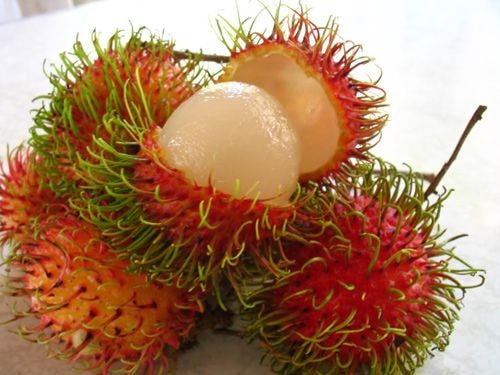 |
| Summer is the season when many delicious fresh fruits flourish, including rambutan (Illustrative image: Internet) |
How to identify Chinese rambutan
Peel: If the rambutan has been artificially ripened, the branches and leaves will remain fresh, while the peel, especially the small spines, will look withered and not as vibrant green as naturally ripened rambutan. Normally, rambutans that ripen on the tree will still have fresh, healthy spines, and will not wilt even after 2-3 days of being harvested.
Flesh: When you split the fruit in half, a lot of juice will flow out. Also, if the inner flesh is mushy, it's a rambutan that has been artificially ripened. You should also avoid choosing rambutans with yellowish flesh, as these are spoiled.
To choose delicious rambutan, you should only select fruits with thick, opaque white flesh, free from any unusual colors.
Taste: Rambutan ripened artificially has a bland taste, sometimes sour. Naturally ripened rambutan, on the other hand, has a sweet, refreshing, and delicious flavor.
The rambutan season usually lasts only from April to June (Illustrative image: Internet)
In addition, to buy fresh and delicious rambutan, you can press firmly on the fruit. If the skin is still firm and the fruit doesn't feel shriveled or watery, then it's a good one. If the skin feels soft, juice leaks out, or it cracks easily when squeezed, you shouldn't buy it.
Additionally, you should buy fruits with green or bright red spines, as these are fresh. Fruits with black or bruised spines are wilted.
You should also note that the rambutan season usually only lasts from April to June. By around July in the lunar calendar, rambutan is out of season and is more susceptible to insect infestation at the stem. Therefore, avoid buying it during this time.
To preserve them for longer, wash the rambutans thoroughly, then cut them in half and peel off all the skin. Take the pulp with the seeds still intact and put it in a sealed plastic container in the refrigerator. They can be used for about 2-3 days without spoiling.
To preserve rambutan for about 12 months, you can soak it in citric acid and sugar water in a glass jar, seal it tightly, and store it in the refrigerator. Alternatively, you can store it in a dry place, away from direct sunlight. Once opened, use within 2 days.
According to Health and Life


