
The turmeric starch production industry is bustling in Nghia Dan.
(Baonghean.vn) - In recent years, the turmeric starch production industry has developed strongly in Nghia Dan district. Starting with just a few households, and seeing the economic benefits, many households have joined together to invest in machinery and find markets for their products.
Ms. Tran Thi Thuy, residing in Son Nam hamlet, Nghia Son commune (Nghia Dan district), has been producing turmeric powder for the past four years. Previously, she produced 10-20 tons per year, but since investing in a centrifugal extraction system to replace manual labor, she now produces 40-50 tons of fresh turmeric annually.
"The turmeric starch production business is busiest from December to March each year. Last year, my family produced about 20 tons of fresh turmeric, and there were fewer customers. This year, even though it's only the beginning of the season, many people have already placed orders. Turmeric starch is mainly consumed in winter and spring, and is used to treat intestinal diseases as well as for beauty purposes," said Ms. Tran Thi Thuy.
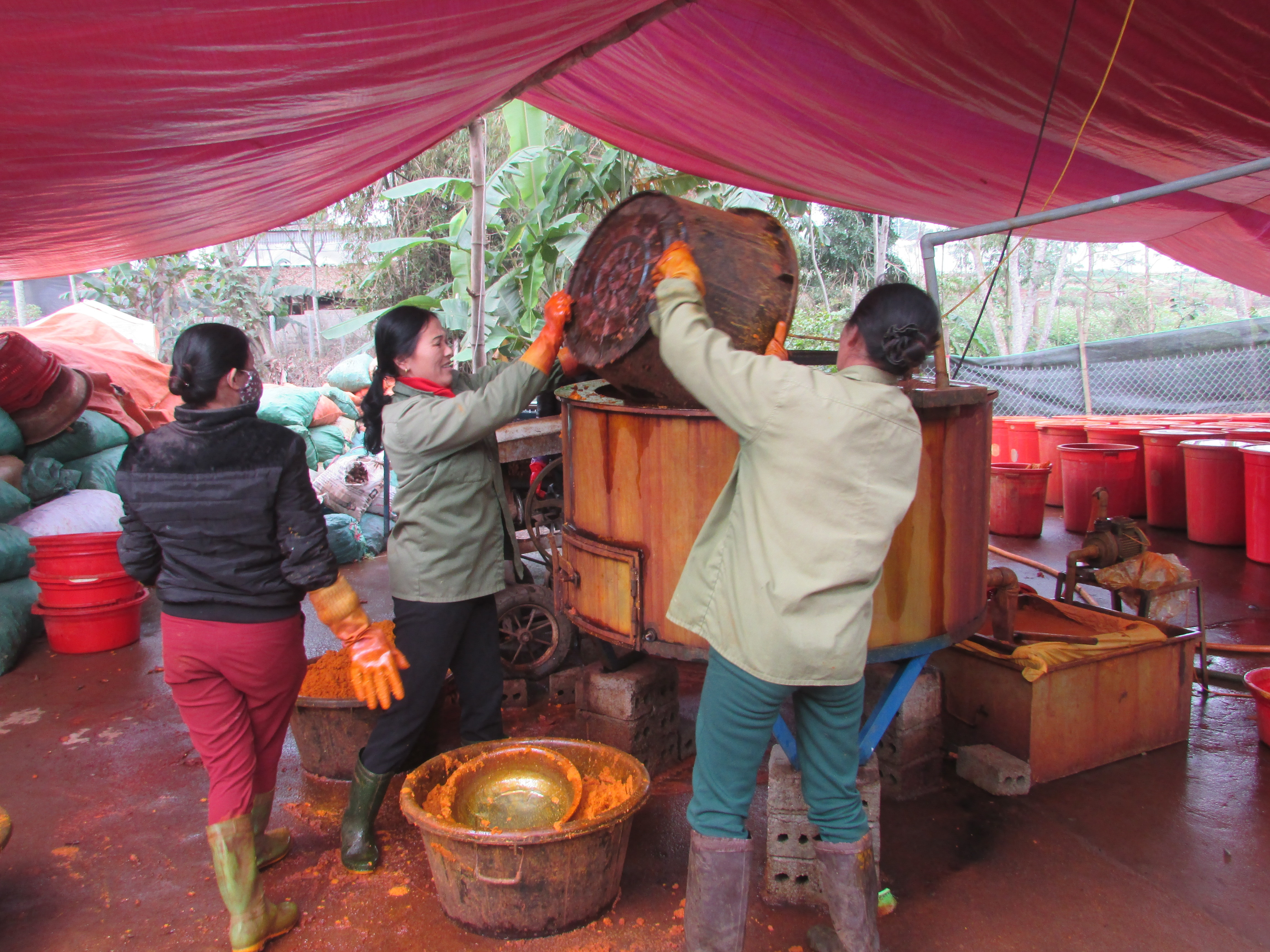 |
| Instead of squeezing the turmeric by hand as before, turmeric producers in Son Nam hamlet, Nghia Son commune (Nghia Dan district) have invested in machines, increasing their production capacity by 4-5 times. Photo: Dinh Thuy |
According to those who make turmeric starch, this is a meticulous and multi-stage process, requiring cleanliness from the very beginning to ensure the product's reputation. After sedimentation, the turmeric starch should not be sun-dried because sunlight will destroy the curcumin content. Therefore, the turmeric starch must be air-dried using fans and dried under electric lights.
Although laborious, the process of making turmeric starch is far more profitable than selling fresh turmeric roots. The price of turmeric starch ranges from 300,000 to 400,000 VND/kg depending on the type of turmeric; after deducting expenses, households engaged in this profession earn between 50 million and 300 million VND per year.
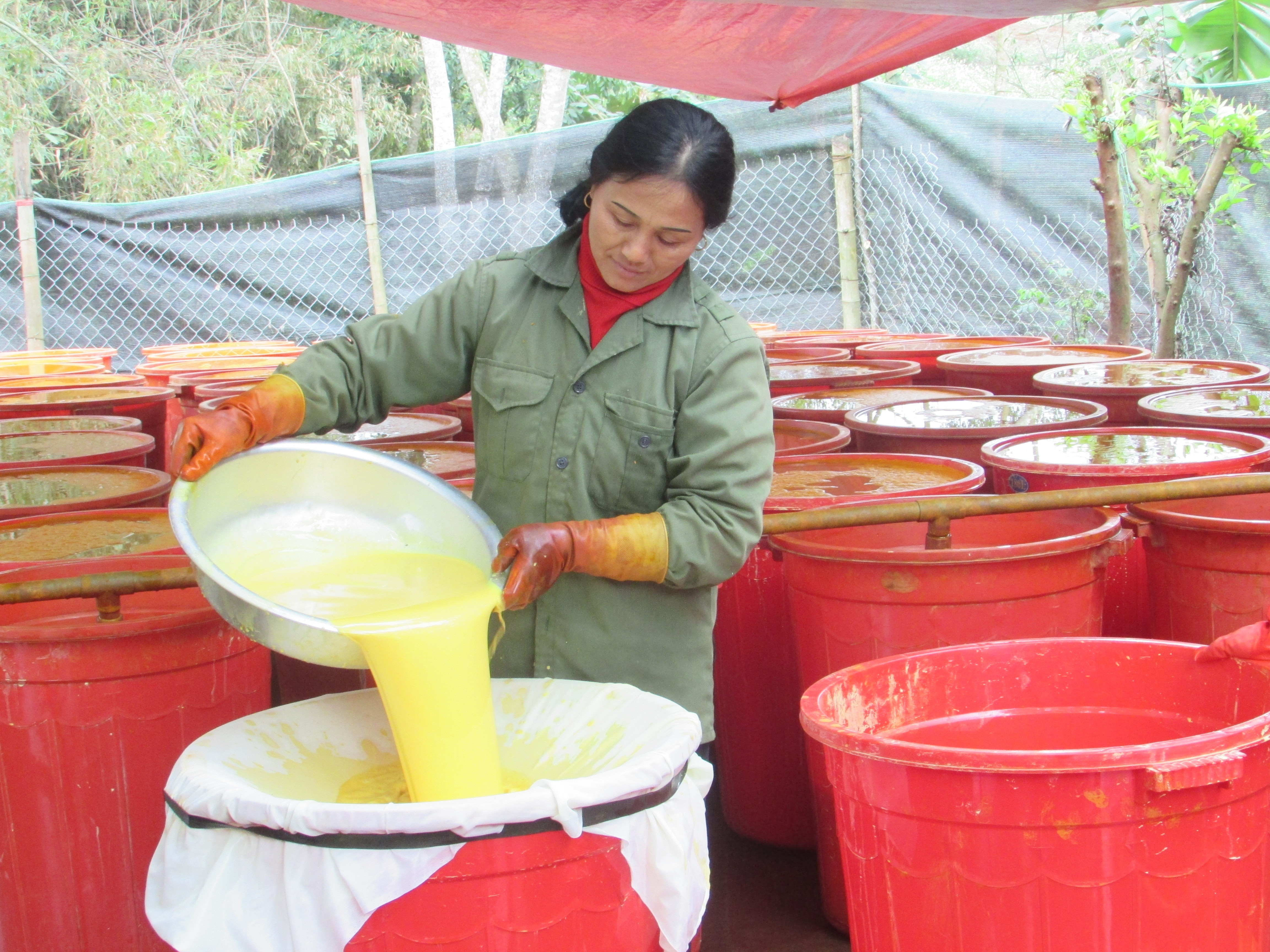 |
| The final step is to let the turmeric starch settle before drying it in the sun. Photo: Dinh Thuy |
In Son Nam hamlet, there are 10 households specializing in turmeric processing, with women being the main workforce. To support each other, the women have formed a cooperative, helping each other with labor, resulting in higher productivity compared to working individually.
Ms. Tran Thi Thao, a member of the group, shared: "Compared to other families, my family started producing turmeric powder later, but thanks to participating in the cooperative group and learning from experience, the quality of the turmeric is guaranteed, and the product is popular in the market. Each batch of turmeric yields about 60-80 kg. If I worked alone, it would take a whole week. When the women in the group help each other, working for one person today and another tomorrow, it's convenient for grinding and filtering, and it shortens the production time."
Each harvest season, Son Nam village produces over 300 tons of fresh turmeric. According to the villagers, in previous years they often had to buy additional turmeric from the North, but this year, people in the district are growing a lot of turmeric, so the main input is locally sourced.
In recent years, farmers in Nghia Dan have introduced turmeric as an intercropping plant and as a replacement for some less productive crops. Turmeric is grown from gardens to fields and on mountains; it is grown intensively in Nghia Dan town and the communes of Nghia Hong, Nghia Son, Nghia Binh, etc.
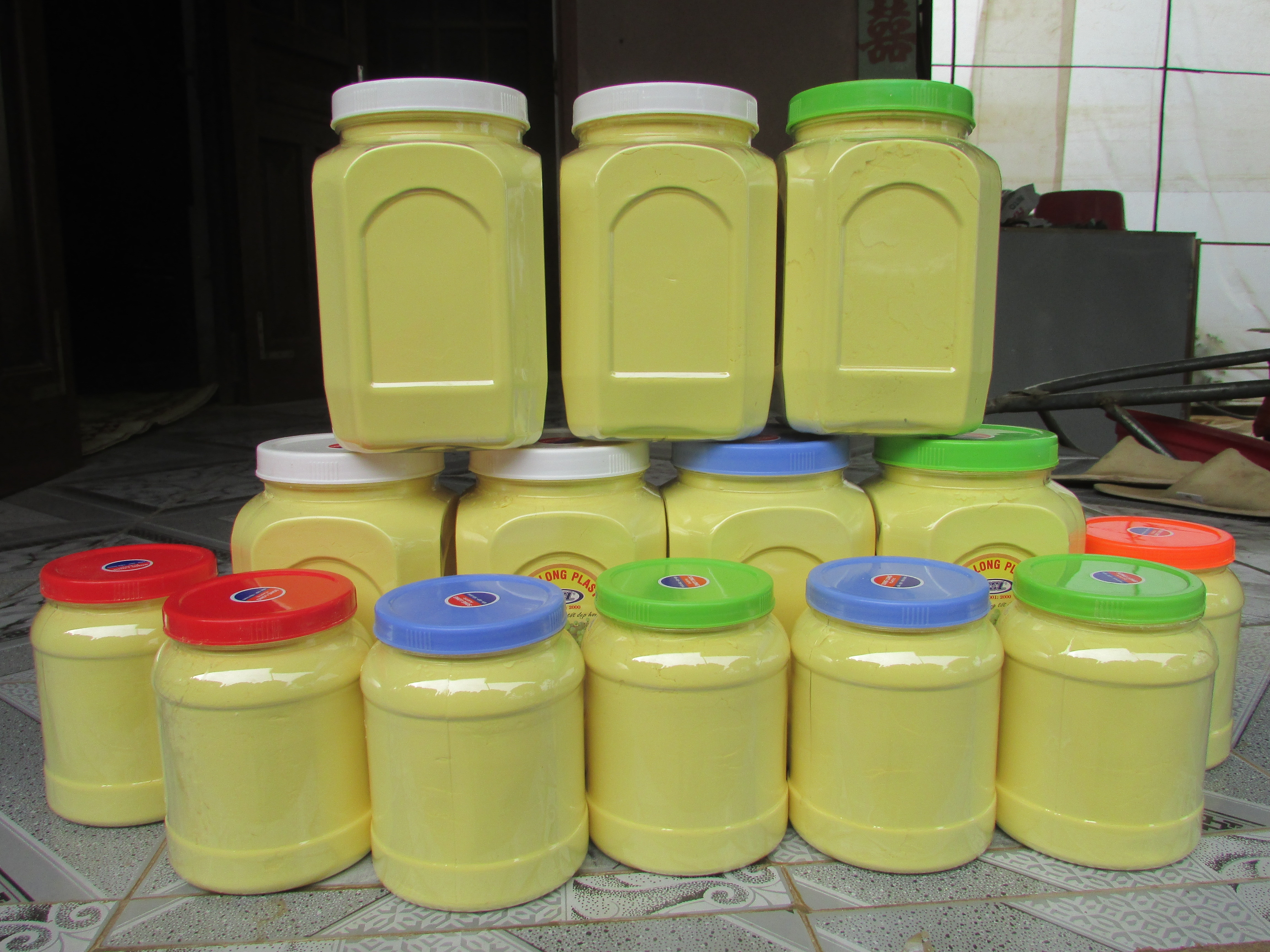 |
| Turmeric starch from Nghia Dan is popular with many consumers. Photo: Dinh Thuy |
In Nghia Dan town, turmeric cultivation has not only replaced less efficient crops but is also intercropped with citrus fruit trees. As a result, the abundant supply of turmeric tubers has led many households in the town to develop turmeric starch production, yielding significantly higher economic returns compared to previous occupations.Those working in the trade are also busy producing goods to meet customer demand.
According to Ms. Nguyen Thi Nhung, Vice President of the Women's Union of Nghia Dan district, the turmeric starch making profession has been learned and replicated by women, mainly concentrated in Nghia Son commune and Nghia Dan town. Women support each other with capital, experience, and market access; however, in the long term, they hope to build a brand to ensure stable product sales.


