
Famous people born in the Year of the Monkey who brought glory to Vietnam.
In the year of the Monkey (Bính Thân), please mention some notable figures born in the year of the Monkey in our country's history.
Year Canh Than 1380 - Nguyen Trai (1380 - 1442)
The renowned scholar and cultural figure, Nguyen Trai, was born on September 19, 1442, in Chi Ngai village, Cong Hoa commune, Chi Linh district, Hai Duong province. He later moved to Nhi Khe village, Thuong Phuc commune, Ha Dong district (now Hanoi). Having passed the Imperial Examination in 1400, Nguyen Trai served as an official under the Ho Dynasty.
After Vietnam fell under Ming rule, Nguyen Trai joined the Lam Son Uprising led by Le Loi and became a strategist for the Lam Son rebels, authoring the Great Proclamation of Victory over the Wu.
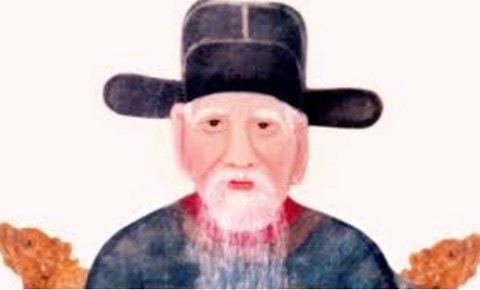 |
| A portrait of Nguyen Trai |
In 1442, Nguyen Trai's entire family was executed in the Le Chi Vien incident. In 1464, King Le Thanh Tong issued a decree exonerating him. Nguyen Trai was a great cultural figure who made significant contributions to the development of Vietnamese literature and thought. He is included in the list of 14 Vietnamese national heroes.
Canh Than 1460 - Luong The Vinh (1460 - 1496)
A renowned scholar during the reign of Emperor Lê Thánh Tông, also known as Trạng Lường, he hailed from Cao Hương commune, Thiên Bản district, Nam Định province (now Vụ Bản). In 1463, he passed the imperial examination and became a Trạng Nguyên (First-ranked scholar) at the age of 23. Later, he served as an official holding positions such as Trực học sĩ (Scholar), Thị thư (Secretary), and Chưởng viên sư (Head of the Academy).
He was a mathematician, Buddhist scholar, and one of the 28 poets of the Tao Dan Society established by King Le Thanh Tong in 1495... He wrote books on Buddhism and mathematics. He died on October 2, 1496, in his hometown.
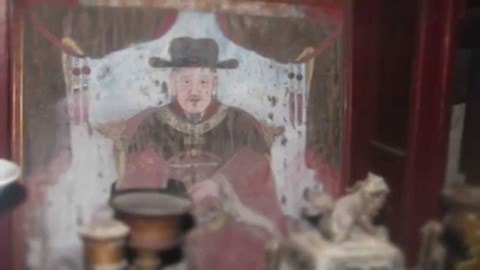 |
| Portrait of Luong The Vinh |
Year of the Monkey 1572 - Dao Duy Tu (1572 - 1639)
A renowned official who helped Lord Nguyen establish his dynasty, he hailed from Hoa Trai village, Ngoc Son commune, Tinh Gia district, Thanh Hoa province. He was well-versed in classical literature and deeply knowledgeable in mathematics. Because his father came from a singing family, he was unable to advance through the imperial examinations. Disappointed, he left for the South and lived as a buffalo herder in Binh Dinh.
His reputation led the court official in Quy Nhon to marry his daughter to him and recommend him to Lord Nguyen Phuc Nguyen. He assisted Lord Nguyen in military, political, and cultural matters, confronting Lord Trinh until victory. In 1631, he ordered the construction of the Thầy rampart from the Nhat Le estuary to Dau Mau mountain. He died on October 17, 1634, leaving behind a military treatise and two literary works.
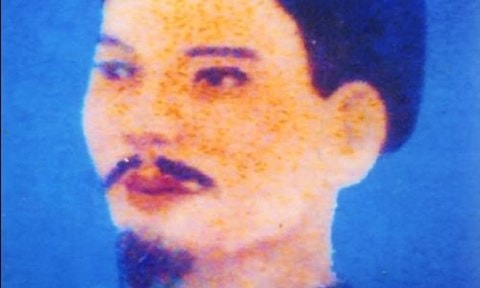 |
| Portrait of Dao Duy Tu |
Year of the Monkey 1872 - Phan Châu Trinh (1872 - 1926)
Also known as Phan Chu Trinh, with the pen name Tay Ho, a patriotic scholar, he was born on September 9, 1872, in Quang Nam province. He spearheaded the Duy Tan (Modernization) democratic movement. In 1887, he secretly traveled to Japan to meet with Phan Boi Chau to exchange ideas on saving the country.
In 1905, he resigned from his official position and, together with Tran Quy Cap and Huynh Thuc Khang, organized a trip to the South to understand the people's situation. Afterward, Phan Chau Trinh traveled to Nghe Tinh, Thanh Hoa, and Hanoi to meet and consult with progressive scholars, then went to De Tham's base to observe the situation. In 1906, he secretly went to Guangdong to meet Phan Boi Chau, exchanged ideas, and then traveled with him to Japan, where he made contact with many politicians.
Phan Châu Trinh advocated for fundamental change by raising the intellectual and moral level of the Vietnamese people, developing the economy and culture, learning progressive Western ideas, and abandoning backward customs and traditions. His slogan was: Enlighten the people, uplift the people's spirit, and improve the people's lives. The movement aimed to reform Vietnamese people and society by encouraging educational reform. In March 1908, the anti-tax movement in Central Vietnam broke out and was brutally suppressed. Phan Châu Trinh and many of his comrades were arrested in Hanoi and taken to Hue.
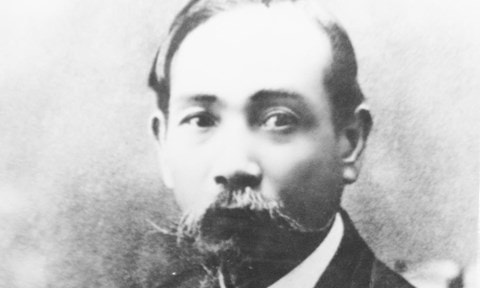 |
| Patriot Phan Chu Trinh |
The Southern court wanted to sentence him to death. But thanks to the intervention of well-meaning French people and representatives of the Human Rights Association in Hanoi, they were forced to exile him to Con Dao Island. Thanks to public outcry both domestically and internationally, in August 1910 he was brought back to the mainland. He was pardoned, but placed under house arrest in My Tho. He wrote to the Governor-General of Indochina, adamantly refusing to be confined in My Tho.
In 1911, the Indochinese government sent him to France, and he seized the opportunity to denounce the crimes of French colonialism. When World War I broke out, Phan Châu Trinh was imprisoned in Paris. In July 1915, due to insufficient evidence to convict him, the French authorities had to release him.
After being released from prison, he learned the trade of developing photographs and worked for photo studios to earn a living and continue his activism. On June 19, 1919, Phan Châu Trinh and his friends drafted the "Demands of the Annamese People" and sent it to the Versailles Conference.
It wasn't until 1925, when his health deteriorated, that the French authorities allowed him to return to Vietnam. During this time, he wrote *Indochina Political Treatise*. After returning home, despite his illness, Phan Châu Trinh still managed to give lectures on two more topics: Eastern and Western Ethics and Morality, and Monarchism versus Democracy. He passed away at 9:30 PM on March 24, 1926, at the age of 54.
Year of the Monkey 1896 - Hoang Ngoc Phach (1896 - 1973)
Teacher and writer, pen name Song An, was born on August 20, 1896, in Duc Phong village, Dong Thai commune, Duc Tho district, Ha Tinh province (now Tung Anh commune). He graduated from the Indochina Teacher Training College, taught at many schools, and wrote. He became famous immediately with his first work, To Tam (1925).
He joined the National Language Propagation Society and the Viet Minh movement in Bac Ninh. After the August Revolution, he successively served as Director of the Bac Ninh School District, Director of Education for Zone XII, Director of the Central Teacher Training College, and then worked in the editorial department of the Ministry of Education. He passed away on November 24, 1973, in Hanoi. He left behind 12 published works of literature.
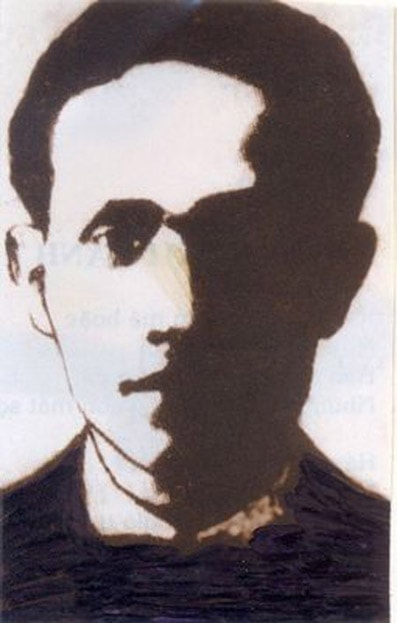 |
| Writer Hoang Ngoc Phach |
Year of the Monkey 1896 - Pham Hong Thai (1896 - 1924)
His real name was Pham Thanh Tich, from Ngoc Dieu village, Nghe An province... He went to the North to contact revolutionaries. He worked as a miner in Hon Gai, then contacted the Vietnam Restoration Society, and crossed the border into Siam and then to Guangzhou at the end of 1918. In April 1924, he joined the Tam Tam Society. On June 19, 1924, after writing a manifesto denouncing the crimes of French colonialism to the people of the world, Pham Hong Thai disguised himself as a journalist and entered the Victoria Hotel in the Sa Dien concession in Guangzhou to assassinate the Governor-General of Indochina, Martial Henri Merlin.
During the party, he threw a grenade disguised in a camera into the middle of the table. However, the assassination attempt failed; Merlin was only slightly injured and survived. Pham Hong Thai escaped from the hotel but was relentlessly pursued, so he committed suicide by jumping into the Chau Giang River at the young age of 28.
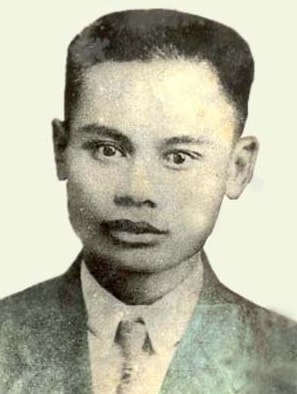 |
| Pham Hong Thai |
This event, known as the "Sa Dien Bombing," shook the news in the region. Pham Hong Thai's remains were respectfully buried by the Sun Yat-sen government at the Huanghua Gang Martyrs' Memorial alongside 72 Chinese martyrs of the 1911 Xinhai Revolution.
Mau Than 1908 - Ngo Gia Tu (1908 - 1935)
The revolutionary martyr was born on December 3, 1908, in Tam Son village, Tu Son commune, Bac Ninh province (now Tien Son district). In 1927, he participated in a political training course organized by Nguyen Ai Quoc in Guangzhou, and was appointed by the Northern Regional Committee of the Vietnam Revolutionary Youth League to the Bac Ninh Provincial Committee to build a base in the locality.
In 1928, Ngo Gia Tu was transferred to work at the Northern Regional Committee. On May 1, 1929, the National Congress of the Vietnam Revolutionary Youth League met in Hong Kong. The delegation from the North, with Ngo Gia Tu playing a decisive role, proposed dissolving the Vietnam Revolutionary Youth League and establishing the Communist Party. Following the policy of "proletarianization," Ngo Gia Tu went to Saigon to work as a coal cart pusher and dock worker. In March 1929, he helped establish the first communist cell in Vietnam.
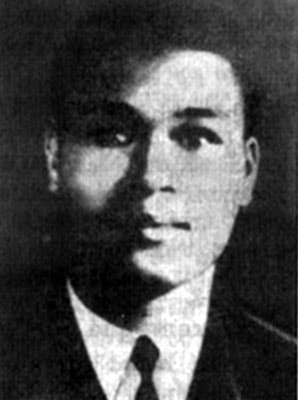 |
| Ngo Gia Tu |
After the founding of the Communist Party of Vietnam, he was elected Secretary of the Provisional Regional Committee of the Southern Party. At the end of 1930, he was arrested by the French colonial authorities in Saigon. After more than two years of imprisonment, on May 2, 1933, the French colonial authorities brought Ngo Gia Tu to a "special high-level trial" and exiled him to Con Dao Island in May 1933. He disappeared during an escape attempt in early 1935 along with other prisoners.
Mau Than 1908 - Nguyen Duc Canh (1908 - 1932)
A revolutionary martyr from Thuy Ha village, Thuy Anh commune, Thai Binh province (now Diem Dien, Thai Thuy district). In 1925, he participated in the memorial service for Phan Chau Trinh and was expelled from school. He moved to Hanoi to live and work. In September 1927, he went to Guangzhou to attend a training course of the General Headquarters of the Vietnam Revolutionary Youth League and joined the organization. After returning to Vietnam, in February 1928, he was assigned to be a member of the Northern Regional Committee and Secretary of the Hai Phong Provincial Committee.
In September 1928, he worked as a factory worker at Caron and led workers in struggles against the employers. In 1929, he founded the General Trade Union of Northern Vietnam.
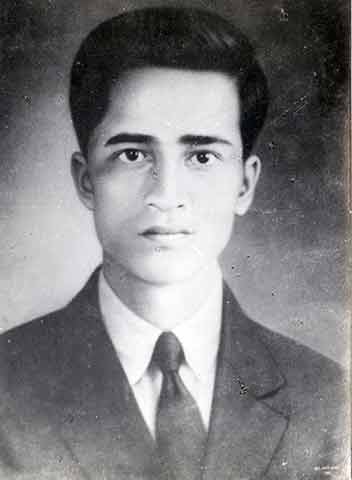 |
| Nguyen Duc Canh |
On February 3, 1930, he participated in the founding of the Indochinese Communist Party as a delegate of the Indochinese Communist Party. At the end of 1930, he was elected to the Standing Committee of the Central Vietnam Regional Committee, in charge of propaganda. At the end of 1931, he was arrested in Vinh. On July 31, 1932, he was executed by beheading by the French in Hai Phong at the age of 24.
According to the Ho Chi Minh City Police Department.
| RELATED NEWS |
|---|


