
Things to keep in mind when you first start driving a car.
Buying insurance, driving slowly, checking mirrors, yielding, maintaining distance, and paying attention to road signs are all things to remember when you first start driving a car.
Anyone learning to drive will experience some awkwardness and mistakes before becoming a confident driver. Here are some tips to ensure the safety of both the driver and others on the road:
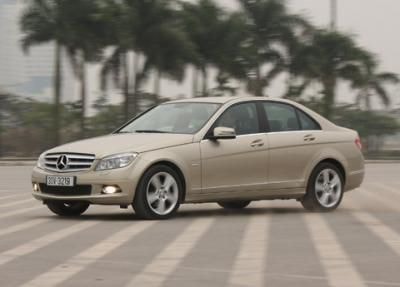 |
| (illustrative image) |
1. Drive a small car.
When you first start driving, you should avoid driving large-engine, high-powered cars, or expensive luxury vehicles. These cars have great power and fast acceleration, which can easily create a feeling of overconfidence. This overconfidence will lead you to drive at high speeds and accelerate quickly, while your skills are not yet sufficient to handle them, easily causing accidents.
Every mistake in a car with a large engine capacity can lead to a much more serious accident than in a smaller car. Therefore, when you're just learning to drive, choose a compact car with an engine capacity of 1.0 to 1.4 liters, which is easy to repair and inexpensive.
2. Buy insurance
Whether you're a beginner or an experienced driver, you should buy insurance for your car. Especially for new drivers, collisions are unavoidable no matter how careful you are, so research and purchase insurance to save on repair costs.
3. Familiarize yourself with the vehicle's operation.
Before getting into any car, you need to familiarize yourself with the controls. Practice using the clutch, accelerator, brake, gear shift, handbrake, etc., while the car is stationary, so you can remember their positions and operate them accurately while driving.
Adjust the driver's seat, steering wheel, and rearview mirrors to achieve the best driving posture, hand position on the steering wheel, and optimal viewing angle through the rearview mirrors.
Remember to fasten your seatbelt before starting the car. If you don't fasten your seatbelt, the airbags will not only fail to save your life in an accident but will also put you in greater danger.
3. Walk slowly and steadily.
New drivers should avoid sudden acceleration and high speeds. Practice precise driving skills at low speeds first, then gradually increase your speed.
Always remember, the most important thing when driving is to drive safely and accurately, not to drive fast. Take your time in traffic and don't rush just because you're a new driver.
All drivers go through a period of awkwardness when they first start driving, so they can understand your situation.
4. Observe the mirror.
When we first start driving, we often focus too much on what's in front of us and forget to check our rearview mirrors. Make it a habit to look in your mirrors to observe both sides of the road and behind your car. This will help you avoid common mistakes made by new drivers, such as cutting off other vehicles, scraping the side of your car against the curb when driving too close, or crossing lane lines.
The most important thing when reversing is to practice using your mirrors and reversing carefully. Don't turn your head or stick your head out the window; instead, practice until you're comfortable with the skill of using your mirrors and reversing.
5. Yield the right of way.
Drive slowly and steadily, and of course, cars behind you will honk and flash their lights to overtake. Don't panic, swerve, or lose your composure and speed up just because of those honks.
Calmly check your rearview mirror; if there's a safe gap, activate your turn signal and yield the right of way. Always remember to perform the action precisely and without rushing.
After the vehicle behind you has overtaken, return to your original lane and wait for the next opportunity to honk your horn to request to overtake. Getting used to yielding will also help improve your driving skills.
6. Maintain distance.
Maintaining distance is the most difficult thing for drivers, especially when traveling in crowded cities like Hanoi or Ho Chi Minh City.
Cars never park with the distance you read about in books, motorbikes constantly cut in front of your car, and both sides of your car will be full of motorbikes with a distance of only 5-10 cm, especially during rush hour.
All drivers, young or old, encounter this situation, but experienced drivers know exactly how to maintain a safe distance to avoid a collision.
Practice reading distances. Of course, don't practice in traffic jams because you'll probably get sick before you can even get a feel for distances.
Find a stretch of road with little traffic, ask someone to signal for you, and practice approaching a motorbike or car, stopping just before a collision. Feel and measure the safe distance between the front of your vehicle and the vehicles in front. Remember, each vehicle has a different front end length, so feeling the distance ahead is essential whenever driving an unfamiliar vehicle.
7. Look at the signs.
Make it a habit to look at all traffic signs on the road if you don't want to constantly pay fines to the traffic police.
Speed limit signs, no-car signs, no-parking signs, signs allowing right turns on a red light... all require your attention to avoid breaking the law.
Don't tailgate large vehicles like coaches, trucks, or buses; you'll lose your view and be unable to see the road signs.
8. Turn around
Turning around is a fairly basic driving skill, but it's not easy, especially for new drivers. In heavy traffic, with other cars constantly honking, turning around in a busy area requires more calmness than skill.
In areas with signs indicating that crossing the road, making a U-turn, or signaling is permitted early, when approaching the turning point, steer slowly and check your rearview mirrors.
On streets where U-turns are required (which are common in Vietnam), it's necessary to observe and find a location where a U-turn can be made with minimal disruption to traffic.
Skills can be practiced, but pressure from other vehicles, car horns, etc., can sometimes make you forget your skills, so it's important to stay calm in difficult situations.
9. Parking, reversing into a parking space.
Parking, whether parallel or reverse, requires skillful driving. The standard distance for parallel parking is never enough in Vietnam, so you need to reverse more skillfully and carefully.
Park calmly, checking your rearview mirrors, but don't be overconfident. Being overconfident while driving when you lack skill can lead to accidents. If you find it difficult, ask for help or have someone signal.
According to VOV.VN


