
Common parking brake mistakes made by new drivers.
The parking brake on a car is designed to keep the vehicle stationary when parked, but if the driver is distracted and operates it incorrectly, this part can damage the car.
The parking brake is an indispensable system on every car; its purpose is to keep the vehicle stationary when parking, even on inclines of varying degrees.
|
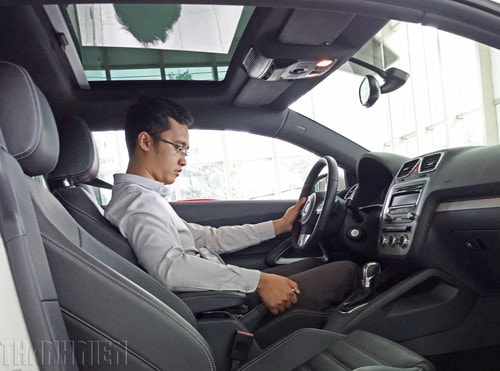
Currently, apart from some new models and luxury cars equipped with an electronic parking brake (EBD), most mainstream cars in Vietnam still use a traditional mechanical parking brake. The parking brake is usually designed as a handle, located near the center armrest between the driver and passenger seats. Additionally, on some automatic transmission vehicles, the parking brake is designed as a button, located near the gear shift lever, or as a pedal (under the left foot).
For vehicles using a mechanical parking brake, pressing the button while simultaneously pulling the handle pushes the brake shoes and brake pads against the brake drum via a cable system connecting the two rear wheels and the push rod (rotating lever). This creates friction, stopping the drum and wheel hub from rotating. If the rear wheels use disc brakes, the parking brake can utilize the brake pads and discs of the main brake system.
|

In fact, many drivers, especially new drivers, often carelessly forget to engage or disengage the parking brake when starting or parking their vehicles. If this happens repeatedly, it can damage the car. Below are some common parking brake problems that new drivers often encounter:
Forgetting to release or not fully releasing the handbrake.
In the case of a driver forgetting to release or not fully releasing the parking brake before driving, the brake shoes and pads remain pressed against the brake drum (or disc). The high friction between the brake pads and drum generates significant heat while the vehicle is in motion, potentially causing the brake pads to burn. Typically, in this situation, some vehicles will signal with a warning light illuminating on the dashboard to alert the driver. If the driver ignores the warning light, they may notice the vehicle feeling heavy and smell a burning odor coming from the braking system after driving.
|

In addition, sensor systems mounted on the brake assembly, such as the anti-lock braking system (ABS), can also malfunction. However, the more dangerous consequence is that the heat generated can cause the brake fluid to boil, resulting in brake failure.
Release the parking brake before the vehicle has come to a complete stop.
Besides forgetting to release or not fully releasing the handbrake, some new drivers, due to driving habits or carelessness, often release the handbrake before the vehicle has come to a complete stop. In fact, the handbrake is not designed to stop a moving vehicle, but only to keep it stationary once it has stopped. If the vehicle is moving or has not come to a complete stop, and the driver carelessly pulls the handbrake, the braking force applied to the rear wheels can cause them to skid, creating a dangerous situation.
Using the parking brake while the car is moving is only practiced by professional drivers for drifting stunts. However, the cars used for these performances are often modified with a parking brake system to generate more braking force.
|

With older car models, in the event of an emergency where the foot brake malfunctions, many people resort to pulling the handbrake. However, due to the weaker force of the handbrake or worn brake pads, it is often ineffective.
Forgetting to engage the parking brake when parking.
One common mistake drivers make is forgetting to engage the parking brake when parking. This can lead to collisions and accidents. Some new drivers often forget or assume that shifting the gear lever to P will keep the car stationary. However, even though the gear lever is in P, the car cannot move because the gearbox holds it in place. In many cases, when parking on steep slopes, carrying heavy loads, or for other reasons, the P gear may become ineffective and the ratchet gear may wear out quickly. In this situation, failing to engage the parking brake will cause the car to roll and easily lead to collisions.
Therefore, to ensure safety, drivers should get into the habit of engaging the parking brake when stopping their cars.


