
Those who fear downsizing are not worthy of continuing to be civil servants.
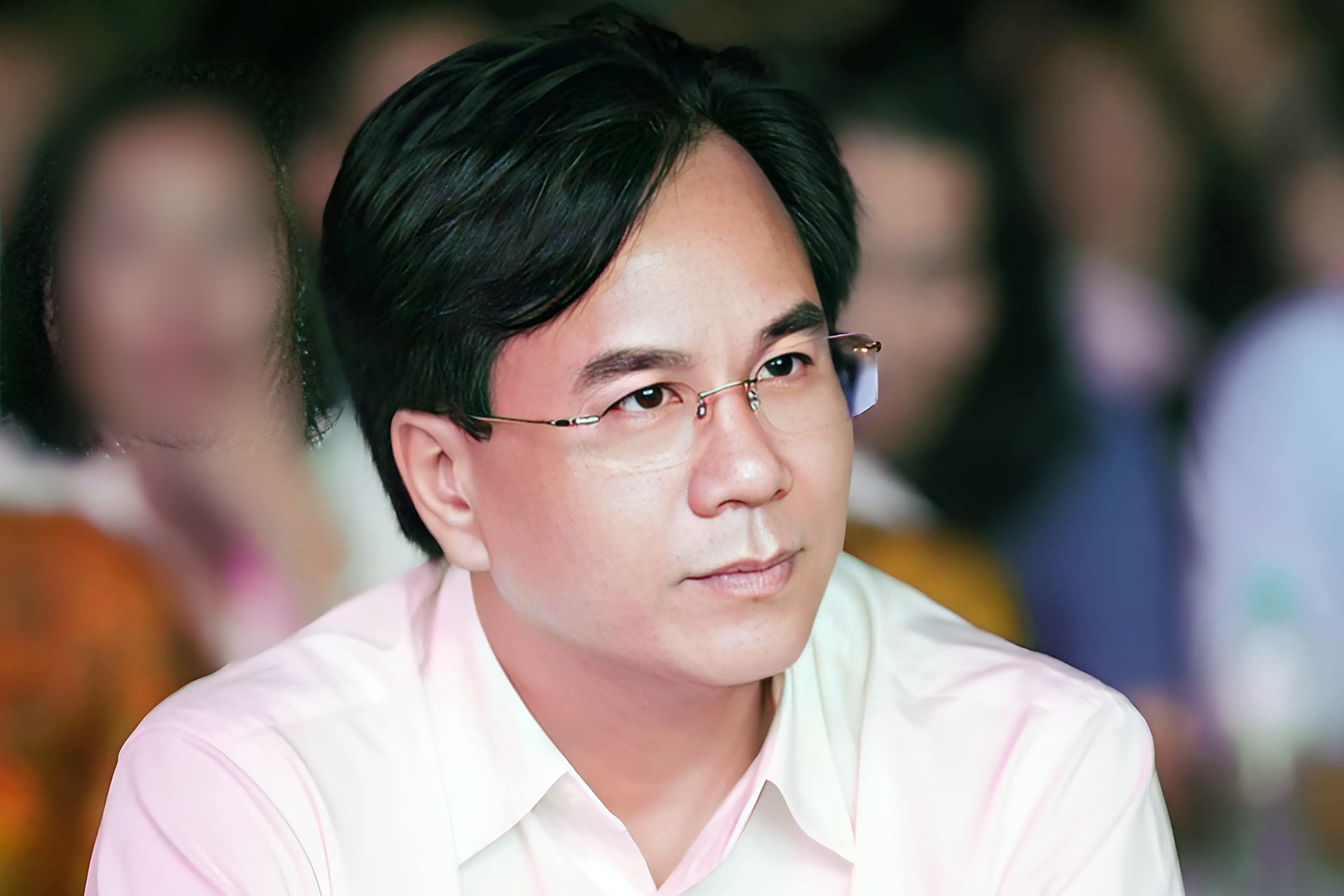
Having been a successful civil servant and now a successful businessman, Dr. Doan Huu Tue believes that the ultimate goal of streamlining the system is to ensure that at some point, only truly talented and dedicated individuals work within the state apparatus.
Nearly 14 years ago, Dr. Doan Huu Tue, head of a department at a ministerial-level agency, decided to leave after 17 years of dedicated service in the civil service.
He spoke frankly about the reality of the working environment for civil servants, such as:"If we can remove those who are 'idle and unproductive' from the system, civil servants' salaries will certainly increase significantly, creating a more vibrant and efficient work environment; at the same time, we will avoid wasting resources because those subject to downsizing will surely have to find new, more suitable jobs and make more positive contributions to society."
From that moment on, Dr. Tuệ recognized:"To thoroughly reform the administrative system, we first need a revolution in the civil service. If we don't address the staffing issue and create healthy, fair competition within the civil service, we will never be able to solve the salary problem. When salaries are commensurate with work performance, civil servants will undoubtedly be wholeheartedly dedicated and strive their best for their jobs. Furthermore, the pride of being a civil servant and not being burdened by financial worries will contribute to reducing corruption and harassment..."
Dr. Doan Huu Tue is the founder and CEO of My Viet International Group. The "reunion" betweenVietNamNetThe meeting with Dr. Tuệ took place at a time when the downsizing of personnel, in the spirit of the streamlined administrative apparatus revolution, was being urgently implemented in all ministries, departments, and localities.
After leaving my civil service job, I felt I was more useful.
Looking back, how would you evaluate the journey of the past 10 years?
Frankly speaking, from a professional standpoint, I find myself more useful after leaving the civil service.
First of all, I believe a person's value is determined by what they contribute to society minus what they receive from society. Accordingly, the value of an ordinary worker can still be higher than the value of a government official if the difference between "contribution and benefit" is greater.
If I had remained in the civil service, I would certainly have a very good job now. But socially, since leaving that environment, I have been able to do more useful things and contribute more to the community and society.
When I left my civil service position, someone else immediately replaced me, and there was no problem. In the government apparatus, no one is irreplaceable. But without me, the business I founded certainly wouldn't exist, meaning there wouldn't be the products and services bearing that brand, and there wouldn't be the jobs that the business created.
If you consider it carefully, what benefits would leaving the government sector bring to his family and himself?
The first benefit for myself is freedom. And you know, freedom is one of the greatest joys of human life, isn't it? As President Ho Chi Minh taught, nothing is more precious than independence and freedom.
When I'm out and about, I have complete control over my time, so I don't work according to rigid schedules. Especially now, with the support of technology, I can work anytime, anywhere, and multitask. I'm no longer dependent on or constrained by technology.8 hours a day,"Going to work with an umbrella in the morning, and coming home with an umbrella in the evening."Furthermore, that's what's best for me personally.
The second benefit is that I get to think more…
Should I have the opportunity to think, or should I have to think, sir?
"More"here is"Okay"otherwise"Right"It's voluntary, a desire to think, not something forced upon me by anyone or anything. Thinking to simplify complex problems, turn difficulties into advantages, even transform the impossible into the possible… Thinking to produce practical and useful results, not thinking merely to cope or to dwell on meaningless thoughts.
"We must think, we must act."and"I want to think, I want to do."This is also a difference between civil servants and businesspeople. Generally, civil servants..."We must think, we must act."and as for entrepreneurs..."I want to think, I want to do.".
For example, when I recently went to India, I realized it's a market with great potential for agricultural products. It naturally sparked an idea in me: how can we expand into this market? It's something I wanted to think about; nobody forced me to.
In the civil service environment, I was only allowed to do the work assigned to me; I couldn't do more even if I wanted to. Furthermore, I had to do assigned tasks, even if they weren't truly suitable or necessary. Now, I can freely do any job that I deem most beneficial to myself, the community, and society, as long as it doesn't violate the law and ethics. Conversely, I don't have to do anything that isn't truly necessary or useful.
Leaving the civil service gave me freedom in both thought and action; I had greater aspirations and came into contact with more talented people. I felt like a different person, certainly in a positive way.
And the third benefit, of course, is income. A civil servant's salary."three pennies"If I stayed, my current salary of over ten million VND wouldn't be enough to help anyone financially. And as you can see, sometimes it's difficult to be a good person without money. Besides, spending money earned through my own hard work and intelligence feels so satisfying and makes me proud!
Of course, there were disadvantages... When I "left," many friends and acquaintances who had previously respected me suddenly looked at me with apprehension mixed with disappointment, which made me feel a little disheartened. But now, most people understand my choice.
So, if he could "start young again," would he work in the private sector right away, or would he remain in the civil service and then "jump" out after some time?
My departure from civil service felt like fate. At the time, my career was going well, and my professional path ahead was very promising. I had successfully defended my doctoral dissertation, completed advanced political theory courses, been included in the planning process, and was trusted and respected by my superiors and colleagues… Continuing my career advancement as a civil servant wouldn't have been too difficult for me.
My time as a civil servant was truly memorable and valuable. I am very grateful for the environment where I worked. The agency provided me with excellent opportunities for comprehensive training both domestically and internationally. I was assigned many challenging and useful tasks, allowing me to hone my skills, learn a great deal, and especially travel extensively. Those years gave me the confidence to enter the business world.
In fact, many people who haven't experienced the civil service environment often lack confidence when interacting with officials. But when I meet and work with them, I treat them like old colleagues, so there's nothing to be apprehensive about. For me, that's also an advantage when starting a business.
If I could be "young again," I would still choose to be a civil servant, but I would have one of two options: leave civil service earlier or stay until retirement.
Review the work items.
Returning to the current hot topic of mergers and downsizing, what are your views as a former civil servant?
Everyone recognizes that streamlining the government apparatus is an urgent issue."I know, it's so annoying, stop saying it all the time."In reality, it's not an exaggeration to say that almost every agency needs to streamline its operations. A department might have dozens of people, but only five or seven actually work. Especially now with information technology and all sorts of supporting tools, there's no need for as many people as before.
On the other hand, if we comprehensively review and reassess the tasks of ministries, departments, and agencies, we will find that many tasks and processes are redundant or overlapping, causing waste.
Therefore, I believe one of the first things to do when streamlining the administrative apparatus is to conduct a comprehensive review of the work items. Tasks that are not truly necessary should be eliminated, and overlapping tasks should be assigned to only one agency. Reducing the number of tasks and the number of people will reduce waste for society. That is the crux of the matter of streamlining the administrative apparatus.
In my opinion, those coming here, leaving the state sector, should view the issue from a positive perspective, as the saying goes."When one door closes, another opens.".
The "other door that opens" may lead to unknown destinations, but beyond it lie new possibilities. Be optimistic that as you step into this new horizon, you will experience new feelings, new jobs, and new relationships.
If you look at things positively, everything will naturally become more normal and exciting. But if you think of this as a tragedy, or that tomorrow you'll no longer be a civil servant and will lose all your rights, then it's like losing before you even enter the arena.
Perhaps his departure from public service was voluntary, hence his different mindset and attitude, while those "forced" into downsizing might have a different feeling?
Whether you're proactive or passive is up to you. You can absolutely turn a passive situation into a proactive one. If I were still working in the civil service at this stage, I would very likely volunteer to be laid off.
Lately, I've read many opinions, and I've noticed that many people view downsizing as a very burdensome issue. Many worry about what their lives will be like tomorrow, what will happen to their families… and all sorts of other things. Personally, I believe that those who think this way don't deserve to remain in their civil service positions.
To be frank, even if the truth hurts, a capable person will think, "If I can't work here, I can work somewhere else; I'll find a job on my own, there's nothing to be afraid of." These are the people we need to keep.
I think the ultimate goal of streamlining is that at some point, the people working in the government apparatus are truly talented and dedicated to their work. Only when that is achieved can it be called a success.
But if the cuts are merely mechanical, and ultimately the talented leave while the incompetent remain, then what's the difference between that and transforming a system?"mixed hot pot"grow into one"mixed hot pot"smaller.
"Opening the doors" so that the public-private divide is no longer so rigid.
Do you think the situation of "the big pot" turning into a "small pot" will occur, where talented people find the selection process too complicated and are willing to leave? As a result, the remaining "civil servant positions" will still be reserved for less capable individuals?
I think that situation could only happen on a small scale, in a specific agency or unit. But on a larger scale, the probability of this happening is very low.
Incidentally, I'd like to share a concern I have. This isn't directly related to downsizing, but it does relate to work in the private sector.
This represents an opportunity for "outsiders" to participate in the state administration. Currently, this is almost impossible due to outdated regulations and restrictions. In many countries, people working in the private sector can absolutely apply for leadership or management positions in the state apparatus if they meet the necessary qualifications.
Conversely, a government official, waking up one fine morning, might suddenly think..."Now I have to go out and experience new jobs and new challenges."After starting his own business and achieving success, he still has the opportunity to return to the government if he wishes.
Ultimately, the goal of working anywhere is self-development and contributing to the development of society. When things are "opened up" in this way, the boundaries between the public and private sectors, and the distinction between civil servants and non-civil servants, will no longer be so rigid. If this is achieved, the revolution to streamline the administrative apparatus will be easier and truly bring about qualitative change.
That's a distant prospect, but I think we should consider it.
| Don't be disappointed if your relatives are no longer civil servants. When I first left my government job, an older brother figure who was a local leader said something that I'll never forget: "There are things you do now that others won't understand until 10-15 years from now." Therefore, for those who will soon no longer be civil servants, family and friends should show them trust and encouragement, not disappointment or doubt. This will greatly motivate them on their path to finding and starting new opportunities for personal development. |


