
Situations where you should use the handbrake while driving.
Besides its use when parking, the handbrake has several other important functions when driving on the road.
Starting on an incline
The parking brake is very helpful for drivers, especially new drivers, when starting on an incline. When needing to move again from a standstill on a slope, the driver disengages the clutch, shifts into gear, releases the clutch, and gently presses the accelerator as if starting normally on a level road. At this point, the parking brake is still engaged, ensuring the car does not roll back. Continue releasing the clutch and gently pressing the accelerator until you feel the car begin to move, then release the parking brake (while still pressing the accelerator) to allow the car to move forward.
|
Use the parking brake to start on an incline. |
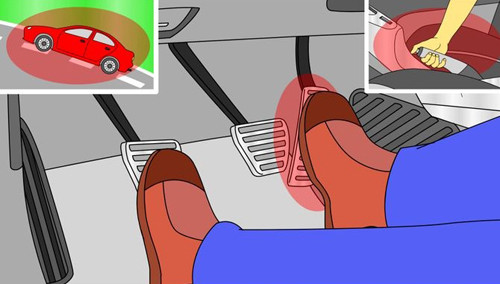
For automatic transmission vehicles (vehicles without hill-start assist), when stopping suddenly on a steep slope, the driver should engage the parking brake, press the accelerator, and then slowly release the parking brake.
Stop at the red light.
When stopped at a red light for more than 10 seconds on a flat road, drivers can shift to neutral (N) and engage the parking brake. This allows drivers to rest their feet for a moment, which is highly effective for those who drive continuously for many hours. Additionally, it helps avoid the illusion of the car rolling when only in neutral.
Emergency
In exceptional circumstances, the parking brake is the last resort when the foot brake fails. However, it's important to note that it should only be used in unavoidable situations. If you suddenly pull the parking brake while the vehicle is in motion, the subsequent events are very difficult to control. The braking force will only be applied to the two rear wheels, causing wheel slippage and the vehicle to spin.
This type of brake is often used for emergency stopping, although it takes longer because it only acts on the rear wheels. When operating it, be careful to pull gently and slowly but with sufficient force. Pulling too hard or too quickly can lock the wheels, causing skidding and loss of control. Remember to hold down the release knob; release the parking brake immediately whenever you notice the vehicle losing control.
Drifting like in the movies (sliding wheels)
By using the handbrake, drivers can experience drifting situations like those seen in movies. While not recommended, under safe conditions, this can be a fun experience. Practicing this requires skill and choosing a quiet, spacious location with no pedestrian traffic.
|
To drift, you need practice and to choose a secluded, spacious location with no pedestrian traffic. |
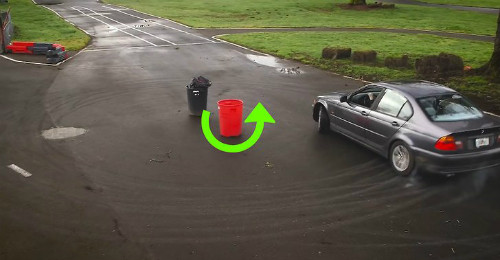
When performing this maneuver, drive around the center point and engage the parking brake to allow the car to complete a 180-degree turn. The car will skid during the 180-degree turn; at this point, steer in the opposite direction. At speeds of 48–64 km/h, firmly engage the parking brake to generate the momentum for the car to skid. Try to maintain control until the car comes to a complete stop. Gradually increase speed until you feel confident in mastering the drift. Continue trying to achieve a full 180-degree turn.


