
Locations to avoid when installing home security cameras.
Installing security cameras is an effective way to protect your home and property. However, to ensure that the installation complies with the law and is as effective as possible, you need to avoid installing them in certain locations. This article will help you understand these locations better.
In the digital age, protecting your home has become much simpler. With just a smartphone, you can control everything from door locks to security cameras. However, to ensure safety and avoid legal troubles, you need to know how to install cameras correctly.
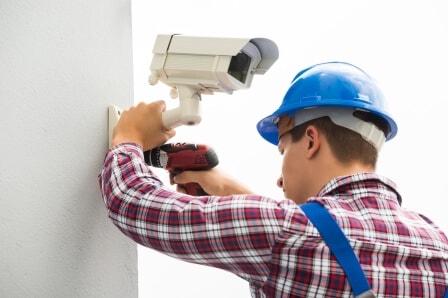
Choosing the right location for your security camera is crucial. Carelessness can lead to problems such as false alarms, blurry images, conflicts with neighbors, and even legal issues. Here are some locations to avoid when installing security cameras for your home:
1. Private spaces
Installing security cameras to protect your home is essential, but you need to be mindful of not positioning the cameras to capture other people's private spaces. Doing so could be illegal and you could be sued. The law protects everyone's right to privacy, so please respect that when installing security cameras.
In fact, you shouldn't install security cameras in places like bathrooms, bedrooms, or other private spaces. If you absolutely must install cameras in these areas (for example, when you rent out your property to multiple people), make sure the cameras are in easily visible locations and everyone is aware of them.
For outdoor security cameras, the cameras are permitted to record in public spaces, such as sidewalks or streets running past your home, as these areas do not require a high degree of privacy.
Remember, cameras help provide a sense of security and serve as a tool to keep you and your home safe. Ensure that cameras are not placed in locations that render them ineffective or, worse, actually endanger someone's privacy.
2. Look directly into your neighbor's house.
When installing security cameras, you need to respect your neighbors' privacy. Avoid pointing the camera at their house, windows, or backyard. Doing so not only violates the law but also creates unnecessary conflicts in neighborly relations.
To avoid unnecessary misunderstandings with your neighbors, you should take advantage of the camera's "private zone" feature. This feature allows you to obscure sensitive areas such as your neighbor's windows, ensuring everyone's privacy. If any disputes arise, you can use this feature to prove you had no intention of trespassing.
3. Locations that are difficult to observe with the naked eye.
While it might seem logical to place cameras in hidden areas to catch unexpected intruders, statistics show that burglars often target more visible entry points. Instead of focusing on blind spots, prioritize installing cameras in key locations such as front doors, ground-floor windows, and main entrances. This will help you detect any unusual activity early and ensure the safety of your home.
In reality, most burglaries occur through seemingly the simplest routes. According to statistics from the American security company ADT, 34% of burglars choose the front door, while 22% exploit first-floor windows to break in. This shows that concentrating security cameras in vulnerable locations such as front doors and ground-floor windows will be most effective in deterring crime.
4. Area with many obstacles
An effective security camera system requires not only modern technology but also appropriate installation locations. Choosing the right camera placement is crucial, especially considering natural elements like trees. Ensure the camera's view is unobstructed by branches or leaves, particularly during the rainy season. This will help you protect your home and property in the best possible way.
Besides focusing on installing cameras in advantageous locations for outdoor observation, you also need to consider the viewing angle inside the house. Make sure the camera can capture clear images when doors are opened or closed. Additionally, you should avoid placing cameras in areas where pets might play. For example, if you place the camera on a high shelf, your cat might accidentally knock it over. Or, if you place the camera in a high-traffic area, it could be bumped and its viewing angle altered.
Choose a safe and convenient location to install the camera, where you can clearly observe all necessary angles without fear of being accidentally bumped into.
5. Place it on the windowsill.
Many people want to save money by buying a camera for indoor use only and intend to place it near a window for a clearer view of the outside area. However, doing so will encounter two major problems.
The first problem is glare caused by sunlight shining through the window. Even with the camera placed close to the glass, image quality is severely affected, especially in bright sunlight or at night. In addition, dust and dirt accumulating on the glass over time also significantly reduces visibility.
Secondly, the viewing angle through a window is quite limited. The camera can hardly cover the entire area you want, especially important locations such as the entrance to the house, the yard, or the pathway.


