
Efforts to promote sustainable production and business development.
(Baonghean) - In 2013, thanks to the effective implementation of proposed solutions and policies, Nghe An's industrial production and trade achieved positive results, contributing to the overall stability and development of the province. Baonghean newspaper had an interview with Mr. Phan Thanh Tinh, Provincial Party Committee member and Director of the Department of Industry and Trade, on this matter.
PV:Comrade, in 2013, Nghe An's industrial production index increased by 8.83% compared to the previous year, higher than the national average; total export turnover also increased quite strongly. Could you please provide more specific details about these results?
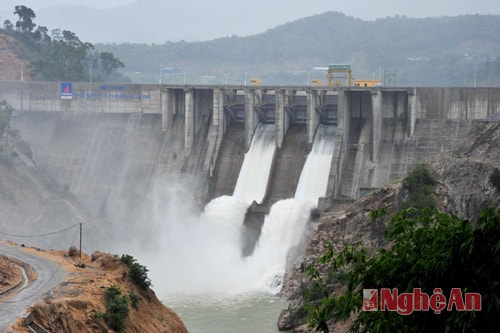 |
| Hua Na Hydroelectric Power Plant. |
Comrade Phan Thanh Tinh:Last year, fuel prices (electricity, gasoline) rose sharply, policies regarding the mining industry were implemented, and world market tin prices fell. However, some products with a large proportion in the province's industrial production value, such as beer, electricity production, and fresh milk, still saw significant growth. In 2013, the industrial production index increased by nearly 9% compared to the previous year. Specifically, mining decreased by nearly 21%; manufacturing increased by 8.28%; electricity, gas, hot water, steam, and air conditioning production and distribution increased by 31%; and water supply, waste management, and wastewater treatment increased by 6.03%. Several key products in 2013 showed significant increases compared to 2012, such as refined sugar (142,751 tons, up 48%) due to increased sugarcane production, higher sugar content in sugarcane, and an earlier start to the crushing season this year. Beer production reached 165.57 million liters; yarn production reached 11,360 tons, an increase of 29%; adult shirts and trousers reached 9.33 million pieces, an increase of 36.72%; electricity production reached 2,375.6 million kWh, an increase of 77%; and tap water production reached 25 million liters, an increase of 12%. Other products showed low growth rates, with many experiencing declines, some with significant drops such as construction stone (down 18%), NPK fertilizer (down 13%), granite tiles (down 6%), standard fired bricks (down 14%), and cement (down 12%).
Total export turnover for the year reached US$624.383 million, exceeding the annual plan target by 35.7%, of which merchandise exports reached US$344.369 million, an increase of 27.8% compared to 2012; and labor and service exports earned US$280.014 million in foreign currency. Several key export items saw significant increases or maintained high turnover levels compared to the previous year; notably: textiles and garments at US$32 million, a 2.2-fold increase; various types of aquatic products at US$22 million, an 82% increase; wood chips at US$80 million, a 25% increase; and cassava starch at US$55 million, equivalent to the previous year. Construction materials reached $38 million, an increase of 15%… The proportion of processed goods exported is increasing, especially forestry and aquatic products, minerals, construction materials, textiles, and wood products, reaching $233 million, accounting for nearly 67% of the province's total merchandise export turnover.
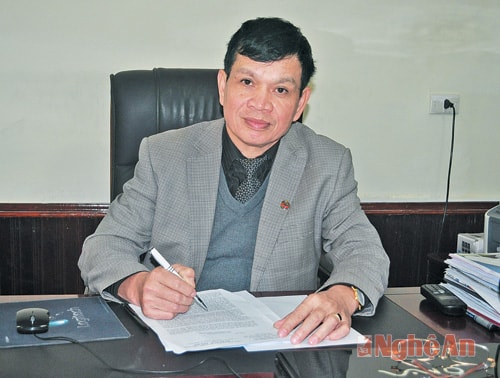 |
| Comrade Phan Thanh Tinh - Provincial Party Committee member, Director of the Department of Industry and Trade |
PV:In your opinion, what are the reasons behind the Ministry of Industry and Trade's achievements?
Comrade Phan Thanh Tinh:Over the past period, the industry has closely followed the programs and plans of the Central Government, the Provincial Party Committee, the Provincial People's Committee, and its assigned functions and tasks, proactively directing and managing the industry's activities effectively. State management of industry and trade has been effective, with some areas performing well, such as: disseminating the State's guidelines, policies, and laws; developing plans, mechanisms, and policies, and organizing the implementation of provincial support policies within its authority; and conducting specialized inspections and audits. The network of commercial and service businesses continues to expand across all three areas: urban, rural, and mountainous. The rural market system continues to be renovated and upgraded. Modern shopping centers and supermarkets have contributed to changing the urban landscape. Coordination with provincial departments and agencies and local governments at all levels has been regularly strengthened and improved, contributing to effective direction and management. Internal unity and consensus are high; Ensuring the principles of democratic centralism and the leadership system in management and administration; while simultaneously promoting a high level of responsibility, initiative, and individual creativity in each position regarding assigned tasks.
In addition, the industry's newly increased capacity is showing positive signs from completed and operational projects that are beginning to yield results, such as: Hua Na Hydropower Plant (February), Khe Bo Hydropower Plant (May), Hanosimex Garment Factory (May), MLB Tenergy Garment Factory (May), TH Fresh Milk Factory (July), Tien Phong Plastic Factory (September),...
PV:Although industrial production value increased compared to the same period last year and was higher than the national average, it still fell short of the planned target. Could you please explain the reasons for this?
Comrade Phan Thanh Tinh:In 2013, several key products, as outlined in the Resolution of the 17th Provincial Party Congress, failed to meet their targets: cement, exported white stone, livestock farming, and dairy processing. The development of new key products with significant economic impact, such as metallurgy, mechanical engineering, electrical equipment, and information technology, yielded low results or was not achieved. The production and business situation of enterprises continued to be difficult, showing signs of stagnation; market purchasing power decreased; many businesses had to downsize, close their tax registrations, and cease production and business operations, resulting in job losses, unstable incomes, and significant hardship for workers. Although market inspection and control were strengthened, the trade in counterfeit and substandard goods remained complex. Land clearance work and the progress of infrastructure investment in concentrated industrial zones, industrial clusters, rural market systems, and commercial centers are still slow... due to limited budget resources and difficulties in mobilizing investment capital.
The reasons stem from the ongoing difficulties both domestically and globally, which continue to significantly impact export markets and the maintenance of economic growth. Businesses face difficulties accessing bank loans primarily due to their inability to meet loan requirements and a lack of feasible production and business plans. Input costs remain high, particularly the fluctuating prices of essential goods such as gasoline, gas, electricity, and water. Unpredictable weather patterns and natural disasters like storms and floods have caused severe damage; complex disease outbreaks have significantly affected production and livelihoods. Many programs and projects have been proposed but lack sufficient resources, resulting in delays in implementation; the state management apparatus at all levels lacks coordination in policy implementation and has not been decisive enough in its direction.
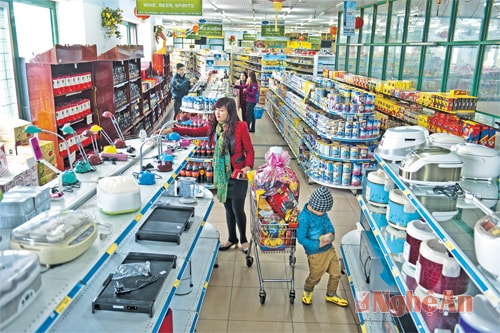 |
| Intimex Supermarket (Vinh City). Photo in page: Sy Minh |
PV:In 2014, the industry's target was to increase industrial production value by 11%-12%. To achieve that goal, what innovations and solutions do you think the industry needs?
Comrade Phan Thanh Tinh:To achieve the set goals, the sector has proposed solutions and groups of solutions for each area. These include: continuing to implement measures to curb inflation; reviewing and supplementing planning, policies, programs, and projects for industrial and commercial development; significantly improving the investment environment, business environment, and provincial competitiveness index (PCI); boosting production and business; and effectively implementing solutions to improve the quality of growth. Focusing on investing in building a team of entrepreneurs and improving the quality of human resources; promoting administrative reform, leadership, and management; combating corruption; practicing thrift and preventing waste; strengthening state management of industrial and commercial activities; and implementing coordination regulations between provincial departments and localities in directing, managing, and monitoring the implementation of tasks, programs, and plans for 2014.
Regarding solutions to boost industrial production, the sector focuses on mobilizing all sources of capital for production investment; encouraging businesses to invest in developing supporting industries and supplying raw materials and components for textile and garment factories preparing to start operations. Gradually investing in technological innovation, mastering imported technologies, and increasing the added value and competitiveness of products. Maximizing the capacity of existing factories and accelerating the implementation of new factories to increase production capacity, such as hydropower, cement, and non-fired building materials, especially key products that contribute significantly to production value such as beer, hydropower, cement, milk, white stone, building materials, and packaging.
In addition, we also discussed solutions for developing the domestic market, developing import and export activities, etc.
PV:Thank you, comrade!
PV(perform)


