Farmers in Nghe An province earn a lot of money from the "ranh rang" plant.
Huy Thu - April 25, 2023 08:47
(Baonghean.vn) - These days, people in some localities of Thanh Chuong and Nam Dan districts are harvesting the "ranh rang" plant. Although the price is not as high as in previous years, "ranh rang" still brings a considerable income to farmers.
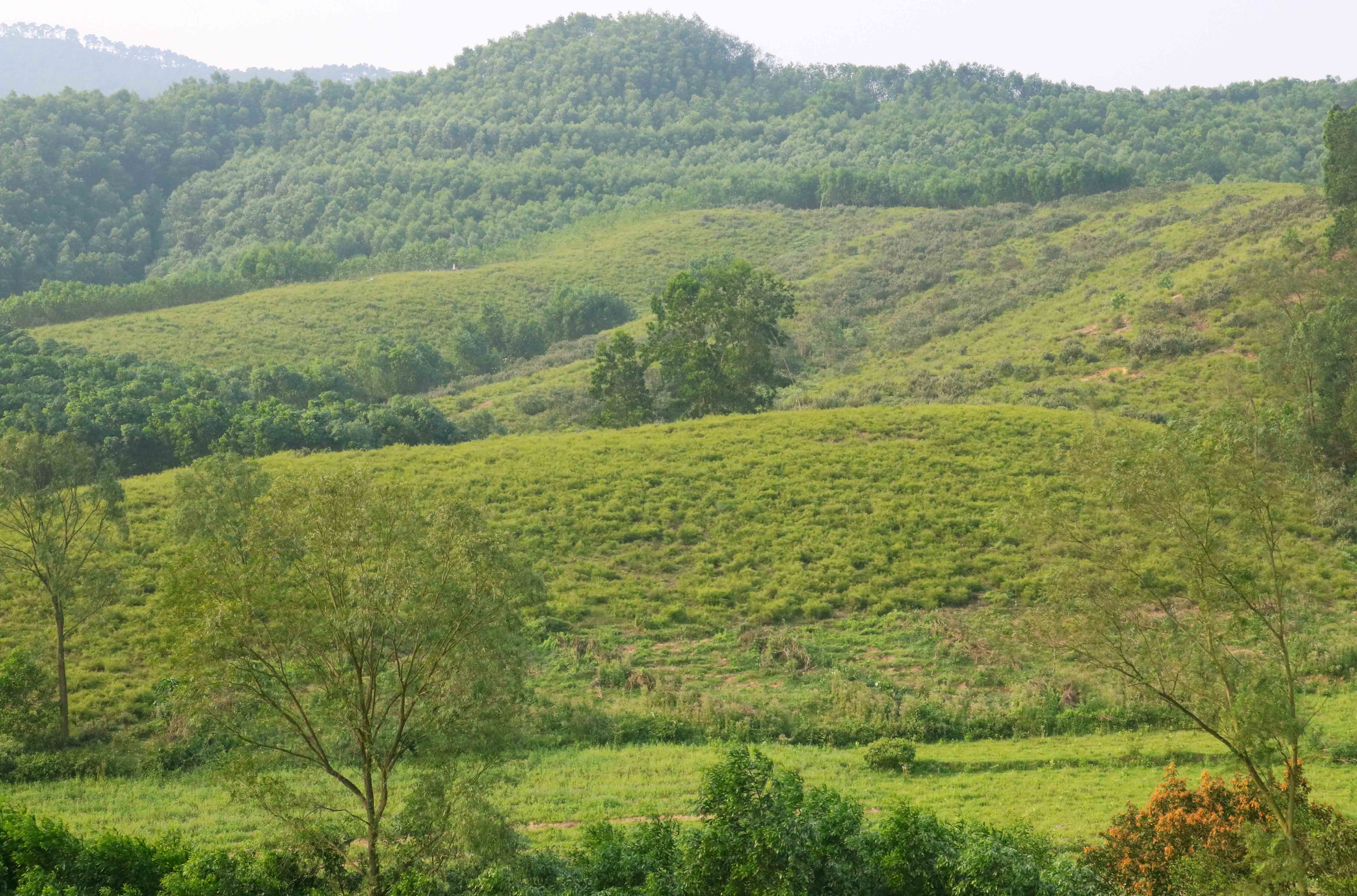 |
| The hilly areas of Thanh Chuong and Nam Dan districts have a considerable number of Rhinacanthus trees. Here, Rhinacanthus are cultivated in plots or on entire hillsides. In the photo: Hills of Rhinacanthus trees in Thanh Xuan commune (Thanh Chuong). Photo: Huy Thu |
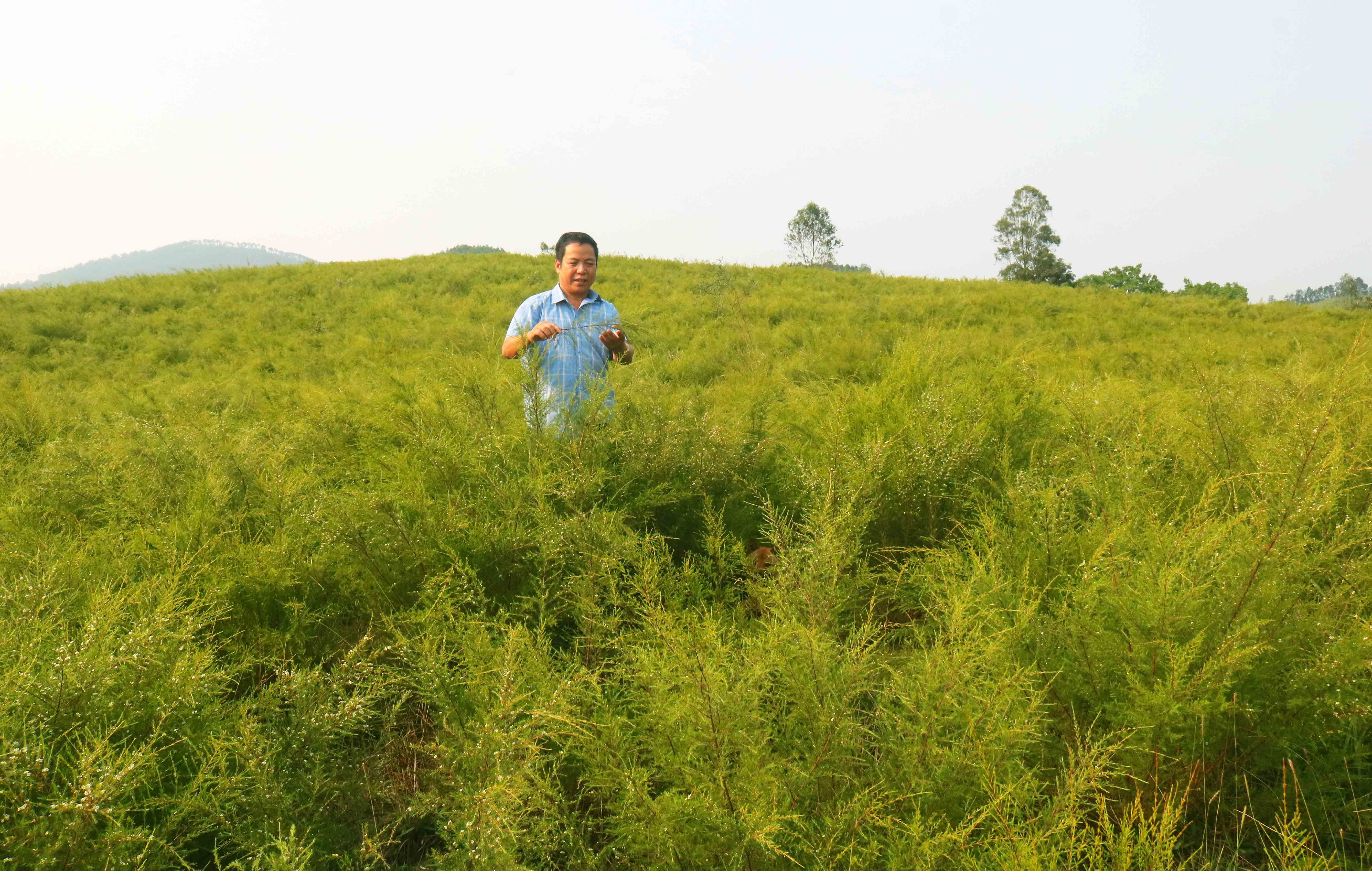 |
| Currently, the Rhinacanthus plant is mainly cultivated by local people in two ways: dedicated cultivation of Rhinacanthus and mixed cultivation. Mr. Nguyen Van Hanh, residing in Thanh Xuan commune (Thanh Chuong district), said that his family's Rhinacanthus hill, covering more than 1.5 hectares, is dedicated solely to cultivating Rhinacanthus, yielding an income of about 70 million VND per year. Photo: Huy Thu |
 |
| In mixed cultivation areas, people clear overgrown hillsides of shrubs and weeds, leaving only two main types of plants: *Trành rành* (a type of shrub) and *Rhododendron* (a type of myrtle). These lush hills of *Rhanh rành* and *Rhododendron* yield three products: *Trành rành* plants, *Rhododendron* fruit, and ornamental *Rhododendron* plants. Mr. Phan Thái Xuân in Thanh Xuân commune (Thanh Chương district) currently cultivates over 2 hectares of mixed *Rhododendron* and *Trành rành* hills, making him one of the households cultivating the most *Trành rành* in the commune. (Photo: Huy Thư) |
 |
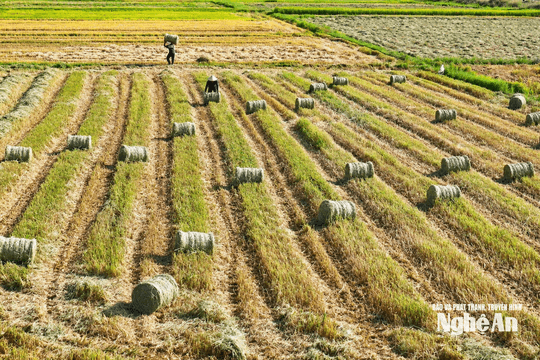
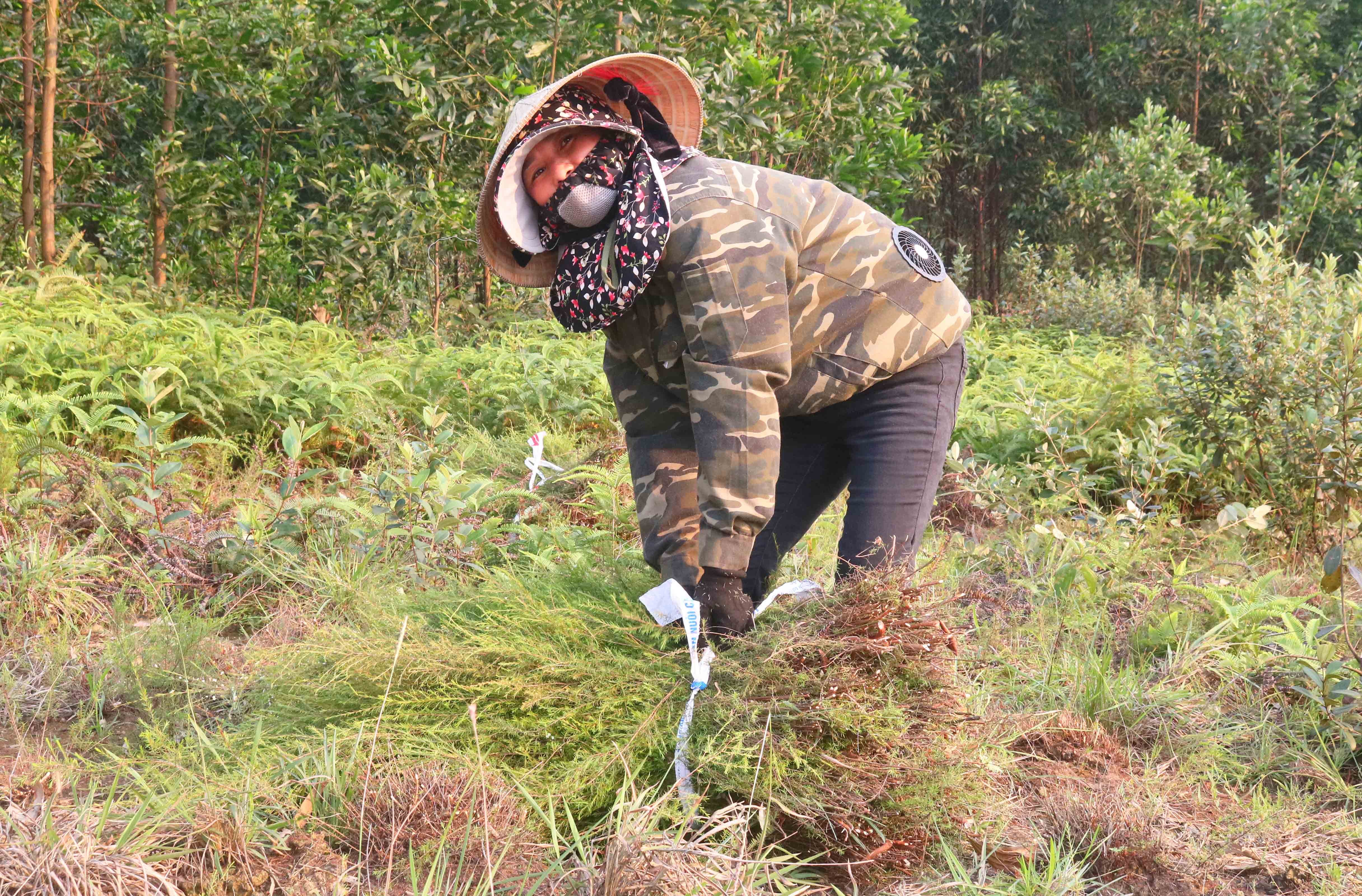
| Taking advantage of the hot weather, farmers in some communes of Thanh Chuong and Nam Dan districts are actively harvesting the "ranh rang" plant. Harvesting the "ranh rang" plant is quite arduous because it has to be cut on the hills and dried under the hot sun. Photo: Huy Thu |
 |
| Depending on the locality, people may harvest the plants at different times, but currently, they mainly cut the plants in April and May, when the plants are at their peak of leaf and flower production. Photo: Huy Thu |
 |
| There are two main harvesting methods: cutting down the entire tree (both large and small trees simultaneously) and pruning (selecting larger trees). Some households combine both methods, pruning at the beginning of the year and cutting down the entire tree at the end of the year. Each harvesting method has its own advantages. Ms. Nguyen Thi Lanh from Thuong Tan Loc commune (Nam Dan district) said that her family is currently hiring 3-4 workers daily to prune the trees on several hillsides. Photo: Huy Thu. |
 |
| Farmers who carefully cultivate their land, removing weeds and unwanted plants, and applying urea fertilizer 1-3 times will produce high-quality, multi-branched, leafy plants with high yields. In barren, uncultivated areas, the plants will be short and sparse. (Photo: Huy Thư) |
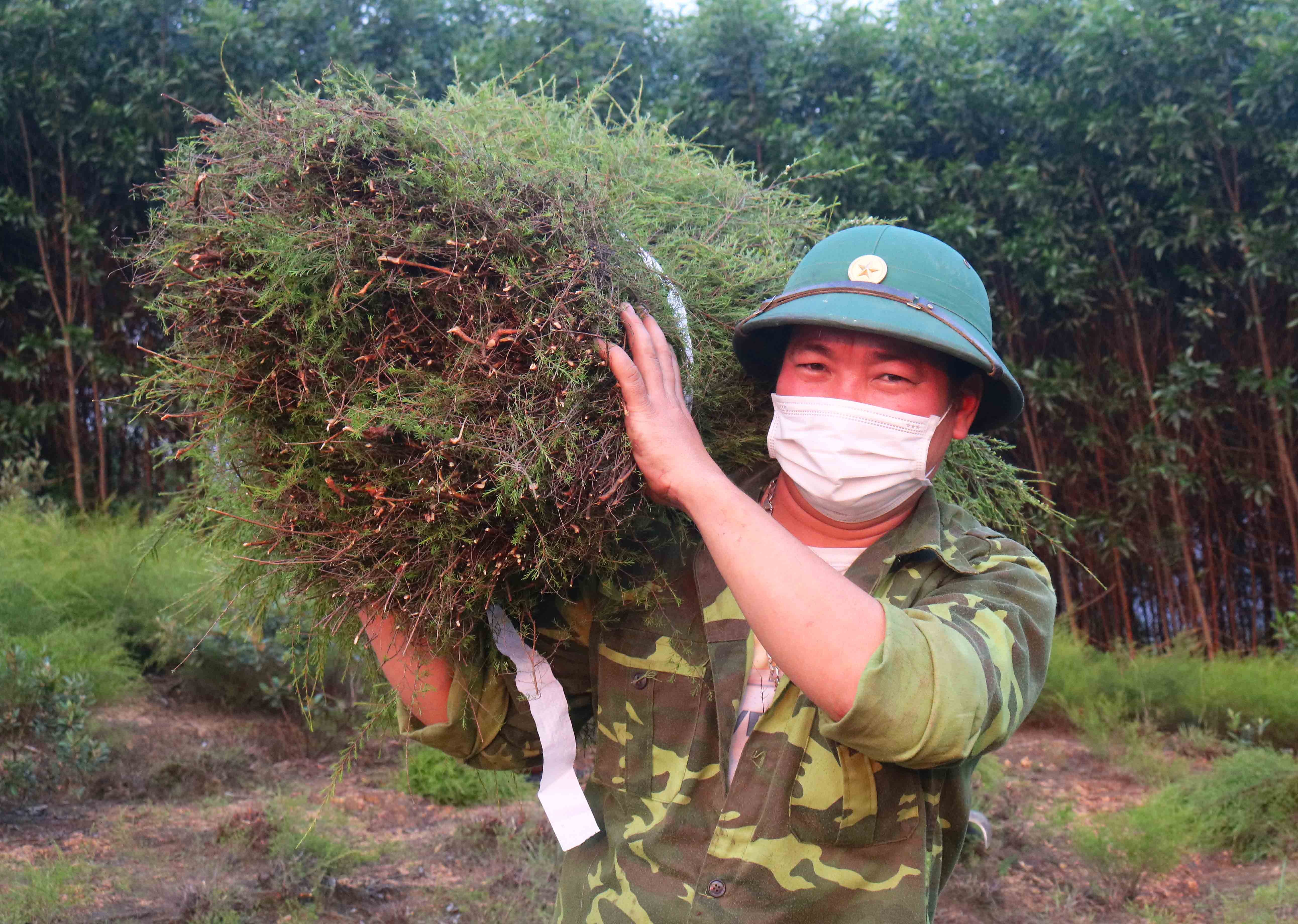 |
| Previously, the wild rambutan tree was not very valuable, sometimes only used for firewood. Since the rambutan tree "rose to prominence," this wild plant has been cultivated and traded actively for making brooms and extracting essential oils. The rambutan harvest season brings a considerable income to the people. Some households earn hundreds of millions of dong per year. Photo: Huy Thu |
 |
| During the harvest season, households can either cut the trees themselves or hire laborers. Currently, many households sell the estimated "crows" (approximately) harvested from the hills to traders, who then hire laborers to harvest them, and rent cars and tractors for transportation... Photo: Huy Thu |
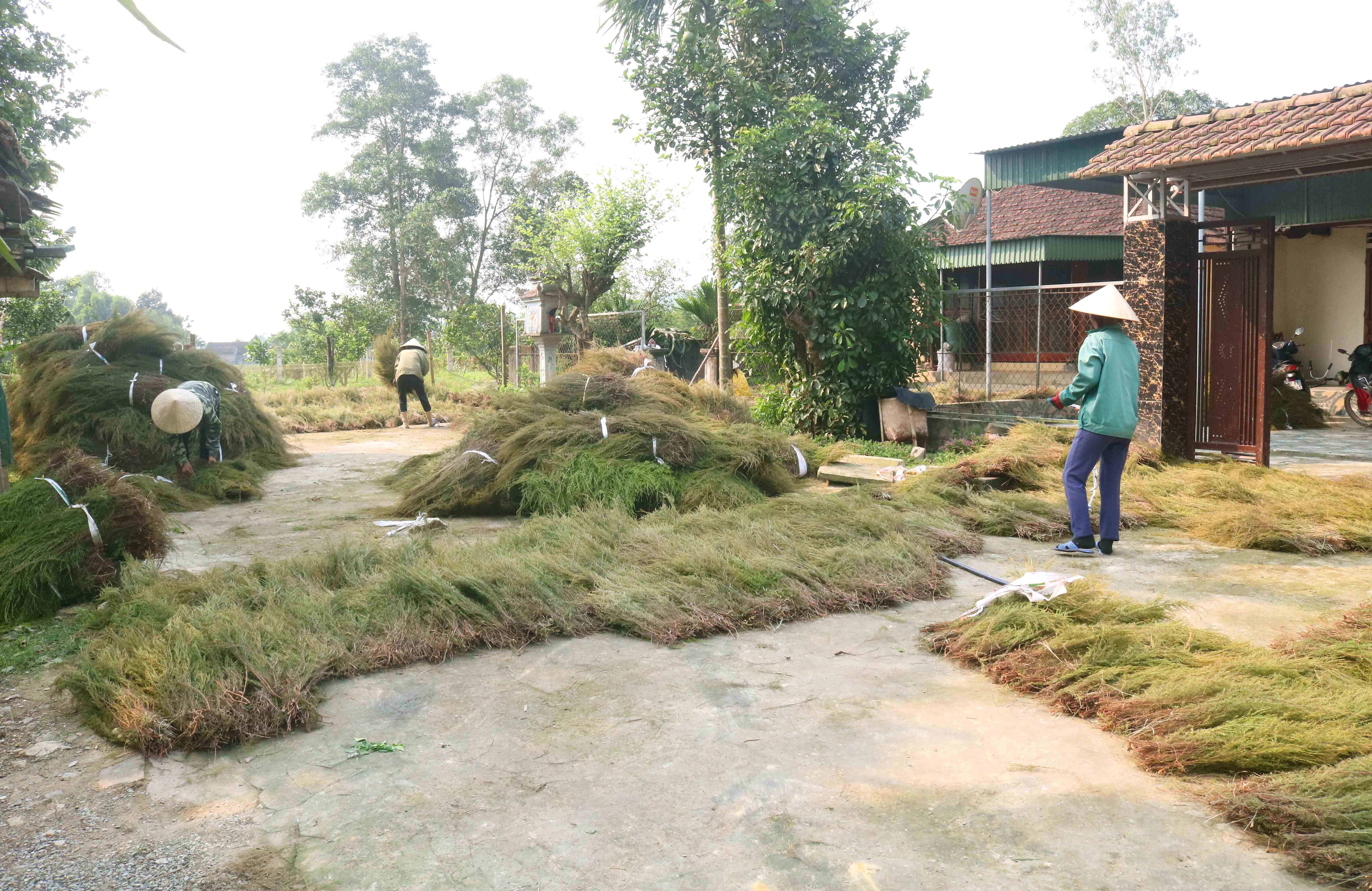 |
| The harvest season for the "rành rành" plant has created jobs for hundreds of laborers. They cut, dry, crush, bundle, and transport the plants onto trucks... Each day, a person can earn between 220,000 and 350,000 VND, depending on the locality. Photo: Huy Thư |
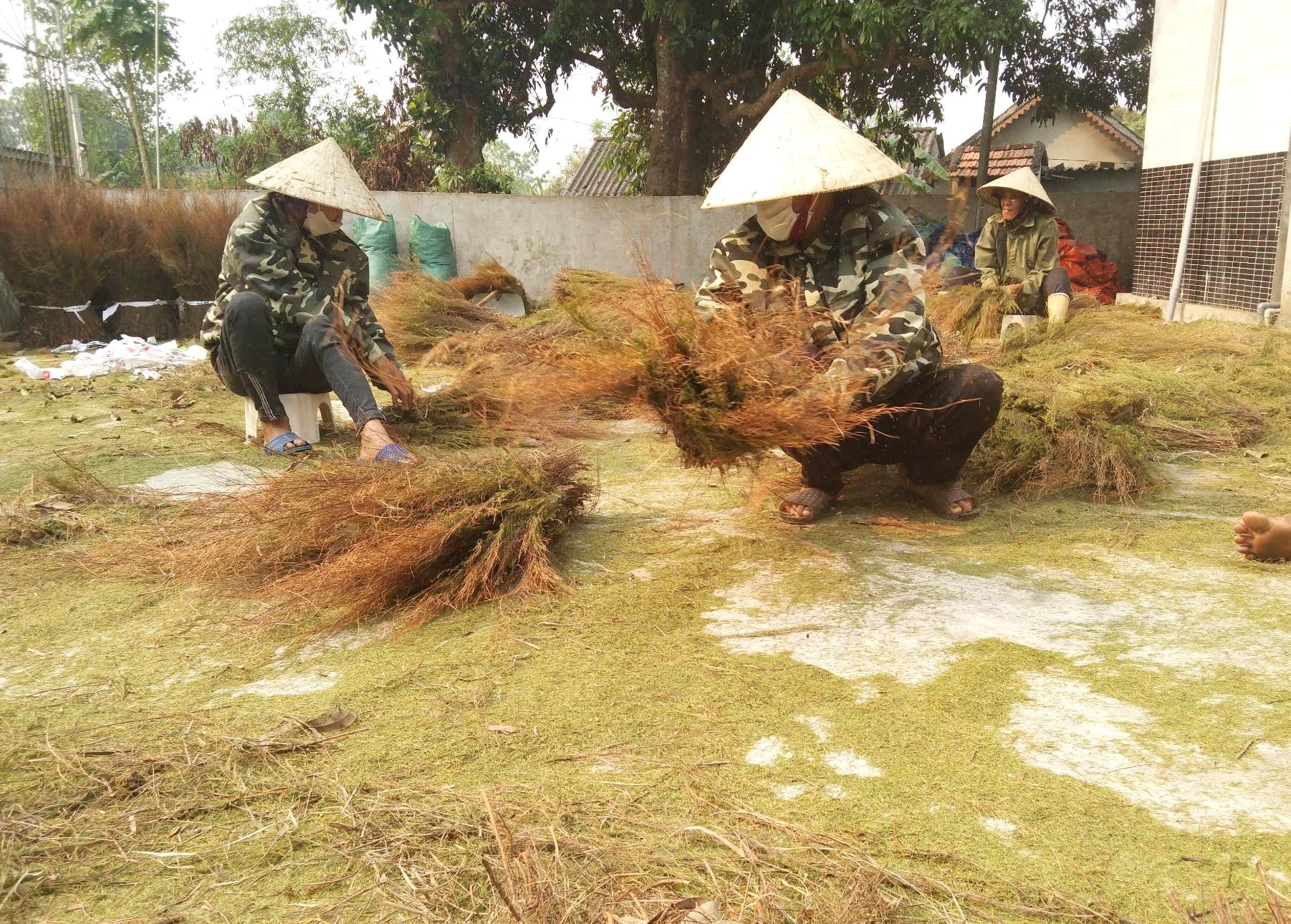 |
| According to local farmers, the price of the plant *Tràn rành* (a type of wild herb) has dropped compared to previous years. Currently, fresh *Tràn rành* is being sold wholesale at 6,000-7,000 VND/kg, dried *Tràn rành* (without crushed leaves) at 11,000-12,000 VND/kg, and dried *Tràn rành* (with crushed leaves) at 22,000 VND/kg. Dried *Tràn rành* leaves and flowers are sold by the sack at 120,000 VND/sack. As a naturally growing plant requiring no investment, despite the price drop, farmers cultivating *Tràn rành* remain optimistic. (Photo: Huy Thư) |
|
|
Harvesting the rành rành plant in Thanh Xuân commune. Video: Huy Thư |