
Chinsu and Nam Ngu fish sauce brands accused of containing chemicals; Masan retaliates.
TAccording to information sent to the press, the company affirms that it has made substantial investments in raw materials for the fish sauce industry. Currently, the company owns a fish sauce fermentation facility in Phu Quoc, with nearly 500 fermentation vats and a total capacity of over 10,000 tons of fish.
This facility supplies approximately 15% of the total raw fish sauce concentrate needed for Chinsu and Nam Ngư fish sauce products.
In addition, the company also collaborates with reputable fish sauce producers in Phu Quoc, Nha Trang, Phan Thiet, etc., to source its raw fish sauce ingredients. All ingredients must comply with strict quality standards.
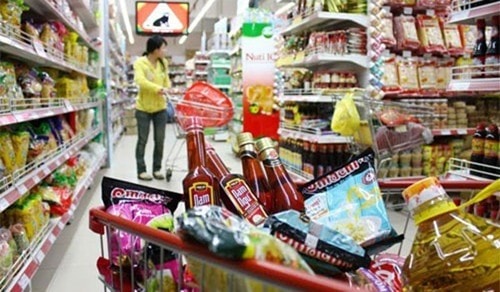 |
| Masan's Nam Ngu fish sauce is being accused of containing chemicals. Photo: NCĐT. |
The company claims that its fish sauce products are processed and bottled using a closed-loop technological process. The business has a strict quality control system and complete quality declaration documents at the Food Safety Department (Ministry of Health) or the local Department of Health in accordance with regulations. The product ingredients are clearly listed on the label in accordance with regulations on product labeling.
The company also reiterated the message presented at a previous industry conference, stating that "high protein content doesn't necessarily mean better taste. High protein content isn't always good. High salt content doesn't necessarily mean cleanliness." This point also caused much outrage among traditional fish sauce producers, leading to a heated exchange between representatives of the two product lines.
Masan raises concerns about the alarming state of food safety and hygiene in Vietnam, attributing it to uncontrolled raw material sources. Manufacturers are misusing prohibited chemicals and failing to comply with food safety and hygiene regulations.
Businesses argue that failure to comply with national technical standards regarding the limits of heavy metal contamination in food is extremely serious.
"This poses a direct risk to the health of millions of consumers. Furthermore, it negatively impacts the export of Vietnamese agricultural products and processed foods to the world," a Masan representative stated.
The brand also stated that it has complied with food safety regulations as stipulated by the Ministry of Health since 2011. Specifically, the company has published product quality information, clearly stating the quality standards and heavy metal content that the company adheres to for its fish sauce product (a type of clear dipping sauce).
The unit stated that it has sent a letter of recommendation to state management agencies requesting a comprehensive inspection and supervision of the fish sauce industry, focusing on compliance with regulations on limits of heavy metal contamination in food, especially arsenic.
Previously, the press reported on the situation where industrially produced fish sauce, containing various chemicals, was dominating the market.
Accordingly, bottles of Nam Ngư brand fish sauce sold in traditional markets and Coop.Mart supermarkets in Ho Chi Minh City, which are trusted by many people, contain up to 17 chemicals in addition to water, salt, sugar, and anchovy extract.
The newspaper quoted Dr. Tran Van Ky, head of professional affairs at the Southern office of the Vietnam Association of Food Safety and Technology, as saying: "The fact that a bottle of fish sauce contains as many as 17 types of additives can be likened to the act of mixing water with chemicals to sell for money, so how can it be called fish sauce?"
On October 10, 2016, Prime Minister Nguyen Xuan Phuc directed the Ministry of Health to take the lead, in coordination with the Ministry of Industry and Trade and other relevant agencies, to urgently investigate, clarify, and report to the Prime Minister before October 22.
According to Zing


