Buddhism in Nghe An - Shining Brightly with the Homeland - Part 1
Reporters•December 20, 2024 12:42
With the spirit of "protecting the nation and ensuring the people's well-being," and with Buddhism accompanying the nation throughout history, Nghe An Buddhism has made many contributions to the Vietnam Buddhist Sangha, to the homeland, and to the country. The tradition of "serving the religion and loving the country, dedicating oneself to practicing the religion" has been and continues to be upheld by monks, nuns, and Buddhists, uniting with other faiths and religions, spreading beautiful and humane values for the peace and happiness of the people and the prosperity of Nghe An province...
Emagazine_Baonghean.vn (3)
Lesson 1: Enlightenment in life
ThoseOver the past year, Buddhism in Nghe An has made significant progress.strong in many aspectsn. Monks, nuns, and abbots of templesactivelyTo carry out the work of propagating the true Dharma, to strictly abide by the policies and laws of the State, and the Charter of the Buddhist Church.Buddhists actively participate in Buddhist activities."benefiting both religion and society"”through concrete actions and deeds.
The power supply flows continuously.
Like many people across Vietnam, for many in Nghe An province, visiting temples has become a long-standing cultural tradition. The temple roofs, bell towers, and the sounds of chanting and prayers are familiar and indispensable elements in the spiritual lives of the people.
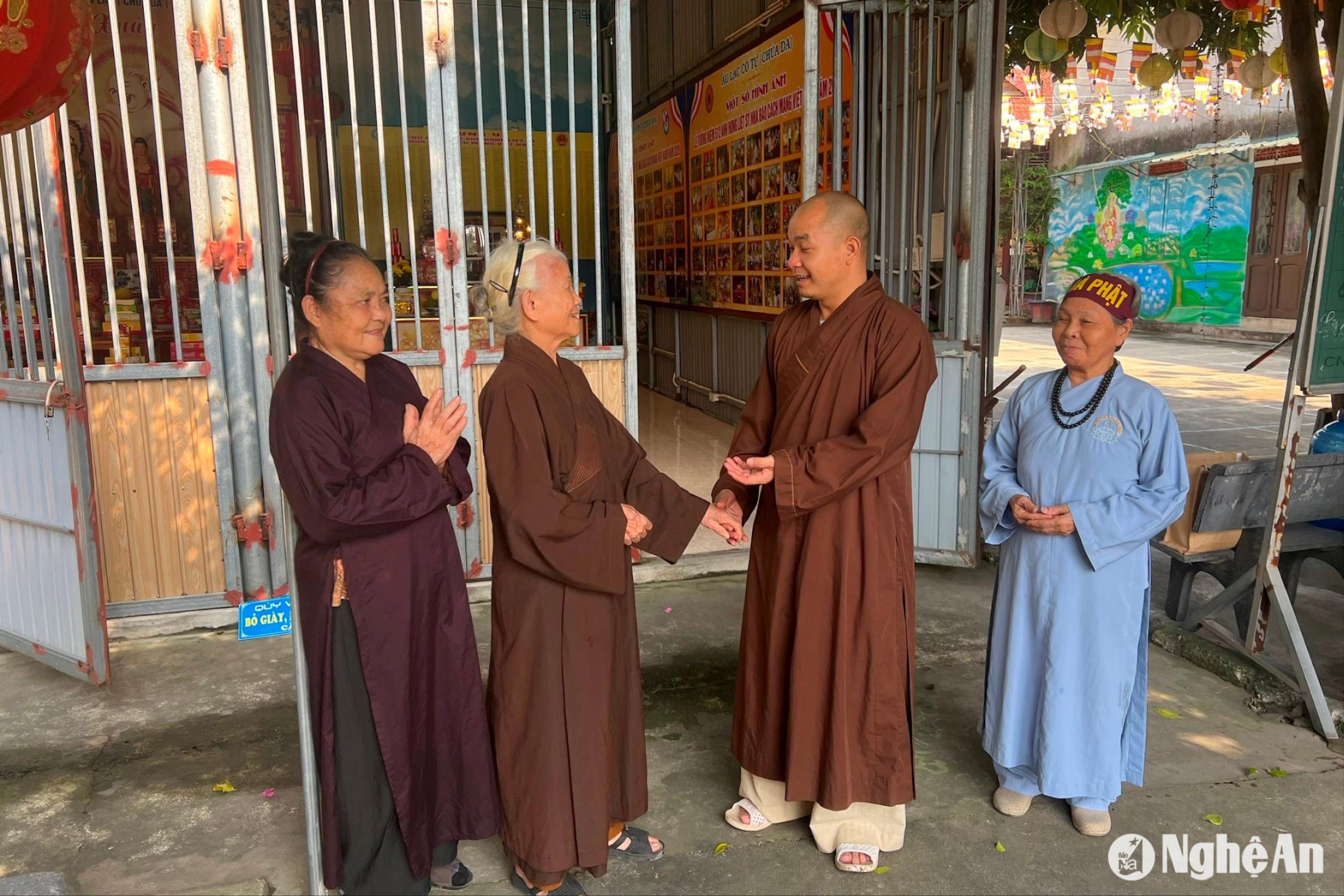
Ms. Nguyen Thi Huong, 80 years old (second from the left), residing in Nghi Phong commune, and other Buddhist followers converse with Venerable Thich Dong Tue - Abbot of Da Pagoda, Hung Loc commune, Vinh City. Photo: KL
Some people go to temples to immerse themselves in a spiritual place, seeking peace of mind in a tranquil space, dispelling the hardships and worries of daily life; others go to admire the scenery; and still others voluntarily take refuge in the Three Jewels, wholeheartedly devoted to Buddhism, participating in prayers for blessings and peace for their families, hometowns, and country.
Referring to how she became a Buddhist, Mrs. Nguyen Thi Huong (80 years old), a retired official residing in Hamlet 4, Nghi Phong Commune, Vinh City, shared: "Since childhood, I occasionally accompanied my grandparents and parents to temples. Each time I went to the temple, it gave me a feeling of peace and comfort. Now that I am old and my children have grown up, I often join the Buddhist group to practice at Da Pagoda (also known as Au Lac Pagoda) every morning. The temple atmosphere, with its gentle bell sounds and fragrant incense smoke, always brings people a feeling of peace, tranquility, and serenity, allowing them to connect with their roots and with the truth, goodness, and beauty in life."
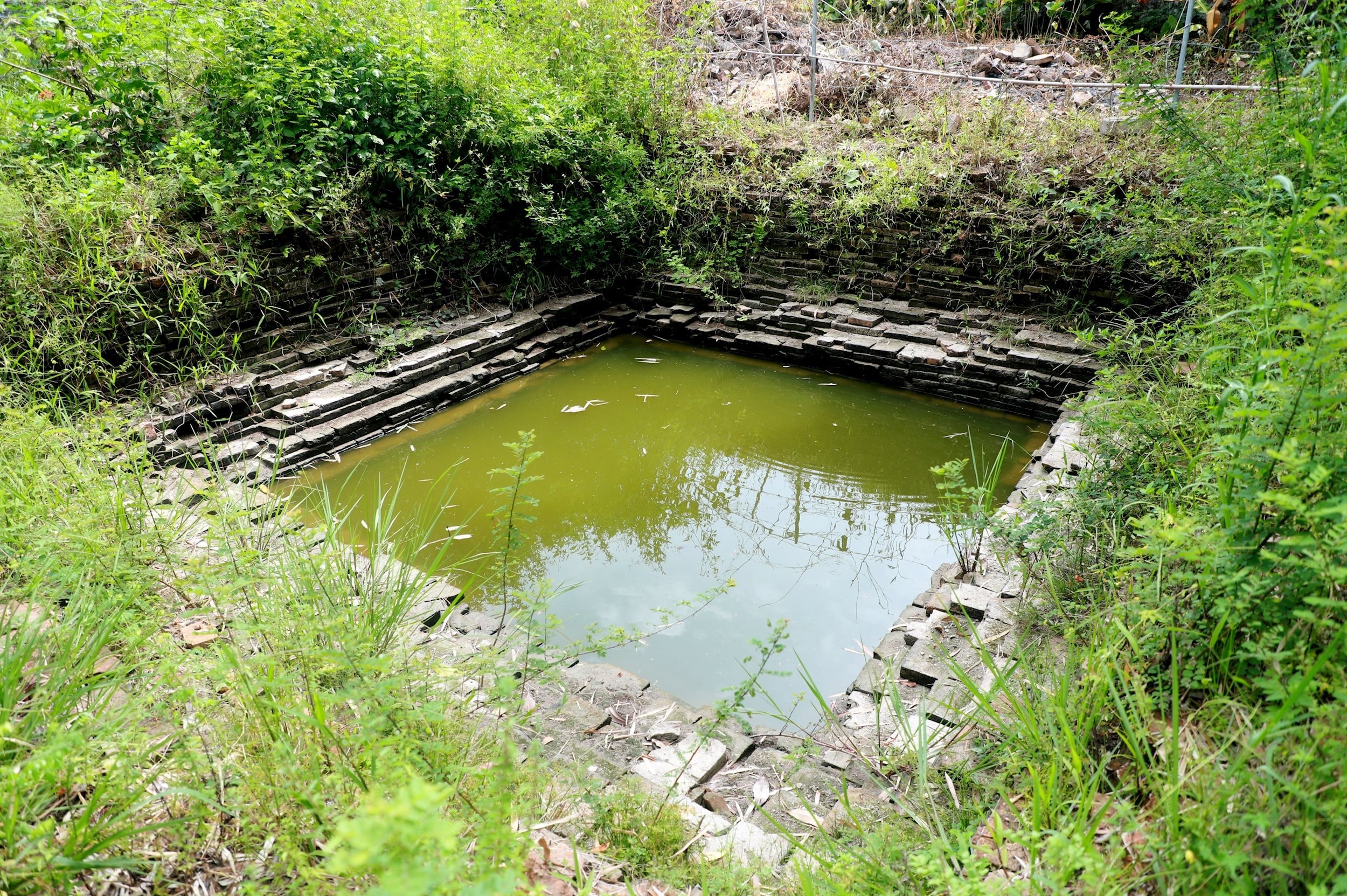
Remnants of the foundation of the Nhan Tower in Hong Long commune, Nam Dan district. Photo courtesy of Thanh Duy.
"
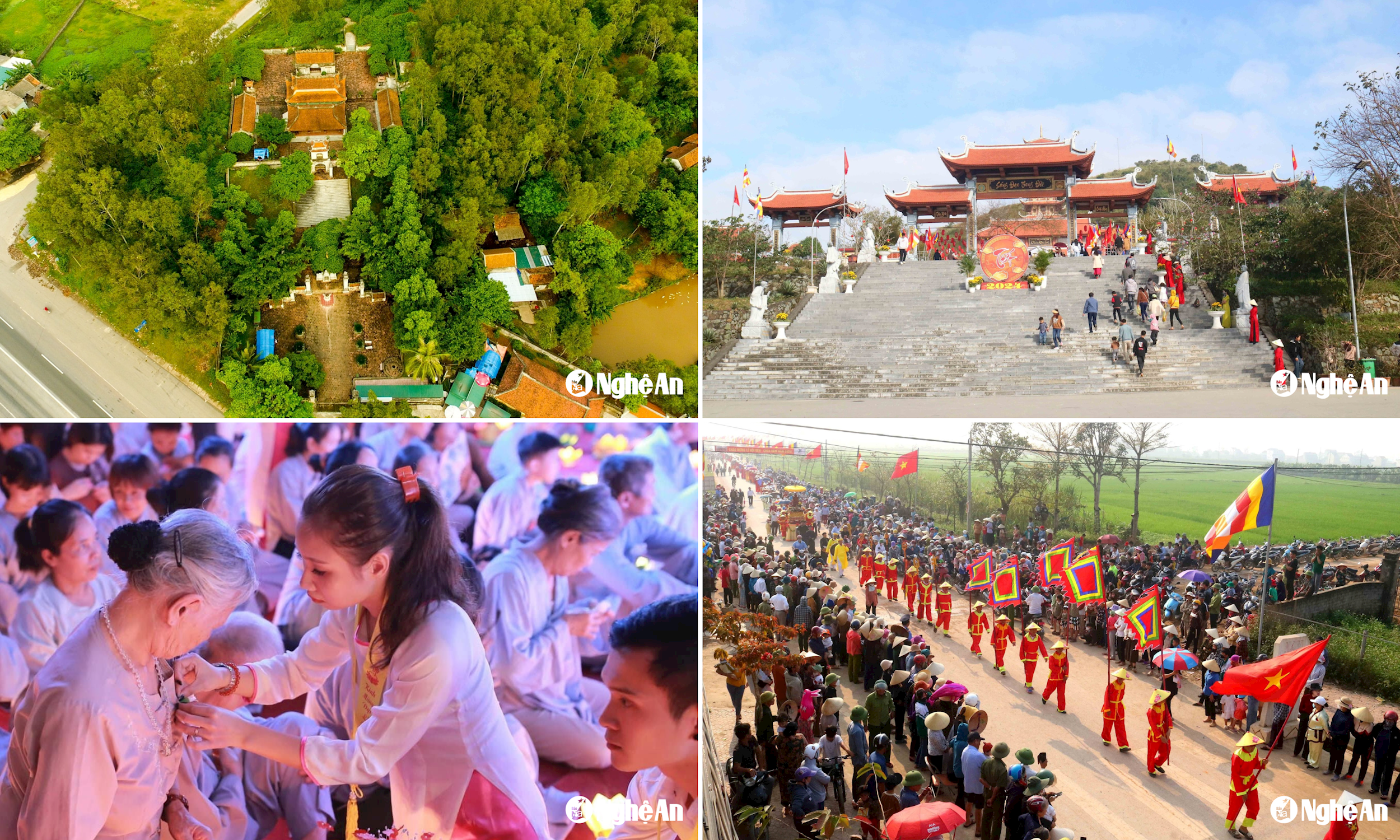
Buddhism in Nghe An has a long historical tradition. The most significant evidence of the development of Buddhism in Nghe An during the Northern domination period is Nhan Son Pagoda and Nhan Tower (built in 623, now located in Hong Long commune, Nam Dan district) and the worship of Buddha relics there.
Assoc. Prof. Dr. Nguyen Quang Hong - Department of History, School of Education (Vinh University)
In particular, during the Ly Dynasty, in Bach Ngoc Prefecture (now Do Luong District), Uy Minh Vuong Ly Nhat Quang commissioned the construction of many large-scale temples. In 1299, Emperor Emeritus Tran Nhan Tong went to Yen Tu Mountain to become a Buddhist monk, founding and leading the Truc Lam Yen Tu Zen sect, an independent Vietnamese Buddhist Zen sect established by the Vietnamese Emperor with the philosophies of "Harmony and Unity with the World," "Living in the World and Finding Joy in the Dharma," and the spirit of engagement with the world, "Protecting the Nation and Bringing Peace to the People," which became the guiding principles of Vietnamese Buddhism. Tinh Quoc Vuong Tran Quoc Khang also commissioned the construction of temples and palaces in the Dien Yen Quynh region.
From then on, the land of Nghe An became a Buddhist land, and Dong Thanh became the center of Buddhism for the entire Hoan Chau region of Nghe An.
Buddhism in Nghe An has a long history and has always been intertwined with the development of the people. Photo: Reporters and Contributors Group.
Throughout various eras and stages of development, regardless of the nation's periods of prosperity and decline, Vietnamese Buddhism in general, and Nghe An Buddhism in particular, has always demonstrated a spirit of companionship with the nation; becoming a spiritual and mental support for the people.
During the struggle for national independence and reunification, many temples became places to shelter cadres and gather the masses; many places of worship were dismantled to concentrate material resources to support the nationwide resistance movement; many monks, nuns, and Buddhists directly participated in revolutionary activities; and donated land, fields, and ancestral property of the temples to concentrate all resources for the common cause of the country.
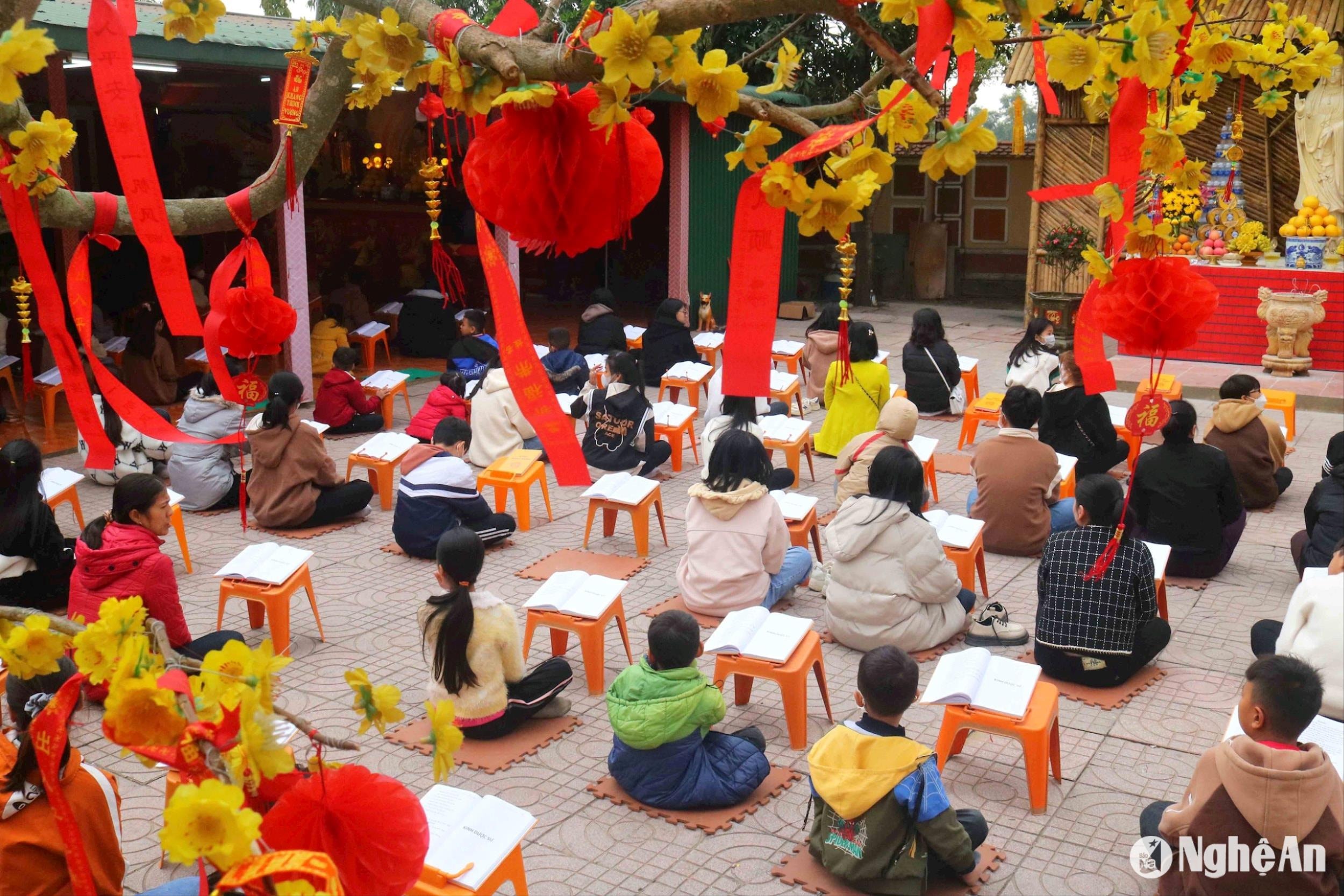
The Spring Calligraphy Ceremony at Phuc Lac Pagoda, Nghi Thach Commune, Nghi Loc District. Photo: Huy Thu
In the introduction to the history of Buddhism in Nghe An, Venerable Thich Thanh Nhieu - Standing Vice Chairman of the Executive Council of the Vietnam Buddhist Sangha, Head of the Executive Board of the Vietnam Buddhist Sangha in Nghe An province, stated: Nghe An is a land of spiritual significance and outstanding people, and it is also the land that received Buddhism earliest in the flow of Vietnamese Buddhist history and culture.
Throughout its development, with a spirit of compassion, wisdom, harmony, goodness, and engagement with the world, Buddhism in Nghe An has always accompanied and actively contributed to the historical flow of Vietnamese Buddhism and the Vietnamese nation.
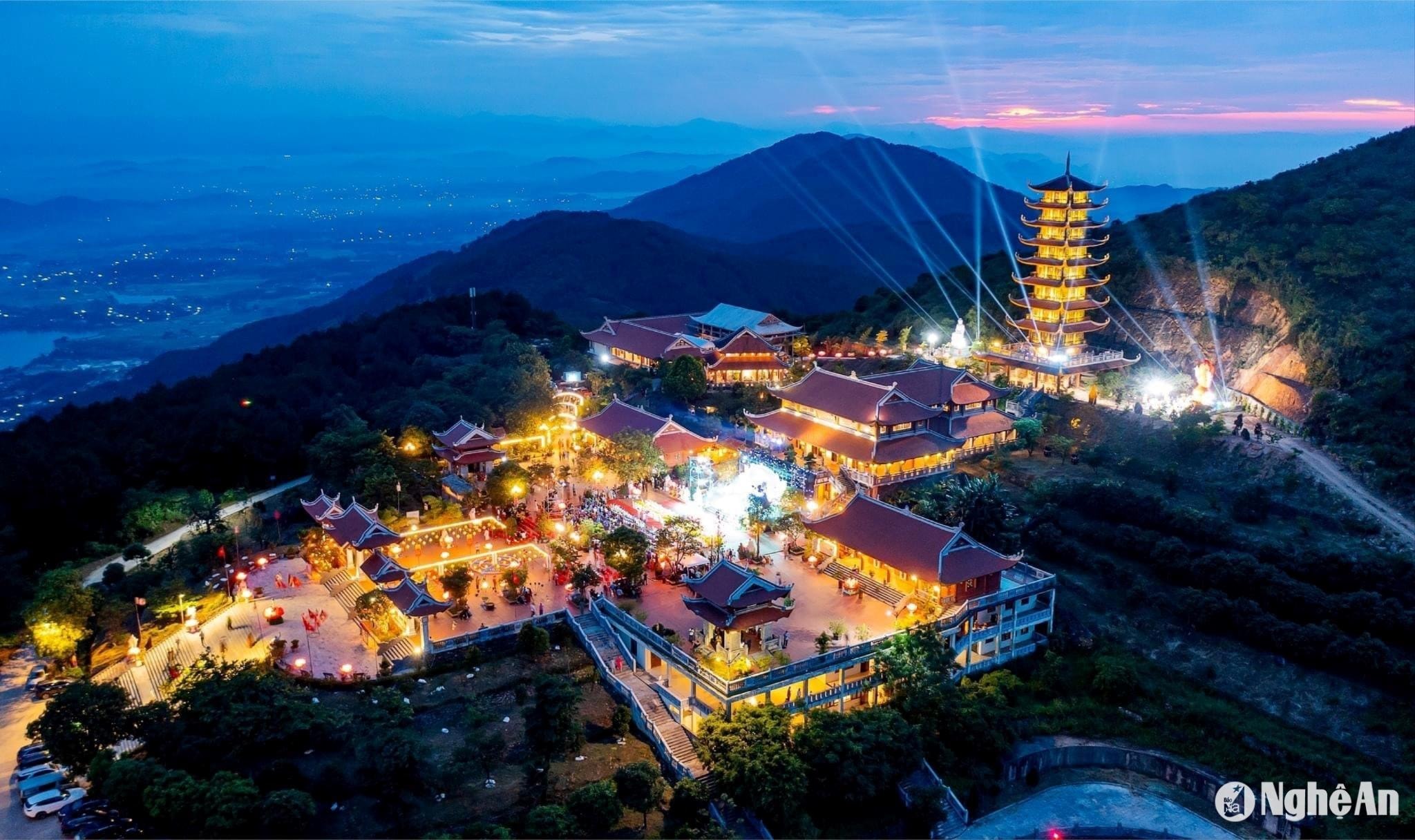
Dai Tue Pagoda in Nam Anh commune (Nam Dan district) prepares for the 2024 Buddha's Birthday celebration. Photo: Dai Tue Pagoda
This is the profound origin that has led countless generations of residents, from the coastal plains of Quynh Luu, Dien Chau, Nghi Loc, Vinh City, Cua Lo town, Hoang Mai town to the western mountainous districts, to respectfully apply the spirit of compassion, selflessness, altruism, and the law of karma of Buddhism to form a culture of morality and conduct in life for Buddhist followers, promoting the tradition of patriotism, love for one's people, and unity of hearts to build and develop Nghe An province as well as Vietnam into an increasingly prosperous, beautiful, and civilized country.
Harmony and unity
Responding to the affection and enthusiasm for Buddhism of a large number of people, and following the policy of the Central Committee of the Vietnam Buddhist Association on the restoration and development of Buddhism in Nghe An, along with the attention of the Party committees and authorities at all levels, the Vietnam Buddhist Association of Nghe An province was established in 2011.
Although it was established later than other organizations nationwide, under the management and direction of the Provincial Buddhist Association's Executive Board, Buddhism in Nghe An has made steady, strong, and comprehensive progress.
Dai Tue Pagoda in Nam Anh commune (Nam Dan district) prepares for the 2024 Buddha's Birthday celebration. Photo: Dai Tue Pagoda
Throughout the congresses (2011-2017), (2017-2022), and (2022-2027), with a spirit of harmony and solidarity, Buddhism in Nghe An has achieved significant milestones, and the management apparatus of the church at all levels and monastic institutions has been strengthened.
Currently, the province has approximately 150,000 Buddhist followers; 75 temples and 1 Buddhist prayer hall; of which 49 temples have resident monks in 14 districts, towns and cities (Dien Chau, Vinh City, Nghi Loc, Nam Dan, Yen Thanh, Quynh Luu, Thanh Chuong, Hung Nguyen, Cua Lo, Do Luong, Hoang Mai, Quy Hop, Anh Son, Tan Ky); and 109 monks, nuns, and religious practitioners.
Over the past period, the Executive Board of the Nghe An Provincial Buddhist Association has focused on mobilizing social resources to implement many projects for the restoration, renovation, and new construction of Buddhist-origin religious sites. Typical examples include the completion of Dai Tue Pagoda – a magnificent structure on the sacred Dai Hue mountain, a national cultural and spiritual landmark; the restoration and renovation of the Gam temple complex (Chi Linh Pagoda), with its ancient architecture in the rice-growing countryside of Yen Thanh; the renovation and construction of Co Am Pagoda, a spacious and imposing structure to meet the needs of Buddhist practitioners in the Dien Chau delta; the planning and construction of Lam Son Pagoda in Quynh Yen commune (Quynh Luu district) and Ha Pagoda in Hung Tien commune (Nam Dan district) using wood, reflecting traditional cultural styles; and the planning for the expansion and restoration of the National Monument Can Linh Pagoda (also known as the Nun's Pagoda) along the Con Moc river in Cua Nam ward (Vinh City). Phuc Lac Pagoda in Nghi Thach commune (Nghi Loc district) has been revived on a white sand beach, An Thai Pagoda in Quynh Long commune (Quynh Luu district), and the historical site of Song Ngu Pagoda (Ngu Island) have been restored and renovated...
Song Ngu Pagoda has become a highlight for tourism on Song Ngu Island. Photo: Tien Dong
The Nghe An Buddhist Association also regularly coordinates with local authorities and organizations to hold prayer ceremonies for peace and gratitude at the Vietnam-Laos International Cemetery, Thai Lao Cemetery, Truong Bon National Historical Site, Hoa Tien Cave, Vach Bac Canal, and martyrs' cemeteries in various localities…
In coordination with the Provincial Fatherland Front, the Provincial Religious Affairs Committee, the Provincial National Defense and Security Education Council, and the Provincial Traffic Safety Committee, Buddhists are organized to hold specialized classes and conferences to disseminate Party policies and State laws; actively respond to and encourage Buddhists to participate in patriotic emulation movements launched by all levels of government, the Fatherland Front, and mass organizations, such as poverty alleviation, building new rural areas and cultural residential areas, combating social evils, participating in environmental protection, responding to climate change, and preventing and controlling epidemics; and propagating and fighting to protect the sacred sovereignty of the Fatherland's seas and islands...
Venerable Thich Tho Lac – Head of the Central Culture Committee, Deputy Head of the Standing Committee of the Vietnam Buddhist Association of Nghe An province.
According to Venerable Thich Tho Lac - Standing Member of the Executive Council, Head of the Central Culture Committee of the Vietnam Buddhist Association, and Deputy Head of the Standing Committee of the Vietnam Buddhist Association in Nghe An province: The Executive Committee always encourages monks, nuns, and Buddhists to promote the compassionate spirit of Buddhism and the tradition of mutual support and love of the nation, and to excellently fulfill social welfare and community service work.
Since the first Provincial Buddhist Congress (2011), religious establishments, monks, nuns, and Buddhist followers have generously contributed to flood and natural disaster relief efforts, donated to funds for the poor, scholarship funds, funds for orphaned and disabled children, and victims of Agent Orange, built solidarity houses, and supported many other funds in localities inside and outside the province… with a total estimated expenditure of nearly 216 billion VND. This includes the construction of nearly 200 solidarity houses, 3 bridges, 5 schools, 1,278 wells, over 700,000 scholarships; over 1.3 million charitable gifts, over 2.8 million bowls of porridge; nearly 1.1 million meals; and the donation of nearly 1,000 units of blood…
Buddhist monks and followers in Nghe An province join hands to support people affected by floods during Typhoon No. 3. Photo: CSCC
In 2024, when people in the northern provinces suffered heavy losses due to the impact of Typhoon Zagi, the Executive Board of the Vietnam Buddhist Association of Nghe An province organized a fundraising campaign, calling on monks, nuns, and Buddhist followers to donate approximately 5 billion VND.
Many temples organized trips to directly distribute gifts to people affected by storms and floods, contributing to the nationwide effort to support and share with people facing natural disasters and calamities, spreading the compassionate spirit of Buddhism in relieving suffering and helping those in need.
Buddhist dignitaries and officials in the province also actively participated in the elections, and dozens were elected by the people of the province to serve in the People's Council and the Vietnam Fatherland Front Committee at all levels.
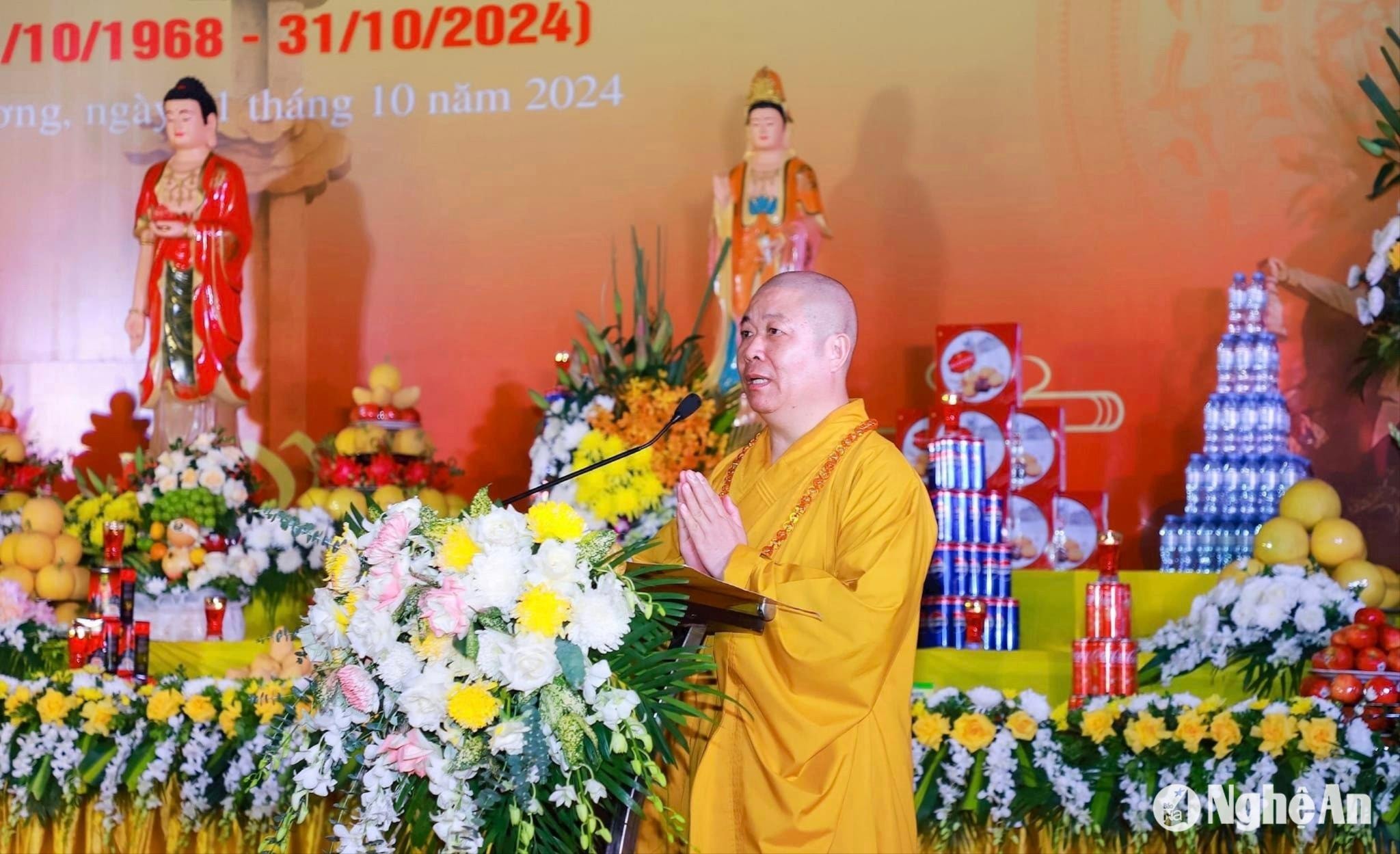
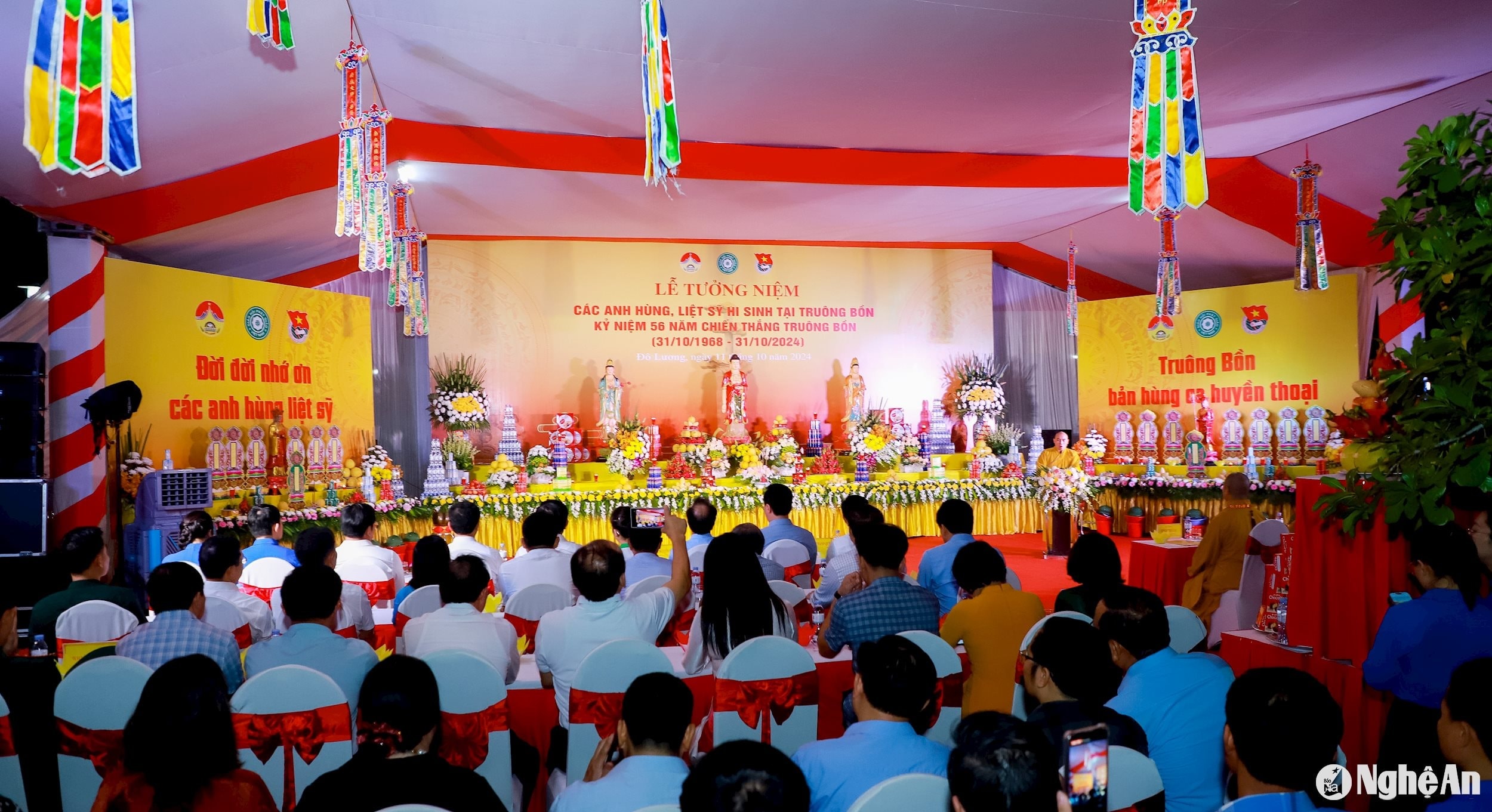
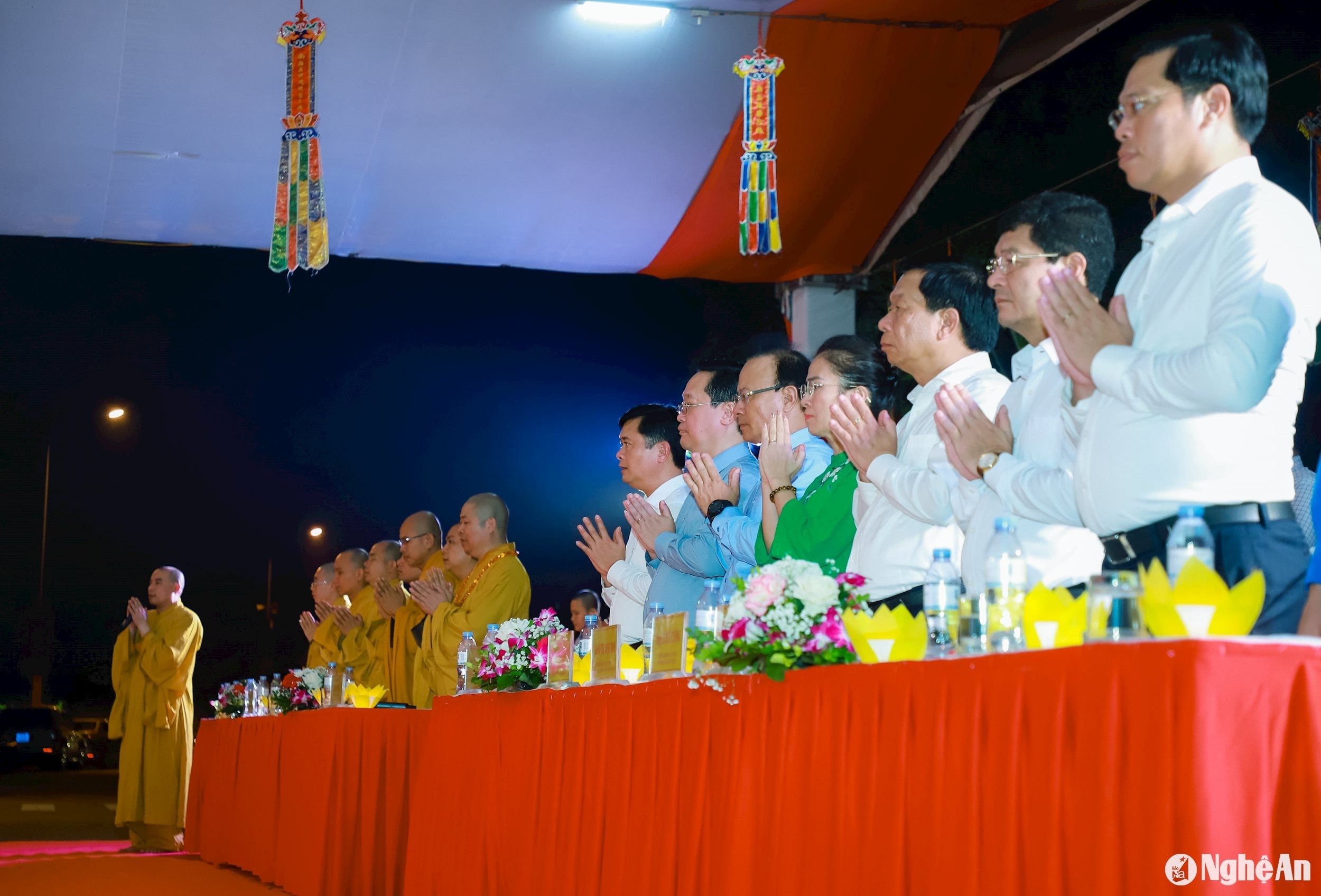
Scenes from the memorial ceremony for the heroes and martyrs who sacrificed their lives at Truông Bồn, Mỹ Sơn commune, Đô Lương district. (Photo courtesy of Thành Duy)Provincial leaders and delegates respectfully commemorated the heroes and martyrs who sacrificed their lives at Truông Bồn, Mỹ Sơn commune, Đô Lương district. (Photo: Thành Duy)
In its activities, the Provincial Buddhist Association has guided monks, nuns, and Buddhist followers to "separate the impure from the pure," promote traditional values, minimize cumbersome rituals unsuitable for modern society, build "cultural temples and landscapes," and contribute to promoting the moral and cultural values and resources of Buddhism, as affirmed by the 13th National Congress of the Party: "Promoting the good cultural and moral values and resources of religions for the cause of national development."
In general, Buddhist activities in localities throughout the province are fundamentally purely religious, complying with local laws and regulations.
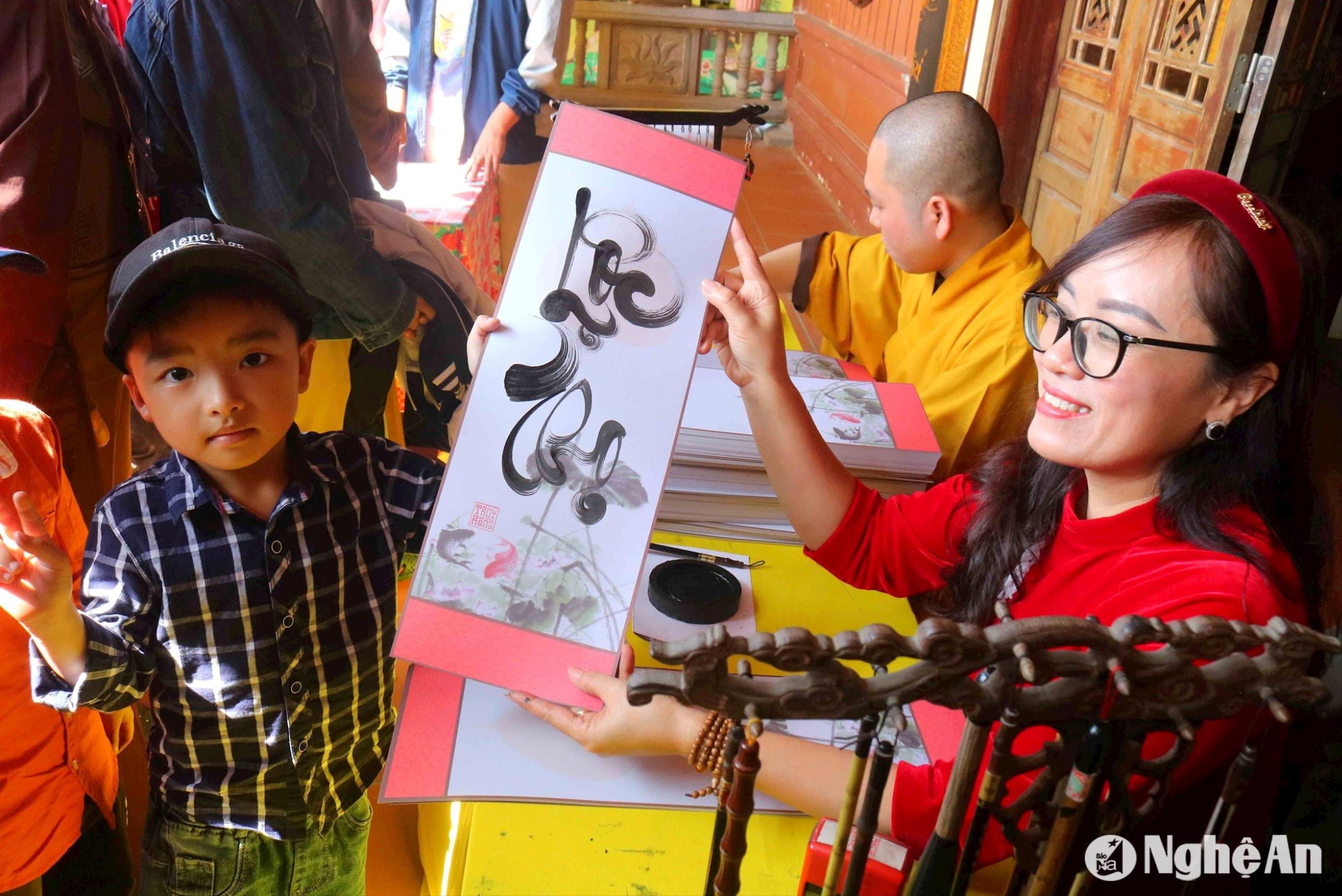
Opening ceremony and gifting of calligraphy at Dai Tue Pagoda, Nam Anh commune, Nam Dan district. Photo courtesy of Huy Thu.
Buddhist followers actively participate in activities expressing gratitude and repaying kindness, movements to build new rural areas and their homeland, charitable and humanitarian work, and fulfilling their civic duties.
Many monks and nuns play an important role in mobilizing the masses to develop the economy, culture, and society in their communities, contributing to social welfare and upholding the motto: "Buddhism - Nation - Socialism" set forth by the Buddhist Church, which has been recognized by local authorities at all levels. The relationship between the authorities and Buddhist organizations, dignitaries, and officials is becoming increasingly open, trusting, and close…
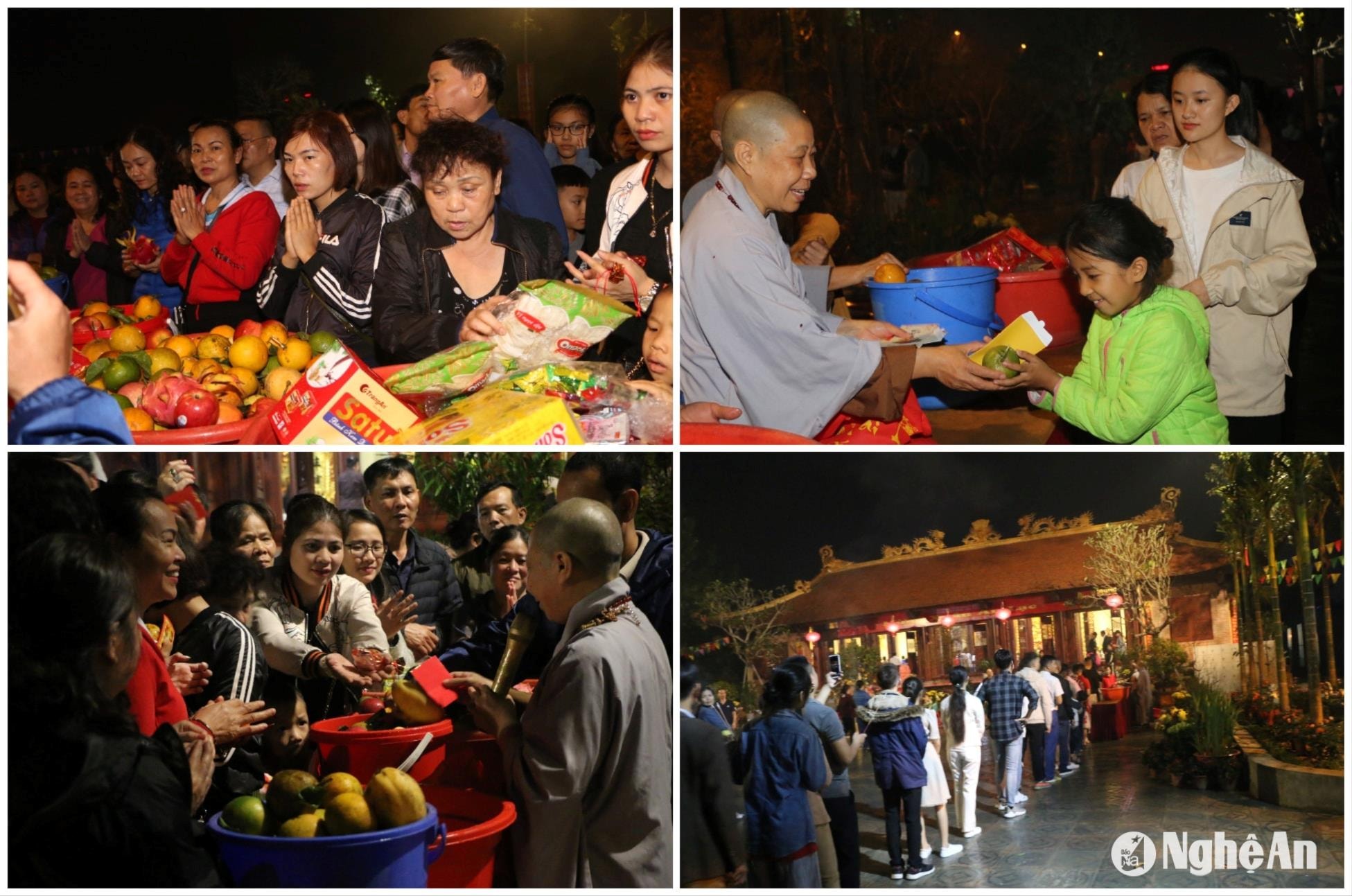
Nun Thich Nu Dieu Nhan - Abbess of Can Linh Pagoda (Vinh City) distributes lucky gifts as a New Year's blessing. (Photo: KL)
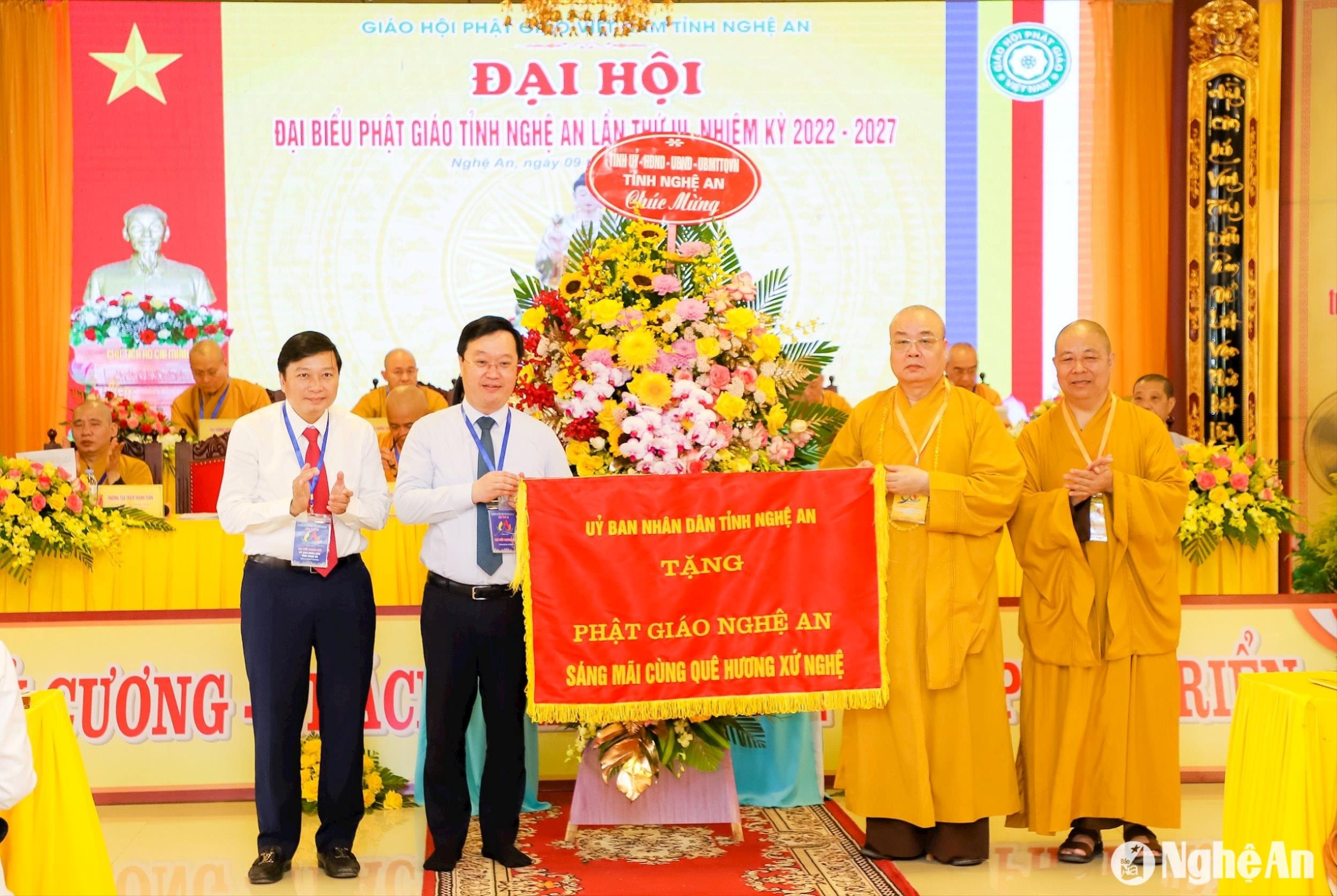
Acknowledging the achievements of Buddhism in Nghe An,Prime Ministerawarded Certificates of Merit to1 group, 5 individuals belonging to the CommitteeExecutive Committee of the Vietnam Buddhist Association of Nghe An Province15 individuals and 6 groups received Certificates of Commendation from the Chairman of the Provincial People's Committee; 4 groups and 7 individuals received Certificates of Commendation from the Minister of Home Affairs..BoardadministrationVietnam Buddhist Association of Nghe An ProvinceAnHe was awarded a banner by the Standing Committee of the Provincial Party Committee with the inscription "Unity, harmony, devotion to religion, patriotism, and solidarity with the nation," and also received an award from the Provincial People's Committee.picturebanner "Buddhism in Nghe An"But"Forever shining brightly with our homeland, Nghe An province."
Your comment has been submitted and will be displayed after being reviewed by the editorial team. The editorial board reserves the right to edit comments to comply with the newspaper's content guidelines.

.jpg)