
Figs can treat stomach ulcers.
Figs are sweet and have cooling properties, helping to relieve coughs. When dried, they have a flavor similar to dates. The Chinese use figs to treat constipation and detoxify the body.
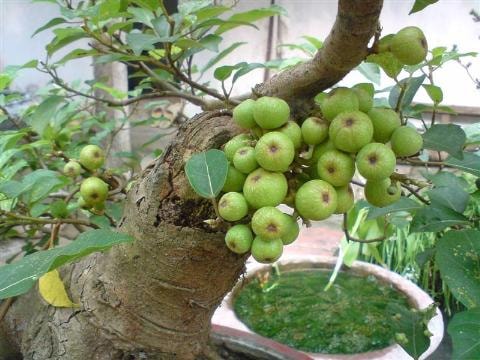
In nature, there are still many mysteries and wonders, such as the fig tree, where what people call fruit is actually a flower, also known as a false fruit, and the bark of the tree has medicinal properties.
Figs are sweet and have cooling and cough-relieving properties. When dried, they have a flavor similar to dates. The Chinese use figs to treat constipation and detoxify the body. In Vietnam, this type of fig is being imported and grown in some areas for ornamental purposes and medicinal use.
The fig tree, scientifically known as Ficus racemosa L., belongs to the mulberry family (Moraceae). It is a woody plant with many varieties, the most common in Vietnam being the Ficus racemosa, Ficus racemosa, and Ficus microcarpa.
Traditional Chinese medicine holds that figs are neutral in nature, sweet and astringent in taste, and effective in strengthening the spleen, cleansing the intestines, reducing swelling, and detoxifying. They can be used to treat enteritis, dysentery, constipation, hemorrhoids, sore throat, boils, and rashes. Fig leaves are sweet, slightly bitter, and neutral in nature, with detoxifying and anti-swelling effects, and can be used to treat swelling and skin ulcers. According to the "Compendium of Materia Medica," they can treat conditions such as hemorrhoids and sore throats. The "Jiangsu Botanical Encyclopedia" suggests that the white sap in fresh figs can be applied topically to treat warts. According to Yunnan Traditional Chinese Medicine, figs nourish the spleen and stomach, treat diarrhea, reduce inflammation, and improve qi circulation.
Here are some dishes made from figs that can be used to treat illnesses.
*Support treatmentesophageal cancer:500g of fresh figs and 100g of lean pork are simmered for 30 minutes. Eat both the solids and drink the broth.
* Treating sore throat:Take 5-10 fresh figs, peel them, slice them, and boil them thoroughly to extract the juice. Add rock sugar and simmer over low heat until it becomes a paste. Suck on this paste daily.
* Dry cough without phlegm:Peel 50-100g of fresh ripe figs and cook them with 50-100g of rice to make porridge. Divide this into several servings throughout the day. You can add some raisins or rock sugar to make it easier to eat.
*Gastric and duodenal ulcers:Take 10 figs and 250g of pig's large intestine. Cook the intestine until tender, cut it into pieces, add fat, ginger, onion, and rice wine, then simmer the figs until well-cooked.
* Treating constipation:Wash 10 fresh figs, cut them in half, and clean a section of pig's large intestine, chop it finely. Simmer both until tender, add seasonings, and consume within the day.
* Hemorrhoids with bleeding, rectal prolapse:Simmer 10 fresh figs with 250g of pig's large intestine until tender, then eat. Alternatively, boil 6g of fresh figs and 9g of persimmon root in water and drink the decoction. If figs are unavailable, boil fig leaves in water and use the resulting liquid for a steam bath or soak for about 30 minutes.
* Mothers with insufficient milk productionTake 120g of fresh figs and 500g of pig's trotters, simmer until very tender, add seasonings, and divide into several servings to eat throughout the day. This recipe is effective in nourishing blood and qi, and promoting lactation (milk production). It is very good for postpartum women who are weak, have insufficient blood and qi, and have little or no milk.
* Treatment of arthritis:Use a sufficient amount of fresh figs to stew with lean pork. Alternatively, take 2-3 fresh figs, wash them, chop them finely, and fry them with chicken eggs.
According to Agriculture - NT


