
'Forgetting' to restore the land after mineral extraction.
(Baonghean.vn) - Land reclamation is a mandatory obligation for businesses after the completion of mineral mining operations. However, in Nghe An province, many mineral mines, after being exploited and then withdrawn by businesses, leave behind unsightly mine shafts and deep pits, posing a danger to people and livestock and negatively impacting the environment.
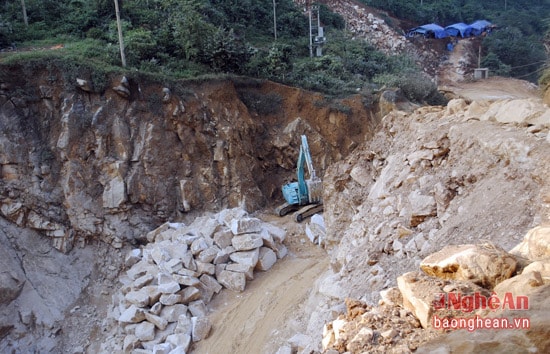 |
| A mining site in Quy Hop. |
In Quy Hop district, there are 46 mineral mines (stone and tin ore mines). Currently, 20 mines have expired licenses, of which 10 have applied for extensions, 8 have not yet completed land reclamation, and 2 mines have completed land reclamation: Nghe Tinh Non-Ferrous Metals Joint Stock Company and Phu Quy Stone Company.
According to Mr. Le Sy Hao, Head of the District's Department of Natural Resources and Environment: the district has established an inspection team and made recommendations to the Department of Natural Resources and Environment, suggesting that strong measures be taken, requiring the enterprise to restore the land to ensure safety for people and livestock when passing through the mining areas.
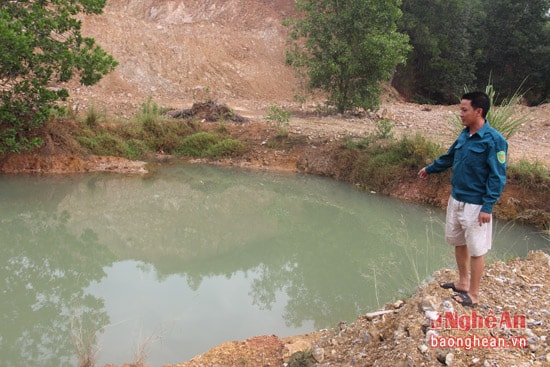 |
| The deep ponds pose a high risk to the lives of children who often play in this area. The photo was taken at a defunct mining site in Dien Doai commune, Dien Chau district. |
Mr. Nguyen Duy Tinh, Vice Chairman of the People's Committee of Dien Doai commune, Dien Chau district, said that the commune has 6 soil mines, but 5 of them have expired licenses but have not been restored. After their mining permits expired in 2015, the Vietnam Mineral Company did not restore the land, leaving the soil mine in Hon Nhan area of Dien Doai commune in a dilapidated state with dangerous deep pits. In addition, many areas are at risk of trees falling due to soil mining...
Mr. Pham Van Hue, from Hamlet 14, Dien Doai Commune, whose house is near the soil mine, said: “The mining company has withdrawn all its workers and machinery, leaving the mine area in disarray. We, who live nearby, constantly have to be vigilant to prevent people or children from entering the area because of the risk of landslides or drowning due to the deep pits left behind by the mining.”
Checking the records, Mr. Nguyen Van Son, Head of the Department of Natural Resources and Environment of Dien Chau, provided further information: Currently, Dien Chau has 8 mineral mines, but 6 of them have expired operating licenses. Most businesses have not restored the land after mining. The most critical issue is the soil mines in Dien Doai commune. Currently, the district has assigned local authorities to guard the mines to prevent illegal soil mining. They are awaiting a solution from the Department of Natural Resources and Environment after their inspection of these mines is completed.
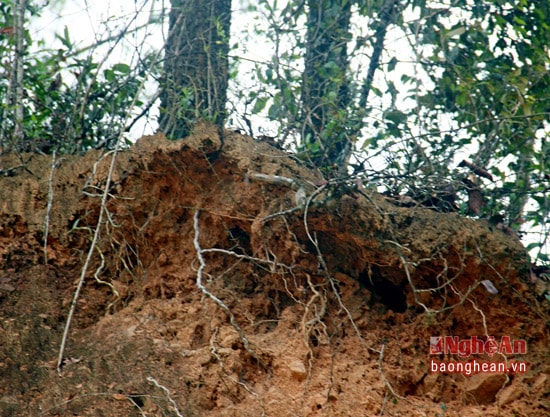 |
| The site has many "overhanging" cavities, threatening the trees in the Dien Doai mining area. |
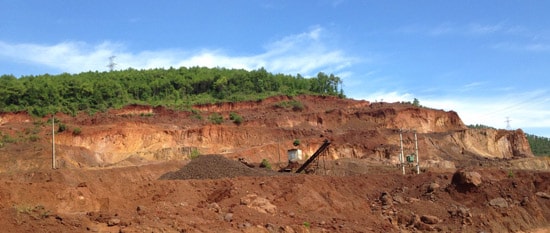 |
| The titanium mine in Nghi Yen, Nghi Loc, owned by Ha Thanh Company, had its permit expire in 2015, but the company has not yet removed all its machinery or carried out land reclamation. In Nghi Loc district, there are 5 mineral mines, and currently, 2 of them have expired permits, but the companies have not yet carried out land reclamation. |
In response to this situation, the Department of Natural Resources and Environment has established an inspection team to review 30 expired mining sites in the province, many of which have not yet had their land restored. The Department requires the businesses to carry out land restoration and environmental rehabilitation. If any business fails to comply, the Department will use the environmental resource deposit previously paid by the business to hire another unit to restore the mine's land.
Regarding the requirements for environmental remediation and restoration for mineral mining activities, Decision No. 18/2013/QD-TTg clearly states: 1. Ensure that the environment and ecosystem in the mining area and areas affected by mining activities are restored to a state close to their original state or meet safety and environmental standards and regulations, ensuring safety and serving purposes beneficial to humans as specified in Appendix I attached to this decision. 2. In accordance with the socio-economic development plan; mineral exploitation plan; land use plan and environmental protection plan of the locality. 3. Implement environmental remediation and restoration during the mineral extraction process. 4. In accordance with the environmental remediation and restoration plan issued by the People's Committee of the province or centrally-governed city for mineral mining projects located within a multi-mine mining area. 5. For environmental remediation and restoration in the exploitation of hazardous minerals containing radioactive substances, in addition to complying with this decision, the provisions of the Atomic Energy Law and other relevant laws must also be followed. |
Hai An
| RELATED NEWS |
|---|


