
Quynh Luu: Addressing the consequences of mass clam deaths in aquaculture.
(Baonghean.vn) - In recent days, in the commercial clam farming area of Quynh Luu district, dozens of households have been concentrating their manpower on the beaches to collect clam shells and clean up the environment after large areas of clam farms experienced mass die-offs, with dead clams floating on the shore.
In Son Hai commune, one of the localities with the largest clam farming area in the district, many people were gathered to collect dead clam shells floating on the beach. Mr. Dong Nhu Nguyen, one of the households whose clam farms were affected by the mass die-off, was working with laborers to pick up the shells and bring them ashore. Nearly 2.3 hectares of his family's marketable clams, ready for harvest, suddenly died in large numbers.
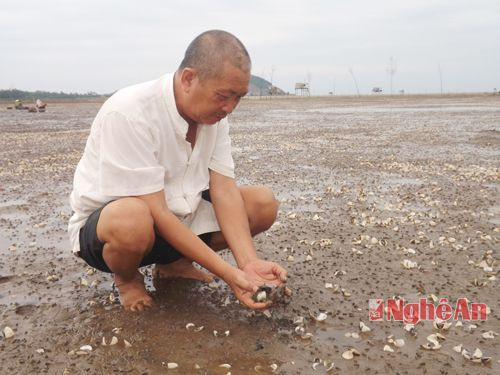 |
| Picking up each dead clam shell, Mr. Nguyen felt immense sorrow because all his hard work and capital had been invested in this clam farm. |
Mr. Nguyen said: "On July 1st, I discovered clams floating on the sand, then their shells burst open and they gradually died. By July 3rd, the entire area of commercial clams and clam seedlings had died en masse, floating white on the sand. The estimated damage is about 700-800 million VND."
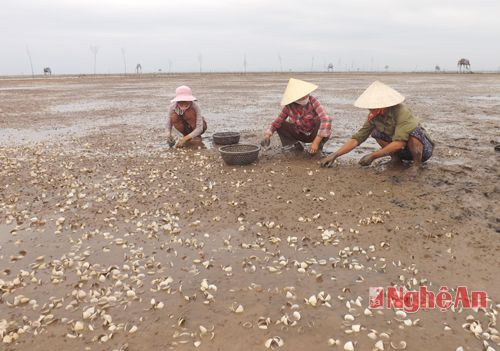 |
| Some laborers are paid 13,000 VND per hour to collect clam shells. |
After dead clams littered the sandy beach, to quickly mitigate the damage, he hired six people to collect the shells, clean the breeding area, and apply lime to treat the pollution in order to resume production. "To remedy the situation caused by the dead clams, I hired six laborers to collect the shells, used a machine to stir up the sediment deep in the beach, and applied disinfectants to clean the area so I could continue stocking. This is the first time in 12 years of clam farming that this has happened. Earlier this year, my family also suffered losses of over 500 million VND, and this second loss is even more severe. My family now has to borrow money to start production again from scratch. I hope the government will have policies to support people in resuming production," Mr. Nguyen shared.
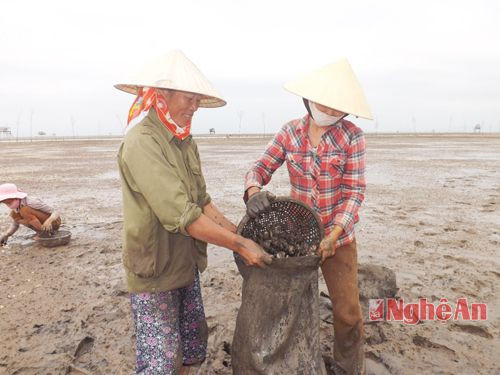 |
| People are putting dead clams into bags to transport them ashore. |
In Son Hai commune, many other households are facing the same predicament as Mr. Dong Nhu Nguyen's family. The entire commune currently has 15 households raising clams, with a total area of over 70 hectares. Many households have been left penniless, having lost all their hard work and capital invested in waiting for the harvest. It is estimated that 1 hectare of clams yields 30-40 tons/hectare, and with the current market price of 15-20 thousand VND/kg, 1 hectare would bring in 400-600 million VND. Therefore, the entire commune has suffered losses of over 3.5 billion VND in this period.
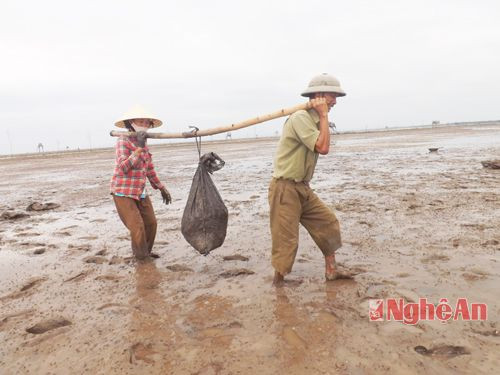 |
| Transport the dead clams away from the beach for environmental disposal. |
Immediately after receiving information about the mass death of farmed clams in the area, the commune's agricultural land management officials, along with relevant departments, went to the clam farms of the households to assess the situation and compile a report on the damage to submit to higher authorities. In addition, the local authorities encouraged the clam farmers to remain calm and focus on overcoming the consequences, clearing away the clam shells, and cleaning the farming areas.
Mr. Nguyen Tien Manh, Vice Chairman of the Son Hai Commune People's Committee, said: "Due to the prolonged hot weather followed by heavy rain, the clams suffered from thermal shock, causing mass deaths. We have formed a team to inspect and handle the dead clams to prevent pollution."
According to statistics from the Department of Agriculture and Rural Development of Quynh Luu district, approximately 104 hectares of clams in the district have died, concentrated in major clam farming areas such as Son Hai, Quynh Tho, Quynh Thuan, and An Hoa. The most severely affected areas are Son Hai and Quynh Tho communes. The cause of the mass clam deaths has been identified as prolonged hot weather. In response to this situation, Quynh Luu district, along with local authorities in the affected communes, has promptly encouraged farmers to overcome the consequences, clean up the clam shells, and treat the environment to resume production. Clam farmers hope that the government will soon implement policies to support those affected by the natural disaster so that people can confidently continue production and economic development.
Viet Hung
Quynh Luu Radio and Television Station


