
Strengthening prevention, control, and treatment of acute diarrhea.
The Ministry of Health has recently issued a document requesting provincial and city health departments, hospitals, and medical institutions with inpatient beds to strengthen prevention, control, and treatment of acute diarrhea at healthcare facilities.
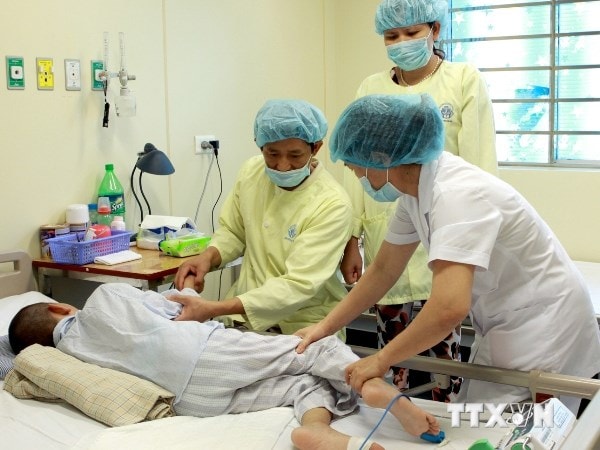 |
| The Ministry of Health has recently issued a document requesting provincial and city health departments, hospitals, and medical institutions with inpatient beds to strengthen prevention, control, and treatment of acute diarrhea at healthcare facilities. |
According to information from the Ministry of Health, a report from the Ho Chi Minh City Department of Health indicates that several cases of acute diarrhea have been admitted to Children's Hospital 1 and the Ho Chi Minh City Hospital for Tropical Diseases; among them was a 10-month-old child who developed sepsis, was severely debilitated, and subsequently died.
The Ministry of Health promptly directed the Department of Preventive Medicine, the Ho Chi Minh City Department of Health, and the Pasteur Institute of Ho Chi Minh City to urgently implement containment measures, actively carry out disease prevention and control measures, investigate and collect samples for testing to find the cause of the disease, manage patients; control the spread of acute diarrhea and minimize the mortality rate.
To proactively prevent, control, and effectively treat acute diarrhea, and minimize mortality rates, the Ministry of Health requires all units to ensure sufficient clean water for daily use and hygienic conditions for patients and their families, such as toilets, hand soap, and handwashing facilities, at healthcare establishments.
Healthcare facilities need to strengthen education and supervision of hygiene in food and beverage services within their facilities; coordinate with preventive health units, food safety and hygiene units, and other local functional units to control food hygiene so that patients and their families can eat and drink in a hygienic manner.
These units need to stockpile sufficient quantities of emergency medications, treatment drugs, intravenous fluids, and necessary medical equipment to be ready to provide emergency care and treatment for acute diarrhea.
In addition, healthcare facilities should organize the reception, admission, diagnosis, classification, isolation, treatment, and timely emergency care of acute diarrhea cases, and transfer them to the appropriate level; they should also prepare emergency and epidemic control teams to provide timely emergency care and transport for severe cases when required.
Regarding treatment, the Minister of Health requested that the relevant units organize refresher training for doctors, nurses, and technicians in related departments and units on the guidelines for diagnosing and treating acute diarrhea caused by various factors, as issued by the Ministry of Health.
According to Vietnam+


