
The missile that shot down MH17 was flying too fast, making it difficult for radar to detect.
The investigative team believes that Russian civilian radar stations failed to detect the missile that shot down Malaysian Airlines flight MH17 in 2014 because it was flying too fast.
|
A piece of wreckage from the MH17 plane shot down in eastern Ukraine. Photo:AFP. |
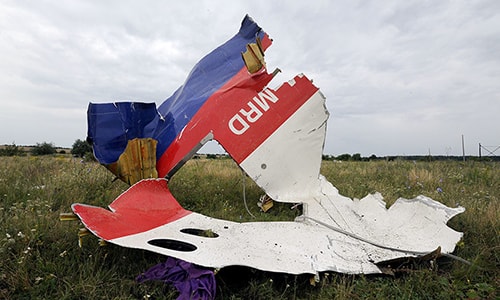
"The missile's speed was much higher than that of a civilian aircraft. Meanwhile, the design rules of civilian radar stations usually ensure that objects traveling at such high speeds do not appear on the screen. This is to avoid causing confusion," stated Dutch prosecutors from the international investigation team (JIT).to state.
The Boeing 777, flight number MH17 of Malaysia Airlines, was shot down over eastern Ukraine in July 2014, killing all 298 people on board.
A JIT report from September 2016 asserted that MH17 was shot down by a Russian-made BUK missile that Moscow supplied to separatist forces in eastern Ukraine.
Russia rejected the accusation and provided the JIT with several screenshots from the Ust-Donetsk radar station showing that no missiles were launched from the separatist-controlled area at the time of the MH17 crash.
The Russian missile manufacturer Almaz-Ante also claimed that the BUK missile was launched from the Zaroshchenske region, which is controlled by the Ukrainian army. The fact that Ukraine has not released images from the radar station suggests that Kyiv likely wants to conceal this fact.


