
World in the past week: 'Fire tests gold, hardship tests strength'
(Baonghean) - Considered an exception, a unique approach in Europe, Sweden remains steadfast in its "herd immunity" policy, believed to be effective in the fight against Covid-19, but the data reflects a completely different picture. Meanwhile, in Russia, domestic anti-epidemic measures are lagging behind other European countries, causing public dissatisfaction. The hard-won legacy and prestige of President Putin are also being put to the test.
A firm stance
Compared to Nordic countries like Finland, Denmark, and Norway – which closed their borders early and implemented strict social distancing measures – Sweden's fight against the pandemic presented a stark contrast. Without lockdowns or strict restrictions like its neighbors, Sweden presented a picture of bustling streets and crowded cafes. Children continued to attend school, and businesses remained open.
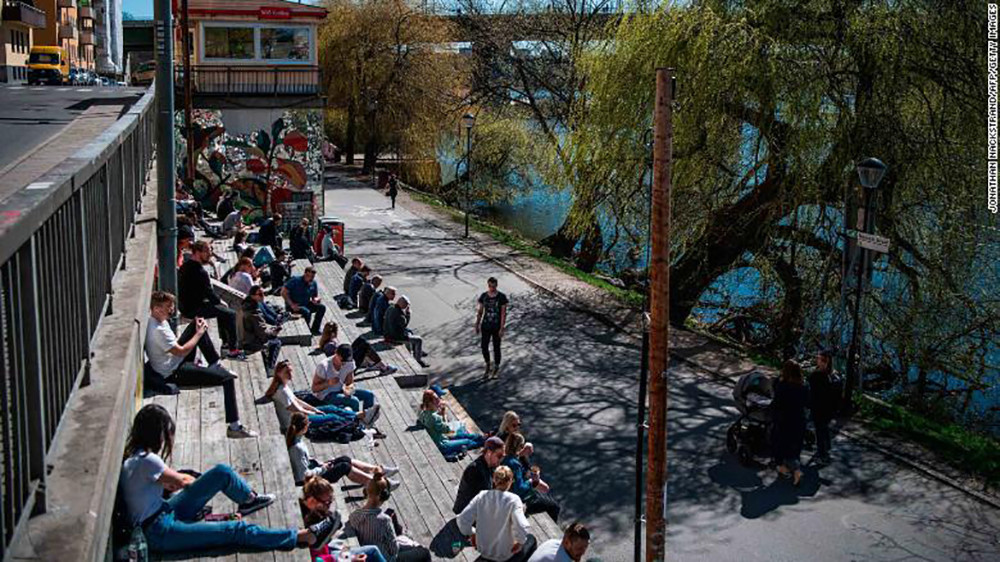 |
| People enjoy the warm spring weather along the Hornstull River in Stockholm, Sweden. Photo: CNN |
The Stockholm government placed its faith in a "soft" approach and the compliance of its citizens. Sweden believed its "herd immunity" strategy was working, and that its people would soon overcome Covid-19 without strict lockdowns. However, the reported figures told a completely different story.
The "herd immunity" strategy has been heavily criticized by many academics and medical doctors. Compared to other countries in the continent such as Spain and Italy, Sweden's Covid-19 death rate is lower, but it is much higher than that of its Nordic neighbors. According to data from Johns Hopkins University, the death rate in Sweden has increased significantly, reaching 22 per 100,000 people, while the figure for Denmark is only 7, and for Norway and Finland 4. With a population of 10.3 million, the current number of infections in Sweden (as of May 2nd) is 21,520, with over 2,653 cases recorded.death.
Jan Albert, Professor of Microbiology and Cell Biology at the Karolinska Institute, stated: “Clearly, Sweden has recorded more deaths than other European countries. This is perhaps partly because we did not implement a lockdown.” But he believes that most scientists in Sweden are “relatively silent” about the government’s “herd immunity” plan because they believe it can be effective.
“The truth is, nobody, not even in Sweden, knows for sure which strategy is best. Time will tell,” Jan Albert stated, expressing his belief that stricter lockdown measures would only help “flatten the curve” of the pandemic, but that doesn’t mean the pandemic will disappear.
 |
| Cafés and bars remain crowded with people gathering and eating in Sweden. Photo: CNN |
Renowned epidemiologist Anders Tegnell, the "orchestrator" of Sweden's Covid-19 response, believes Sweden will cope better with a second wave of Covid-19 because many people there have already been infected. He asserts that a "soft" approach has been effective in some respects. The Swedish Foreign Minister emphasized that different countries have different methods, and the way Sweden is doing it is "simply trying to do what we believe is right."
Heritage sites that are "threatened"
The Russian capital, Moscow, has been severely impacted by Covid-19. According to the latest figures, Russia now has over 114,493 confirmed cases, with more than 1,169 deaths, and over half of these are in Moscow. Notably, Prime Minister Mikhail Mishustin was the first high-ranking Russian official to test positive for the virus. In response, President Putin appointed a replacement and ordered an extension of social distancing measures until May 11th, as the country had not yet passed the peak of the epidemic. Thus, the number of infections in Russia has officially surpassed China – the initial epicenter of the Covid-19 pandemic – ranking ninth globally in terms of the number of cases.
President Putin, like other world leaders, faces an unpredictable crisis, and his position could be shaken amidst the complex developments of the pandemic, its impact on public health, and the decline of the economy. Significantly, if Covid-19 had not appeared, the Russian people could have participated in the April 22 referendum on constitutional amendments that would have allowed President Putin to continue leading.
Russian State Duma Chairman Vyacheslav Volodin stated: "Our competitive advantage is not oil or gas. It is Vladimir Putin." Observers believe the pandemic has created an existential crisis for the Russian leader at a time when he needs public support to consolidate his power in the future.
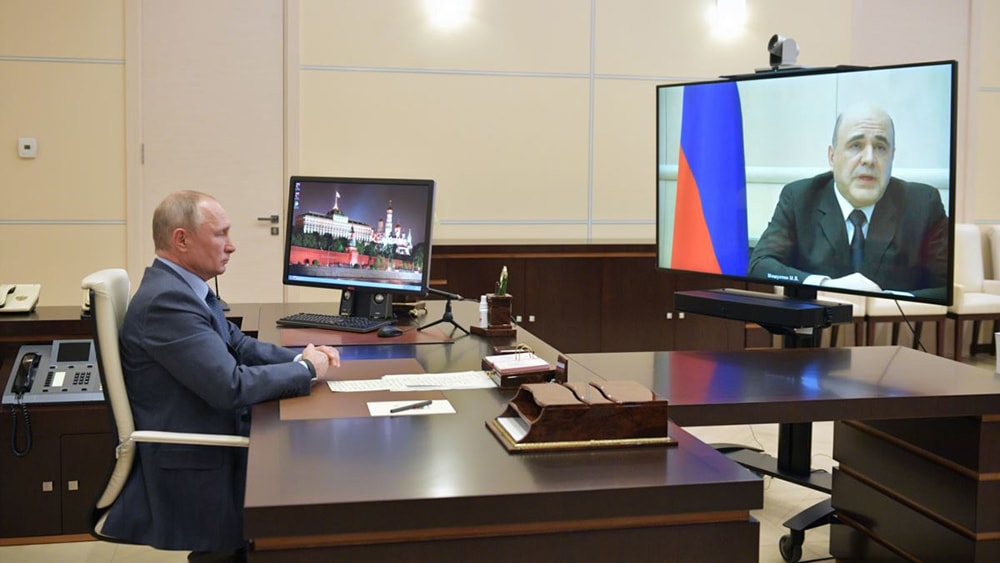 |
| Russian Prime Minister Mikhail Mishustin announced he had contracted Covid-19 and asked President Putin to find a temporary replacement. (Photo: Ria Novosti) |
Initially, Russia quickly implemented countermeasures such as closing its borders when the epidemic began to rage in neighboring China. However, Russia's domestic anti-epidemic measures were considered to lag behind those of other European countries. This caused public discontent and threatened Putin's hard-won legacy.
When Covid-19 began spreading across the country, President Putin used it to improve his image by making numerous statements emphasizing that everything was under control, or that Russia was better prepared for the crisis than Europe and the US. However, as the pandemic showed signs of spiraling out of control, Putin appeared in public and described the severity of the disease.
The Russian leader stated that the coming weeks would be crucial in determining whether Russia could effectively flatten the curve and slow the spread of the virus. If necessary, the Russian military was “ready to be deployed.” The president intensified stricter lockdown measures, ordering nationwide paid leave. However, these measures began to backfire.
Another equally significant blow that Covid-19 dealt to President Putin was the postponement of the traditional Victory Day parade on May 9th, commemorating the 75th anniversary of the Great Patriotic War, the victory over Nazi Germany in World War II. For the Kremlin, celebrating the victory is one of the most important events, helping to boost President Putin's domestic approval ratings.
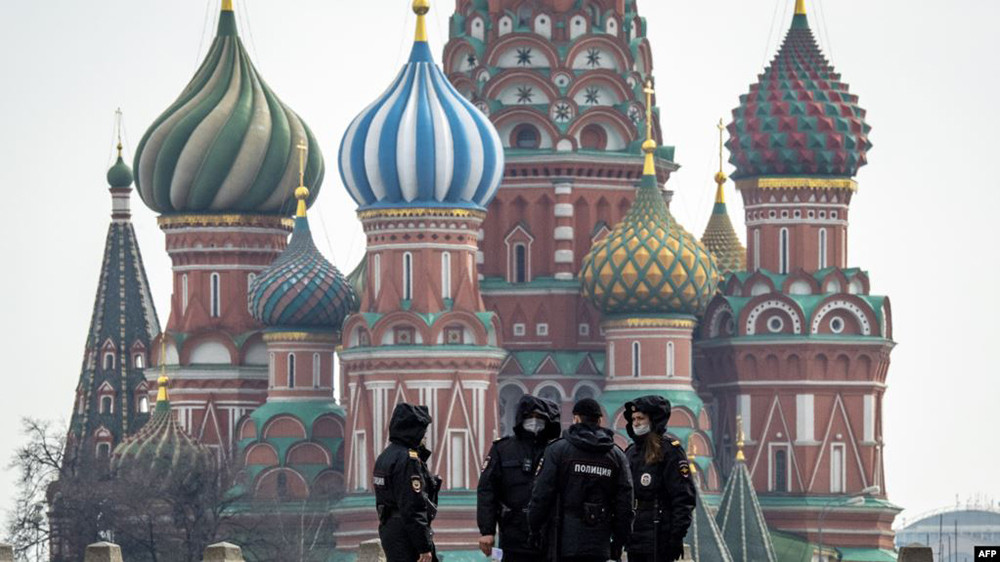 |
| Russian police patrol an empty Red Square in Moscow on April 13, 2020, amid a lockdown aimed at curbing the spread of Covid-19. Photo: AFP |
President Putin had planned the entire year hoping to consolidate power, celebrate Russia's Victory Day, and usher in the next phase of his career, but now instead, he is embroiled in a struggle with an invisible and difficult-to-control enemy.
Russian officials have predicted that the country's infection numbers could stabilize in May as most regions are well-quarantined. With the crisis unfolding across the globe, President Putin and other world leaders are employing new strategies to cope and maintain their power.


