Arriving in Hanoi in 1991, German photographer Reisen took dozens of photos of Hanoi's transportation methods during the "post-subsidy" era.
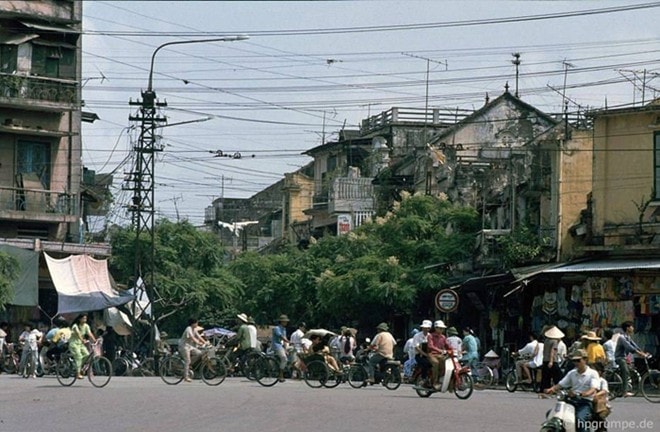 |
| In 1991, the primary mode of transportation for people in Hanoi was still the bicycle. |
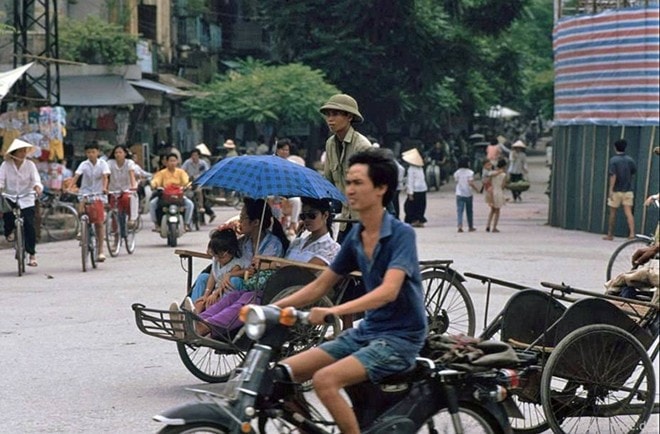 |
| The most popular motorcycle models remain those from Honda, from the 1979 to 1982 models. |
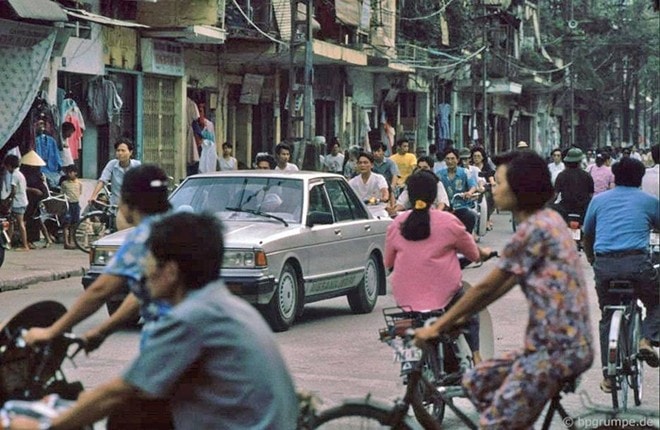 |
| Cars were considered a luxury item; only high-ranking officials or directors of large organizations could afford to drive them. |
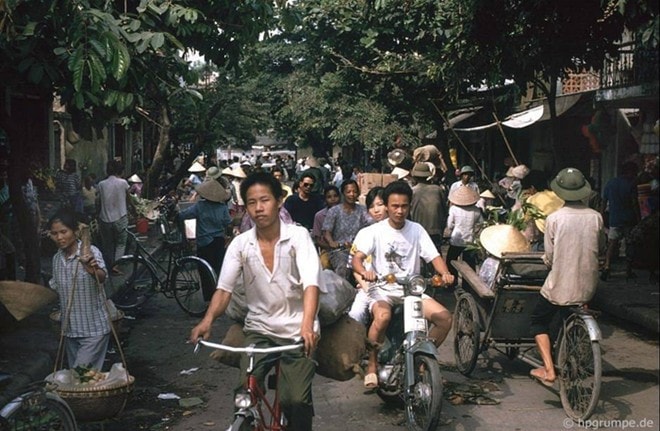 |
| Bicycles, motorbikes, and cyclos were three characteristic modes of transportation in Hanoi during the 1990s. |
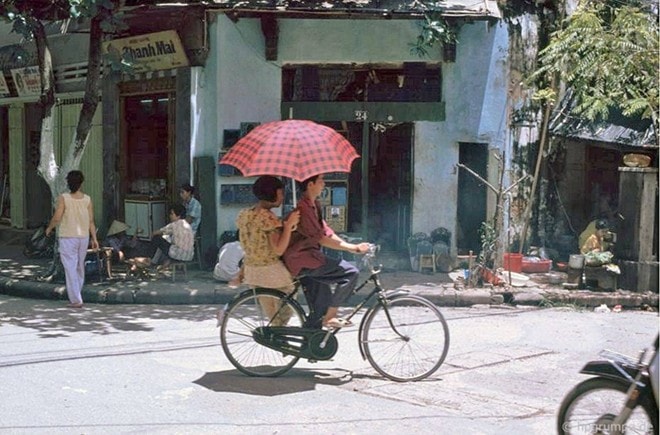 |
| Cycling to work in the early morning or taking your loved one for a ride on a Phoenix bicycle. |
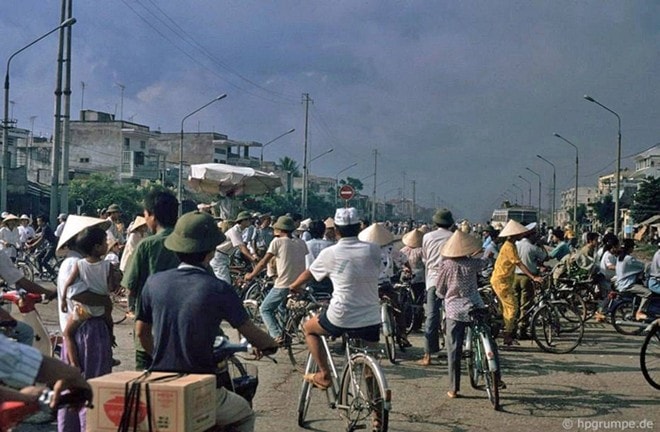 |
| The section of Giai Phong road near Giap Bat bus station in 1991. |
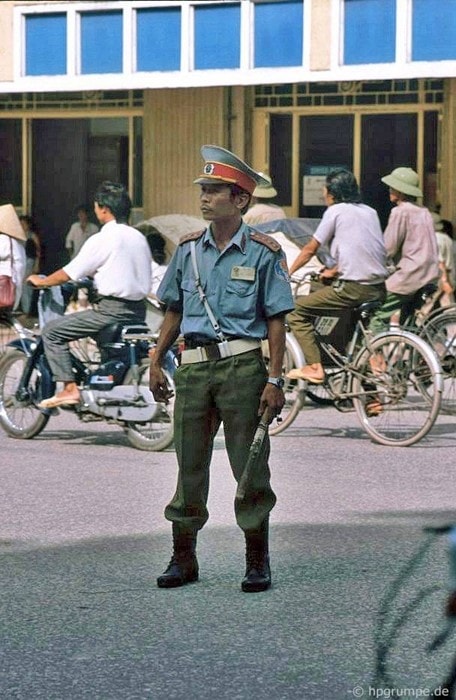 |
| Hanoi traffic police in 1991, wearing light blue uniforms and carrying a pole containing violation reports. |
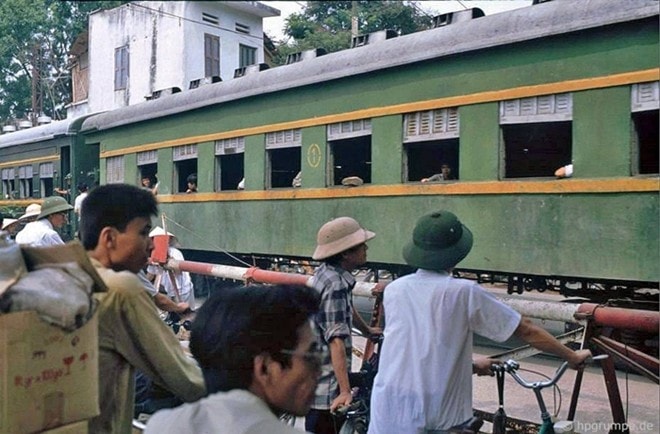 |
| A railway crossing extends across Kham Thien Street. In the 1990s, many trains from the North, such as Hai Phong and Lao Cai, ran all the way to Hanoi station to drop off passengers. |
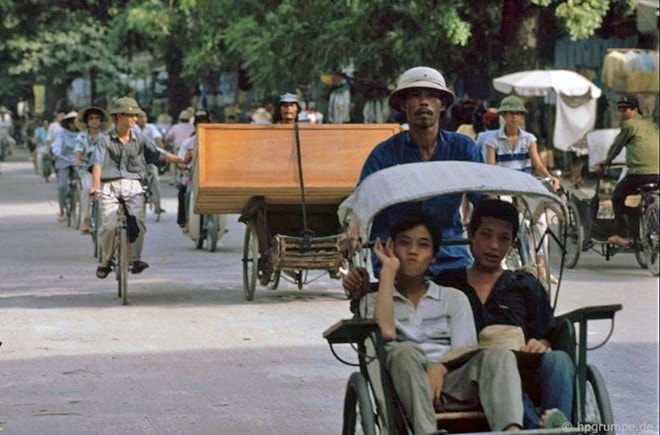 |
| In the 1990s, cyclos were the most useful means of transportation for people in Hanoi. Cyclos were used to carry people for sightseeing. They had a small canopy to protect passengers from rain and sun. |
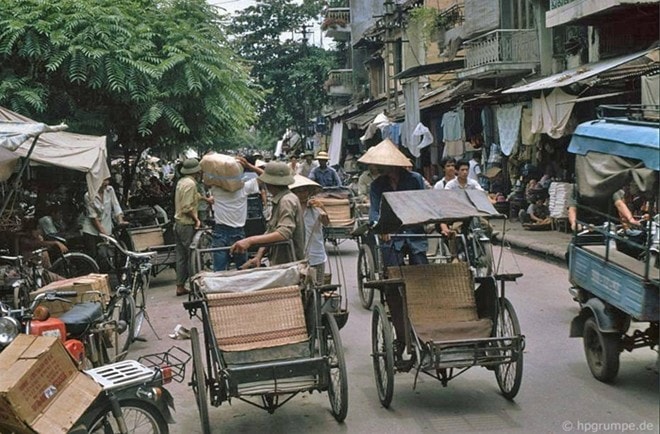 |
| There are areas where cyclos are concentrated in large numbers, such as bus and train stations or hospital entrances. Cyclos move slower than bicycles but can access very narrow alleys. |
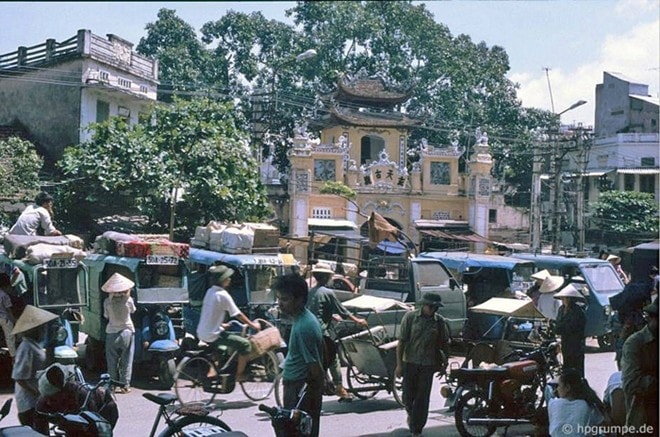 |
| Besides cyclos, Hanoi also has motorized rickshaws, which are used for transporting goods and operate mainly at the Southern bus station and Hanoi train station. |
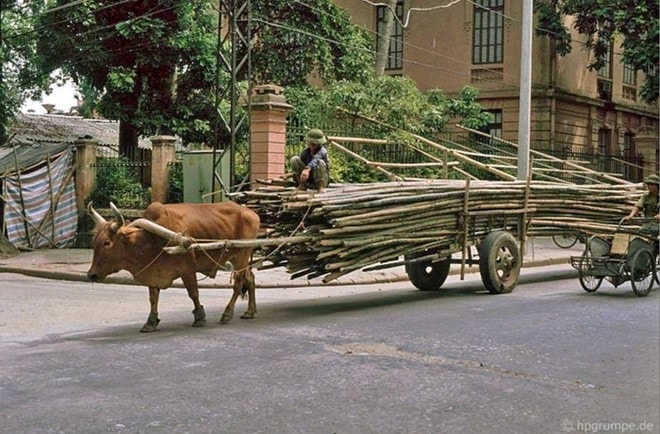 |
| Sometimes on the streets, you can still see these types of vehicles carrying oversized, overweight materials, moving extremely slowly. |
Source: Zing



