
Tips for fixing weak Wi-Fi signals
There are several simple ways you can make your wireless internet connection faster.
 |
Internet speed largely depends on the internet plan you're using. However, over time, the ability to browse the web, watch movies, and play games online starts to degrade, sometimes causing frustration.
There are many reasons for this, including the provider's failure to guarantee service quality, router degradation, a rapid increase in the number of Wi-Fi connected devices, poor load balancing, or simply electromagnetic waves being absorbed by devices in your home. To avoid this inconvenience, you can follow the methods below.
Restart your Wi-Fi router.
Restarting your Wi-Fi router is something many people think of when frustrated with their internet connection; in fact, it's one of the tips technical support staff often recommend when your network is slow or lagging.
The reason is that routers heat up after prolonged and intensive use, affecting the quality of the emitted electromagnetic waves, leading to less stable and more intermittent network connections compared to before. In that case, let the router rest for a while by turning it off to cool down for 1-2 minutes, then restart it.
Find a more suitable location for the router.
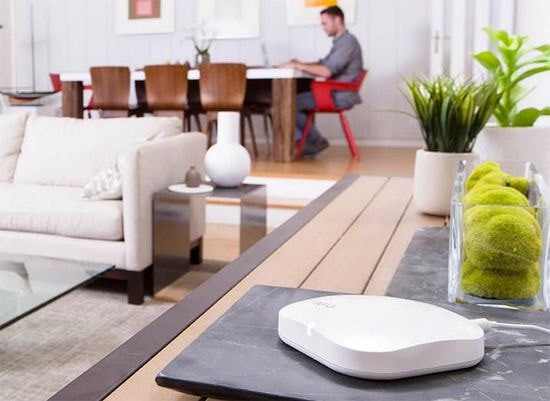
When technicians come to install your home internet system, they usually leave quite a few cables so you can customize the placement for optimal convenience. Generally, there are criteria to ensure Wi-Fi signal quality, including avoiding placing the router near metal objects, positioning it as high as possible, and minimizing obstructions between the device and the router. Be aware that household appliances with strong magnetic fields, such as refrigerators, TVs, and microwave ovens, can cause interference and affect signal quality. The height should also be suitable for easy replacement and installation of new equipment.
Use a Wi-Fi Repeater
Nowadays, users have another solution to extend their home WiFi network with a compact device that doesn't require messy, unsightly wiring. This is the function of a WiFi repeater (also known as a signal booster).
A repeater receives the Wi-Fi signal from the main router and retransmits it with higher strength to extend the signal's range. Repeaters are especially useful in multi-story houses and homes with many devices connected simultaneously.
Besides buying a repeater, users can use two routers of the same type and manufacturer to extend the signal; however, this method is very unstable, especially when allocating IP ranges to devices.
Control Wi-Fi connected devices.
Routers are sold with various recommendations regarding the number of connections. If you're using the Wi-Fi modem provided by your internet service provider, this number is usually very low, typically only 4-6 devices. Therefore, to ensure a stable Wi-Fi connection and avoid lag, you should turn off unused devices such as tablets and smartphones to dedicate all the bandwidth to your laptop.
Secondly, monitoring connected devices also lets you know how many people are using your home WiFi for free by accessing your router's administration panel and counting the number of connected MAC addresses.
Network bandwidth control
Your task is simple: discreetly check what your family members are doing and whether they're hogging bandwidth. It's no surprise if the network slows down because someone is loading dozens of movie tabs on Chrome or downloading games via IDM. Doing this will help reduce the load on your network when you ask them to stop downloading, but remember, "a little patience goes a long way."
Contact the service provider.
When all the above options fail, perhaps the last resort is to call your ISP's support center. There, staff will guide you on how to troubleshoot and offer technical solutions to restore your internet connection. Of course, in cases like a broken undersea cable, you'll just have to accept the situation until it's fully repaired.
According to Vietnamnet


