
A beverage brewed with yeast from 36 types of forest leaves is in high demand during Tet (Lunar New Year).
(Baonghean.vn) - The distilled beverage, made from yeast derived from forest leaves, is produced in the traditional leaf-fermented rice wine villages of Ban Xieng and Cham Muong in the mountainous district of Con Cuong. Although the Lunar New Year is not yet here, many households involved in this craft have already run out of supply.
Even before the Kitchen God and Stove God festival this year, the festive atmosphere had already arrived in the traditional craft villages.leaf yeastand traditional liquor distillation in Don Phuc and Mau Duc communes, districtCon CuongThe villagers are much more excited than during the Lunar New Year of 2022, as almost all the products they made throughout 2022 have been sold.
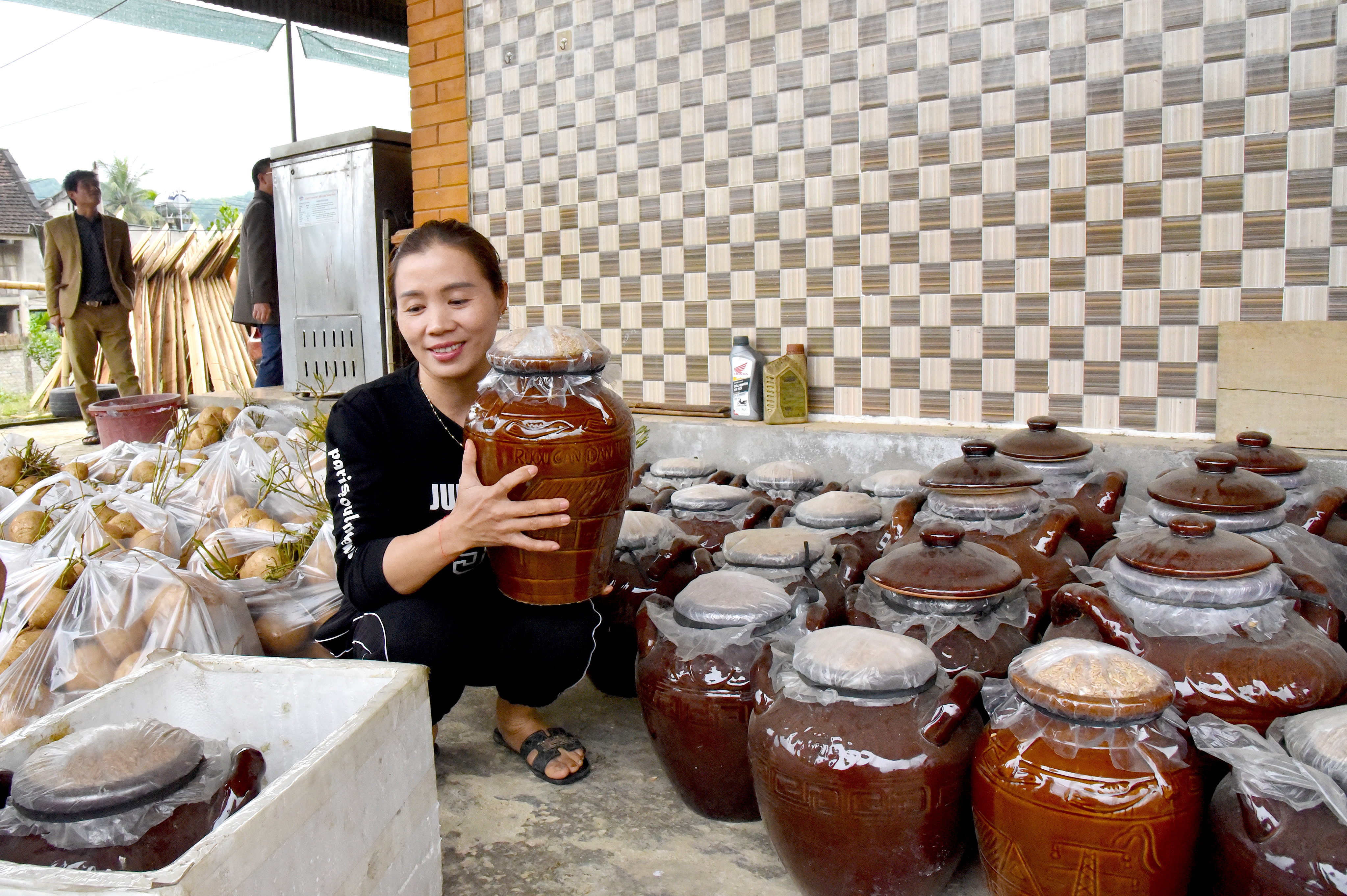 |
The people of Cham Muong village are delighted that their products were sold out early before Tet (Lunar New Year). Photo: HT |
In Cham Muong village, Mau Duc commune, home to the Cham Muong traditional rice wine making village, which was recognized by the Provincial People's Committee in November 2021, the villagers have begun preparing for new batches of products because the entire year's production has already been sold and reserved.
Ms. Ngan Thi Hanh, one of the households participating in the production groups.rice wineA woman from Chằm Muộng, who recently introduced a new batch of fermented leaves, said: “My family only has a little over 50 jars left to celebrate the Lunar New Year of the Rabbit. We're mainly saving them for relatives, friends, and acquaintances, not selling them anymore. It's the same in the village; all the households involved in production have either sold out or received orders from customers. This year, Chằm Muộng is experiencing a shortage, so my sisters and I are rushing into the forest to find leaves to prepare for new batches of products.”
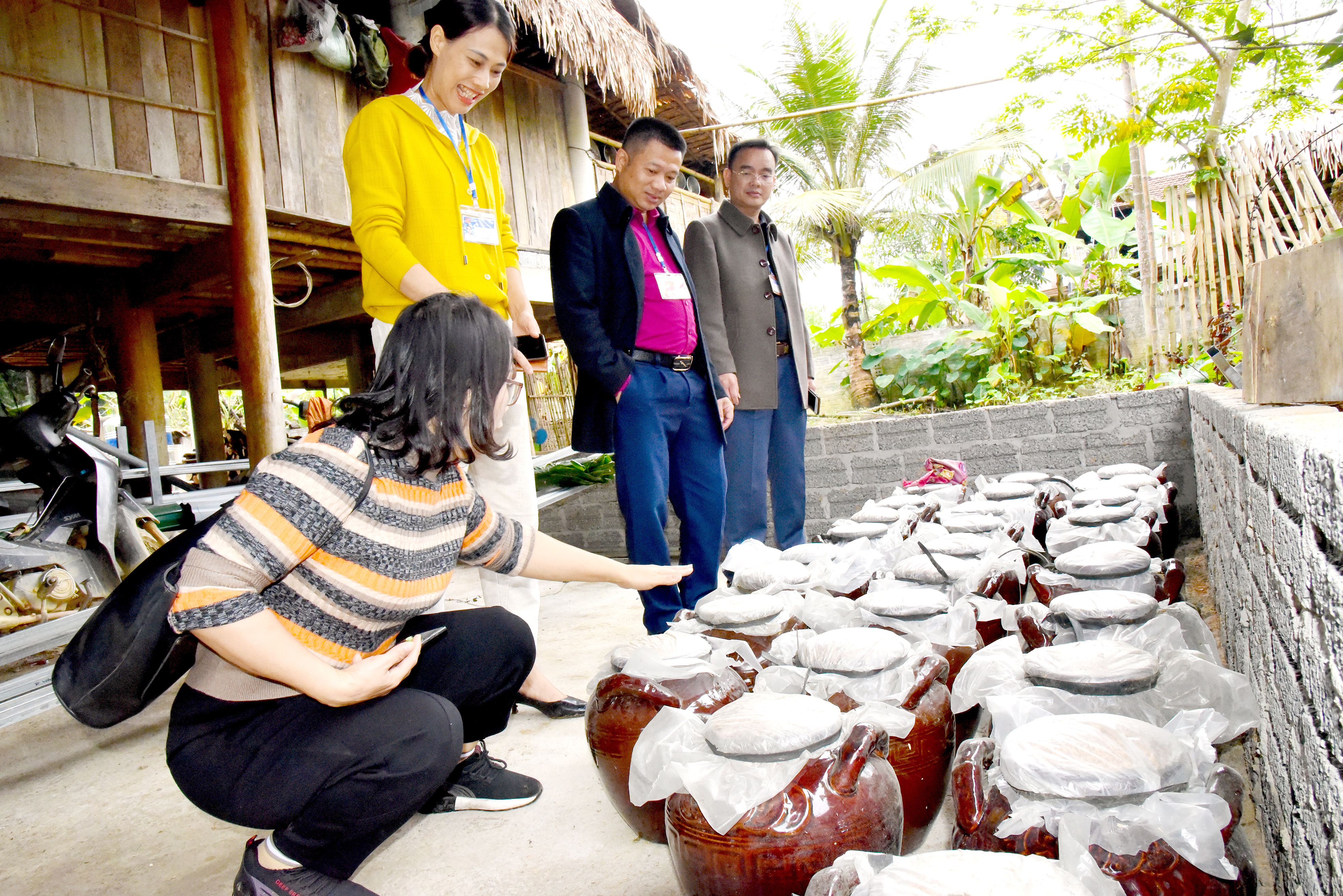 |
The remaining amount of rice wine belonging to Mr. Quang Van Thu's family. Photo: HT |
Not far from Ms. Hanh's house is the rather spacious stilt house of Mr. Quang Van Thu. In a corner of Mr. Thu's yard, neatly arranged are more than 30 containers of the "much-loved" beverage, each with a capacity of 10-15 liters. Mr. Thu's son said that the family kept these containers for use during Tet (Lunar New Year) and for some acquaintances who had ordered them but hadn't come to pick them up yet.
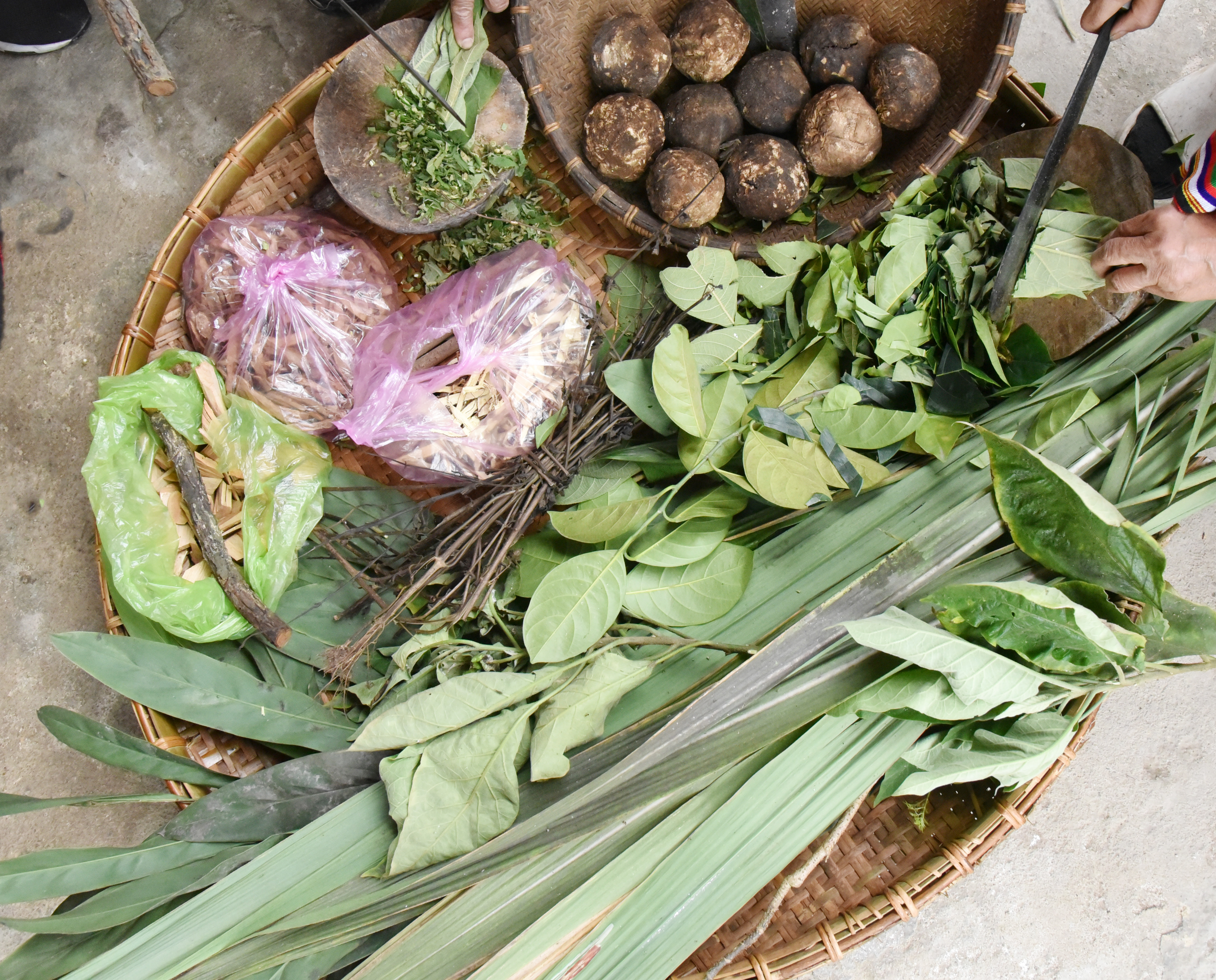 |
The traditional yeast used in brewing rice wine by the Thai ethnic group is made from more than 30 types of herbs, mostly sourced from the forest. Photo: HT |
“This year, traditional products from Cham Muong sold out early. Customers from the South to the North placed orders; consumers in the district and province also bought a lot more than in previous years, so the people are very happy,” said Mr. Vo Dinh Thanh, Chairman of the People's Committee of Mau Duc commune.
Sharing the joy of the households producing traditional leaf yeast and liquor in Mau Duc, the production groups in the Xieng village, Don Phuc commune, also reported that, even though the Lunar New Year of the Rabbit is still more than ten days away, all their products have already been sold.
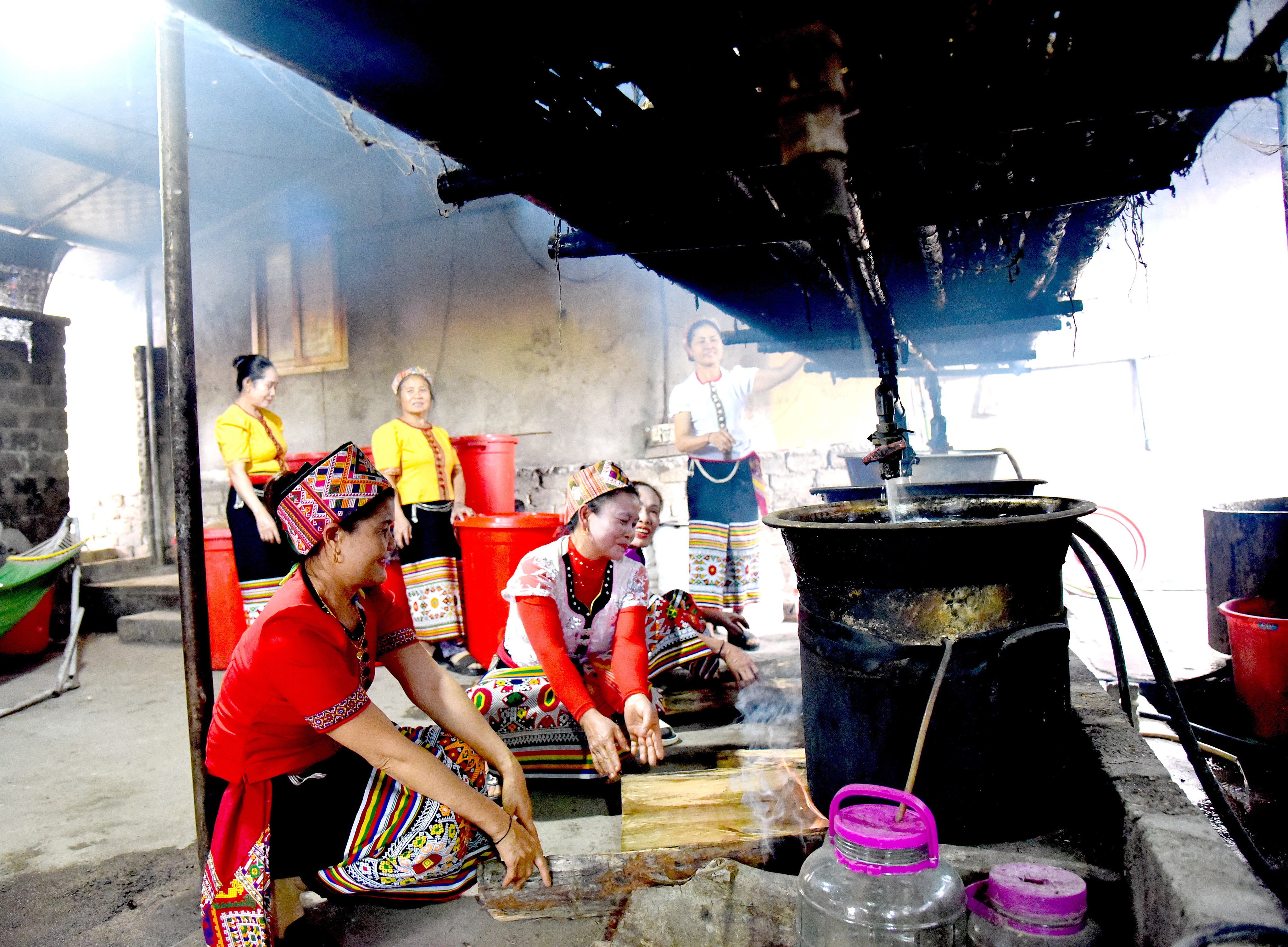 |
Production teams in Xieng village operate continuously day and night. Photo: HT |
Ms. Vi Thi Hoang, head of the Xieng village's leaf glaze production group, said that currently, the Xieng village craft village has 56 participating households, divided into two production groups. The households take turns performing the various stages of production according to the agreed-upon division of labor within each group.
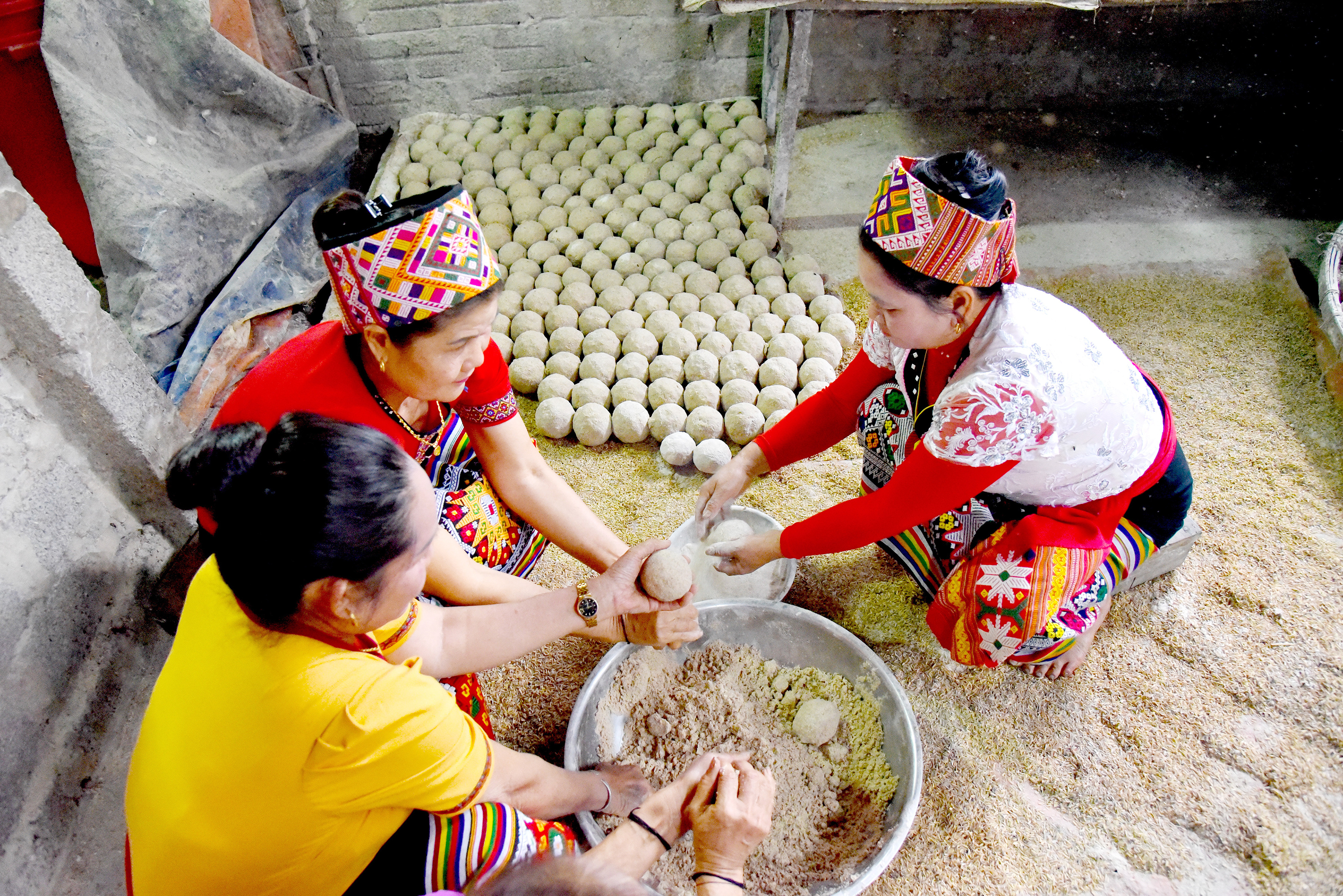 |
The traditional craft village of Xieng in Don Phuc commune produces glaze from 36 types of forest leaves. Photo: HT |
“Because the process of making yeast from forest leaves and the fermentation time required for months, we have to rotate our production to ensure a consistent supply for our customers. The village of Xiềng was only recognized as a traditional craft village by the province about a year ago; however, the villagers didn't anticipate the level of product consumption once the village was recognized and promoted by various levels of government, so this year we sold out early,” said Ms. Vi Thị Hoàng.
According to the leaders of Don Phuc commune People's Committee, out of 188 households with 844 inhabitants, more than 70% are proficient in the process of producing yeast from forest leaves and participate in brewing leaf-fermented rice wine. Approximately 21% of these households are involved in the production and sale of this traditional beverage.
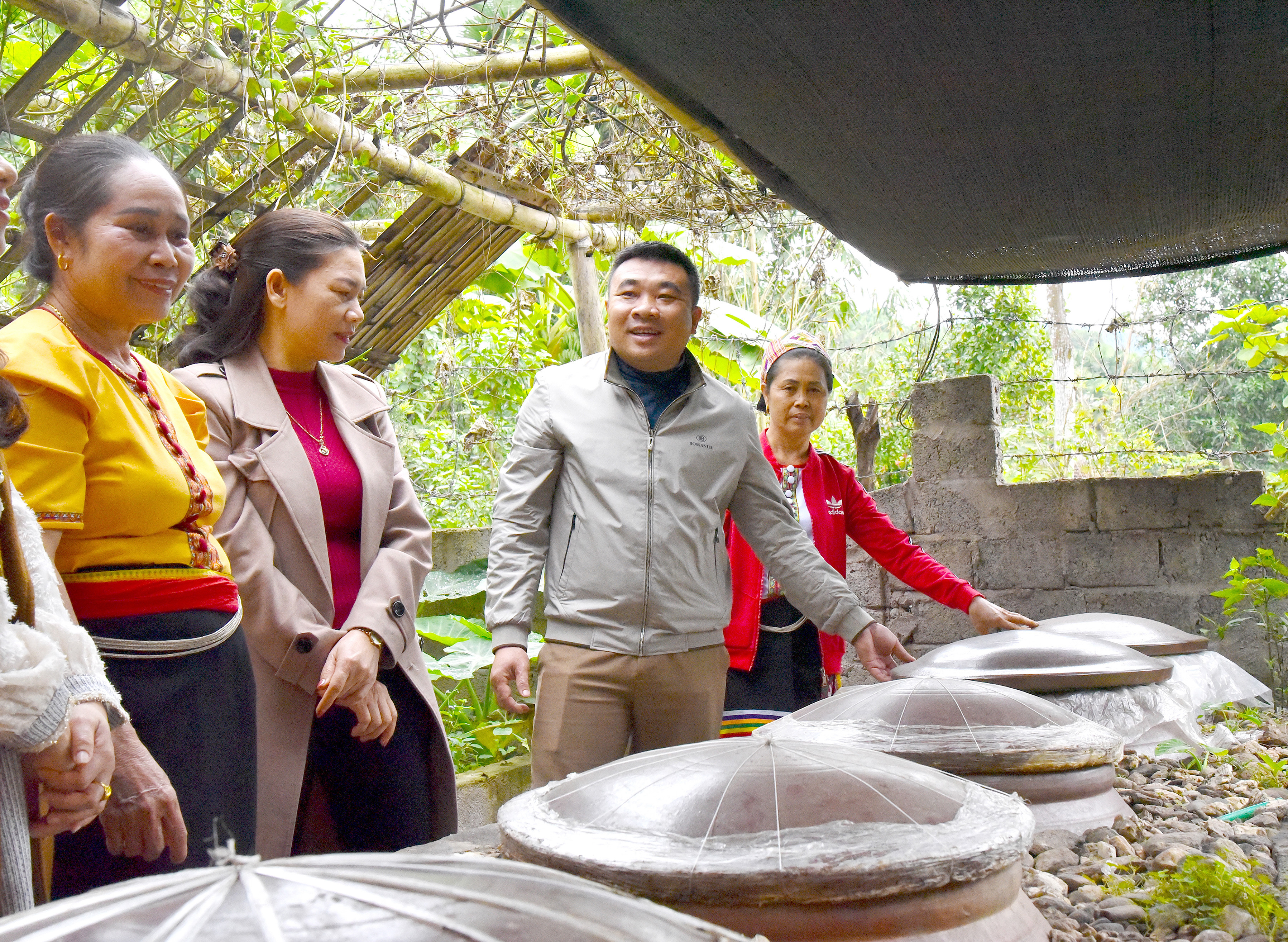 |
Leaders of Don Phuc commune People's Committee inspect the herbal rice wine production groups. Photo: HT |
Currently, the traditional rice wine making village of Ban Xieng has two production groups, each distilling approximately 100-150 liters per day using 4-6 manual stills, bringing in an average income of about 18 million VND per year for each worker. At the same time, it provides employment for more than 500 workers annually.
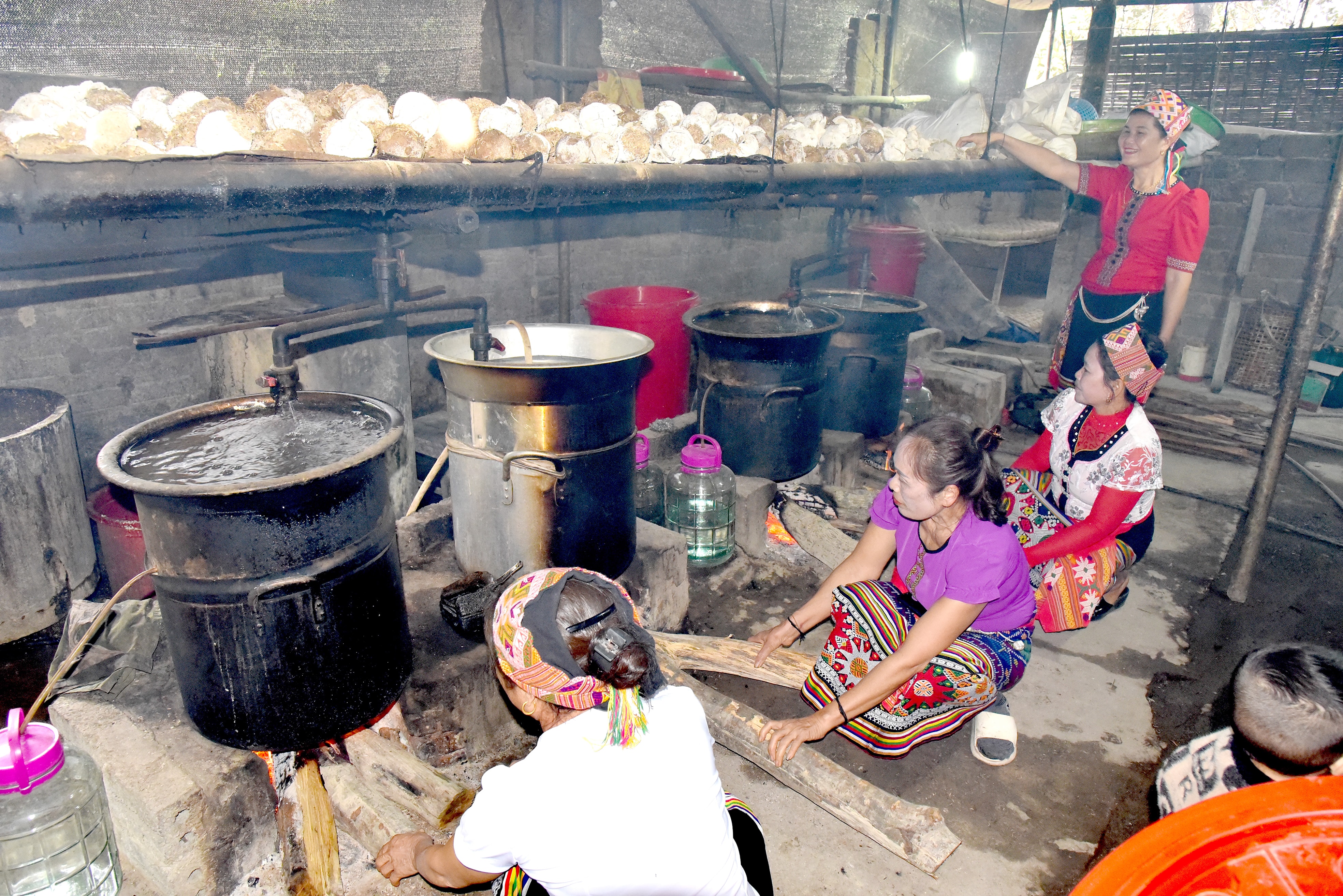 |
The yeast made from forest leaves, after being fermented, is then taken upstairs to a drying rack above the fire to preserve it. Photo: HT |
“To help people maintain traditional crafts and develop the economy, the People's Committee of Don Phuc commune always guides and directs people to comply with regulations and rules on production and business. In particular, to build and maintain the reputation of the craft village, ensuring quality must always be prioritized. We emphasize to the people that batches of distilled products must be soaked and fermented for a sufficient amount of time before being sold; they must not prioritize quantity at the expense of quality,” affirmed Mr. Lu Ngoc Chi, Vice Chairman of the People's Committee of Don Phuc commune.


