
Vietnamese brands in America
Vietnamese food and fashion brands are gradually conquering the American market. This is a commendable effort by Vietnamese businesses and their partners, including the Vietnamese diaspora in the United States.
From pho and banh mi
In Vietnamese and Chinese supermarkets and markets in both the East and West, as well as in Eden near Washington DC, Texas, and California, at restaurants like Pho Tu Do Manhattan, Pho Saigon, or the famous Pho Kim Long in Las Vegas, you'll find bottles of Sriracha hot sauce. Sriracha is also present in many American fast-food chains, going beyond just a condiment for Asian cuisine. Founded by Huy Phong Company in the 1980s, Sriracha has been recognized by the small city of Rosemead near Los Angeles as one of its flagship brands, alongside Panda Express, one of the leading Chinese-owned fast-food chains in the US.
Lee's Sandwiches was founded by Mr. Le Van Ba in 1981, starting with Vietnamese sandwiches and expanding to include other food items besides meat sandwiches, adding the Lee's Coffee brand. This has cemented the names "Banh Mi" and "Iced Coffee with Milk" in American culinary culture – not in English. Lee's Sandwiches and Lee's Coffee belong to Lee Bros Food Services Inc., currently the largest industrial food distribution company in Northern California, with nearly 50 locations across the United States and expansion into several other countries.
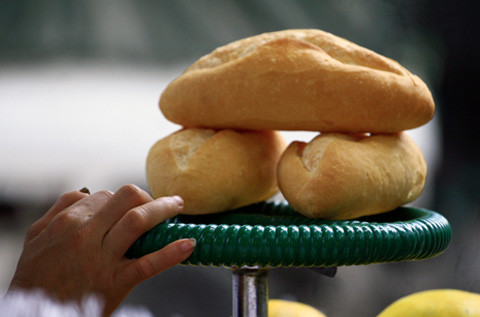 |
| Vietnamese brands are gradually becoming ingrained in the minds of Vietnamese people living abroad. |
In Las Vegas, WADAPHO – Pho Qua Da (Widely Delicious Pho) follows the model of a mobile vendor cart with a logo of chopsticks and a steaming bowl, serving fast food in plastic bowls with large, steak-sized beef slices, "invented" by a chef named Jack. Imagine enjoying a bowl of Vietnamese pho inside the cart, right in the Art District of Midtown Vegas, where Jamaican Reggea music is playing… It's truly a "culinary alliance" forming and developing a shared strength in a "United Nations"-like space unique to Las Vegas.
Meanwhile, in the instant noodle sector, Vifon and Acecook are still competing for market share in Vietnamese and Chinese supermarkets. Aside from Italian pasta and Nissin products, which have already entered the market and are accepted in vending machines and 7-Eleven stores, all other instant noodle products are marketed equally regardless of origin and type. This could create equal opportunities for Asian-origin instant noodle products, depending on the efforts of distributors and genuine brand competition in the future.
Let's go for coffee and beer.
In the memories of Vietnamese people before 1975, the image of the tiger-shaped beer logo and 33 Beer remained vivid. Later, Saigon Beer Company officially registered the trademark as 333, signifying the lucky number 9, but left the name 33 open. Capitalizing on this trend, the Vietnam Beer Joint Venture Company, after taking over BGI Vietnam, revived the 33 brand, officially competing with Sabeco's 333 in the US market.
The intriguing historical rivalry between 33 and 333 began in a different urban space from Vietnam, where a significant portion of Vietnamese Americans still maintain the drinking culture from their homeland. Regardless of the merits or flaws of this drinking culture, the image of Vietnamese beer brands in America is a source of genuine pride and a positive aspect of the integration process and the successful export of Vietnamese products and brands.
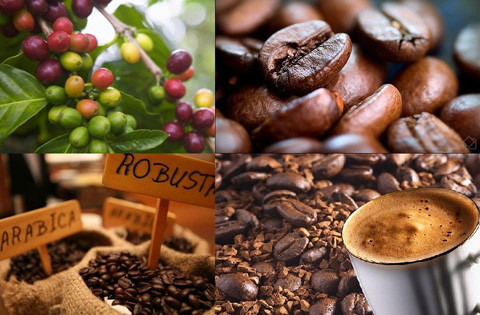 |
| Vietnamese coffee with a distinctive character. |
Trung Nguyen's pioneering spirit, honed over decades, has garnered enthusiastic support from Vietnamese people overseas in general and in North America in particular. Almost every Vietnamese and Asian booth features Trung Nguyen and G7 coffee. Alongside them, Vinacafe's presence is equally prominent. The culture of casually inviting someone for coffee, regardless of purpose or person, is expected to contribute to bringing Vietnamese coffee to a significant part of the world, following a trend that values humane communication and genuine, personalized service, replacing the self-service and queuing culture typical of the US.
While Trung Nguyen's challenging efforts remain uncertain, Trung Nguyen's packaged coffee (R&G) and G7 (instant) have made solid progress thanks to the efforts of ambitious distributors, as well as Trung Nguyen itself, in this market.
Vietnamese silk ao dai
In 2013, Thuy Nga Paris's Paris By Night dedicated an entire show to the theme of Silk in Las Vegas, linking the idea with sponsorship from the Thai Tuan Silk brand. Thai Tuan Chi, CEO of Thai Tuan Silk, shared a clear perspective on the mission of preserving Vietnamese cultural identity for overseas Vietnamese and the opportunities and challenges facing Thai Tuan in promoting Vietnamese silk and clothing culture to the world, through the cultural identity of the Vietnamese ao dai (traditional dress).
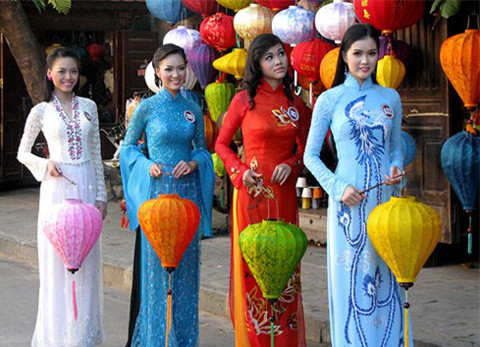 |
| Vietnamese Ao Dai travels across five continents. |
Epilogue
As predicted by marketing strategist Philip Kotler during his visit to Vietnam, we have many opportunities to penetrate the most fundamental market of humanity: providing food and clothing for all. In addition, there are also Vietnamese products that have reached the pinnacle and established a strong foothold, such as the Tosy robot brand.
Vietnamese brands are more readily accepted within the Vietnamese community in the US, with most products reflecting national identity. However, the gap between the Vietnamese community and the mainstream is quite significant. Therefore, conquering the Vietnamese market does not guarantee conquering the entire US market. Vietnamese people only have influence in certain regions, mainly the West Coast of Texas and the South. A favorable factor for the penetration of Vietnamese products into the US is that the younger generation of Vietnamese people are more adaptable and confident, spreading their influence across the country rather than remaining isolated like previous generations. Vietnamese Americans also place great emphasis on preserving traditional values across generations.
Besides their ability to integrate, the majority of young Vietnamese people still identify themselves as Vietnamese. This is also an advantage for maintaining the position of products with Vietnamese identity. Furthermore, American culture is not overly conservative and actively accepts good, healthy trends that align with the values of the times. American culture is not biased, and it doesn't blindly follow "Vietnamese identity." American consumers respect the values of the times.
Therefore, elevating oneself to embody contemporary values such as humanism, wholesomeness, and non-discrimination based on ethnicity or politics is the right path for Vietnamese brands.
According to Vietnam.net


