
From gold mines to attractive ecotourism destinations in the highlands of Nghe An.
(Baonghean.vn) - With its fertile fields, clear streams, and dozens of waterwheels along the Cha Ha ravine, the people of Yen Hoa commune (Tuong Duong district) have developed it into an attractive eco-tourism destination. Few people know that more than 10 years ago, this place was once a gold mining site that was devastated by excavation and came with many negative consequences.
A time of devastation caused by illegal gold mining.
Returning to Yen Hoa commune (Tuong Duong district), we were truly amazed by the changes and improvements in the villages there. What impressed us most was that the Thai people in Yen Hoa commune have learned to develop tourism, leveraging the landscape, cultural life, and customs to attract visitors.tourists.
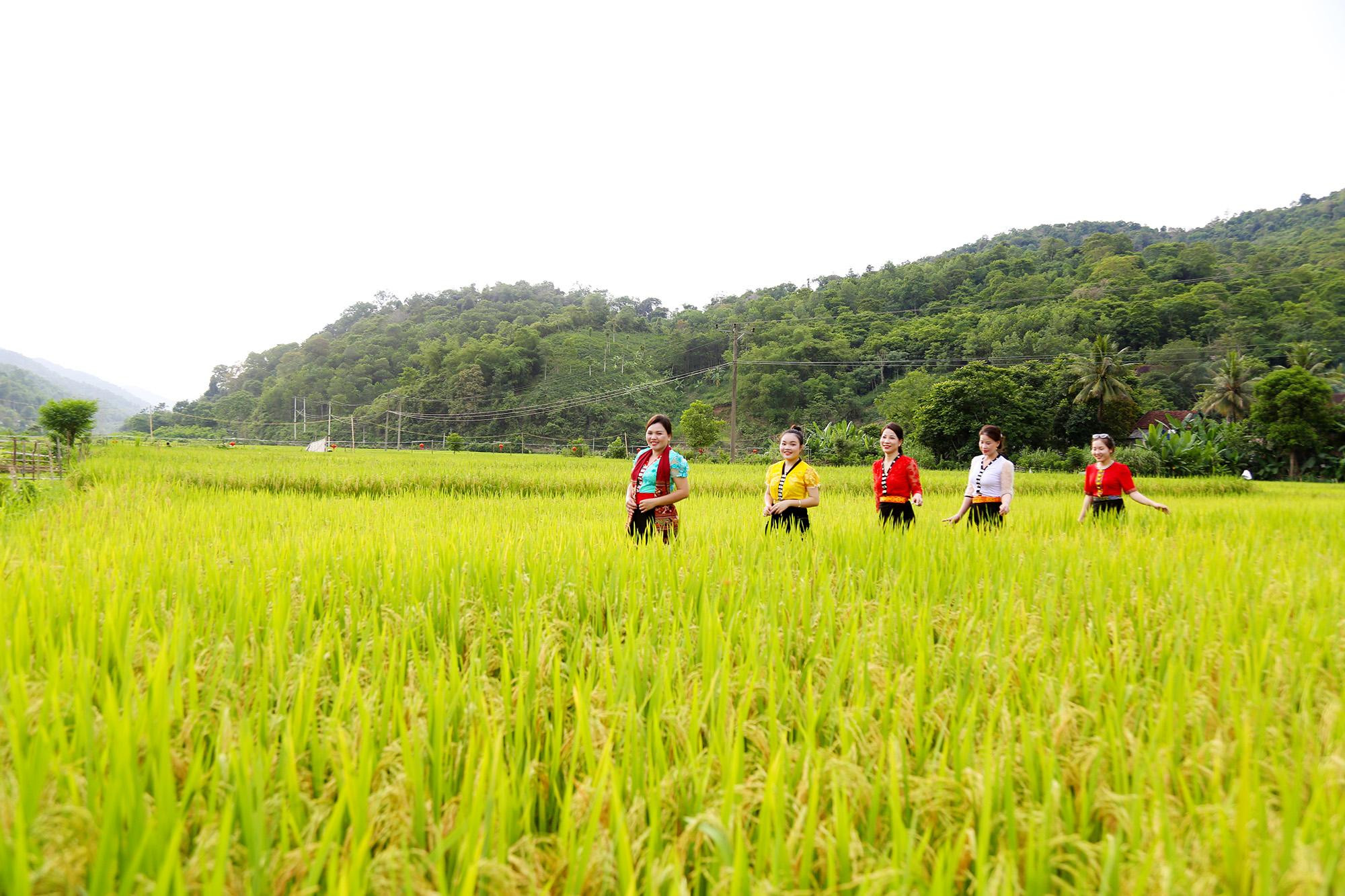 |
Rice fields heavy with grain in Yen Hoa (Tuong Duong). Photo: Dinh Tuyen |
Visitors to Yen Hoa are captivated by the rice paddies laden with grain, the nearly 50 waterwheels that run day and night along the Cha Ha River, the stunning Săng Lẻ forest, and the songs and dances of the Thai girls. Many believe that, with its advantageous scenery, Yen Hoa will be one of the most outstanding community tourism destinations in western Nghe An.
Walking amidst rice paddies ready for harvest, following the cool, clear Cha Ha stream, with waterwheels tirelessly pumping water to the fields, we felt the abundance and peaceful rhythm of life, just like its name – Yen Hoa (Peaceful and Harmonious). Tourists were also strolling through the fields, taking advantage of the afternoon to admire the mountain scenery and take photos beside the waterwheels. Few know that more than 10 years ago, the image of this place was just a scene of muddy red streams and ravines.gold mining.
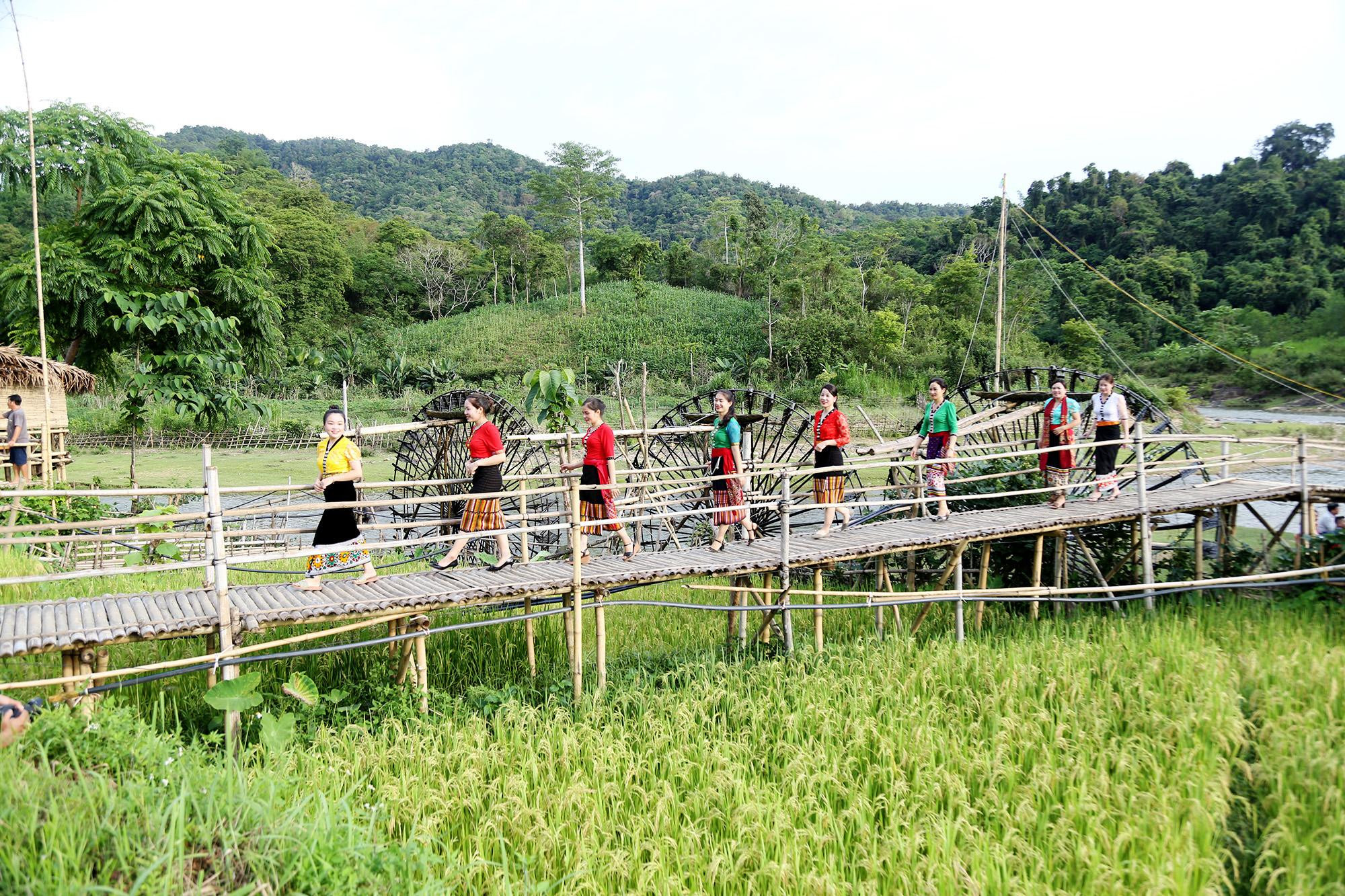 |
The beautiful scenery of mountains, hills, rivers, streams, and waterwheels in Yen Hoa commune. Photo: Cong Kien |
The "Four Yen" region (comprising the communes of Yen Na, Yen Tinh, Yen Hoa, and Yen Thang) in Tuong Duong district has long been known for its large reserves of alluvial gold. Since ancient times, the Thai people have practiced traditional gold panning, providing their families with a significant income and ensuring they had enough to eat during the lean season.
Then, suddenly, groups of people arrived from nowhere, bringing barges, excavators, and high-powered pumps to dig along the streams and fields. The Chà Hạ, Nậm Ngân, Huổi Nguyên, and Líp streams, which were once clear and blue, suddenly became muddy and reddish, their water sources polluted.pollutedThe situation was so serious that fish and shrimp couldn't survive, forcing people to go far away to get them for consumption.
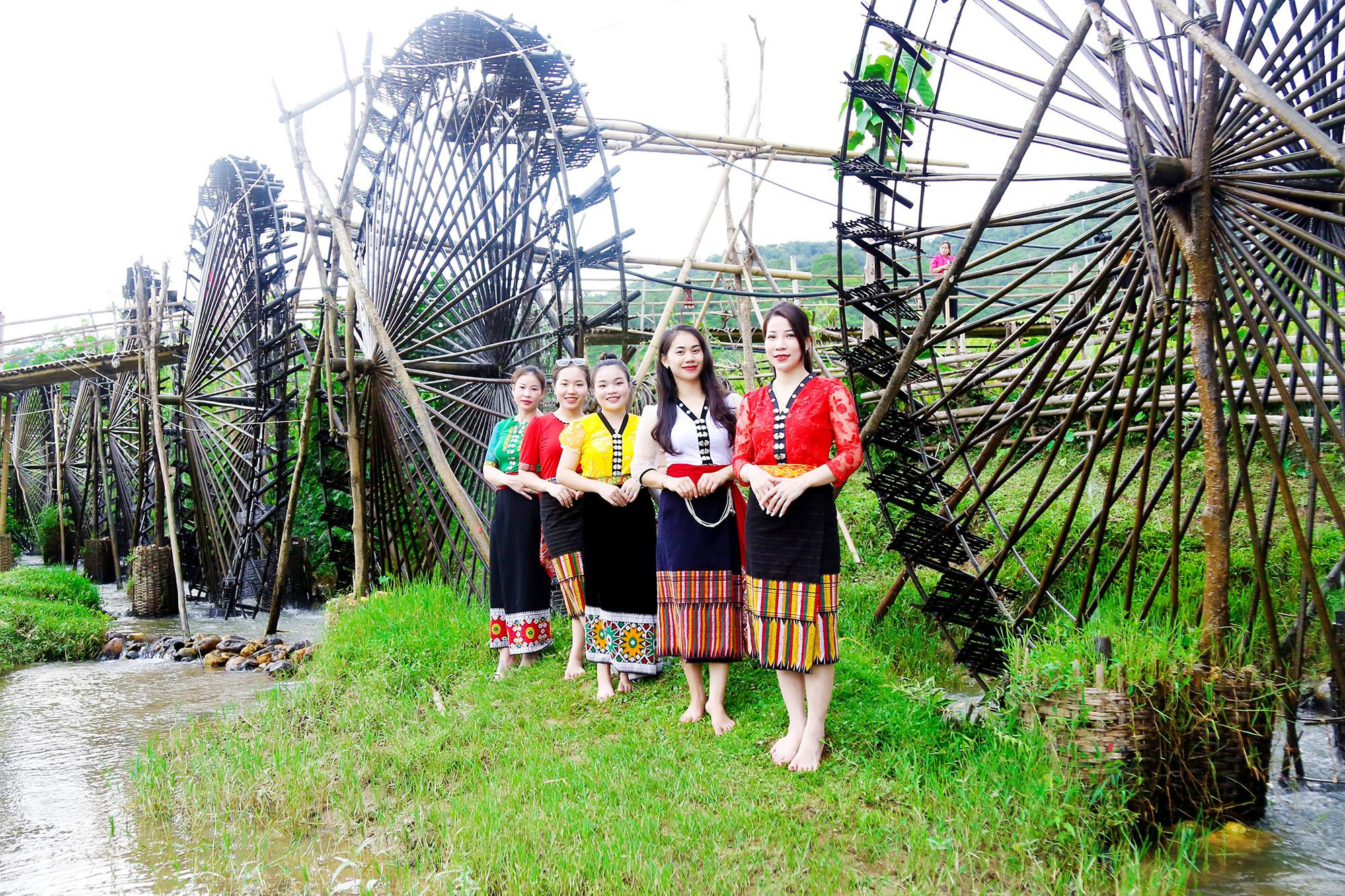 |
Thai women look graceful beside a waterwheel. Photo: Dinh Tuyen |
 |
Tourists check in by the waterwheel. Photo: Dinh Tuyen |
Route 48C through Yen Hoa is always covered in thick white dust, passengers constantly have to endure the noise of various engines and machinery, village life is disrupted, and the people of Yen Hoa live in a constant state of "unease".
Back then, Mr. Vi Kham Mun, a folk artist in Xieng Lip village (Yen Hoa), lamented: "I don't know when the 'gold rush' will end, restoring peace to the village? When will the Huoi Nguyen, Nam Ngan, Cha Ha, and Lip streams become clear again so that fish and shrimp can return, and people can go out to wash their clothes in the evenings?"
Attractive destination
RememberartisanAfter passing through Vi Kham Mun, we crossed the fields and walked a short distance to Xieng Lip village to chat. It was still the same stilt house on the hillside, but the paths were cleaner and more beautiful now.
After so many years, Mr. Mun was genuinely happy and excited to see him again: “Have you visited the rice fields and admired the waterwheels along the Cha Ha River, journalist? I never thought we would see the rivers and streams in the region become clear and green again, with shrimp and fish swimming in the water. And now, ecotourism and community tourism are developing.”
 |
The beauty of the Săng Lẻ forest in Yên Hòa commune (Tương Dương district). Photo: Đình Tuyên |
Over a glass of wine and grilled fish, a familiar dish of the people of Xieng Lip, artisan Vi Kham Mun spoke at length about the revival of the rivers and streams in Yen Hoa. Unable to bear the sight of the rivers and streams perpetually muddy and heavily polluted, the people of Yen Hoa petitioned the commune and district authorities, requesting that organizations and individuals cease alluvial gold mining and promptly restore the land for the people.manufactureand live.
Machinery was gradually withdrawn from the "Four Yen" area, and over the years, the rivers and streams gradually became clear again. In the early seasons, the fields were barren, and yields were low. With the diligent care of the Thai people, each year the fields became more fertile and bountiful, waterwheels were built along the streams to provide irrigation water, and the landscape became even more beautiful…
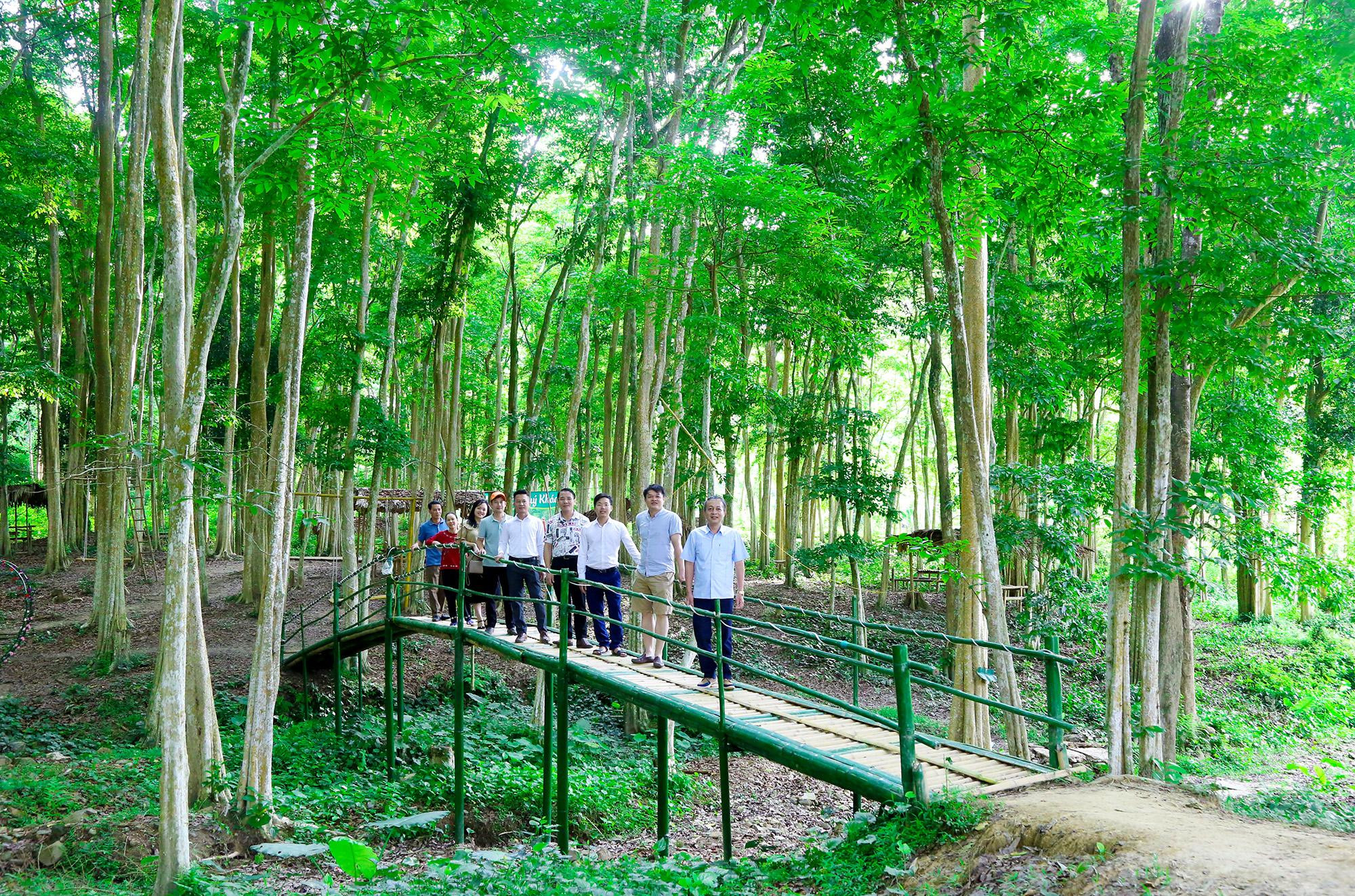 |
Tourists visit the Yen Hoa sandalwood forest. Photo: Cong Kien |
As an officer in the District Agricultural Department, Mr. Lo Thanh was assigned to serve as Chairman of the People's Committee of Yen Hoa Commune. Recognizing the potential for ecotourism and community-based tourism in the area, he decided to develop a model.tourism development,This approach combines the exploitation of scenic beauty, the preservation of cultural identity, and the provision of additional income for local people.
He arranged his schedule to travel to Con Cuong district, then to Quy Chau, Que Phong, and even as far as Thanh Hoa, Hoa Binh, and Lao Cai to learn about community-based tourism. Upon returning, he sought advice from experienced organizations and individuals, even going so far as to receive hands-on guidance.
This included support from the Union of Science and Technology Associations of the province with the project "Building a community tourism model associated with poverty alleviation, contributing to the construction of new rural areas in Yen Hoa commune". The project program provided support in terms of equipment and facilities, established a performing arts group; and supported the promotion and advertising of the potential and advantages of tourism development as well as other aspects.destinationlocal attractions.
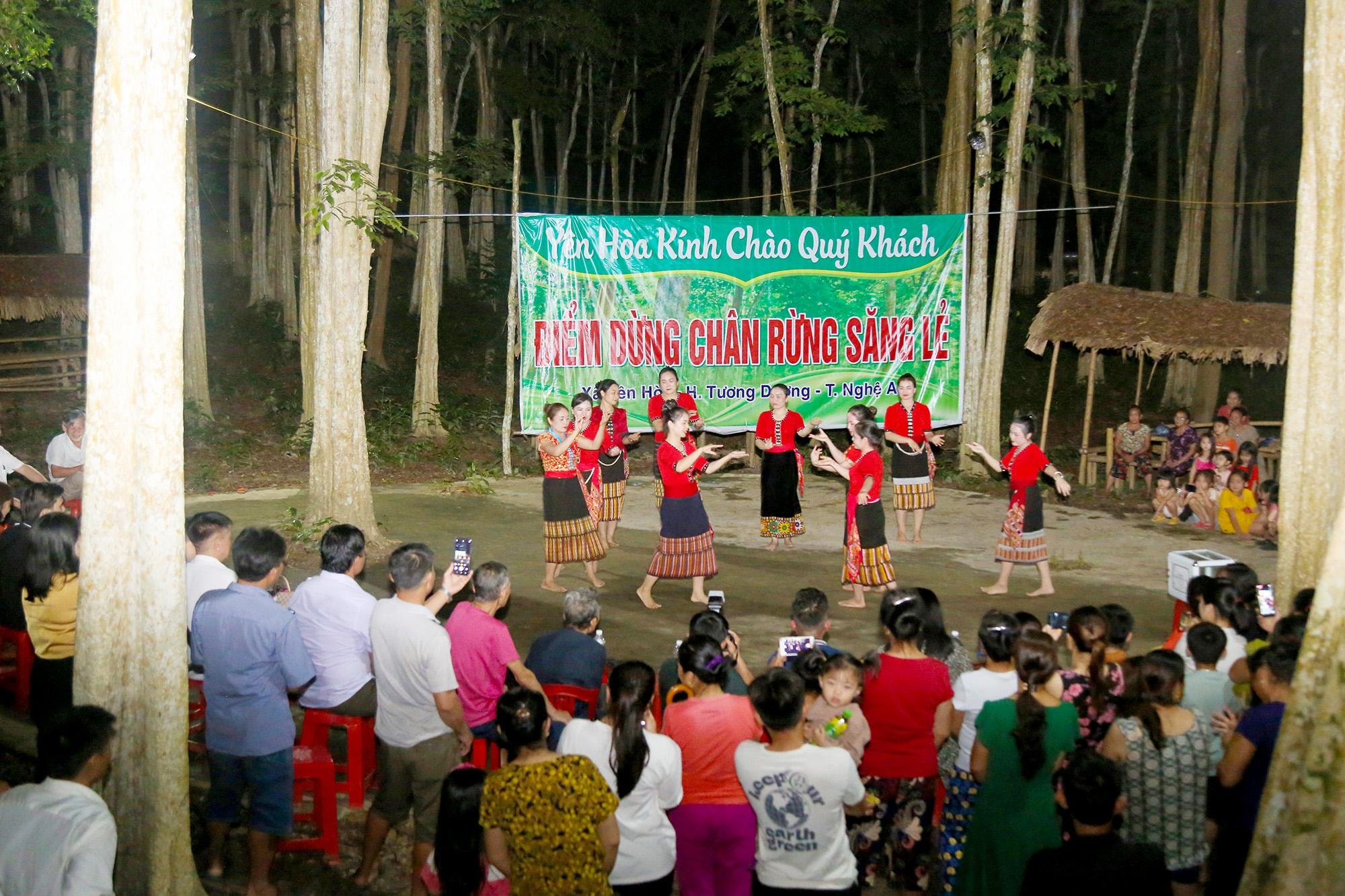 |
| Tourists engage in cultural and artistic exchanges with the people of Yen Hoa commune. Photo: Dinh Tuyen. |
Step by step, with the consensus and support of the people, Yen Hoa's tourism model began to take shape with two highlights: the system of nearly 50 waterwheels along the Cha Ha stream and the Săng Lẻ forest in Yen Tan village. Recently, several tourist groups have visited Yen Hoa to enjoy the scenery and experience the local culture.cultural lifeof the Thai people.
Recently, the Union of Science and Technology Associations organized a trial tour to explore Yen Hoa and several destinations in Tuong Duong. Participants highly praised the scenery, cultural activities, and cuisine.
“The tourist destinations in Yen Hoa commune have the advantage of beautiful natural landscapes, especially the Săng Lẻ forest, rice fields, and streams, creating a unique and distinctive character. The current challenge is to both continue promoting tourism extensively and improve service quality, which promises to attract even more tourists.”
Mr. Dau Quang Vinh – Vice Chairman of the Union of Science and Technology Associations of Nghe An Province


