
From Tien - The lens of immortal moments!
Mentioning photographer Tu Tien brings to mind historical moments captured through his timeless news and art photographs. To this day, the works of the late photographer Tu Tien remain an integral part of the great history of national defense and nation-building of the Vietnamese people.
.png)
Minh Thu• December 11, 2024
Mentioning photographer Tu Tien brings to mind historical moments captured through his timeless news and art photographs. To this day, the works of the late photographer Tu Tien remain an integral part of the great history of national defense and nation-building of the Vietnamese people.

According to his family, photographer Tu Tien was born in 1942 in Thailand, with his ancestral home in Thach Kenh commune, Thach Ha district (Ha Tinh province). Around 1940, his father, Tu Hong, a revolutionary cadre who worked underground before the August Revolution of 1945, moved his family to live in a Vietnamese community in Laos. This was an important revolutionary base, and therefore closely monitored by the French colonialists. Therefore, Tu Hong decided to move his family to Thailand to live and continue his revolutionary activities.
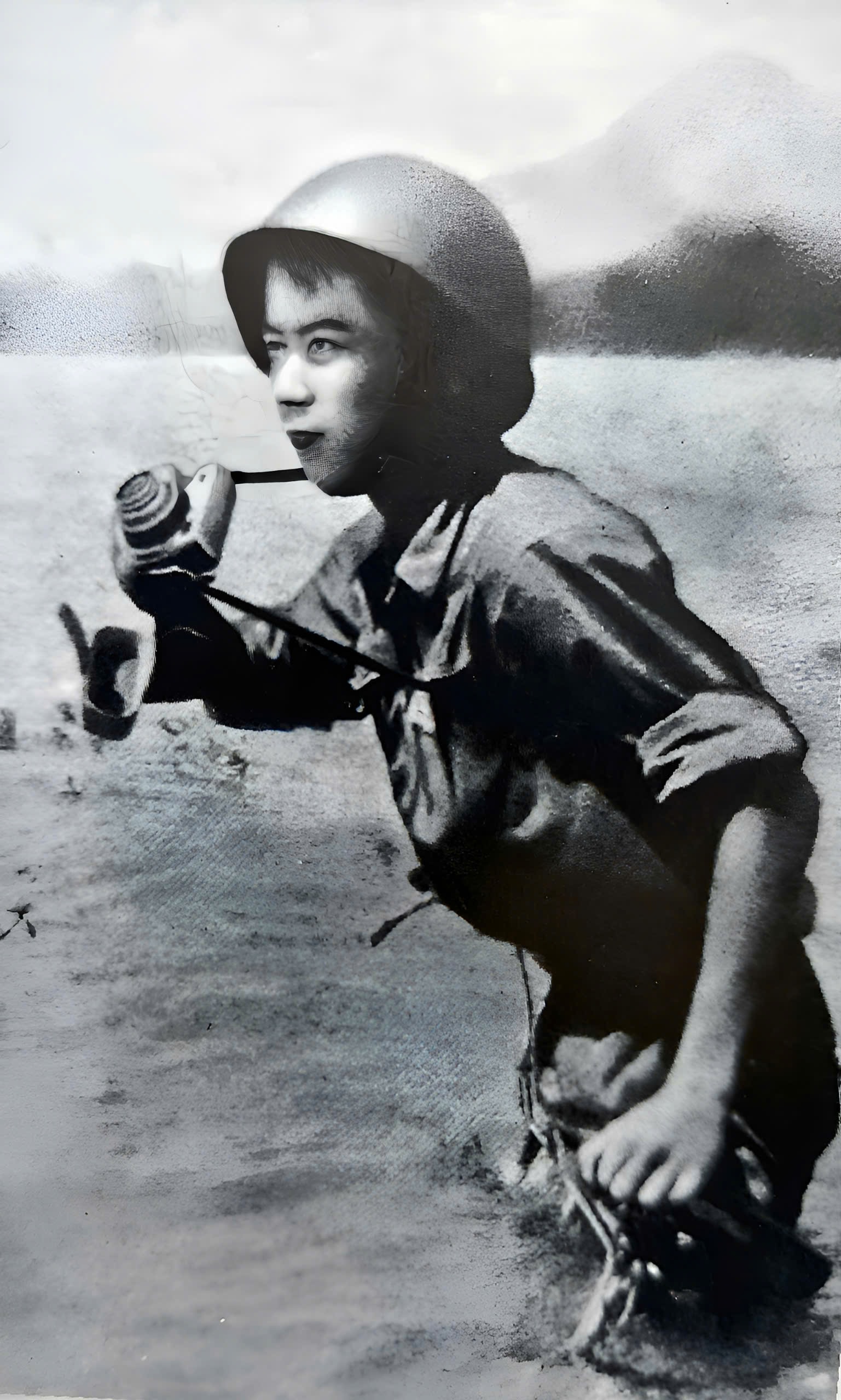
Mr. Tu Tien grew up, studied, and practiced photography in Thailand. In 1961, responding to President Ho Chi Minh's call for overseas Vietnamese to return home to build and defend the Fatherland, Mr. Tu Hong brought his family back to live in his hometown in Ha Tinh. Coming from a patriotic Vietnamese expatriate family in Thailand, with his father being a revolutionary cadre of the Party, Mr. Tu Tien quickly immersed himself in the great national resistance war. Thanks to his photography skills, he was hired by the Ha Tinh Provincial Department of Culture at that time.
During the years of the war against the US, after completing basic journalist training at the Central Propaganda School, he plunged into the flames of war. During this time, he was often seen wearing an anti-aircraft soldier's steel helmet and carrying an old EXA.Ia and Zenit camera, venturing across key battlefields. He was present at battlefronts from Truong Bon and Ben Thuy (Nghe An) to Dong Loc Crossroads (Ha Tinh), along the legendary Truong Son trail… documenting the most arduous and fierce moments of the war against the US waged by our army and people.
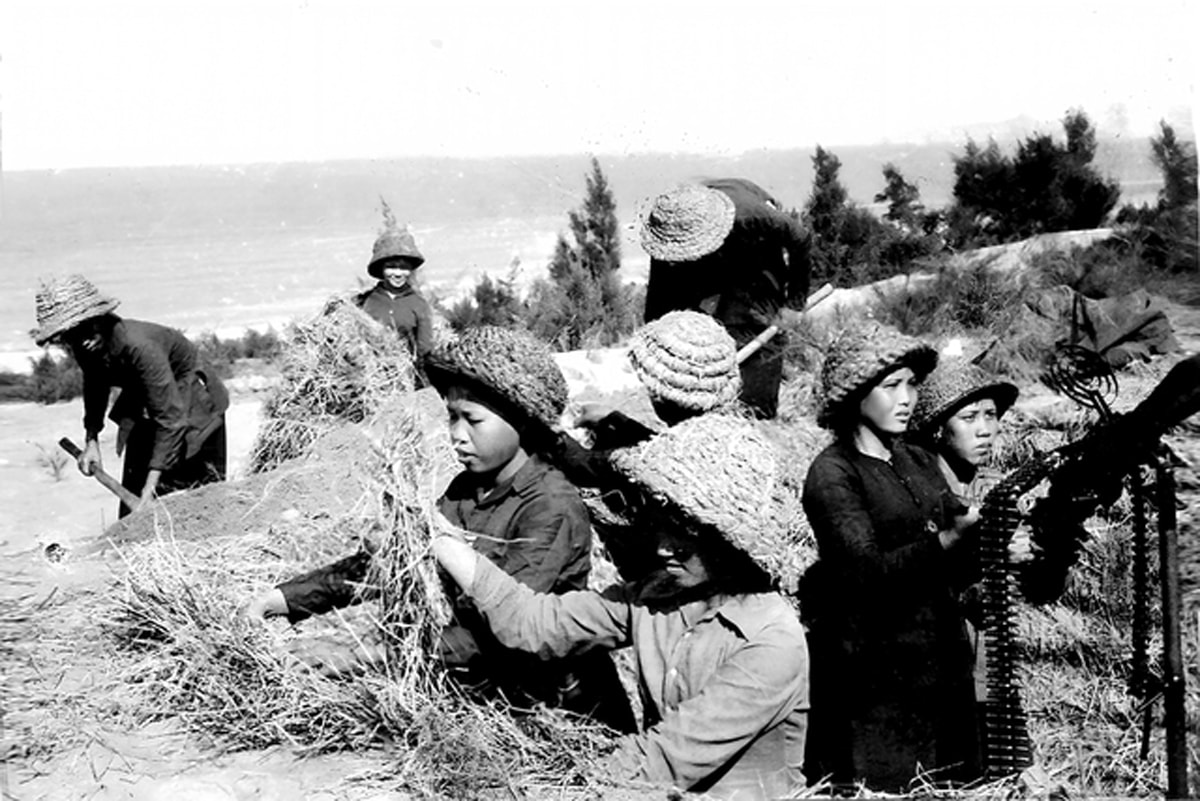
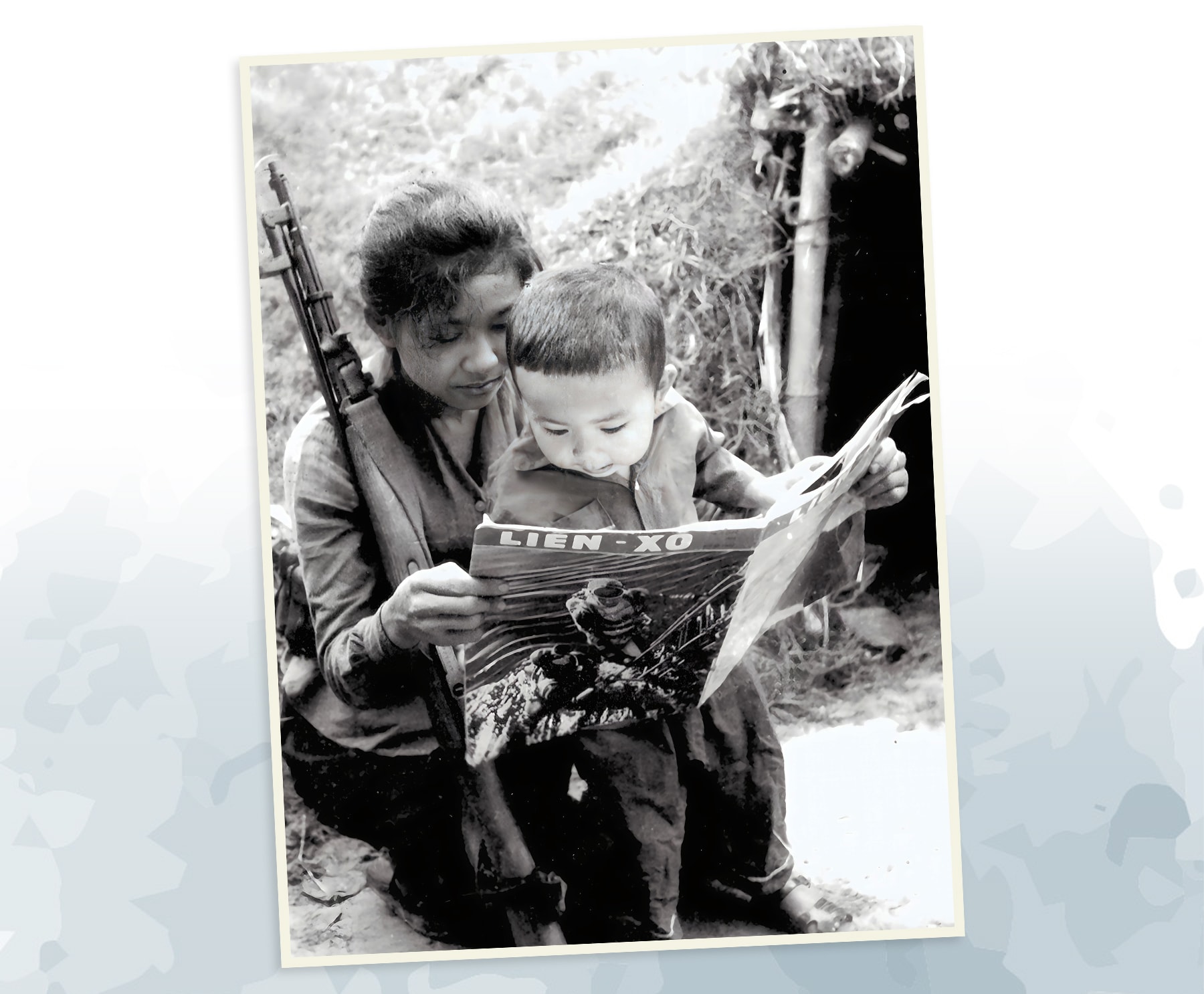
Through his black-and-white photographs, photographer Tu Tien profoundly depicted revolutionary heroism, while simultaneously honoring the unwavering will and determination of the people and soldiers of Nghe An and Ha Tinh provinces in particular, and the entire nation in general. Many moments he captured have become timeless works, such as: "Let Mother Go to Fight the Americans"; "Ky Phuong Women's Squad - Heroic Unit"; "The Ten Girls of Dong Loc"; "Hero La Thi Tam at the observation post 'counting each bomb fall' at Dong Loc Crossroads"; "Protecting the Cam Duong Sea"; "Combat Production and Fighting"; "After the Duty Shift"; "Hero Vuong Dinh Nho, Defusing Delayed Explosive Bombs"; "Cultural Performances Serving the Battlefield"... These works not only vividly demonstrate the patriotic spirit and heroic sacrifices of the previous generation, but also represent pride and a shining example in the revolutionary photography of Vietnam.
In particular, the photograph "The Heart of the Vietnamese People," taken by photographer Tu Tien on May 19, 1972, is a deeply meaningful image, full of topical, political, and humanistic significance. At that time, the militia of Thach Trung commune, Thach Ha district (Ha Tinh province), in coordination with the 233rd Anti-Aircraft Artillery Unit, bravely resisted the fierce bombing raids of American aircraft. A jet nicknamed "Thunderbolt, Ghost" of the American Air Force was hit by artillery fire and burst into flames in the sky. The pilot, Major Obrinicol, was forced to parachute to safety but suffered serious facial injuries.
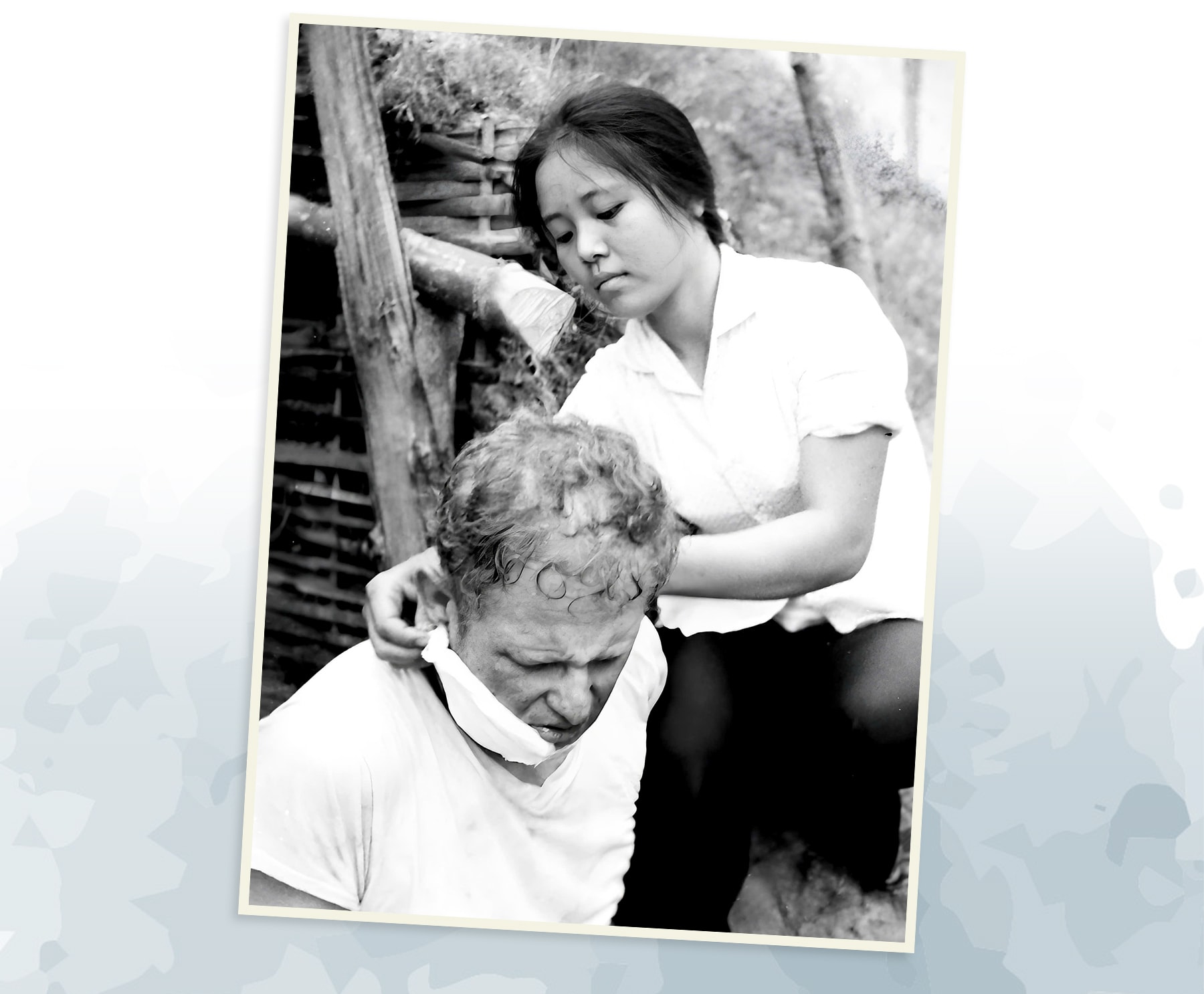
As militia nurse Tran Thi Sam was bandaging Obrinicol's wounds, photographer Tu Tien managed to capture a special moment: the image of a small Vietnamese girl, with a kind yet resolute face, caring for the enemy who had just dropped bombs on her homeland. The large American pilot, with his face bowed in pain, seemed silently remorseful.
The photograph quickly spread both domestically and internationally, becoming a symbol that helped people around the world better understand Vietnam's just struggle. At the same time, it illuminated the noble spirit of the Vietnamese people, true to the teachings of our ancestors: "Using righteousness to overcome brutality; using humanity to replace tyranny."
Later, the work "The Heart of the Vietnamese People" was awarded a bronze medal by the Vietnam Association of Photographic Artists at the "A Journey in Photography" photo exhibition celebrating the 50th anniversary of President Ho Chi Minh signing Decree No. 147/SL establishing the "Vietnam National Film and Photography Enterprise" (March 15, 1953 - March 15, 2003).
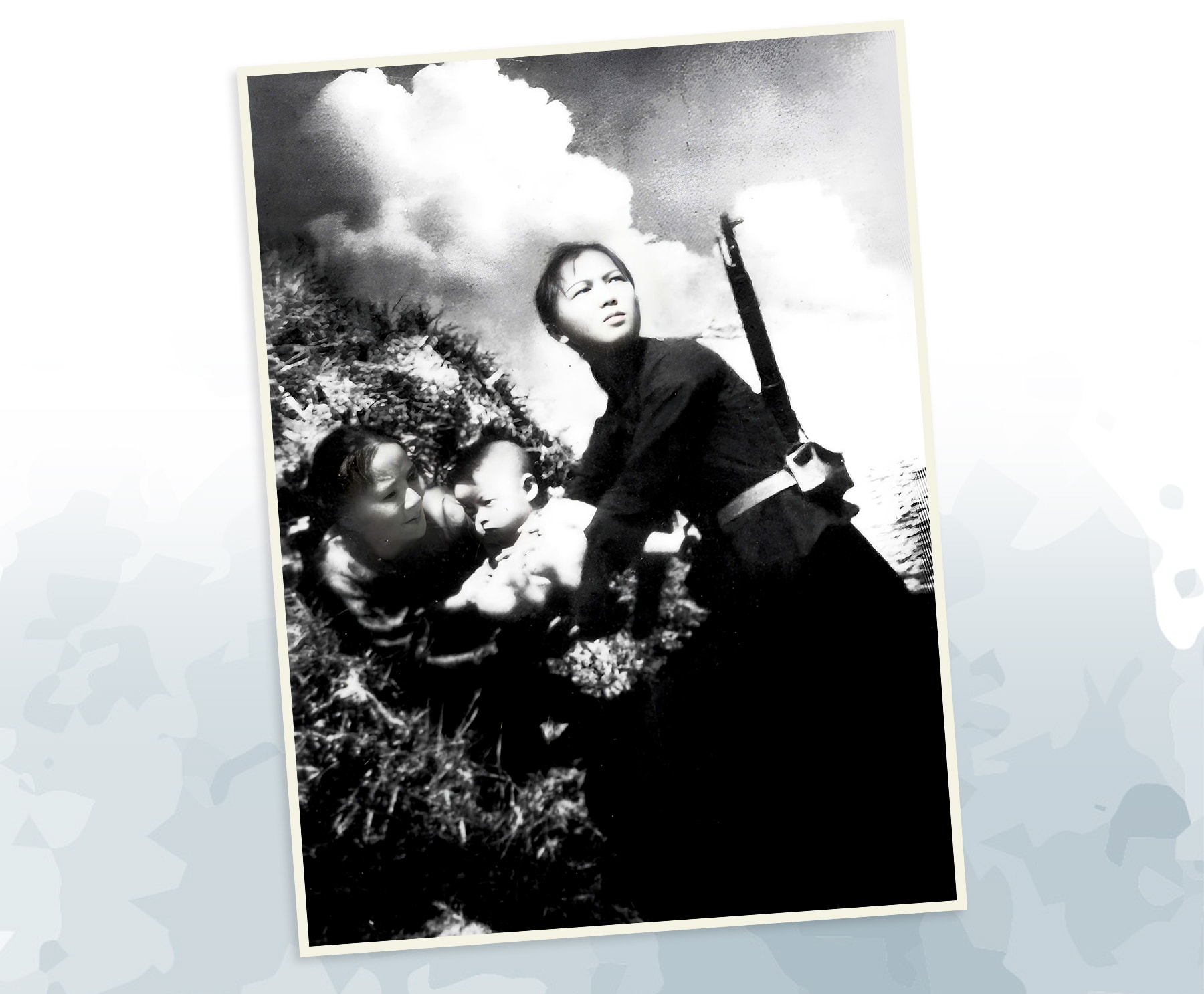
During this same period, the photograph "Let Mother Go to Fight the Americans" by photographer Tu Tien also left a profound mark. The photograph depicts a woman, rifle slung over her shoulder, cradling her small child in her arms, her eyes filled with hatred as she gazes up at the smoke-filled sky, entrusting her child to a neighbor lurking behind an A-shaped bunker. The vivid image captivates viewers, as if they can hear the roar of the American planes dropping bombs and the woman hurrying to her fighting position… moving millions of hearts and evoking memories of a heroic era for the entire nation!
The photo series "Kỳ Phương Women's Squad - A Heroic Unit". The Kỳ Phương Women's Squad, from Kỳ Anh district (Hà Tĩnh province), was established on April 3, 1968, consisting of nine girls aged 17 to 19, equipped with rifles and machine guns. During six months of tenacious fighting, they shot down three American aircraft and, in coordination with other forces, destroyed 12 more, protecting transportation targets and artillery positions. For their outstanding achievements, the squad was awarded the Ho Chi Minh Badge, the Third Class Military Merit Medal, and in October 1972, was honorably awarded the title of Hero of the People's Armed Forces.
.jpg)
After the war ended in 1976, he was admitted as a member of the Vietnam Association of Photographic Artists and transferred to the Communications Department of the Nghe Tinh Provincial Health Department until his retirement. Regardless of his position, he maintained his passion for photography, diligently traveling to various places to capture news and artistic photographs on the themes of healthcare and the working lives of soldiers and civilians in the construction and defense of the Fatherland.
While writing this, I recall meeting him on the roads of western Nghe An province and witnessing his timeless photographs reflecting the life and people of this region. These include the photo of Labor Hero and Director of Con Cuong Forestry Station Nguyen Ngoc Lai when he was a worker in the Trung Chinh Forestry Exploitation Team, or the radiant smiles of the two elderly women in Tam Dinh commune, Tuong Duong district (Nghe An province) when "Electricity reached the village"; "The melodies of the forest"...

Later, photographer Tu Tien compiled his photographic works and published two photo books: "A Time of Bombs and Bullets, a Time of Peace" (1999) and "A Time to Remember" (2000). These two photo books vividly depicted authentic moments of our soldiers and people during the years of the war against the US to save the country. Under enemy bombs and bullets, women, children, and soldiers remained resilient, living and fighting. These moments not only showcased courage, willpower, and determination, but also embodied noble human values and the reconstruction and development of the country after the war ended and peace was restored.
The late General Secretary of the Vietnam Association of Photographic Artists, Le Phuc, upon viewing the precious photographs of photographer Tu Tien, wrote: "Those who knew photographer Tu Tien all recognized in him a passionate, dedicated, and devoted person... He was a diligent and serious worker... Tu Tien's lens truthfully and vividly reflected the life of fighting, producing, and building in a region famous for its rich revolutionary traditions... That is his homeland of Nghe Tinh, a place closely associated with the ups and downs of the country... His photographic subjects are very diverse: healthcare, forestry, culture and society, lowlands, mountains, islands... but most prominently, his photographs on the theme of the war against America... That is the essence, distilled from a lifetime of photography by the artist..."
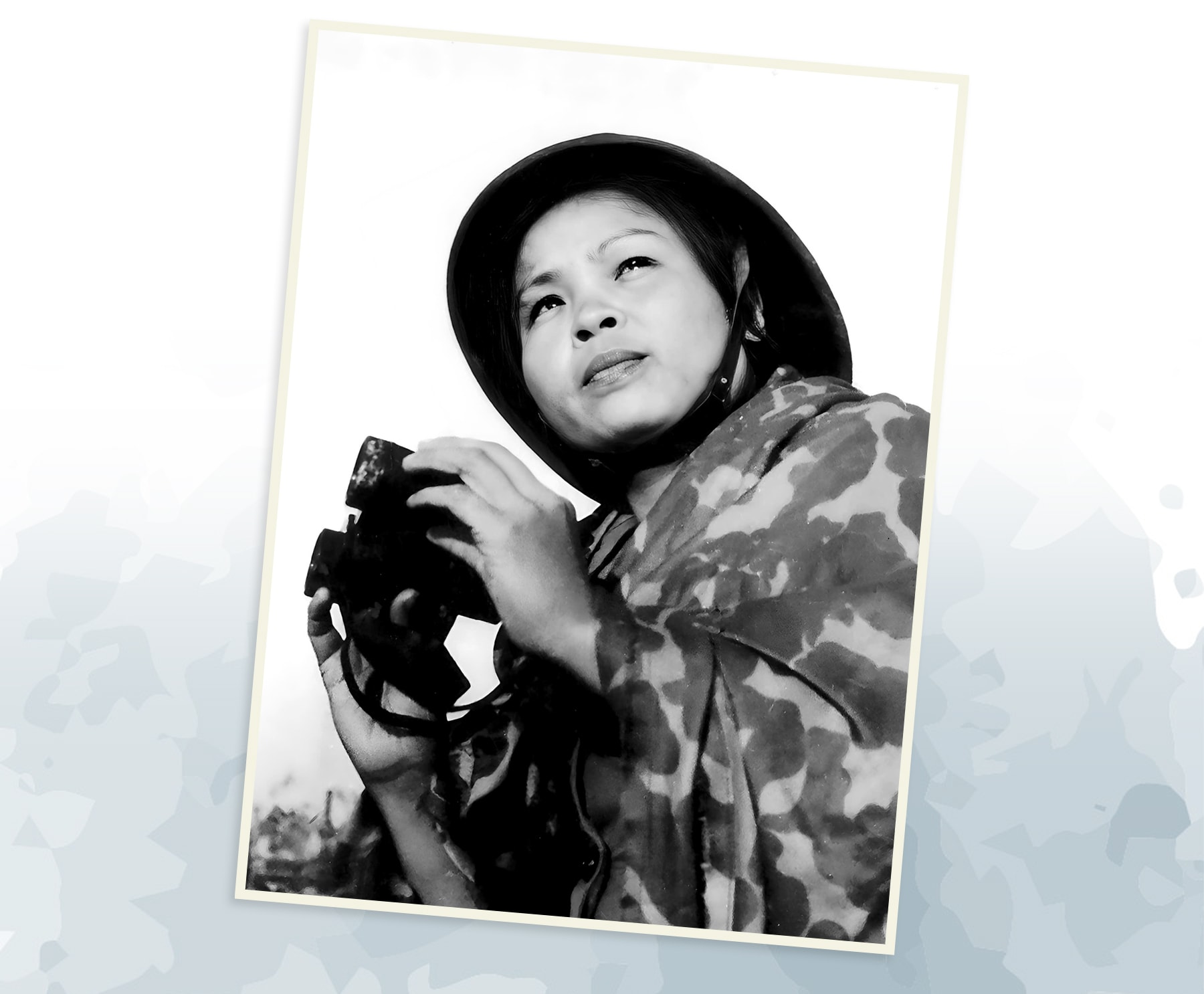
Former Chairman of the People's Committee of Nghe An province, former Deputy Minister of Agriculture and Rural Development Ho Xuan Hung, upon viewing the photo collection of photographer Tu Tien, expressed his thoughts: "...Growing up in the cultural cradle of Nghe An, artist Tu Tien was nurtured and closely connected to his homeland, and at the same time, dedicated his entire life to the cause of photography... During the years of fierce war, as well as in the peaceful life of his homeland and country, his lens recorded many valuable documents about the vital struggle of the nation, as well as images of the people's persistent labor in the construction of socialism and the current cause of renewal... The photo collection with the theme "War" is a collection of memories through artistic imagery..."
"Only by enduring the hardships and harsh realities of life and death amidst the smoke and flames of war can artists capture images and events that leave a profound impression of the heroic struggle of the Vietnamese people... Many of his photographs contain a noble philosophy of life of a nation that knows how to fight and win..."
His diligent and serious work has left behind invaluable photographic documentation, making him a worthy role model for future generations of photographers to follow. Although he has now passed away, the works of photographer Tu Tien continue to endure through the years.


