
There is still a lot of work to be done.
Abundant natural resources are only one of the important conditions for developing the cement manufacturing industry. Along with that, many other related issues exist, such as: mechanisms and policies to attract investment; attracting capable and dedicated investors; technical infrastructure; planning and development orientation; and opportune moments… Because it has not yet fully met these factors, Nghe An is facing difficulties in achieving its goal of becoming a major cement production center of the country.
(Baonghean)Abundant natural resources are only one of the important conditions for developing the cement manufacturing industry. Along with that, many other related issues exist, such as: mechanisms and policies to attract investment; attracting capable and dedicated investors; technical infrastructure; planning and development orientation; and opportune moments… Because it has not yet fully met these factors, Nghe An is facing difficulties in achieving its goal of becoming a major cement production center of the country.
The "Gray Shades"
Nghe An's cement industry is considered to have a long tradition. With the early establishment of the Cau Duoc Cement Plant and the 12/9 Anh Son Cement Plant, this should have been a solid foundation for the province's strong development of the cement industry, but the reality is different.
Theoretically, if we add up the total capacity of all existing cement plants in the province, we get 1.648 million tons/year (including: Hoang Mai Cement 1.4 million tons; Cau Duoc Cement 0.072 million tons; Petrochemical 12/9 Cement 0.088 million tons and Hop Son Cement 0.088 million tons). However, in reality, except for Hoang Mai Cement (which started production in 2002) with rotary kiln technology, which has stable production and business, most of the other cement plants are experiencing a decline.
The Cau Duoc Cement Plant, with its outdated vertical kiln production line, produces low-quality, unsaleable products. Furthermore, its operation causes environmental pollution. The plant's main product is not cement; it primarily buys clinker as raw material and grinds it, resulting in very low production volumes. Currently, the plant is shifting its focus to producing various construction materials. Similarly, the 12/9 Oil and Gas Cement and Hop Son - Anh Son Cement Plants, also using outdated rotary kiln technology, are currently operating at a reduced capacity, awaiting investment in new projects. Outdated cement technology, low production capacity, and products struggling to compete in the market are the "gray areas" facing cement manufacturing businesses in Nghe An province.
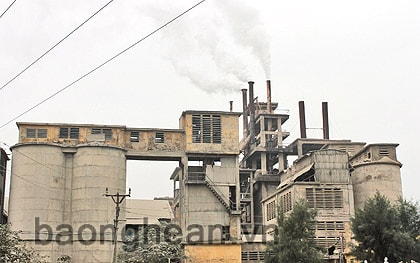
Rotary kiln cement production technology has become outdated at Cau Duoc Cement Joint Stock Company.
Limestone and clay are the main raw materials for the cement industry. Many localities in the province, such as Quynh Luu, Hoang Mai, Nghia Dan, Do Luong, Anh Son, and Con Cuong, have abundant resources. However, due to outdated cement plant technology, low capacity, and inconsistent quarrying processes, the value of limestone-based products has not been fully realized. Furthermore, quarrying wastes resources, causes significant environmental and ecological damage. According to surveys and explorations by relevant agencies, the province has reserves of over 4 billion cubic meters of limestone, over 1 billion tons of clay, and hundreds of millions of tons of additives such as basalt, kaolin, and iron ore. In addition, there are approximately 4-5 million tons of coal (in Tuong Duong and Con Cuong), a type of long-fired coal with high calorific value, suitable for cement firing. With such large reserves, any investor in the cement industry would be attracted and want to get involved. Thus, the resource advantage of the cement industry in our province is enormous, but it has not been effectively exploited; in fact, this resource is being exploited to serve cement production projects in other provinces.
Từ bao đời nay, Núi Len, Kim Giao, Răng Cưa, Đá Bạc… là những dãy núi đá vôi, đá sét không mang lại ý nghĩa cũng như giá trị về kinh tế cho người dân xã miền núi Tân Thắng và vùng lân cận của huyện Quỳnh Lưu. Nhưng kết quả khảo sát gần đây, cho thấy, đây là vùng mỏ có trữ lượng đá vôi khoảng 241 triệu tấn và 36 triệu tấn đá sét, chất lượng tốt, rất lý tưởng cho ngành sản xuất xi măng. Với kết quả đó, người dân nơi đây có quyền hy vọng, thời gian tới, sẽ có những dự án xi măng đầu tư trên địa bàn xã và họ sẽ được hưởng lợi về việc làm, thu nhập, từng bước thay đổi bộ mặt nông thôn. Cũng như ở Tân Thắng, bà con vùng Lèn Rỏi - Tân Kỳ rất vui khi biết, qua thăm dò, khảo sát cho kết quả, nguồn đá vôi nơi đây có tổng trữ lượng hơn 2.782 triệu tấn, chất lượng tốt và Tập đoàn đầu tư Sài Gòn đã quyết định đầu tư thực hiện dự án xây dựng Khu công nghiệp tổ hợp sản xuất xi măng VLXD lớn tại Tân Kỳ.
Tuy nhiên, cho đến nay, nguồn tài nguyên quý này vẫn đang là… tài nguyên, bởi chủ đầu tư dự án đã “rút lui”. Người dân nơi đây, đang phải đối mặt với ô nhiễm môi trường, tài nguyên bị khai thác bữa bãi. Nhiều “chủ mỏ” khai thác đá xây dựng không phép “mọc lên”. Quy trình khai thác không đáp ứng các yêu cầu, quy định của Nhà nước, tạo nên mối nguy hiểm luôn rình rập, đe dọa tính mạng người lao động vì nguy cơ sập mỏ (cách đây không lâu đã xẩy ra vụ sập mỏ đá ở Lèn Rỏi. Cơ quan chức năng đã bắt giữ những người liên quan, vì không chấp hành nghiêm túc quy định của pháp luật)…
Như đã nêu ở trên, nguồn tài nguyên đá vôi, đất đá sét trên địa bàn tỉnh ta rất phong phú, nhưng chưa được quản lý, khai thác hiệu quả phục vụ cho ngành sản xuất xi măng. Một trong những nguyên nhân dẫn đến tình trạng đó là chưa thực hiện tốt công tác quy hoạch. Vì vậy, đã gây khó khăn cho các nhà đầu tư khi tìm hiểu thông tin, triển khai dự án... Chủ đầu tư dự án xi măng Tân Thắng, sau một thời gian triển khai dự án, nay được điều chỉnh bổ sung từ quy hoạch mỏ khoáng sản dự trữ sang quy hoạch thăm dò, khai thác trữ lượng khoáng sản làm nguyên liệu sản xuất xi măng đến năm 2020.
Hay dự án triển khai dây chuyền xi măng Hoàng Mai 2 cũng rất lo lắng về mỏ nguyên liệu và một số dự án khác cũng đang gặp khó khăn, vướng mắc khi quy hoạch vùng mỏ nguyên liệu. Sự thiếu quy hoạch đồng bộ vùng nguyên liệu, làm ảnh hưởng rất lớn đến tâm lý nhà đầu tư. Trong những năm qua, tỉnh ta liên tục đổi mới công tác xúc tiến đầu tư, ban hành cơ chế, chính sách thu hút đầu tư thông thoáng, có nhiều dự án đầu tư vào lĩnh vực sản xuất xi măng.
Tuy nhiên, có dự án ban đầu vào cuộc khá “ồn ào”, nhưng lại “chìm” nhanh. Điển hình là Tập đoàn đầu tư Sài Gòn với dự án xây dựng Khu công nghiệp tổ hợp sản xuất xi măng VLXD lớn tại Tân Kỳ. Mở đầu cho việc triển khai một dự án đầu tư dài hơi, là khởi công nhà máy xi măng Sài Gòn - Tân Kỳ (ngày 19/5/2010) với công suất thiết kế giai đoạn 1 gần 1 triệu tấn xi măng/năm (tổng mức đầu tư khoảng 1.500 tỷ đồng), giai đoạn 2 sẽ mở rộng công suất lên 10.000 tấn clinker/ngày, với 2 dây chuyền, tương đương 4 triệu tấn xi măng/năm.
Sau sự kiện lễ khởi công xây dựng nhà máy, đem đến bao hy vọng cho người dân Tân Kỳ và các cấp, ngành của tỉnh cũng đặt rất nhiều kỳ vọng vào dự án này. Nhưng sự chờ đợi, mong mỏi kéo dài khá lâu và kết cục, tỉnh đành phải rút Giấy phép đầu tư. Ông Hồng Trường - Nguyên Tổng Giám đốc dự án Nhà máy xi măng Sài Gòn - Tân Kỳ từng chia sẻ: “Vì gặp khó khăn về nguồn vốn, nếu tiếp tục đầu tư, phải vay vốn ngân hàng với lãi suất thương mại, đã vậy còn rất khó vay. Lĩnh vực đầu tư làm xi măng cần có thời gian dài, do vậy, đầu tư bằng nguồn vốn vay lãi suất thương mại sẽ không khả thi”. Có nhiều nguyên nhân dẫn đến sự thất bại này, nhưng có thể thấy rõ, nhà đầu tư thiếu tiềm lực và lựa chọn giai đoạn đầu tư (thời điểm) chưa phù hợp. Tuy đã chi phí không ít kinh phí cho công tác chuẩn bị đầu tư, khởi công, đền bù GPMB, xây dựng các hạng mục phụ trợ, hoạt động xã hội, từ thiện…nhưng chủ đầu tư đành phải “buông” dự án.
Hay tại dự án xi măng Hợp Sơn (trước đây là Nhà máy xi măng 19/5 Anh Sơn), do chủ đầu tư không đủ tiềm lực để tiếp tục triển khai dự án và tiến độ thực hiện dự án chậm hàng năm trời, nên tỉnh đã rút giấy chứng nhận đầu tư. Có thể thấy, từ năm 2010 đến cuối năm 2012, thị trường tiêu thụ xi măng diễn biến phức tạp, nhiều nhà máy xi măng trên toàn quốc lâm vào tình trạng, càng sản xuất càng thua lỗ vì cung đã vượt cầu, hơn nữa do ảnh hưởng của Nghị quyết 11 - CP và chính sách thắt chặt đầu tư, cùng với đó, chính sách và lãi suất cho vay của các tổ chức tín dụng siết chặt và khá cao. Do “mắc cạn” bởi những khó khăn này, trên địa bàn tỉnh ta, một số dự án xi măng đầu tư mới, hay liên doanh, liên kết đều gặp khó khăn khi triển khai, như: Xi măng Cầu Đước, Xi măng Đô Lương, Xi măng Dầu khí 12/9…
The signs are gradually warming up...
Từ đầu năm 2013, thị trường xi măng, vật liệu xây dựng đang có dấu hiệu ấm dần lên. Tiêu thụ xi măng hiện đang tăng trưởng từ 10 - 15%, dự báo thời gian tới sẽ tiếp tục tăng ở mức 5- 10%/năm. Sở dĩ có được tín hiệu mới cho ngành sản xuất xi măng, là do Chính phủ đã áp dụng nhiều chính sách kích cầu, tháo gỡ khó khăn cho các doanh nghiệp, ngân hàng giảm lãi suất cho vay… và đã có thêm những dự án đầu tư xây dựng mới được khởi công. Cùng với đó, nhu cầu tiêu thụ phục vụ khối dân sinh cũng đang có xu hướng tăng. Có thể xem đây là cơ hội mới cho việc khởi động các dự án đầu tư ngành sản xuất xi măng.
Đón đầu xu thế đó, Xi măng Tân Thắng sau một thời gian dài thực hiện đầu tư theo kiểu “cầm chừng”, đầu tháng 8 này, Công ty quyết định đẩy nhanh tiến độ bằng việc tổ chức Lễ ký kết hợp đồng và triển khai thực hiện gói thầu EP cung cấp thiết bị với tổng giá trị hơn 93,3 triệu USD. Các nhà thầu cung cấp thiết bị là những thương hiệu nổi tiếng thế giới về công nghệ sản xuất xi măng. Theo kế hoạch, sau khi hoàn thành giai đoạn 1 của dự án vào năm 2016, Nhà máy xi măng Tân Thắng mỗi năm sẽ cung cấp cho thị trường xi măng 2 triệu tấn sản phẩm chất lượng cao. Ông Nguyễn Cao Điến – Tổng Giám đốc Công ty CP xi măng Tân Thắng cho biết: “Xác định xu thế thị trường tiêu thụ xi măng của Việt Nam và trong khu vực đòi hỏi phải đảm bảo chất lượng cao, giá cả hợp lý và có đủ năng lực đáp ứng những hợp đồng cho các dự án lớn, Công ty quyết định đầu tư công nghệ sản xuất xi măng vào loại hiện đại, tiên tiến nhất hiện nay của thế giới, thân thiện với môi trường, sản xuất ra sản phẩm chất lượng cao, tạo lợi thế cạnh tranh trên thị trường”.
Hiện nay, trên địa bàn Nghệ An, Nhà máy xi măng Hoàng Mai mỗi năm cung cấp ra thị trường hơn 1,4 triệu tấn xi măng, các nhà máy xi măng khác đạt từ 300 - 400 ngàn tấn. Nhưng qua khảo sát, thống kê của ngành chức năng, năm 2011 địa bàn tỉnh Nghệ An đã tiêu thụ 2,7 triệu tấn xi măng. Như vậy, ở thị trường nội tỉnh vẫn còn “thị phần” cho các dự án nhà máy xi măng. Theo dự báo, đến năm 2015, nhu cầu tiệu thụ xi măng trên địa bàn tỉnh sẽ giao động khoảng 3,3 - 4,95 triệu tấn, năm 2020 sẽ khoảng 7,2 - 8,8 triệu tấn… Điều này có ý nghĩa, tạo động lực để một số nhà đầu tư mạnh dạn “tiến công” vào lĩnh vực sản xuất xi măng.
The 12/9 Petroleum Cement Joint Stock Company in Anh Son district seized this opportunity and has been working diligently to complete a project with a capacity of 550,000 tons per year, using modern rotary kiln technology according to European standards. The project has a total investment of over 1.1 trillion VND and has completed several major components, including cement silos, heat exchange towers, bagging facilities, general warehouses, cement grinding plants, and kiln bases. The company is determined to complete the project in the fourth quarter of 2003 and begin producing its first tons of product in early 2014. Thanks to the abundant limestone raw material area (the planned mining area of the 12/9 cement company) with reserves of 49.5 million tons, the plant has favorable conditions for long-term operation.
Another cement project currently underway is the Do Luong Cement Plant. After years of struggle and changes in ownership by multiple investors, it has remained difficult to secure a permanent location. Currently, The Vissai Cement Group – Ninh Binh has agreed to take over the project and install advanced equipment and technology to achieve a capacity of 2 million tons per year (the project's original design was for over 900,000 tons per year). Given the investor's strong commitment, the Provincial People's Committee has submitted a document to relevant authorities for consideration and resolution. Clearly, accelerating investment in several cement projects is a suitable approach given the current situation.
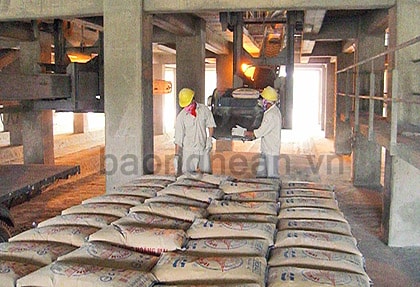
Cement products of Vicem Hoang Joint Stock Company.
Seize the opportunity...
In the coming period, it is likely that only 7 out of 46 cement projects (in the planning stage) nationwide will be completed and put into production (many cement projects have not been implemented due to a lack of investment capital). Therefore, from 2015 onwards, a shortage is predicted in the cement product segment, especially high-quality cement. According to economic experts, the current period is favorable for cement projects (already approved by the Government) to accelerate their completion.
According to the Vietnam Cement Industry Development Plan for the period 2011-2020 and orientation to 2030, as stipulated in Decision No. 1488/QD-TTg dated August 29, 2011, of the Prime Minister, Nghe An is one of four regions with significant potential for cement industry development nationwide, including: the Red River Delta region (Quang Ninh, Hai Phong, Hai Duong, former Ha Tay); Ninh Binh; Ha Nam; and the North Central region (Thanh Hoa, Nghe An, Quang Binh). Therefore, the goal of developing Nghe An into a major cement production center is appropriate; the remaining issue is how the province will organize its implementation.
To stimulate the development of the cement industry, in the coming period, along with continuing to improve the investment environment, reviewing, supplementing, and building preferential mechanisms and policies to support and encourage investment capital for cement production, and promoting the effectiveness of the "one-stop shop" and "integrated one-stop shop" mechanisms to quickly resolve investors' requests during project implementation, the issue of planning and granting raw material mine licenses needs timely attention. Currently, the procedures for granting mine licenses are quite complex, involving approval from many levels of government agencies. A comprehensive approach is needed: after evaluating and selecting suitable investors, the relevant provincial authorities should be responsible for supporting and creating favorable conditions for them.
In addition, the province needs to provide decisive direction to further improve the labor market information system, especially in training a skilled and high-quality workforce for cement manufacturing enterprises. Focus state budget support on building off-site infrastructure for projects. Apply financial and credit support policies and strengthen local capital mobilization from state-owned banks and credit institutions, shifting lending methods to project-based lending, directing capital flows into priority areas such as cement production and consumption...
To become a major cement production center of the country, Nghe An cannot rely solely on its abundant resources; much work remains to be done. However, with the attention and support of all levels and sectors, the strong innovation in the province's management and direction, the dedication and efforts of investors, and the agreement and support of the people, we will certainly achieve the goal of "becoming a major cement production center of the country."
Text and photos: Hoang Vinh


