(Baonghean.vn) - Saint-PetersburgButSaint-Petersburg, the former capital of Russia, was founded on May 27, 1703, by order of Tsar Peter the Great, on land conquered from Sweden. Located on the Neva River delta, it flows into the Gulf of Finland. As the birthplace of the great October Revolution, and despite numerous historical events, the city retains its magnificent and ancient beauty.
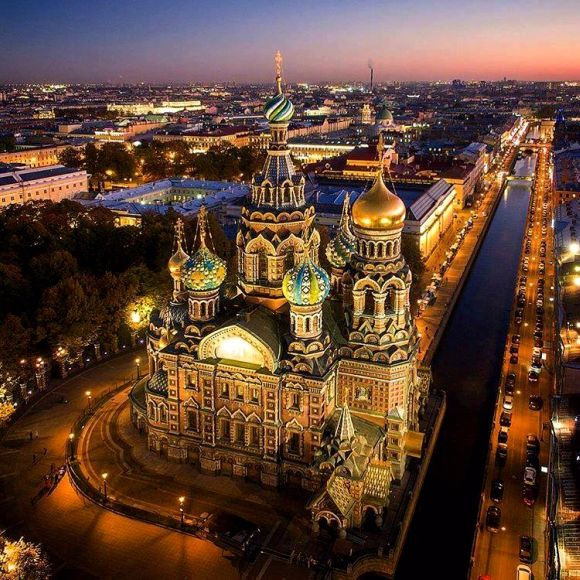 |
| The city is named after Saint Peter (one of the twelve disciples of Jesus), the patron saint of Peter the Great. The French word "saint" means 'holy', so "Saint Peter" means 'Saint Peter'; and the German word "burg" means 'city'. Thus, Saint-Peterburg means "City of Saint Peter". (Image: St.Peterburg Guide fanpage). |
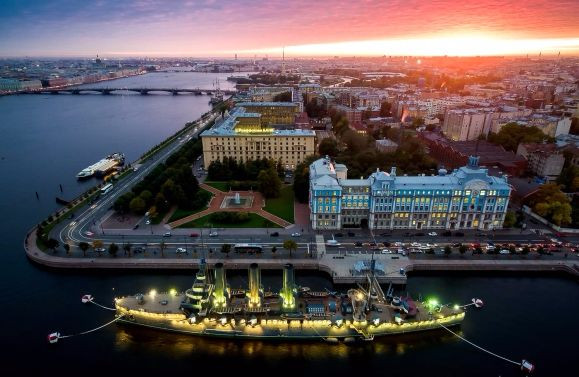 |
| The city is surrounded by the beautiful Neva River. Not only does the Neva provide fresh water for the entire city, but it also reflects the rhythm of life in Saint Petersburg. (Photo: St.Peterburg Guide fanpage). |
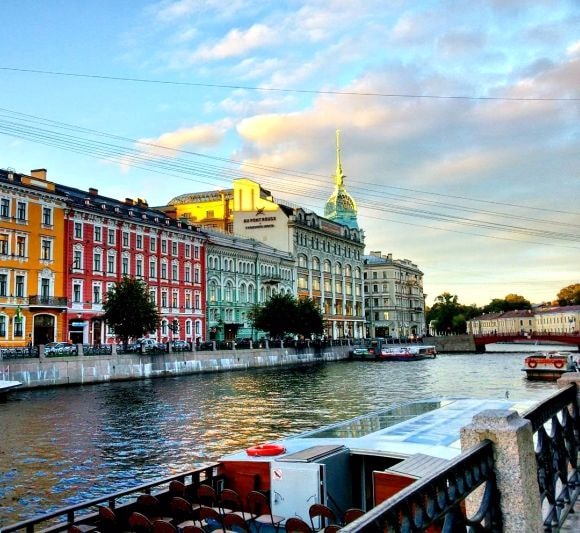 |
| Saint Petersburg, the former capital and second largest city of Russia (after Moscow), is the only city on Earth to be included in the UNESCO World Heritage list. With over 3,700 historical and cultural monuments representing various architectural styles and schools from around the world, Saint Petersburg is recognized as the 8th most attractive tourist city in the world. It is known as the city of palaces. (Image: St.Peterburg Guide fanpage) |
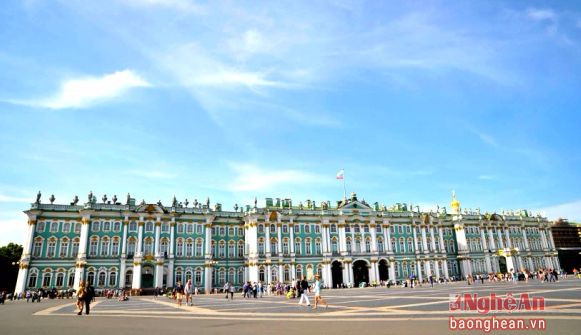 |
| The Winter Palace is one of Saint-Petersburg's most famous architectural landmarks, situated on a vast 90,000 m² site.2The building is a typical example of Baroque art, serving as the Tsar's palace. After the October Revolution, the Winter Palace became the Hermitage National Museum (the largest art museum in Russia and the third largest in the world, after the Louvre Museum (France) and the Vatican (Italy), displaying over 3 million works of art collected from around the world). |
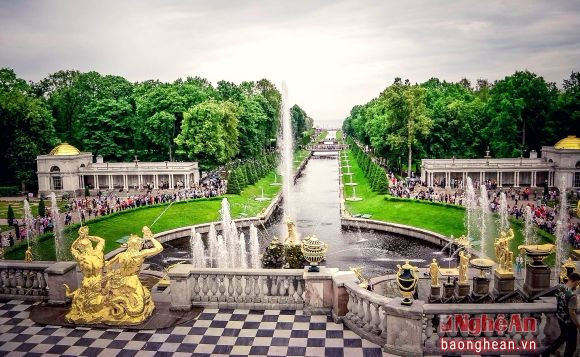 |
| The Summer Palace is located on the Gulf of Finland. One of the most striking features of the palace's exterior is the golden fountain in the center. The 20-meter-high waterfall,喷射 from the mouth of a lion, flows into a reservoir and then out into the Gulf of Finland. Because it was modeled after the Palace of Versailles in France, it is also known as the Russian Palace of Versailles. |
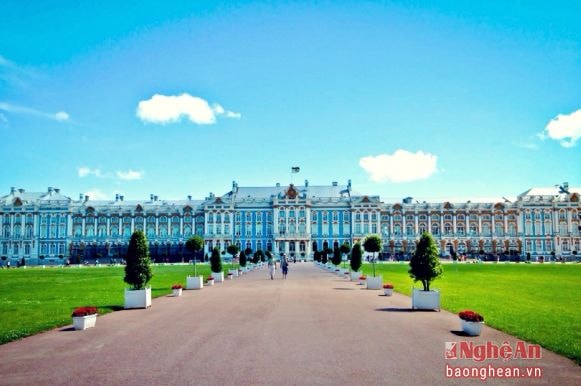 |
| The Autumn Palace – built by Peter the Great for his wife Catherine I – spans over 1 kilometer and is covered in 99 kilograms of gold on the exterior. The large painting on the ceiling of the main hall and many of the carved patterns on the walls are also gilded. The Amber Room – the legendary and most famous room in the palace – is decorated with 450 kilograms of amber. The room was dismantled in 1941 when the German army occupied the palace. Forty years later, the Amber Room was rebuilt. Russia spent 20 years and over $12 million to rebuild this room. |
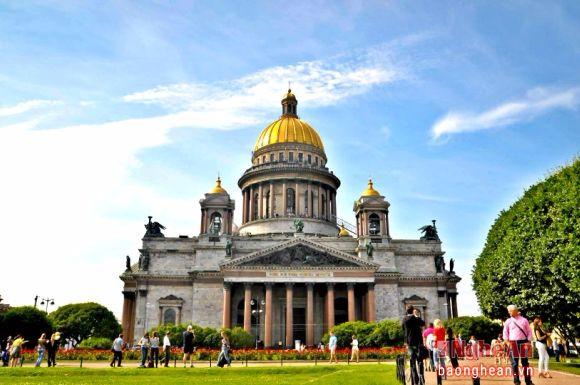 |
| St. Isaac's Cathedral is the largest cathedral in Russia, and one of the largest in Europe, standing at 101.5 meters tall. It took 50 years to build. |
 |
| Kazanski Cathedral is one of the pinnacles of classical art. It is impressive with its 136 massive stone columns. (Photo: St. Petersburg Guide fanpage). |
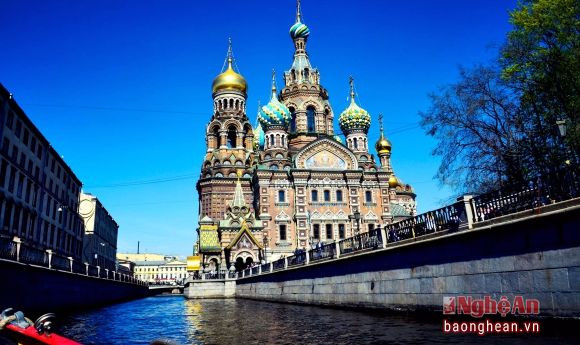 |
| The Church of the Savior on Spilled Blood, or the Church of the Resurrection, is where Tsar Alexander II was assassinated in 1881. |
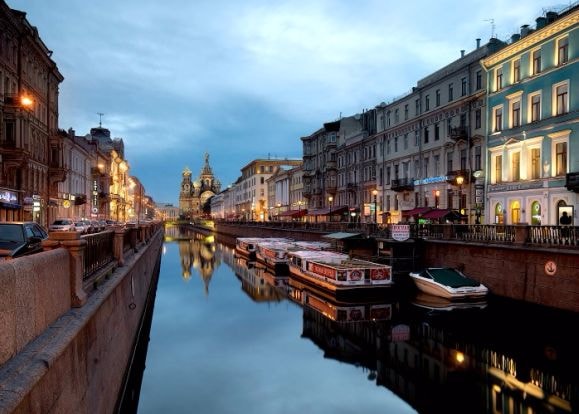 |
| The Moika River flows through the city, creating a network of natural and man-made canals, along with countless ancient bridges, earning it the nickname "Venice of the North." (Photo: St.Peterburg Guide fanpage). |
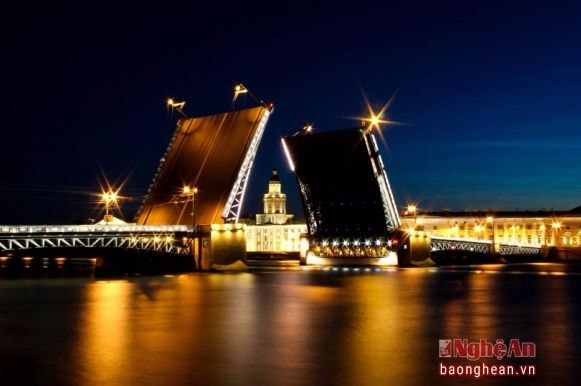 |
| Located in the north, Saint-Petersburg is famous for the fascinating natural phenomenon of the "white nights," where sunlight is refracted from the other side of the globe (where it is daytime). The entire city is bathed in a beautiful, milky white light. Visiting the Neva River during these white nights to see the bridges open is a unique experience in Saint-Petersburg. The city's bridges alternately open between 1 AM and 5 AM to allow ships to pass through. |
US Russia



