(Baonghean.vn) - Ten months have passed since the Provincial People's Committee approved Decision No. 4422/QD-UBND on amending and supplementing some policies to support investment in agricultural and rural development, including the addition of some policies to support passion fruit growing areas. As one of the localities eligible to benefit from the program, however, to date, the people of Que Phong are still waiting but have not yet received the aforementioned support.
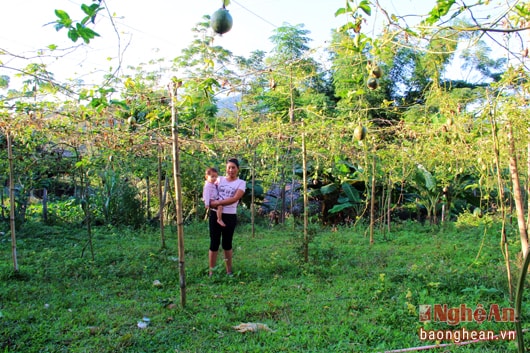 |
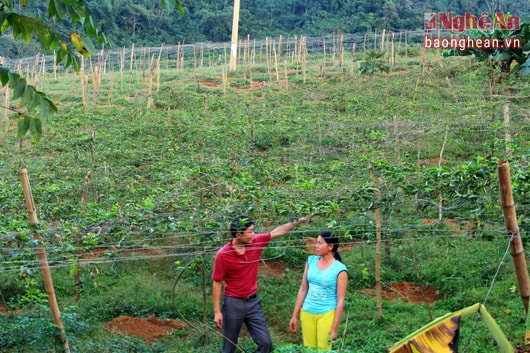
| According to the Decision, 70% of the value of small-scale irrigation projects for passion fruit plants, approved by the District People's Committee, will be subsidized, with each project not exceeding 70 million VND. For Que Phong district, funding will be approved for households with planting areas exceeding 1 hectare. Currently, Tri Le is the only locality in Que Phong benefiting from this policy among the three communes of Tri Le, Nam Nhoong, and Nam Giai. The photo shows the passion fruit plantation of Mr. and Mrs. Loc Van Chin in Xan village (Tri Le commune) – one of the households eligible for support under the decision, with a planting area of 1.2 hectares. Lack of irrigation water is one of the reasons for the poor development and low yield of passion fruit. |
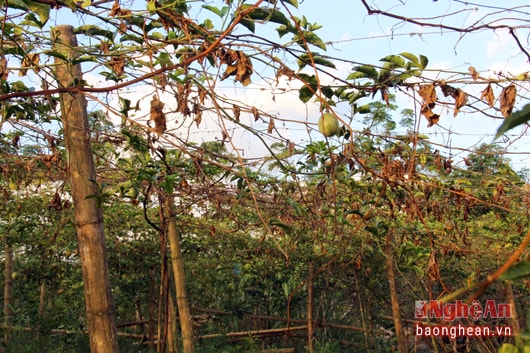 |
| According to Mr. Lu Van Cuong, Vice Chairman in charge of the economy of Tri Le commune, the locality currently has 108 hectares of passion fruit cultivation, of which 35 hectares are cultivated by a company located in the area, and the remaining 73 hectares are owned by local people. Areas with significant passion fruit cultivation include Yen Son, Na Nieng, D1, Xan, and Bo villages. Among these, more than 70% of households have cultivation areas exceeding 1 hectare. Current calculations show that over 40 households are eligible for the small-scale irrigation support program. However, no households have yet received support, even though the commune has completed the list of recipients and submitted it to the District People's Committee. |
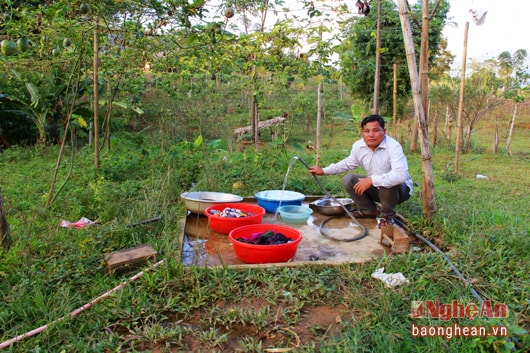 |
| Mr. Ha Van Tien, head of Xan village (Tri Le district), said that the village is home to 100% Thai ethnic minority people, with 61 households participating in passion fruit cultivation. Life is still difficult, so when they heard about the support policy for building small-scale irrigation systems, the villagers were very happy. They were happy because, until now, they had to use drinking water to irrigate their passion fruit plants, causing the plants to wither and die or grow stunted during the dry season. Since the survey and compilation of the list of eligible households, they have been anxiously awaiting the support, but haven't seen any results yet, so they have had to reluctantly use drinking water to irrigate their passion fruit. And water is scarce; the entire village only has water from the Huoi Luong stream. Drilling a well requires going to a depth of over 70 meters to have any hope of finding water. |
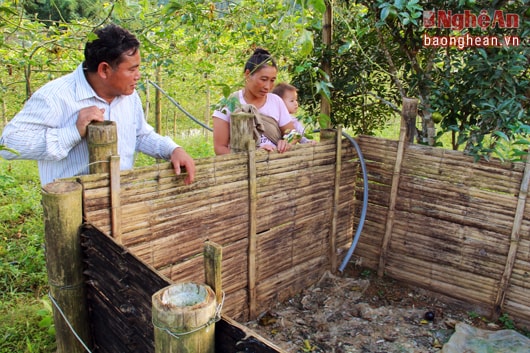 |
| Many households in the village have built their own irrigation systems by lining the fields with plastic sheeting and pumping water into it to store it. However, this method is inefficient because each sheet only lasts for about a week, sometimes tearing and breaking, rendering all the pumping effort useless. According to calculations, the "standard" yield of 1 hectare of passion fruit is around 45 tons. However, the yield of the households here is only about 20-25 tons. One of the reasons for the low yield in these growing areas is the unreliable water supply for irrigation. |
 |
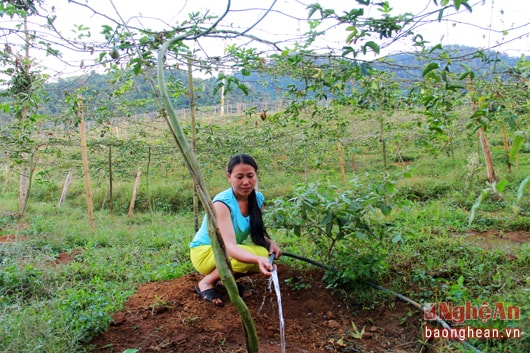
| In Yen Son village, these days the family of Ms. Vi Thi Mai is planting more than 300 passion fruit vines, bringing the total area of passion fruit cultivation to nearly 800 vines. With more passion fruit, the worry about the water supply for irrigation is also increasing. |
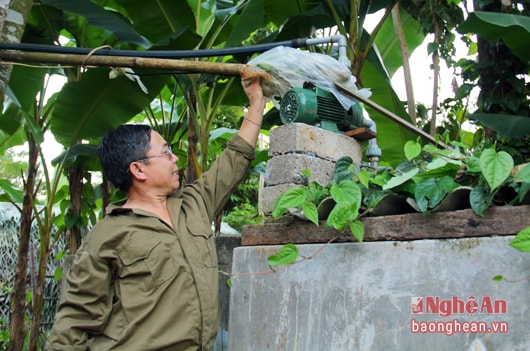 |
| According to Mr. Vi Thanh Xuan, head of Yen Son village, some households have boldly invested in small water pumps (pictured), but this number accounts for a very small percentage of the nearly 70 lemon-growing households in the village. |
 |
Regarding concerns about the delay in providing funding to support people in building small-scale irrigation systems in passion fruit growing areas, Mr. Nguyen Ba Hien, Head of the Mountainous Area Development Board of Que Phong District, stated: Although the Decision was made at the end of January 2016, the district only received 100 million VND in support as of September 12th of this year. The reason for the delay in receiving the funds from the province is that the accounting of revenue and expenditure for the province's capital for 2016 will be carried out at the end of 2015. Therefore, when the Decision to support the passion fruit growing area is implemented in 2017, only 100 million VND of supplementary conversion funds will be received in advance. This amount is expected to be disbursed in December to support two exemplary households. The remaining households will wait for funding support in the following year. |
Thanh Quynh



