
Antibacterial hand soap doesn't work as advertised.
The antibacterial properties of hand soaps containing the chemical "triclosan" are no more effective than those of regular soaps.
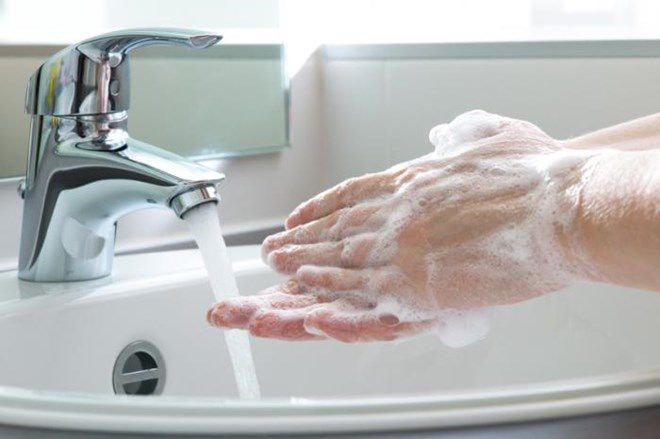 |
| Illustrative image. (Source: medicalnewstoday) |
This is the result of a study published by the U.S. Food and Drug Administration (FDA) in the Journal of Antimicrobial Chemotherapy (JAC) on September 15th.
According to experts, triclosan has long been one of the most common ingredients in antibacterial soaps, used by millions of consumers and generating annual revenue of up to $1 billion in the US market alone.
However, many studies have suggested that soaps containing this dangerous chemical may cause hormonal imbalances and have little antibacterial effect on users.
The FDA conducted research and found that in routine handwashing, the antibacterial effect of soap containing triclosan was not significantly different from that of regular soap.
To evaluate the antibacterial properties of triclosan, the research team placed 20 strains of dangerous bacteria (including Escherichia coli, Listeria monocytogenes, and Salmonella enteritidis) in Petri dishes with antibacterial soap solutions containing triclosan and regular soap.
These test samples were heated to 22 or 40 degrees Celsius, and the solution was left in warm or hot water for 20 seconds – the handwashing time recommended by the World Health Organization (WHO).
The research team then applied the bacteria to the hands of 16 adults who had stopped using antibacterial soap for at least a week before participating in the experiment. They were then asked to wash their hands for 30 seconds using either antibacterial soap or regular soap with water at 40 degrees Celsius.
In all these experiments, the research team used antibacterial soap containing 0.3% triclosan (the maximum level permitted in the European Union, Canada, Australia, China, and Japan).
Studies show that soaps containing triclosan only become effective at killing bacteria after they have been soaked in the solution for up to 9 hours.
At less than 6 hours, the antibacterial effect of the two types of soap is virtually indistinguishable. Meanwhile, 9 hours is considered too long for handwashing.
Based on these findings, researchers suggest that consumers should be aware that antibacterial soaps do not protect them from germs as advertised.
According to VNA


