
4 shocking findings about climate change
Humankind is almost certainly the primary culprit behind global warming, and its consequences could be far worse than we imagine – according to a leaked draft of the latest climate report from the United Nations.
The United Nations Intergovernmental Panel on Climate Change (IPCC) is expected to release the first parts of its report next month. This will be the organization's fifth climate report. Although the report has not yet been finalized, details from leaked drafts suggest it will issue stark warnings about the threats posed by climate change. Here are four key findings.
Humans are responsible for 95% of the problem.
The report's biggest takeaway is that scientists are more convinced than ever that humans are causing climate change. According to the report, not only is this a real phenomenon, but there is a 95% certainty that human activity is driving climate change.
Compared to six years ago, the certainty has increased by 5%, with the latest IPCC report stating that there is 90% certainty that humans are causing global warming. This is an increase from what scientists predicted in 2001 (66%) and 1995 (50%).
The biggest culprit: Burning fossil fuels – an activity the report attributes to a significant increase in global temperatures since 1950.
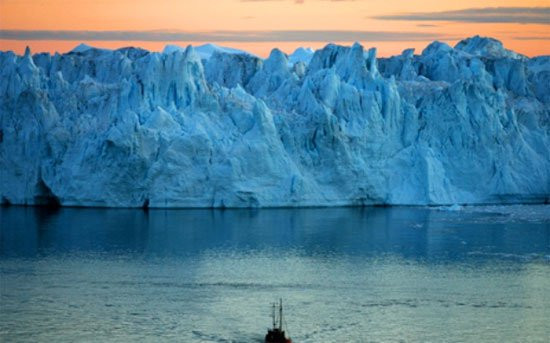 |
| Melting ice could cause sea levels to rise by approximately 0.9 meters over the next century. (Image: theatlanticwire.com) |
Sea levels could rise by approximately 0.9 meters by 2100.
In warning about one of the most alarming impacts of global warming, the report suggests that sea levels could rise by more than 0.9 meters this century. Rising temperatures are melting snow and ice, raising global average sea levels, altering some extremes of weather patterns, and this is far worse than we previously thought.
Six years ago, the last report predicted that sea levels would rise, at worst, by about 58.42cm, or less than 0.6m.
The rate of temperature increase has slowed since 1998.
Although greenhouse gas emissions continue to break previous records, the IPCC report confirms an unusual trend: The rate of global temperature increase is actually slowing down. While temperatures continue to rise, they have increased at a slower pace since around 1998, the report states.
The reasons behind this slowdown remain unclear. The report offers several possibilities with “medium confidence,” such as increased volcanic ash in the atmosphere, a change in the solar cycle, and a hypothesis that the ocean is absorbing more energy than before.
In July, British scientists said they had determined that the ocean is drawing in more heat while slowly absorbing it into the deeper waters below. Newly melted Arctic ice can also increase the overall water volume, thereby creating more liquid to absorb heat that would otherwise have a direct impact on air temperatures.
Regardless, the climate is still warming.
Even if the world finds a way to immediately stop greenhouse gas emissions, the report suggests that warming will continue for “centuries.” This is because about 20% of carbon dioxide is already in the atmosphere and will remain there for the next millennium.
As a result, according to the report, a “large proportion” of climate change will be “irreversible over the course of human history.”
To put it bluntly, the report added, there is a “very high risk” that global temperatures will rise by more than 2 or 3 degrees Celsius this century. Previously, scientists have cited 2 degrees as a critical threshold beyond which ecosystems could be disrupted and our planet could face catastrophic, irreversible destruction.
According to Khoahoc.tv
| RELATED NEWS |
|---|


