
Ursula von der Leyen is preparing to announce the new European Commission.
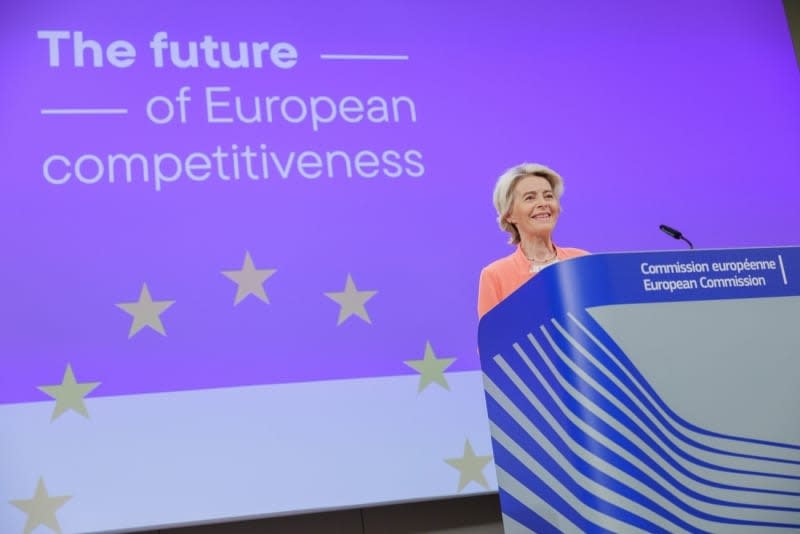
European Commission President Ursula von der Leyen will announce her new leadership team to the European Parliament on September 17, amid the unexpected and angry resignation of French President Thierry Breton.
The former EU Commissioner for Internal Market stated in his resignation letter on social media platform X (formerly Twitter) that von der Leyen had asked Paris to nominate someone else in exchange for "what was supposed to be a more influential position for France" within the EU executive body. Breton, who holds the French commissioner position, said this "political deal" was made "for personal reasons without von der Leyen ever consulting him directly."
The former French candidate, who has publicly criticized von der Leyen's leadership in the recent European Parliament elections, said this was "further evidence of the commission's questionable governance."
The conservative German politician is often criticized by her opponents for her authoritarian approach to running the European Union's executive body.
A spokesperson for the committee declined to comment on the publicly available contents of Mr. Breton's letter and the attacks on Ms. von der Leyen's leadership.
Breton's unexpected resignation fueled speculation as von der Leyen grapples with EU nations on a range of policy options, attempting to balance geopolitical and political factors.
This process has been delayed due to an internal political dispute in Slovenia regarding the nomination of a candidate to the committee.
In addition, there is the issue of appointing the Italian candidate, Raffaele Fitto, from Prime Minister Giorgia Meloni's far-right Brotherhood of Italy party, to a position on the committee.
Prime Minister Meloni does not support von der Leyen serving a second term on the committee; however, von der Leyen needs to consider the risk that Italy could continue to move towards the far right, in opposition to the EU, like Hungary.
Adding to the complexity of the issue is von der Leyen's request that EU member states nominate one male and one female for roles on the commission, aiming for gender balance among her 26 commissioners.
The commission president made an exception to this requirement for EU countries wishing to nominate their incumbent European commissioner, as in the case of Mr. Breton, for another term.
However, most EU member states ignored von der Leyen's request and nominated only one candidate to the commission, the majority of whom were men.
There are no legal requirements in EU treaties to nominate one male and one female candidate.
Following Breton's unexpected resignation, the Élysée Palace announced the nomination of Stéphane Séjourné, the outgoing French Foreign Minister. Paris did not nominate a woman to replace Breton.


