
White Robed Princess - The sacred temple at the foot of Hon Thang mountain.
(Baonghean.vn) - At the foot of Hon Thang cave, in Hamlet 3, Tang Thanh commune (Yen Thanh district, Nghe An province), there is a sacred temple dedicated to Bach Y Cong Chua, the daughter of Emperor Ho Quy Ly.
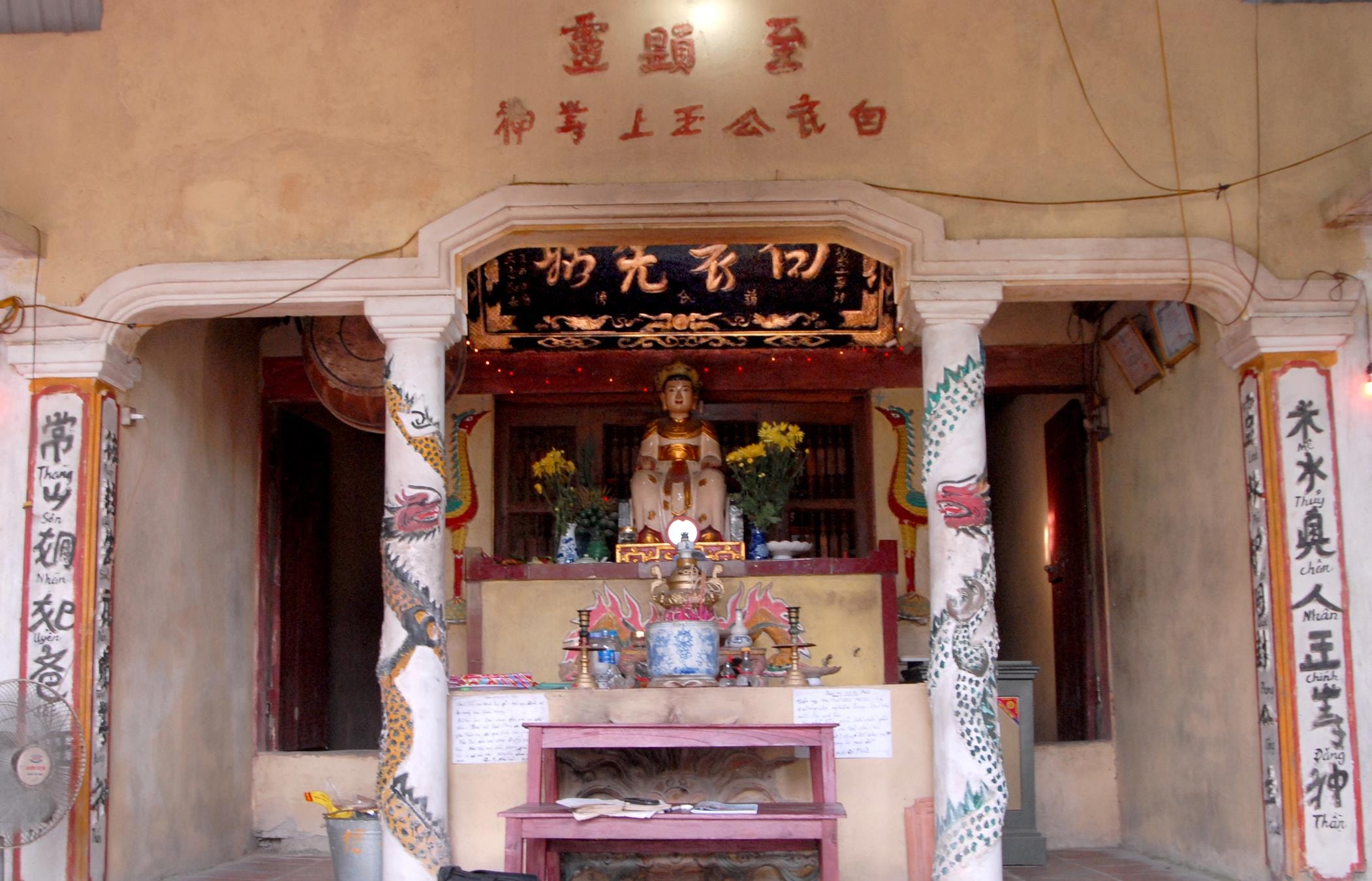 |
| The exterior of the main hall of the temple. |
Spiritual legends
This temple was built during the Le Trung Hung era by a man named Ho who came from another place to gather people, establish a settlement, and reclaim land north of Gam hill and south of Hon Thang cave. The founder of the temple is also the founding deity of Ke Gang village, also known as Phuc Tang village, an ancient village of the former Quan Hoa district, now belonging to Tang Thanh commune, Yen Thanh district (some books record the name of the founder as Ho Lam, others as Ho Truat).
The book on the worship of deities and legends of Nghe An, the genealogy of the Ho family written in Chinese characters, as well as the history of the Ho clan of Vietnam, states that: Bach Y Cong Chua, also known as Thai Duong Cong Chua, was the beautiful and talented daughter of Ho Quy Ly. The large inscription at the temple in Hon Thang clearly reads "Bach Y Tien Co," with a smaller line below: "Ho Thi Hi Le Trieu Sac Thuong Dang Than."
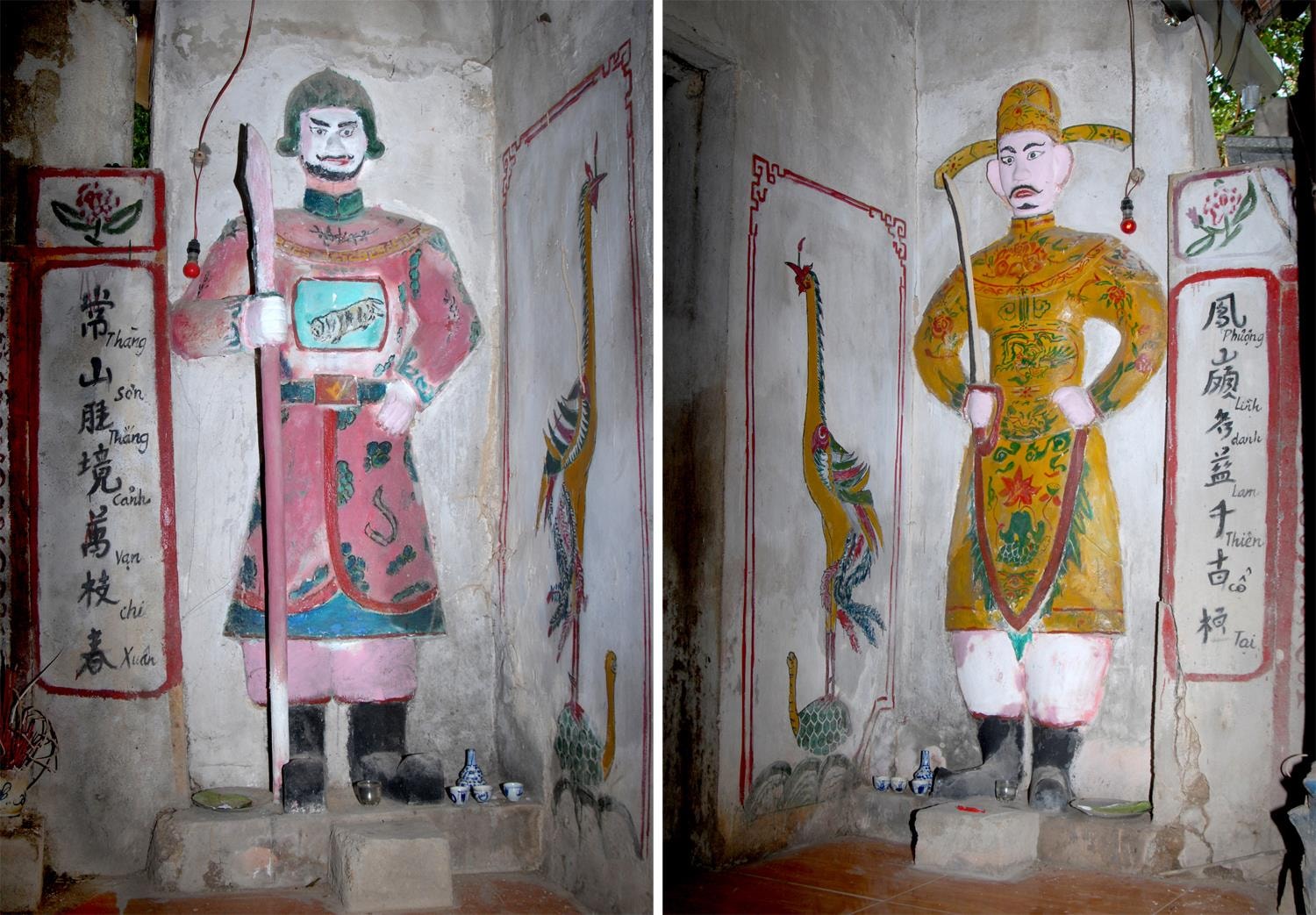 |
| Statues of civil and military officials at the temple. |
The story goes that, both when Ho Quy Ly served as Regent and Grand Tutor for the Tran Dynasty, and after ascending to the throne as Emperor in 1400, he implemented many reform policies, including building many high walls and deep moats, and repairing transportation routes, especially waterways, to defend against the Ming invaders.
In Nghe An, he ordered the construction of Dai Hue citadel, the Bau Dot base, and the dredging and widening of the Nha Le canal. The dredging of the Nha Le canal, especially the section through Nghe An, had to be done urgently. Thousands of soldiers and laborers took turns working hard. When they reached the section of the Iron Canal in front of the Thuc An Duong Vuong temple, in Dien Chau district, they encountered a section of hard rock due to the presence of iron ore, making it impossible for the soldiers and laborers to dig, and they also faced scorching hot winds from Laos.
Hunger and brutal beatings filled the land with cries of anguish; some died of starvation from exhaustion by the canal. Many high-ranking officials were sent by King Ho Quy Ly to supervise and direct the work, but it did not progress. The king then sent the princess to encourage and motivate them.
Upon arriving, the princess initially played a zither to encourage the laborers, but the music was drowned out by the deafening cries of complaint and resentment. So she went around assessing the situation, and everywhere she looked, she saw scenes of hunger, thirst, and misery. She thought that perhaps the policies her father had implemented were not in line with the people's wishes.
Out of compassion for the people suffering under forced labor, and following the advice of a local herbalist, she instructed the laborers to gather the leaves of the dogwood tree and throw them into the section of the canal containing iron ore at night. When the dogwood leaves came into contact with the iron ore, a pool of blood-red water spread along a long stretch of the canal. This spread the news that digging the canal had encountered a bleeding dragon's neck, disturbing a dragon's vein, and she begged her father, the king, to stop the canal digging.
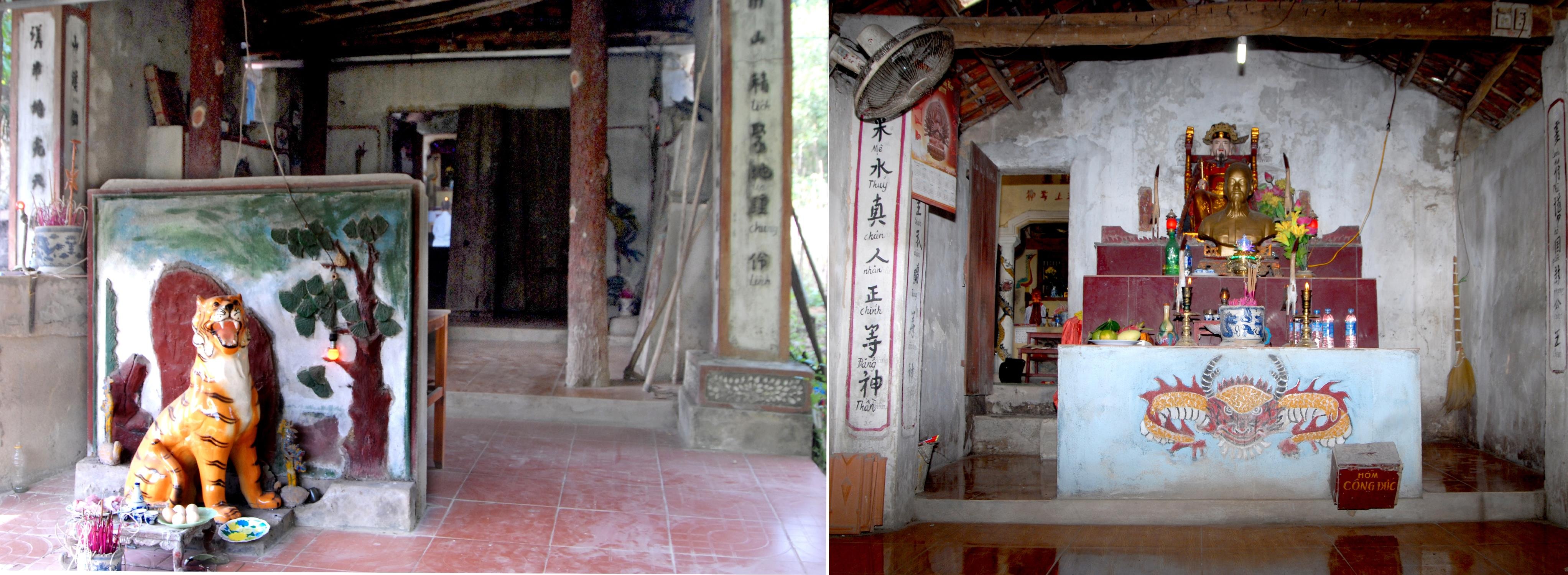 |
| The statue of the tiger and the lower hall of the temple. |
When the incident was discovered, Ho Quy Ly ordered his daughter's execution to uphold the law. That year, the princess had just turned 18. Out of pity for their precious daughter, who suffered an unjust death out of love for the people and soldiers, people in many villages in Thanh Hoa and Nghe An provinces erected temples in her honor.
Night after night, along the canals where the princess used to travel, and in places where her shrine is located, the villagers often see the figure of a girl in white clothes passing by, as if her spirit has returned to bless and protect the villagers as she did when she was alive.
The spirit of the White-Clothed Princess not only protects and saves the common people, but also assists heroes in times of danger.
The legends of the temples dedicated to Princess Bạch Y in Thanh Hóa and Nghệ An provinces record a story similar to the following:
When the hero Le Loi led his rebellion against the invading Ming army, in the early days of gathering his troops, he faced many difficulties. There were many victories but also some defeats. In one battle against the Ming invaders, he and his soldiers were defeated, and Le Loi had to flee into a forest. At first, there were guards, but later, no one was left, and he had to hide in a thicket.
When the Ming army surrounded the bushes and thrust their spears at him, Le Loi had to wipe away the blood with his shirt. But the Ming soldiers unleashed their dogs to search for him. Suddenly, from a nearby clump of trees, a white fox (some say a white weasel or a white stork) ran out. The entire pack of dogs chased after the white fox. The Ming soldiers, enraged, grabbed the dog, saying, "We brought you here to hunt people, not foxes!", and then killed the dog. Le Loi thus escaped danger. That white fox was actually Princess Bach Y in disguise, who came to Le Loi's rescue.
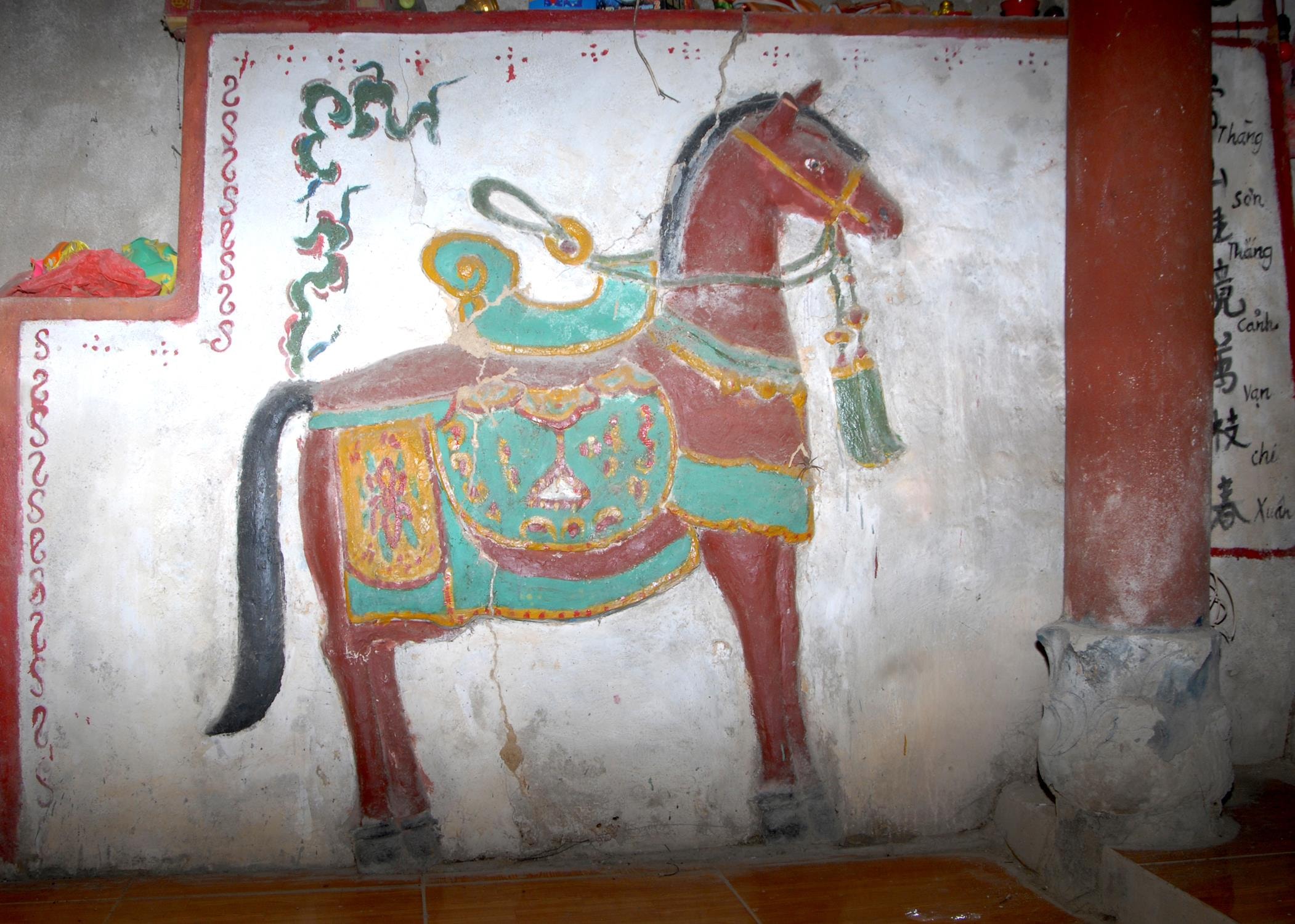 |
| A statue of a pack horse at the temple. |
Out of compassion for the people, the people built a temple in their honor.
In Nghe An province, especially in the midland villages, almost every village has a temple dedicated to Princess Bach Y. According to incomplete statistics, there are dozens of temples dedicated to Princess Bach Y in the districts of Nghe An, although their titles and names may differ.
Accordingly, in some places she is the White-Clothed Goddess, in others the Sun Princess (Nẻ Temple by the Iron Canal in Diễn An, Diễn Châu), in some places the White-Clothed Great King (Mai Hùng, Hoàng Mai), and in Mậu Long (Liên Thành, Yên Thành), the people call her the White-Clothed Princess... The Lê and Nguyễn dynasties, based on the legends, bestowed many imperial decrees upon the temples dedicated to the White-Clothed Princess.
In some places, he was bestowed the title of "Middle-Ranking Deity" or "High-Ranking Deity." The people of Dien Chau and Yen Thanh regions still recite a folk poem expressing their love and affection for the deity who "protects the nation and governs the people":
How did Tran Quoc Cong (Ho Quy Ly) come about?
Killing the virtuous lady unjustly caused the son's heartbreak.
Pity the young girl, so innocent and pure.
She was just eighteen years old, like a full moon.
Holding a cup of wine for three months.
The melody she played was sometimes raised, sometimes lowered.
I love you so much, my dear.
Because the Iron Canal was dug but never finished.
Killing one's own child to gain authority
I suffered injustice, but the river did not flow.
Therefore, a shrine was built on the cliff.
Offering prayers and sacrifices from all directions has always been a long-standing tradition.
From the second princess, Ho Thi Hi, daughter of King Ho Quy Ly, whose noble deed of standing up to protect and shelter the innocent people led to her unjust death, she entered legend and folklore, shining brightly in the spiritual life of the people.
However, through the ups and downs of history and the ravages of time, most of the temples and shrines dedicated to the White Robed Princess have been damaged, with some only remaining in the ancient texts of the villages.
The temple dedicated to Princess Bach Y at the foot of Hon Thang also shared a similar fate, at one point becoming a ruin. However, strangely, even when the temple was severely damaged, with only the altar and four walls remaining, during war or peace, it was never without visitors coming to offer incense and pay their respects.
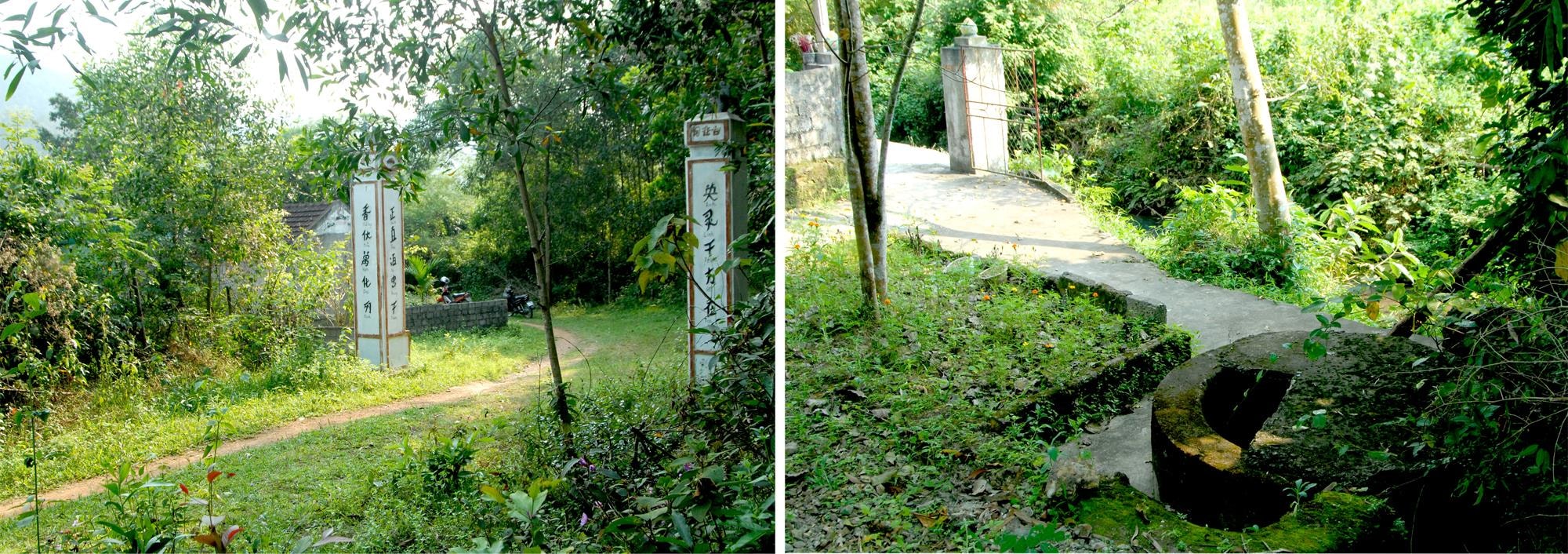 |
| The temple's entrance gate and ancient well. |
The White Princess Temple in Hon Thang is located next to a small stream, on the road leading to the forest entrance, amidst lush vegetation. The temple still retains traces of its four old stone walls and an ancient well to the north. The old temple grounds consist of a two-room house built along the hillside, in the style of a front-facing, rear-facing roof. The upper part is 4 meters wide, the lower part is 4.5 meters wide, and the length is 9.4 meters. In the 1990s, Mr. Tran Van Chi, a retired forestry engineer from Yen Thanh, along with the villagers, restored the temple, built walls, added beams, roofed with tiles, constructed two temple gate pillars, renovated the ancient well, and has voluntarily maintained and protected the temple for nearly 30 years.
In 2002, due to the increasing number of visitors and worshippers at the temple, especially on the first and fifteenth days of each lunar month, and particularly on the anniversary of the Princess's death (February 13th in the lunar calendar) every year, nearly a thousand people from near and far came here to worship, pray for blessings, and pray for offspring... so the temple caretaker and villagers built an additional sanctuary at the back.
At the most prominent altar in the inner sanctuary stands a statue of the goddess White Robed Princess. Above the statue is a large inscription with four characters: "White Robed Immortal Maiden," and below it is the inscription "Ho Thi Hi, Le Dynasty's Imperial Decree, Supreme Deity." (This main content is also recorded in the eulogy of Tong Quan Hoa, which is still preserved at Gam Pagoda in Xuan Thanh commune, Yen Thanh district).
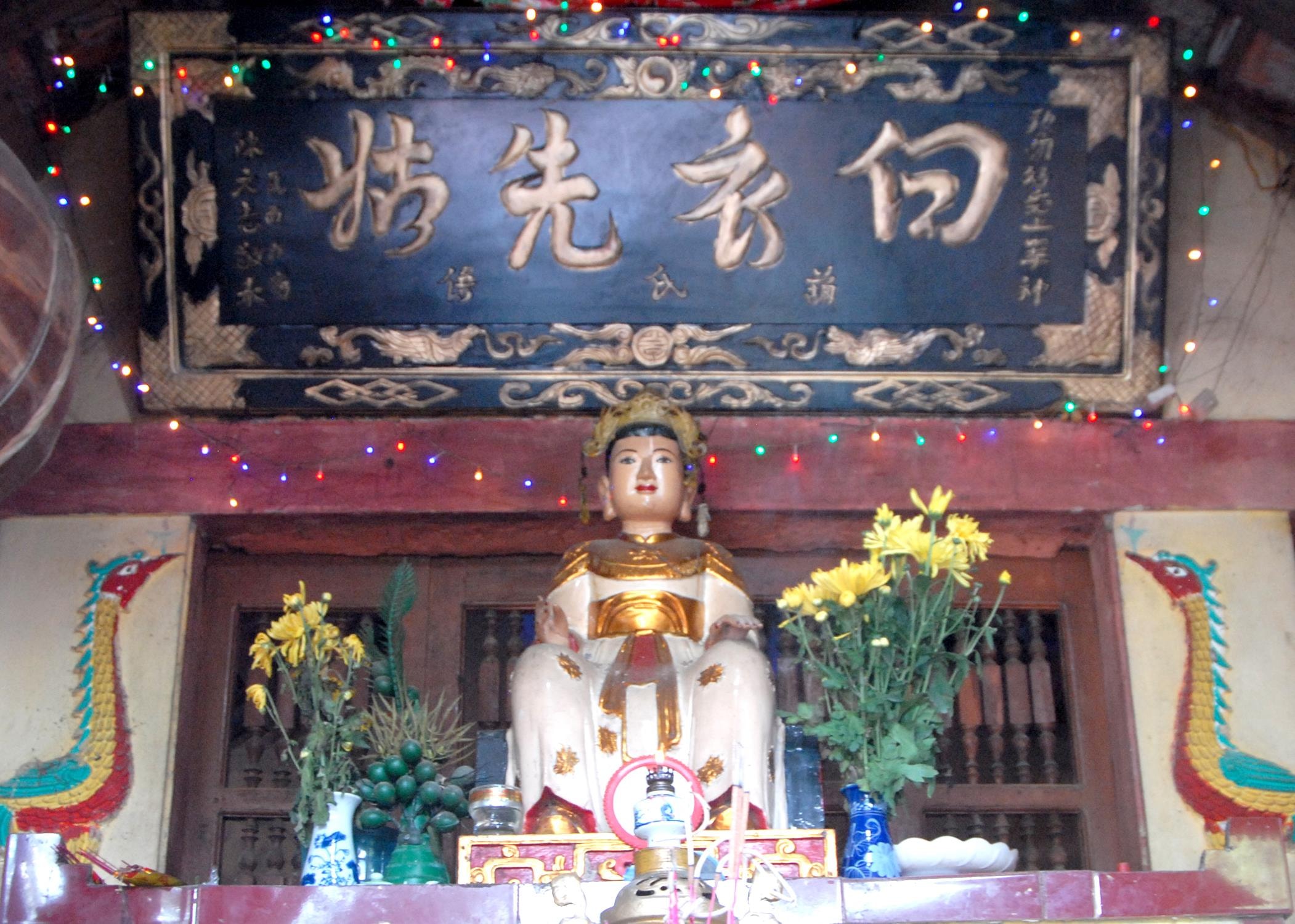 |
| The altar dedicated to the goddess White Robed Princess. |
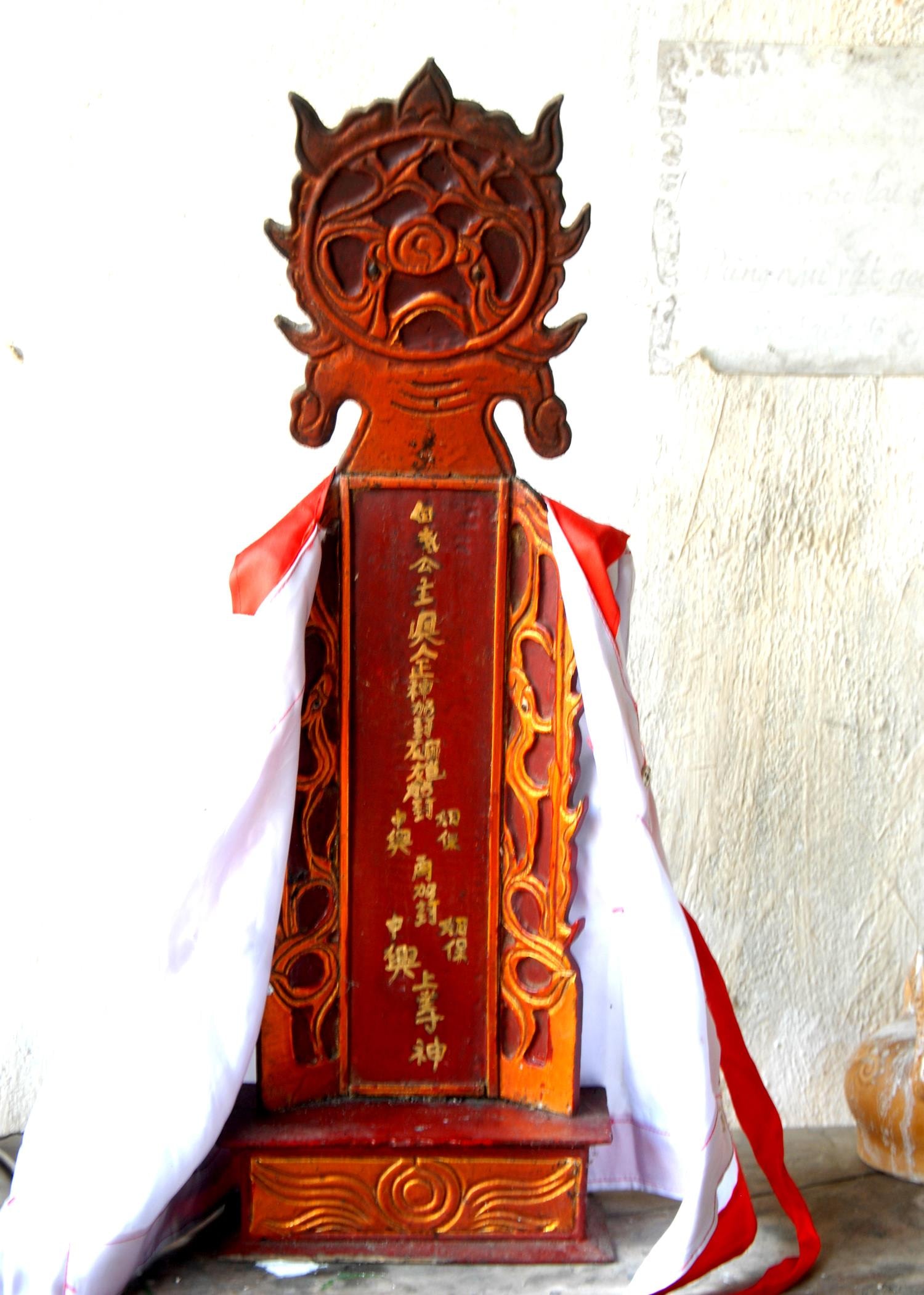 |
| The memorial tablet of Princess Bạch Y. |
From the temple gate to the main temple and the inner sanctuary, many couplets written in both Chinese and Vietnamese script remain:
- Incense and offerings for generations to come / Ancestral spirits of all ages
- Truly protecting the heavens/Intelligent and filial
- Thanh Son scenic spot, a place of boundless spring beauty / Phuong Linh famous ancient temple.
(Thành Sơn is Hòn Thàng, Phượng Lĩnh is Rú Gám)
- The divine talisman protects the nation and bestows the title of princess/The supreme deity who saves the people.
According to the elders, these couplets date back to the time the temple was built and have been passed down through generations; they have only recently been restored.
For hundreds of years, from the Le Dynasty through the Nguyen Dynasty and up to the present day, the sacred temple of Princess Bach Y has remained, intertwined with history and legends about the patriotic princess who loved her people. It is also a sacred site within the complex of temples and pagodas in Gam, Yen Thanh.
Recently, while being taken to the temple by Mr. Ho Thanh, a cultural official from Tang Thanh commune, I happened to read a few lines written on the temple wall: "Namo Amitabha Buddha. Currently, the lower hall of the temple is in serious disrepair. Waiting for the government will take a long time, so the temple needs urgent repairs. We respectfully request the help of devotees, whether they contribute a lot or a little."
When asked, Mr. Tran Van Chi, who has voluntarily served as the temple caretaker for several decades, said: "Except for days with heavy rain and strong winds, people come here to offer incense and prayers every day of the year. Now that I see the temple in such a dilapidated state, I am very worried, so I am writing these lines hoping for a benefactor's assistance."
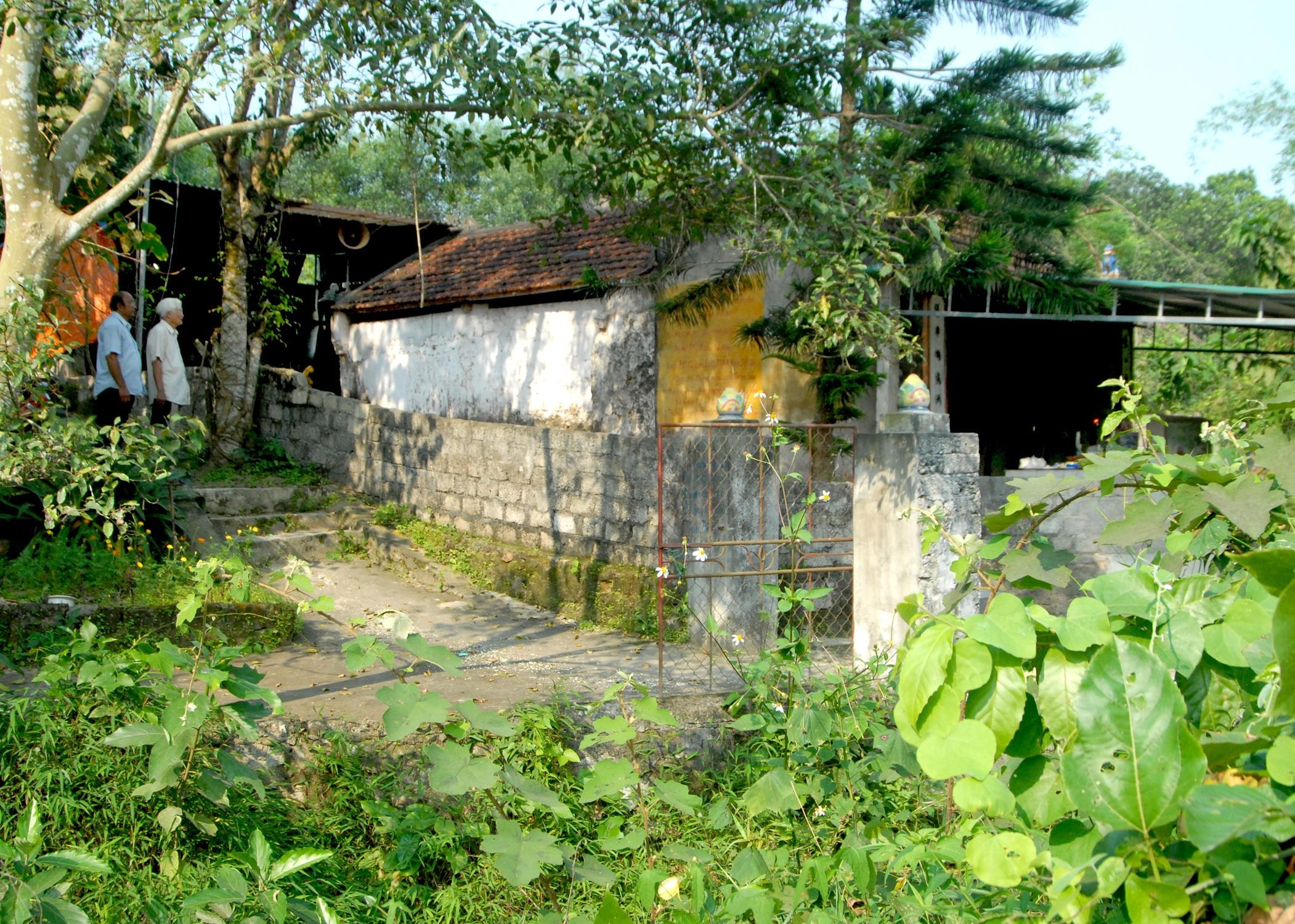 |
| A panoramic view of the temple. |
Indeed, of the dozens of temples dedicated to Princess Bach Y, only the one at Hon Thang Tang Thanh remains. It is suggested that relevant cultural agencies, government authorities at all levels, and descendants of the Ho family from various places should come here to survey the site and develop a plan to classify, manage, and restore the temple as a historical and spiritual monument worthy of a patriotic and benevolent deity.


