
Strong measures are needed to prevent the burning of undergrowth used for acacia plantations.
Every reforestation season, people in some localities in Nghe An province burn undergrowth to plant acacia trees. This practice not only pollutes the environment but also violates the regulations of the Forest Stewardship Council (FSC) sustainable forest management certification. However, this practice remains quite common to this day.
Widespread burning of vegetation causes pollution.
Traveling along National Highway 48 through Quy Chau district in the early days of the year, many hills in Nghe An province are shrouded in thick black smoke as locals burn undergrowth to prepare for reforestation. In the Bu Bai slope area, bordering Chau Hanh and Chau Thang communes, the smoke billows up, obscuring a large area of the sky and enveloping National Highway 48, causing environmental pollution and posing a traffic safety hazard.
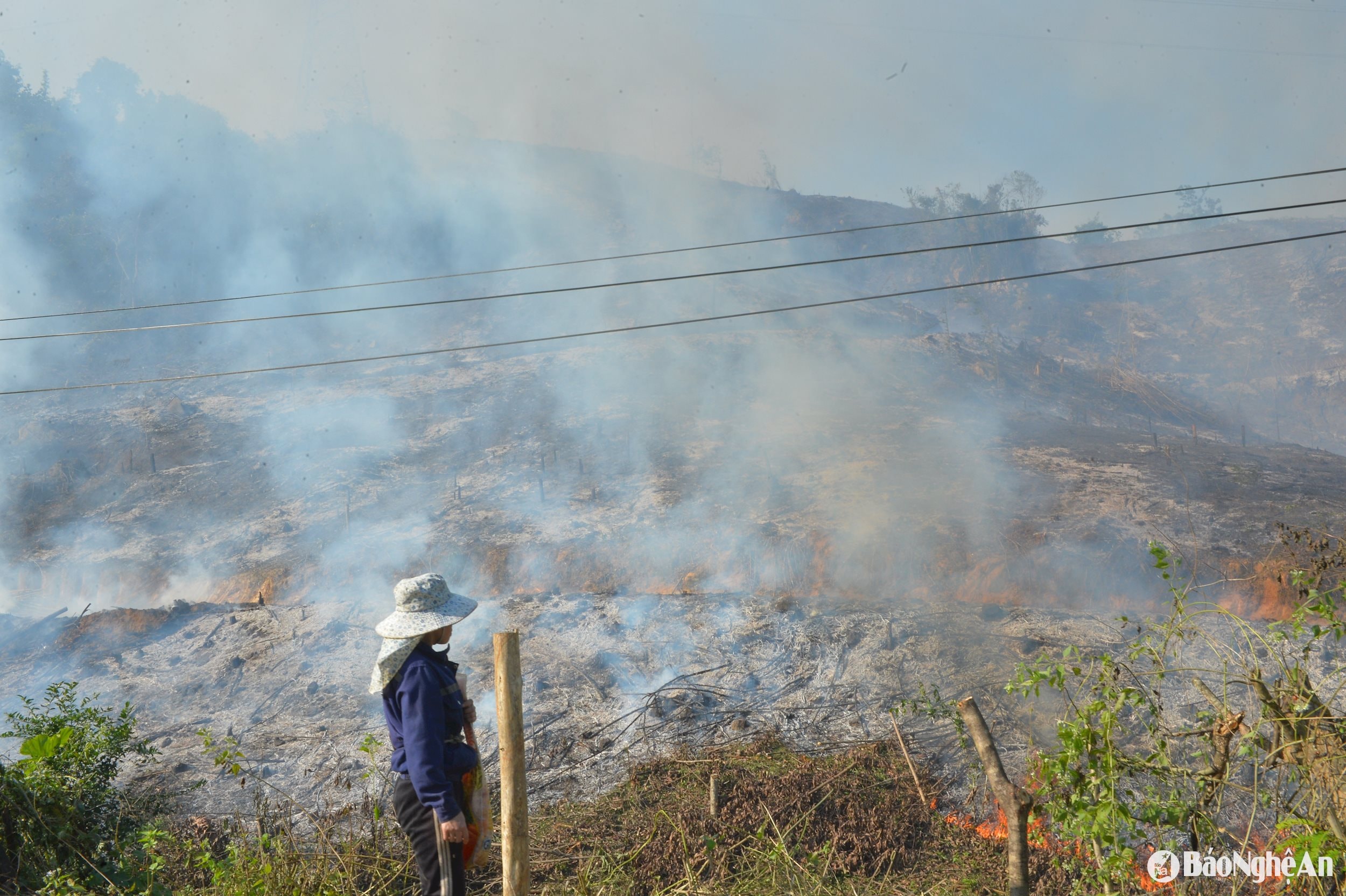
Ms. Luong Thi Chau, from Chau Thang commune, said: "In this area, people often burn undergrowth to plant acacia trees. The fire burns, the smoke is acrid and very unpleasant, and it also obscures visibility on the steep mountain road with many hairpin bends, posing a constant risk to traffic safety." Other local residents added: "Burning undergrowth causes air pollution and affects people's health. The authorities need to find solutions to prevent this situation."
A local resident burning undergrowth said: "After harvesting the acacia trees, we choose dry weather to burn the undergrowth so we can plant trees. Burning the undergrowth is faster and saves effort and cleanup costs."
According to a report from the Department of Agriculture and Rural Development of Quy Chau district, there are currently over 24,000 hectares of acacia forests for raw materials in the district. In 2024, the district, in coordination with relevant agencies, granted forest certification (FSC) to over 4,800 hectares in the communes of Chau Phong, Chau Hanh, Chau Binh, Nghia Dung, and Nghia Hanh. According to the plan for 2025, Quy Chau district will continue to receive certification for over 1,000 hectares in Chau Hoi commune.
Recognizing acacia trees as a key driver of economic development and a means of poverty alleviation, the district aims to increase the area of FSC-certified timber forests to ensure stable output and enhance the long-term economic value of acacia trees. However, a current challenge is that most farmers in the district still practice burning undergrowth before planting acacia trees.
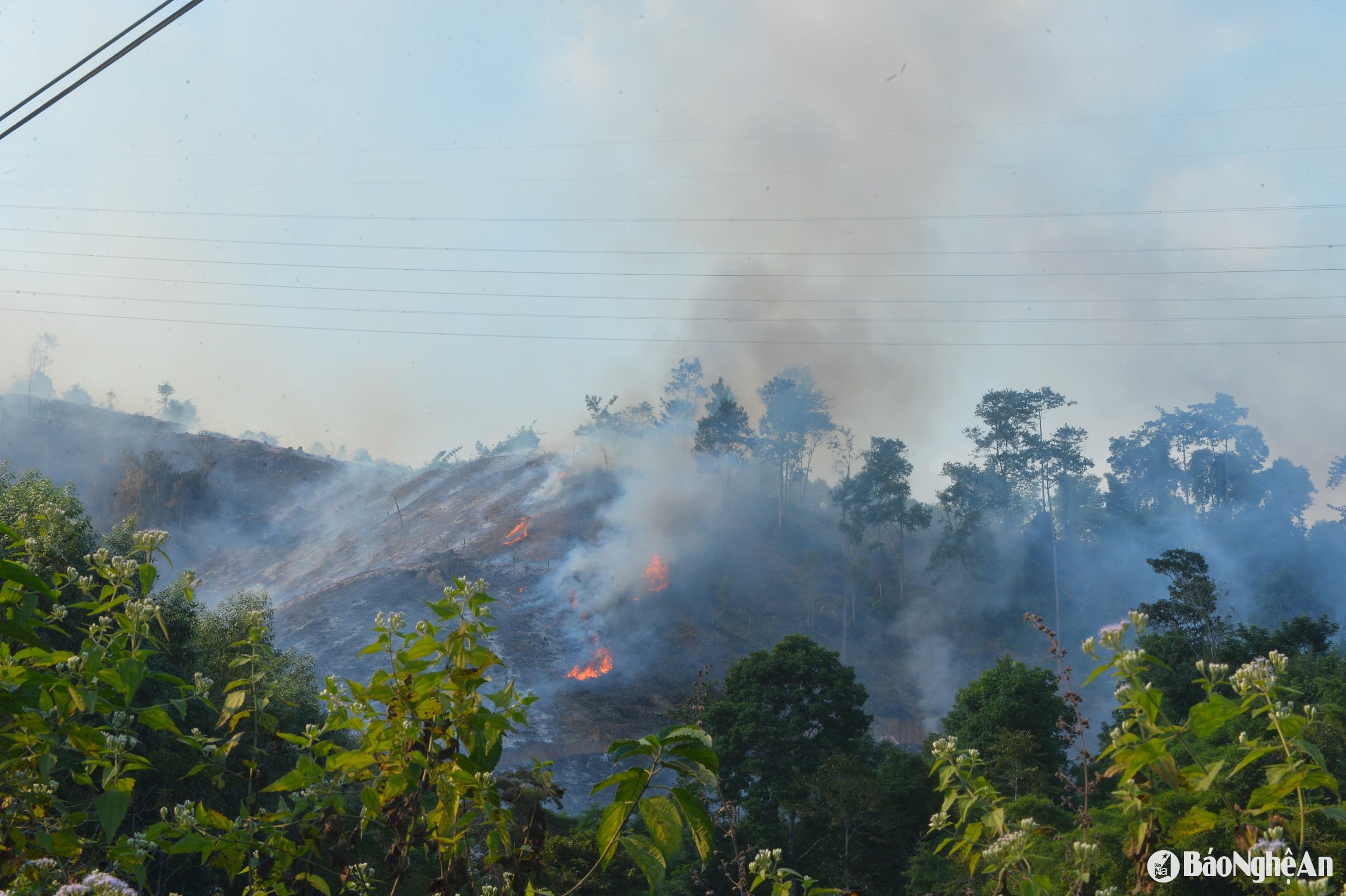
Currently, the district has directed communes to carry out propaganda and explanation work to help people understand the harmful effects of burning undergrowth for reforestation, especially the FSC certification criteria which prohibit burning vegetation after harvest.
Similarly, in Con Cuong district, during this season, traveling through the communes of Mau Duc, Bong Khe, Thach Ngan, etc., one can observe many hills blackened by fire. In some places, people burn vegetation, and the black smoke suffocates the entire residential area.
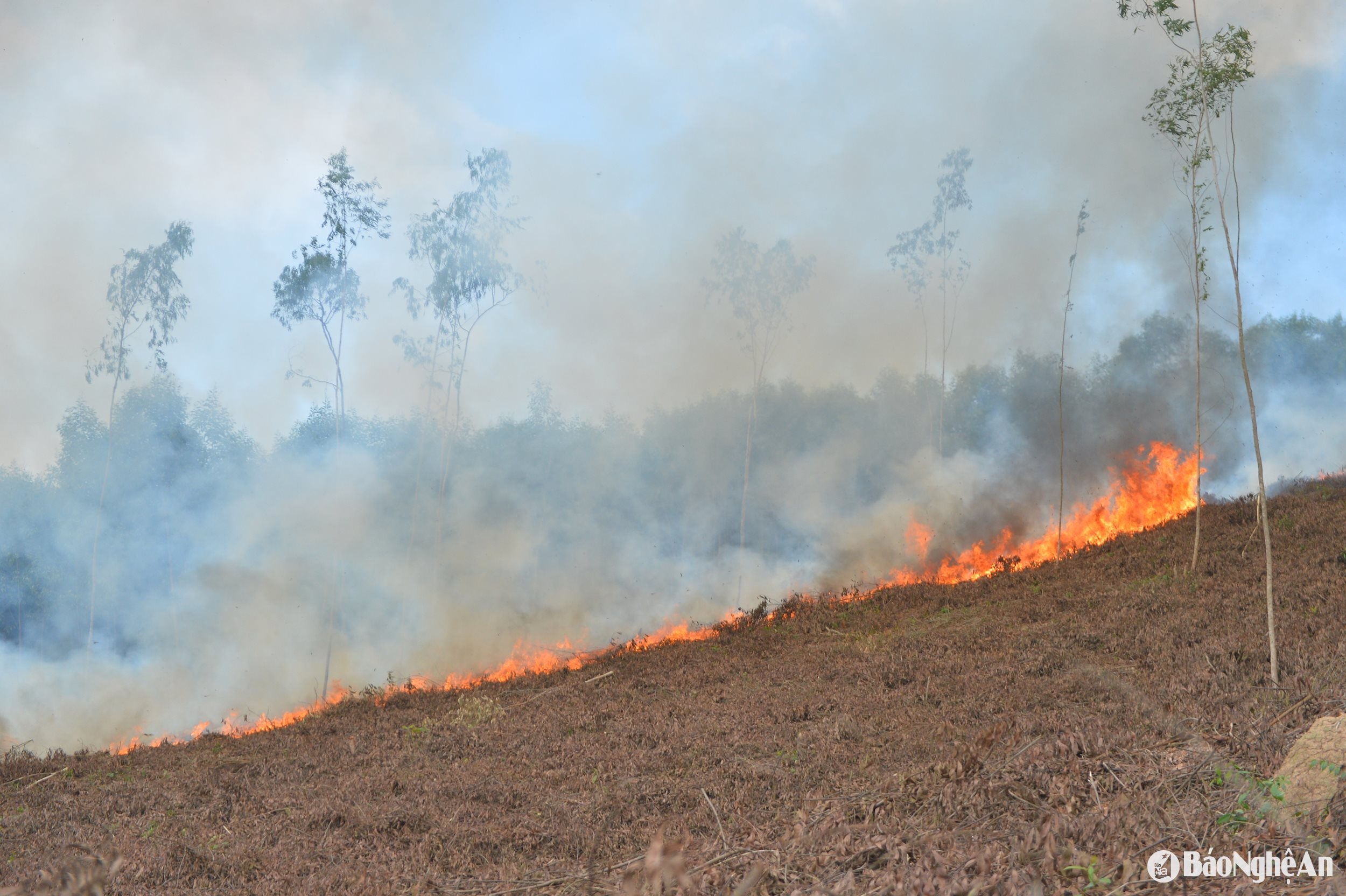
Ms. Dinh Thi Thuy Anh, Head of the Agriculture and Rural Development Department of Con Cuong District, added: The entire Con Cuong district has over 12,000 hectares of raw material forests. Currently, only 400 hectares have been certified by FSC. In 2025-2026, the district is coordinating with relevant departments to increase the area to 4,000 hectares that meet FSC certification standards.
However, local people are still burning undergrowth for reforestation, which is somewhat affecting the FSC certification process. The district is continuing to promote and encourage farmers in the area to limit burning undergrowth, implement safe collection methods, minimize pollution, and facilitate the FSC certification process for raw material forests, thereby increasing the economic value of the forests.
Solutions are needed to limit the burning of vegetation.
Mr. Hoang Trung Son - Head of the Forest Utilization and Development Department (Forestry Sub-Department) added: In recent years, Nghe An We have worked with localities, businesses, and sectors to accelerate the process of granting sustainable forest certification (FSC). To date, the entire province has 30,184 hectares of forest certified under FSC out of a total of 175,000 hectares of raw material forest. This is mainly concentrated in the districts of Thanh Chuong, Anh Son, Con Cuong, and Quy Hop…
Every year, Nghe An province plants 18,000-20,000 hectares of acacia trees for timber production. However, the current challenge is that before planting, most people burn the undergrowth on-site, causing significant environmental problems. In 2025, The province directed localities to implement forest certification on over 50,000 hectares, and to review the planted forest areas in their localities that meet the criteria for referral to businesses for forest certification.
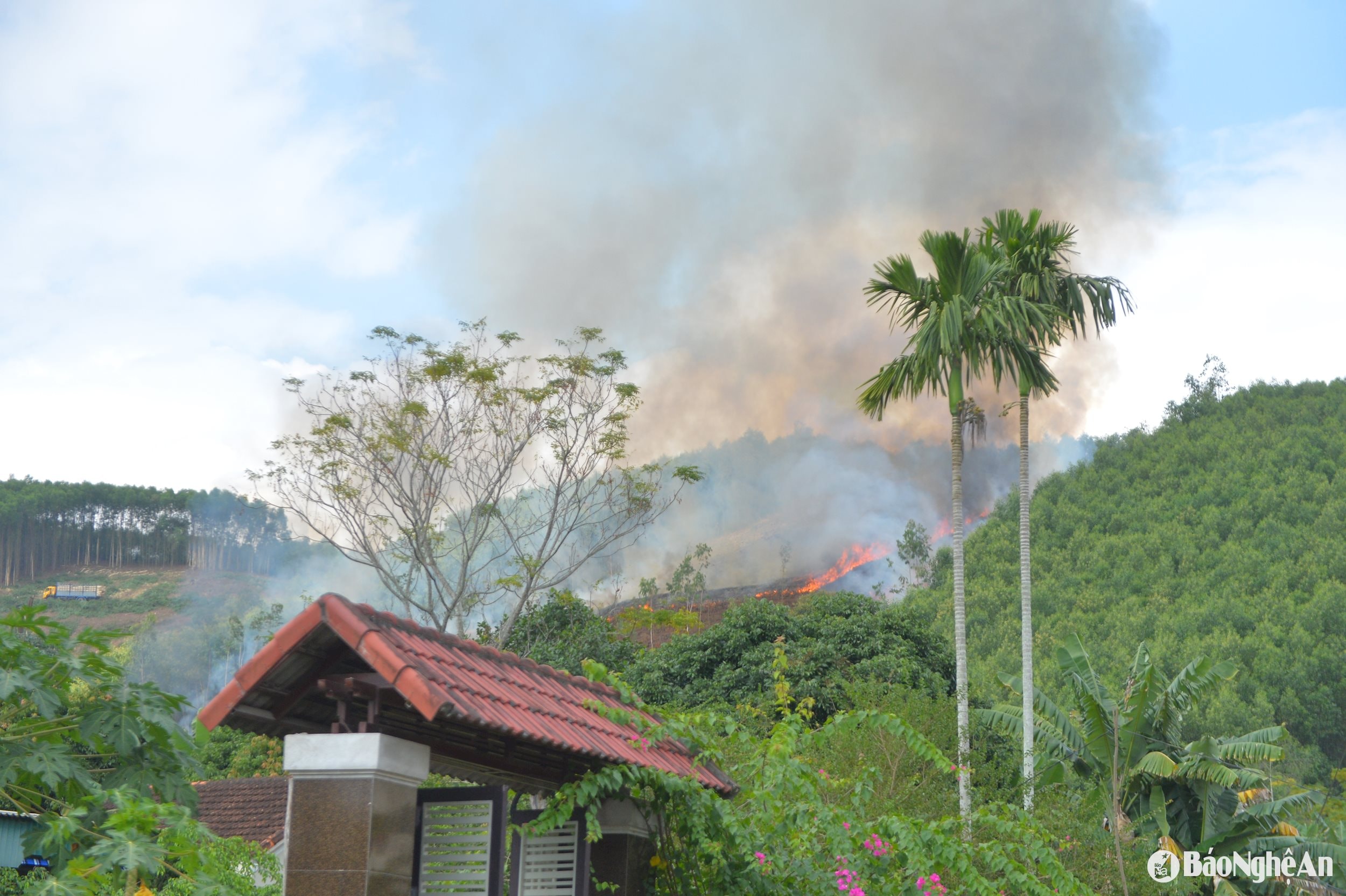
However, because many localities burn undergrowth for reforestation, certification becomes very difficult. FSC-certified forest areas must meet stringent criteria, such as strict adherence to production processes from planting and caring to harvesting; additionally, no burning of vegetation after harvesting is permitted.
Recently, the Forest Protection Department has directed district-level Forest Protection Units to strengthen propaganda and mobilization efforts to discourage people from burning vegetation for disposal; however, this remains very difficult.
According to experts, obtaining FSC certification gives raw timber the opportunity to access the global market and increase the economic value for forest growers. Specifically, most FSC-certified areas have product purchase agreements with businesses at prices higher than market prices.
.jpg)
While the cost of free-range reforestation is lower, therefore, farmers need to change their reforestation practices to avoid burning undergrowth. They must use on-site clearing methods, collect the cleared vegetation for composting, and preserve the plant cover.
According to new regulations from the European Union (EU), products such as coffee, cocoa, wood, and rubber originating from areas with deforested or degraded forests will not be allowed to be exported to this market. If forest growers want to export wood and wood products to markets such as Japan, South Korea, the US, and the EU, they need to change their post-harvest organic waste management practices to be more environmentally friendly.


