
Where are the green walls now?
(Baonghean) - Looking at the long, winding walls, high and low, studded with shards of pottery, bottles, and tangled barbed wire, I greedily wished that my village still retained its green walls, teeming with bees, butterflies, and birds.
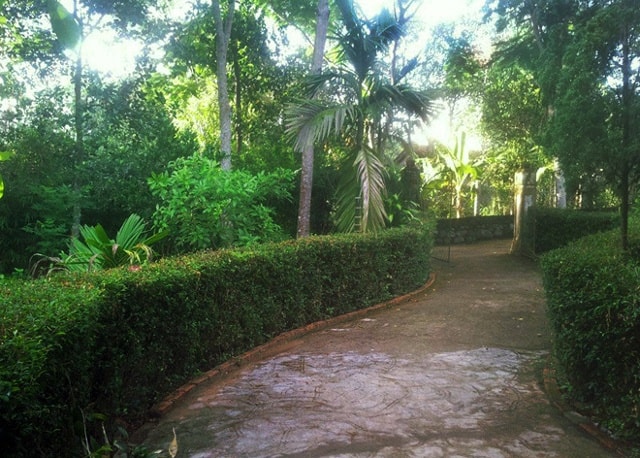 |
| Illustrative image - Source: Internet |
My hometown is so different now than it used to be! The boundary walls have extended to even the most remote and isolated places. Some are built of stone, others of brick or shell. Some are only about waist-high, while others are taller than a person. Most walls are simply rough constructions; however, some are meticulously plastered by the homeowners. Some walls are even lavishly tiled with glossy decorative tiles. Sometimes, being nestled between these narrow, enclosed walls feels strange and cold, as if I've stepped into a place that's no longer my hometown. The peaceful, idyllic countryside of yesteryear has faded into the past!
I remember vividly how, in my hometown, houses were separated by lush green walls, sometimes just a single tree, a row of sugarcane, a banana grove, or a "vibrant green morning glory hedge," like a rural painting by the poet Nguyen Binh. People in my village lived together harmoniously, surrounded by birds, animals, and plants.
The hedges surrounding each house not only provided shelter from wind and dust, and deterred theft, but also served as ideal places for us children to leisurely play and chatter during afternoon naps. It seemed that every village child at that time loved these hedges. There were guava, apple, fig, and banyan trees... each season bringing its own produce. For me and my mischievous friends, the best were the rows of crape myrtle trees in front of the house, along the alleyways, and beside the winding dirt roads.
The presence of brick walls means the green hedges are gone. Admittedly, the reasons given by my villagers aren't without merit. They believe that building boundary walls clearly defines the limits between houses, helping to protect the inner living space. With a solid wall, ducks and chickens are less likely to escape and roam freely. And that helps avoid arguments, conflicts, and disunity among neighbors.
However, it is undeniable that when these solid walls were built, they inadvertently created a separation between the simple, honest people of the countryside, who once shared everything from a single eggplant to a bowl of soup. They lived secluded within these layers of walls, only cautiously and hesitantly stepping outside their boundaries when necessary.
Looking at the long, winding walls, some high, some low, studded with shards of pottery, bottles, and tangled barbed wire; seeing the children who just wander around the house and yard, engrossed in cartoons or video games, I suddenly realized how fortunate and rich my own childhood was. At that moment, I wished that my village still had those green walls, teeming with bees, butterflies, and birds.
The loss of green walls has led to increasingly harsh climates, with scorching summers and bone-chilling winters. Floods and droughts, followed by crop failures, have plagued every village. Ultimately, the root cause is environmental change and ecological imbalance; planting new trees cannot compensate for the number of trees cut down.
Where are those lush green hibiscus bushes that lit up the walls with their bright red "lanterns" of flowers? Where are those graceful rows of betel nut and coconut trees that stretched straight in front of each house? Where are those banana trees that grew so vigorously and densely behind the kitchens? Where are those crape myrtle trees that bloomed in March, their purple blossoms floating gently? Where are those walls that soothed our souls after the hardships and stresses of life?
Perhaps that green fence now only remains in the memories of those who were once deeply connected to their homeland!
Nguyen Hoe
| RELATED NEWS |
|---|