
Warning signs of a stroke
Following a transient ischemic attack (TIA), patients may face a full-blown stroke a few days to a few months later.
I am 50 years old and was hospitalized due to sudden weakness and paralysis of my arms and legs. The doctor said I had a transient ischemic attack (TIA), but I have now fully recovered. Was this a mild stroke, and am I at risk of another stroke? Thank you, doctor! (Hong Thuy, Dong Nai).
Dr. Nguyen Ba Thang, Head of the Stroke Unit at the University Medical Center of Ho Chi Minh City, advises:
A transient ischemic attack (TIA) is a non-persistent event that resolves after a short period. The patient experiences a blockage in a blood vessel, depriving a part of the brain of blood supply. The body then restores blood flow on its own before any brain cells are damaged. Therefore, the patient recovers completely.
Stroke has similar symptoms but does not spontaneously restore blood flow, leading to the death of brain cells that cannot be restored. Therefore, transient ischemic attack (TIA) and stroke are two different degrees of the same medical condition.
Previously, it was thought that strokes came almost without warning. However, transient ischemic attacks (TIAs) are an important sign that gives patients a chance to prevent actual strokes.
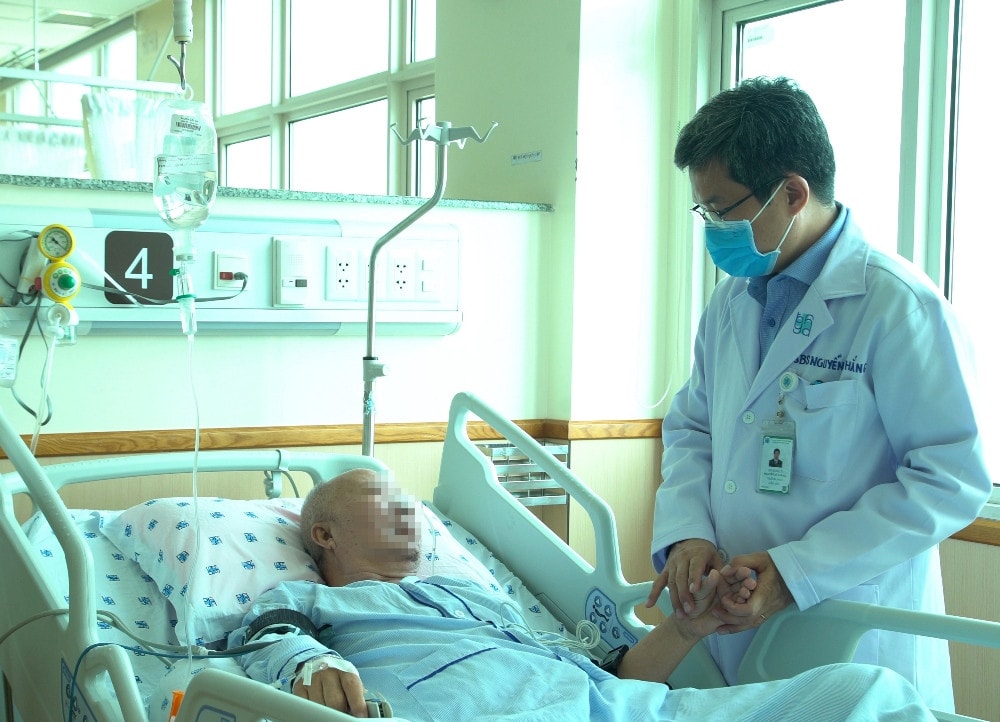 |
Doctor Nguyen Ba Thang and a patient undergoing treatment for a stroke. Photo: Provided by the hospital. |
Specifically, about 7% of people who experience a transient ischemic attack (TIA) will have a stroke within 2 days; 12% within 30 days; and 17% within 90 days. This means that for every 100 people who experience a TIA, approximately 7 will have a stroke within 2 days; 12 within 30 days; and 17 within 90 days.
In the long term, 20-30% of people who experience transient ischemic attacks (TIAs) will eventually have a full-blown stroke.
The main symptoms of a stroke are weakness in the arms and legs, facial muscle weakness, and voice weakness. A small number of people may experience dizziness, loss of balance, or visual disturbances.
When these symptoms occur, people should not wait to differentiate between a stroke and a transient ischemic attack (TIA), but should seek immediate emergency care as if it were a stroke. If they delay and wait for the body to restore blood flow on its own, the patient will lose the critical window of opportunity and may die or suffer permanent disability.
At home, family members only need to ensure the patient's safety and transport them to the most appropriate hospital for emergency treatment. Methods such as bloodletting, cupping, or squeezing lemon juice are not beneficial and can even harm the patient.
With stroke, "time is brain," and losing time will cause more brain cells to die.


