
Effective capital mobilization creates momentum for economic growth.
In 2025, with the economy showing many positive signs, banks in Nghe An province are accelerating capital mobilization to meet credit demand. This helps ensure stable liquidity and plays a crucial role in promoting economic growth and supporting production and business activities.
Mobilizing good growth
At the beginning of the year, many banks in Nghe An maintained deposit interest rates at the same level as the previous year, with abundant mobilized capital.
HDBank Nghe An branch maintains interest rates at 3.35-3.45%/year for 3-5 month terms and 4.6%/year for 7-11 month terms. Many joint-stock banks such as Vietbank, VIB, etc., offer interest rates of 6.1%/year for 12-month terms and 6.3%/year for 24-month terms. Eximbank, in particular, has raised its highest deposit interest rate to 6.8%/year for 24-36 month terms, maintaining its leading position in the market.

Mr. Nguyen Manh Ha, Director of HDBank Nghe An, said that after the Lunar New Year, the demand for loans is not high, but deposits from the public are abundant, and capital mobilization is good. In one month, our bank mobilizes several hundred billion VND, achieving a growth rate of over 3%.
However, major banks such as Vietcombank, BIDV, Vietinbank, and Agribank still maintain interest rates lower than the general market average, fluctuating around 4.7-5% per year for 12-month terms.
A representative from Vietinbank Nghe An stated that deposits increased well at the beginning of the year, with ample idle funds, while loan demand was not yet high, resulting in a slight decrease in deposit interest rates compared to the period before Tet (Lunar New Year). From the beginning of the year until now, Vietinbank Nghe An alone has seen a 7.2% increase in deposits across both individual and corporate sectors; lending has increased by 3%. In 2024, Vietinbank Nghe An achieved positive business results, paving the way for its target of a 19% increase in deposits and over 20% increase in lending in 2025.
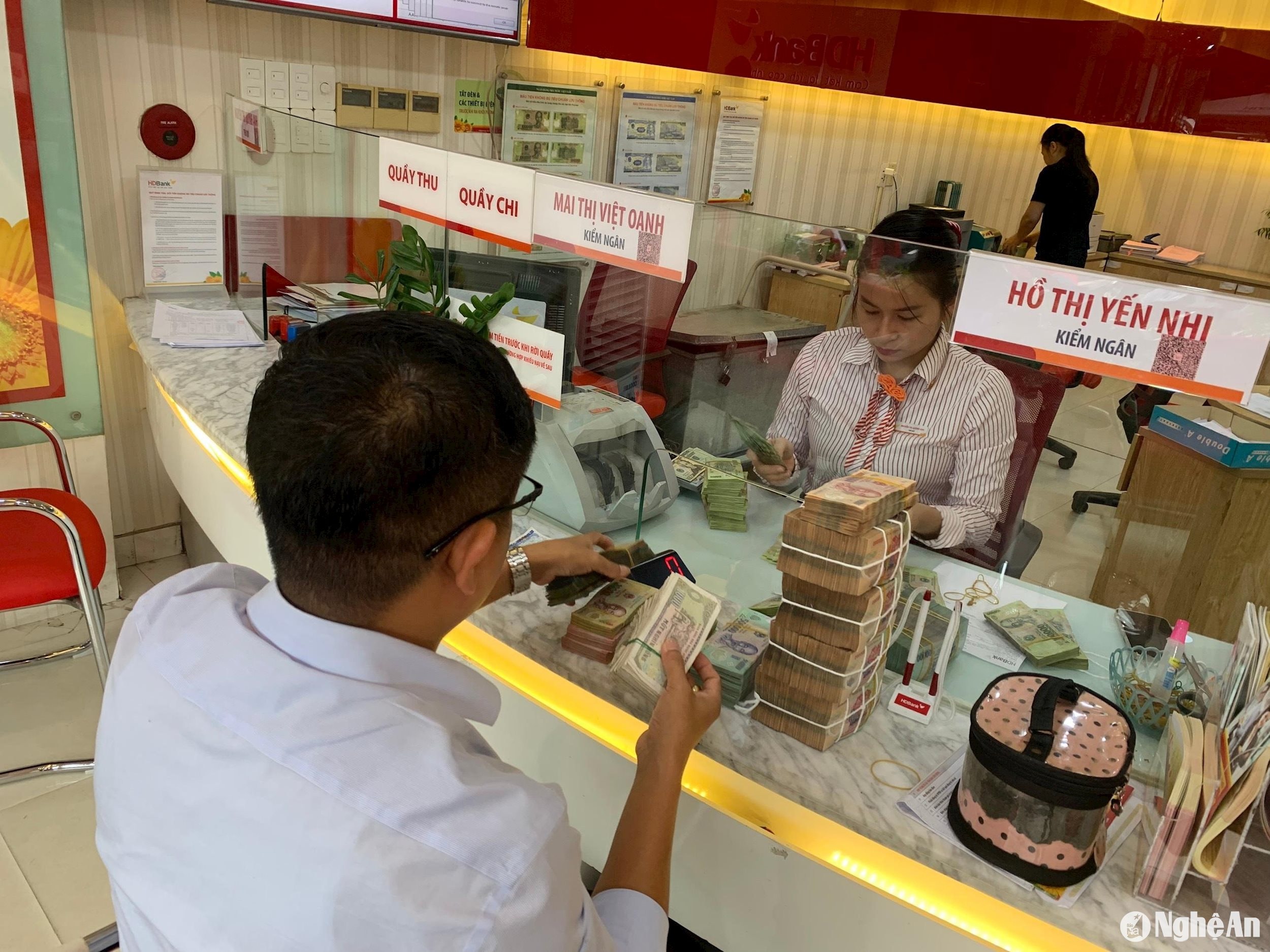
At the beginning of the year, banks need large amounts of capital to support their annual credit plans. The interest rate differential between different groups of banks shows that large banks, with their state-owned prestige and relationships with major corporations, find it easier to raise capital, thus ensuring stable funding and system liquidity. Conversely, smaller joint-stock banks rely more heavily on deposit mobilization. For this group, higher deposit interest rates are necessary to attract capital, ensure liquidity, and support business plans.
The State Bank of Vietnam's leadership stated that they have directed credit institutions to stabilize deposit interest rates and continue striving to reduce lending interest rates. Recently, the maximum interest rate for VND deposits with maturities under 6 months, demand deposits, and deposits with maturities under 1 month has been 0.5%/year, while deposits with maturities from 1 to under 6 months have been 4.75%/year. The maximum short-term lending interest rate in VND for some priority sectors is 4%/year… In 2025, the State Bank of Vietnam will continue to implement its regulations on interest rates.
As of January 31, 2024, mobilized capital in the area was estimated at VND 271,112 billion, an increase of VND 1,349 billion (0.5%) compared to the previous month. Total outstanding loans were estimated at VND 326,734 billion, an increase of VND 1,496 billion (0.46%) compared to the previous month. Excluding the Development Bank, outstanding loans reached VND 318,734 billion, an increase of VND 1,586 billion (0.5%) compared to the previous month. Of this, medium and long-term loans accounted for an estimated 38.7% of total outstanding loans, and loans denominated in VND accounted for an estimated 99% of total outstanding loans.
Outstanding balances for some credit programs as of January 31, 2025:
+ Outstanding loans to the agricultural sector, rural areas, and rural regions across the entire province are estimated at VND 142,400 billion, accounting for 43.6% of the total outstanding loans in the province.
+ Outstanding loans for the development of high-tech and clean agriculture under Resolution 30/NQ-CP are estimated at VND 19,829 billion, accounting for 6% of the total outstanding loans in the entire area.
Outstanding export loans are estimated at VND 2,420 billion, a 5.4% increase compared to the beginning of the year.
Outstanding loans for housing support under Government Resolution 02/NQ-CP dated January 7, 2013 are estimated at VND 65 billion, a decrease of 2.4% compared to the beginning of the year.
Outstanding loans for shipbuilding under Decree 67/2014/ND-CP are estimated at 76 billion VND, a decrease of 2% compared to the beginning of the year.
Implement monetary policy management solutions effectively.
In January 2025, following the directives of the State Bank of Vietnam and the People's Committee of Nghe An province, the State Bank of Vietnam's Nghe An branch promptly implemented mechanisms, policies, and solutions related to state management of currency, credit, and banking operations. They also accelerated the implementation of credit programs for the forestry and fisheries sectors. Regarding the VND 120,000 billion credit program (which has now increased to VND 145,000 billion with 9 banks registering) for social housing, worker housing, and the renovation and reconstruction of old apartment buildings under Government Resolution 33/NQ-CP, the Provincial People's Committee announced a list of 3 projects that met the legal requirements to access loans under Resolution 33. Commercial bank branches in the area have been actively approaching and receiving loan applications from investors.

The State Bank of Vietnam continues to direct credit institutions in the area to maintain stable deposit interest rates and reduce costs to promptly lower lending interest rates to support people and businesses in the area. It is also aggressively implementing solutions to alleviate difficulties for businesses and individuals, particularly extending the debt restructuring period and maintaining the same debt classification. From April 24, 2023 to December 31, 2024, debt restructuring and maintaining the same debt classification have been implemented for 207 customers, with a total restructured debt value (principal and interest) of VND 2,583.6 billion.
According to the State Bank of Vietnam's leadership, this year the State Bank aims for a credit growth rate of approximately 16% to support an economic growth target of 8%. If economic growth reaches 10%, credit growth should be at 18-20%.
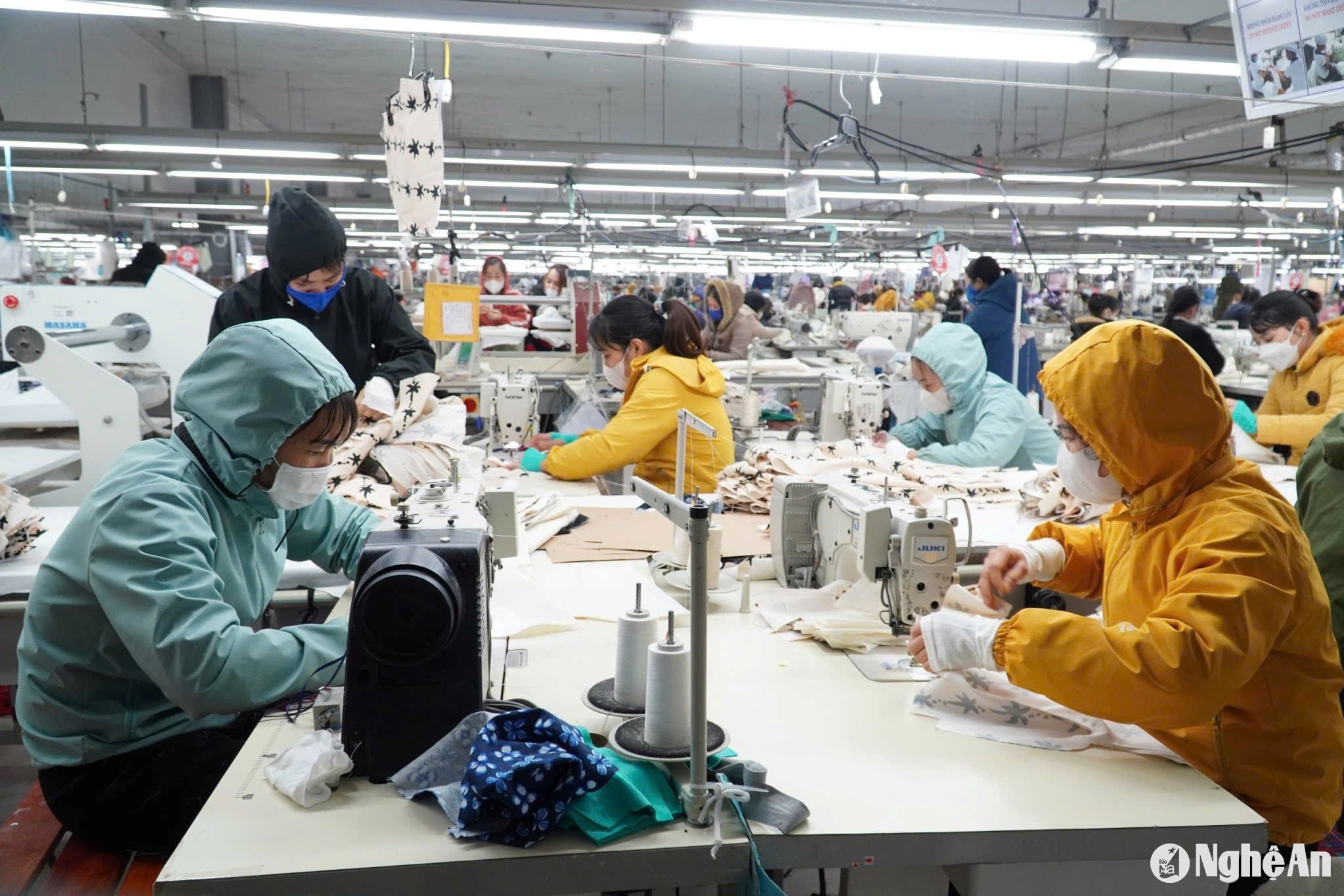
Currently, the banking sector is reducing costs and lowering lending interest rates; increasing access to capital for businesses and individuals. It is implementing credit packages that adequately and promptly meet the capital needs for production, business, and serving the legitimate living and consumption needs of people and businesses, striving for credit growth while controlling credit quality. It is also continuing to promote digital transformation in banking operations to meet the requirements of new business models and products and services based on information technology, digital banking, and digital payments.
The Governor of the State Bank of Vietnam (SBV) has just issued Directive No. 01/CT-NHNN, dated January 20, 2025, on organizing the implementation of key tasks of the banking sector in 2025. Accordingly, in implementing Resolution No. 158/2024/QH15 dated November 25, 2024, of the National Assembly on the socio-economic development plan for 2025, Resolution No. 01/NQ-CP dated January 8, 2025, of the Government on the main tasks and solutions for directing and managing the implementation of the socio-economic development plan and the State budget estimate for 2025, and closely following the direction of the SBV Party Committee on the key tasks and orientations of the banking sector in 2025, the SBV Governor requests all units under its purview and credit institutions, and branches of foreign banks to effectively implement monetary policy and banking operations in 2025, contributing to... The priority is to strongly promote economic growth while maintaining macroeconomic stability, controlling inflation, and ensuring the major balances of the economy.


