
Giving a "makeover" to OCOP products in Nghe An.
(Baonghean.vn) - Currently, Nghe An has 249 OCOP products that have achieved 3 stars or higher at the provincial level, all of which are of good quality. However, many products still lack investment in packaging and labeling, making it difficult for them to find a foothold in the market…
"Good wood" needs "good paint as well"
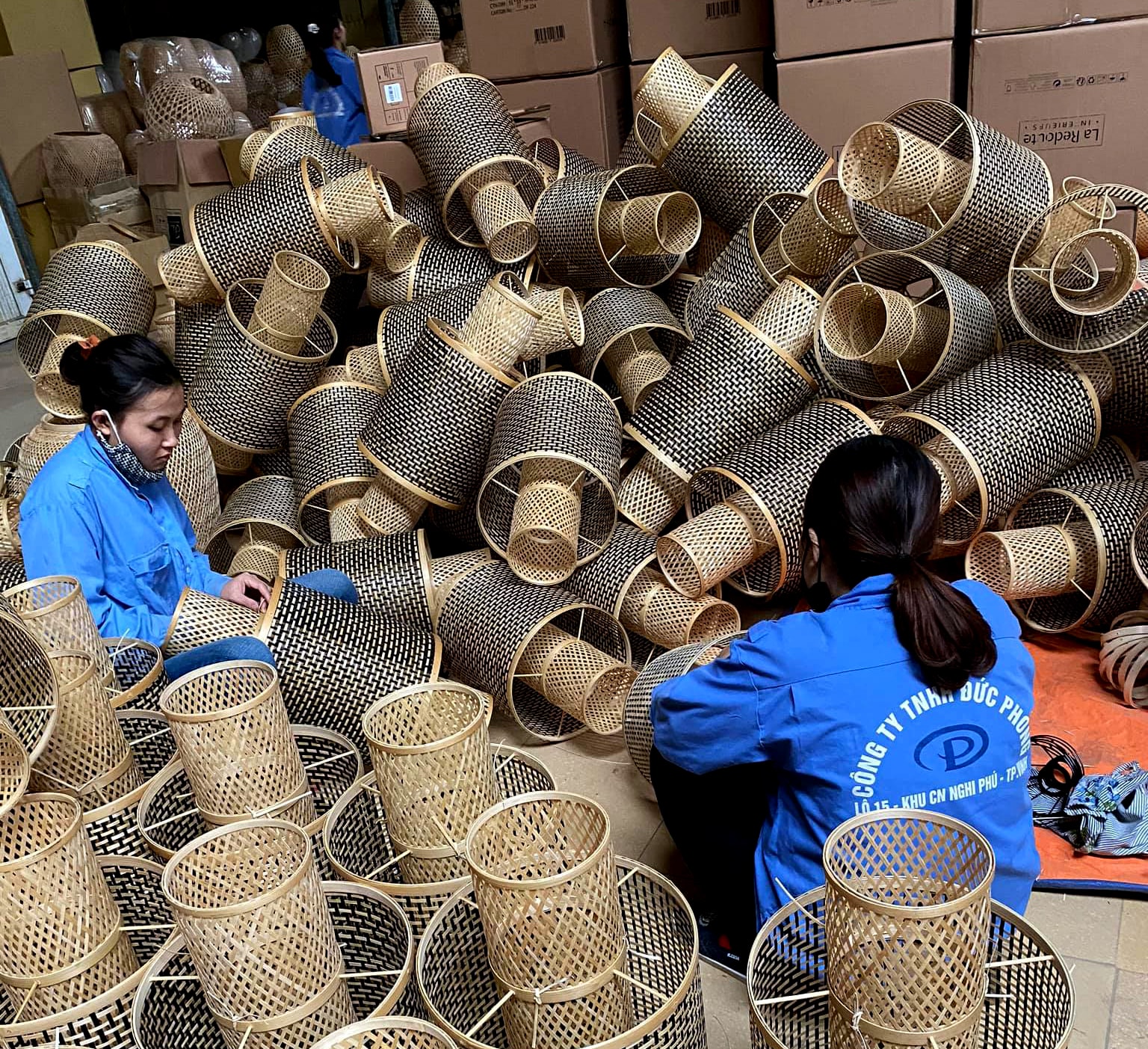 |
| A lantern production stage at Duc Phong Co., Ltd. Photo: Thanh Phuc |
As a unit with many OCOP products, including one product with 5-star potential and currently being submitted to the central government for consideration and approval as a national-level OCOP product,Duc Phong Co., Ltd. (Nghi Phu Industrial Park, Vinh City)In addition to focusing on product quality and design, great attention is paid to packaging, labeling, and traceability for products.
Mr. Thai Dai Phong, Director of Duc Phong Co., Ltd., said: “Most of our company's products are exported to Japan, South Korea, and Western countries. Since the main market is overseas, the products require high-quality standards, complete labels, QR codes, etc., in accordance with regulations. Especially for products awarded the OCOP (One Commune One Product) certification, we have invested in OCOP labeling. This is also a way for us to promote the quality and brand of our products, considering it a 'passport' to establish brand recognition and reputation in the market, especially in the current context where the company is simultaneously exporting and expanding into the domestic market.”
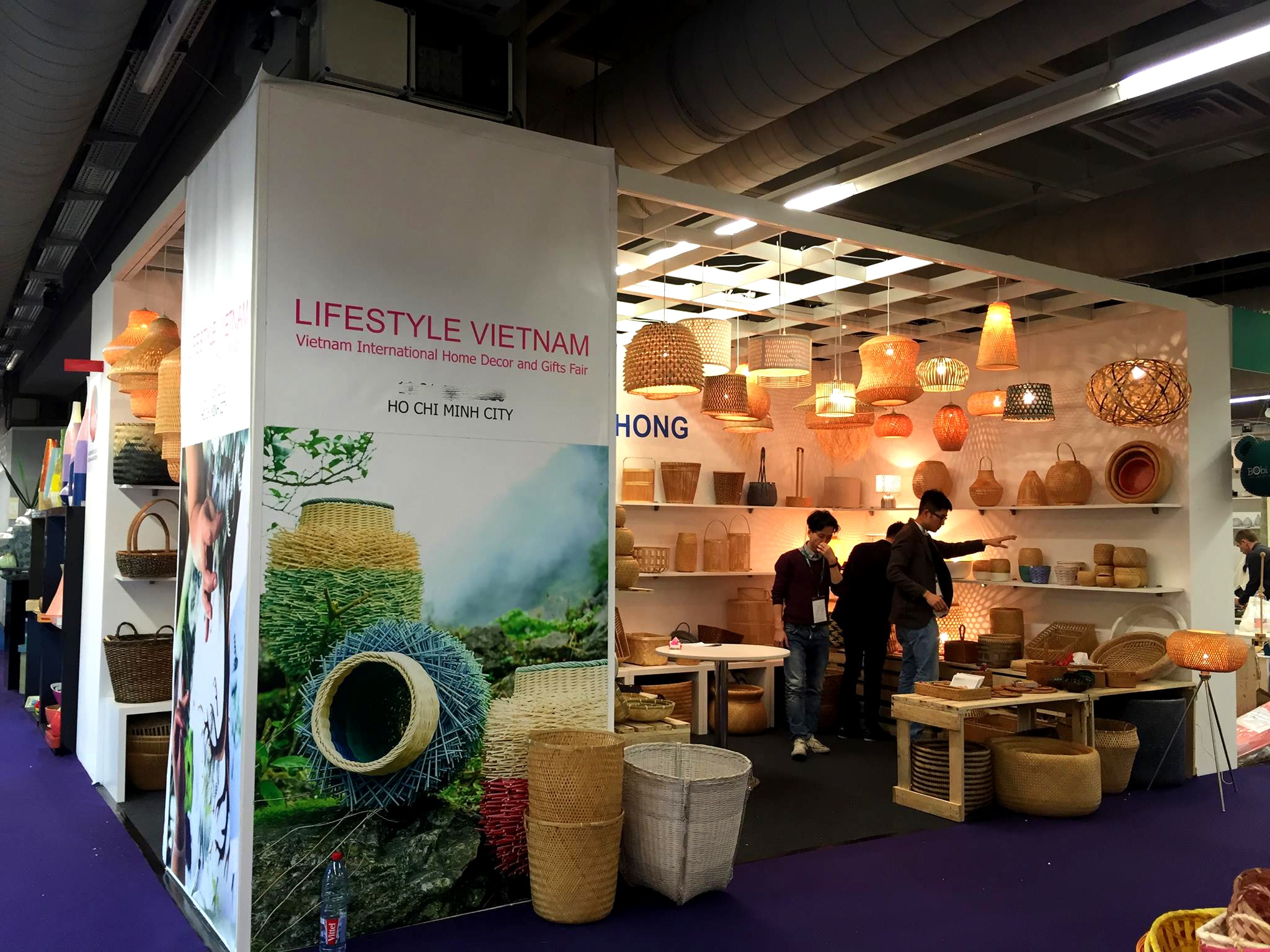 |
| The lantern products of Duc Phong Co., Ltd. are currently being submitted for National OCOP certification (5 stars). Photo: Thanh Phuc |
ProductLuong Son rice crackersThe rice cracker product of Luong Son Food Production and Trading Co., Ltd. (Nhan Son commune, Do Luong district) was recognized with 3 OCOP stars in 2020. After receiving the "stars," Mr. Nguyen Ngoc Phuong - the company's director - was very concerned about building a brand and investing in design and packaging for the rice cracker product. He clearly understood that, having received the "stars," in addition to the recognized quality, the product must also have something different, worthy of its status, and build a brand, rather than being "identical" to similar products on the market.
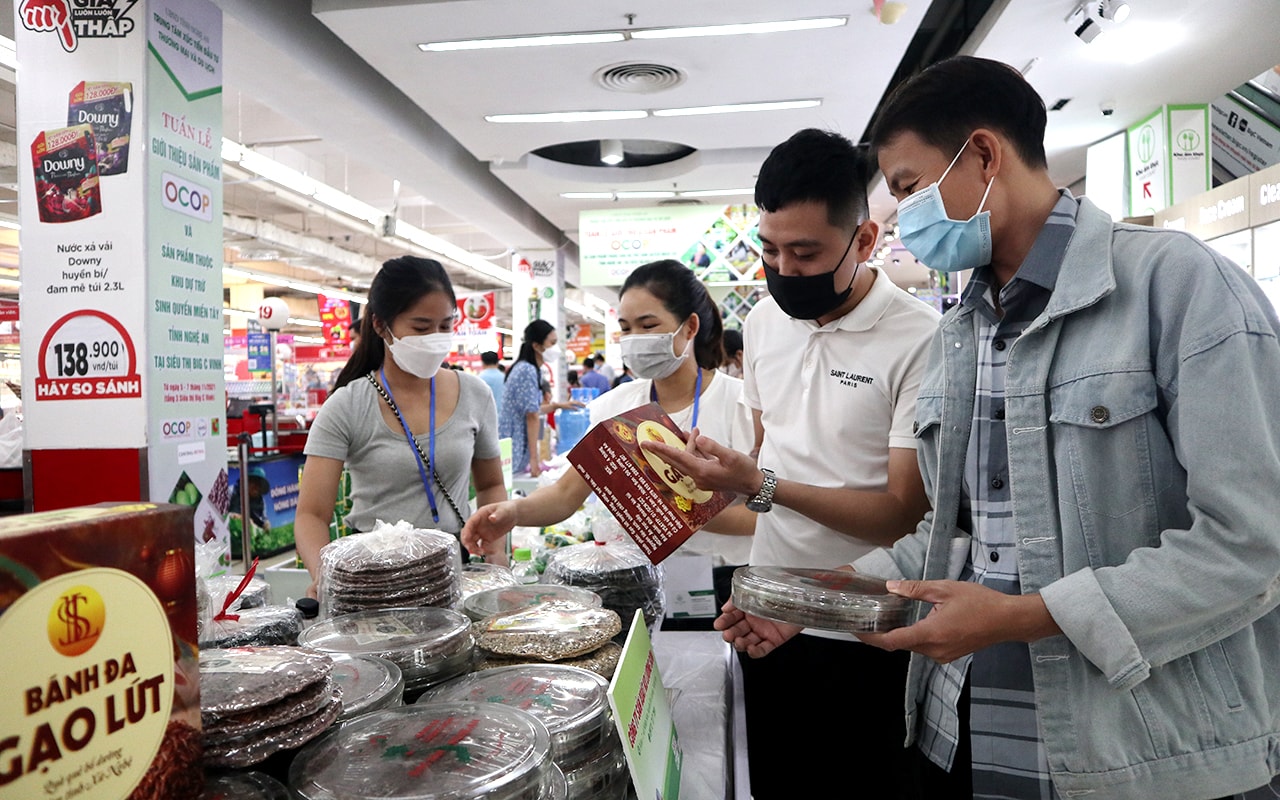 |
| Luong Son rice crackers, which have achieved 3-star OCOP certification, are now available in supermarkets thanks to investments in packaging and standardized labels. Photo: Thanh Phuc |
In particular, to get into supermarkets and clean food chains, and for consumers to know about Luong Son rice crackers, they must at least have a name, address, and traceability labels. Understanding the importance of brand building and labeling, Mr. Phuong came up with the idea of designing a logo, investing in printing packaging and labels, and applying for barcodes… Luong Son rice crackers are packaged in a clear plastic wrap, in an attractive cardboard box, and with labels that fully list the ingredients, usage instructions, expiration date, and place of production… This is what creates the brand and reputation for the product.
Mr. Nguyen Ngoc Phuong, Director of Luong Son Food Production and Trading Company Limited, said: “A box of 10 rice crackers costs only 30,000-35,000 VND, and the cost of packaging and labels is already 3,000 VND. Increased costs mean lower profits, and we can't raise the price of the crackers much higher. But in return, thanks to the packaging and labels, the Luong Son rice cracker brand has become well-known, and the product has entered the system of supermarkets and organic food stores. Many people who bought or received them as gifts once, found the crackers delicious, and then contacted the address and phone number on the packaging to place orders.”
Thanks to this, Luong Son rice crackers have become well-known throughout the country and are exported to Laos, Cambodia, Thailand, and Japan. Currently, the company has established partnerships with 2,000 large and small distributors and 350 collaborators nationwide, achieving a stable sales volume of approximately 1,300,000 products per year, generating revenue of 2.6 billion VND, and creating jobs for hundreds of workers.
 |
| Many small-scale producers have also begun paying attention to product labeling. Photo: Thanh Phuc |
While large-scale, export-oriented manufacturers invest in packaging and labeling in a systematic, scientific, and professional manner, many small-scale, family-owned, and retail businesses are now also paying attention to investing in product labels. They are aware that consumers today are very concerned about the origin, source, and expiration date of products; moreover, labeling is also a way to promote their products and connect consumers with manufacturers.
Assessing the role of branding, labels, and packaging in promoting, advertising, and expanding the market for OCOP products, especially in bringing these products to e-commerce platforms.
“To date, the province has 31 entities granted collective trademark protection certificates, the majority of which are OCOP products. These products have attractive labels and packaging, initially building consumer trust and gaining market acceptance. As a result, selling prices have increased by 10-30%, profits have risen, and they have found a foothold in major distribution and retail systems and in exports.”
DIVERSE FORMS OF SUPPORT
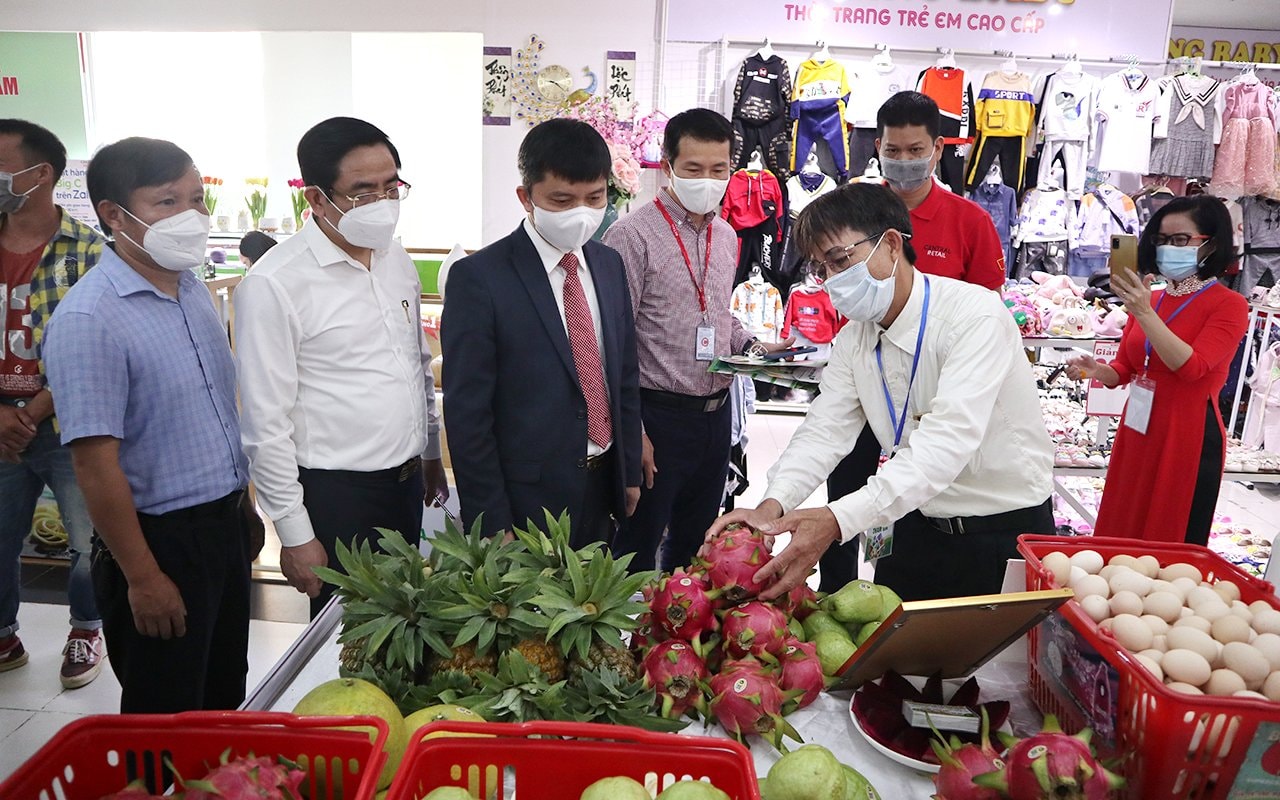 |
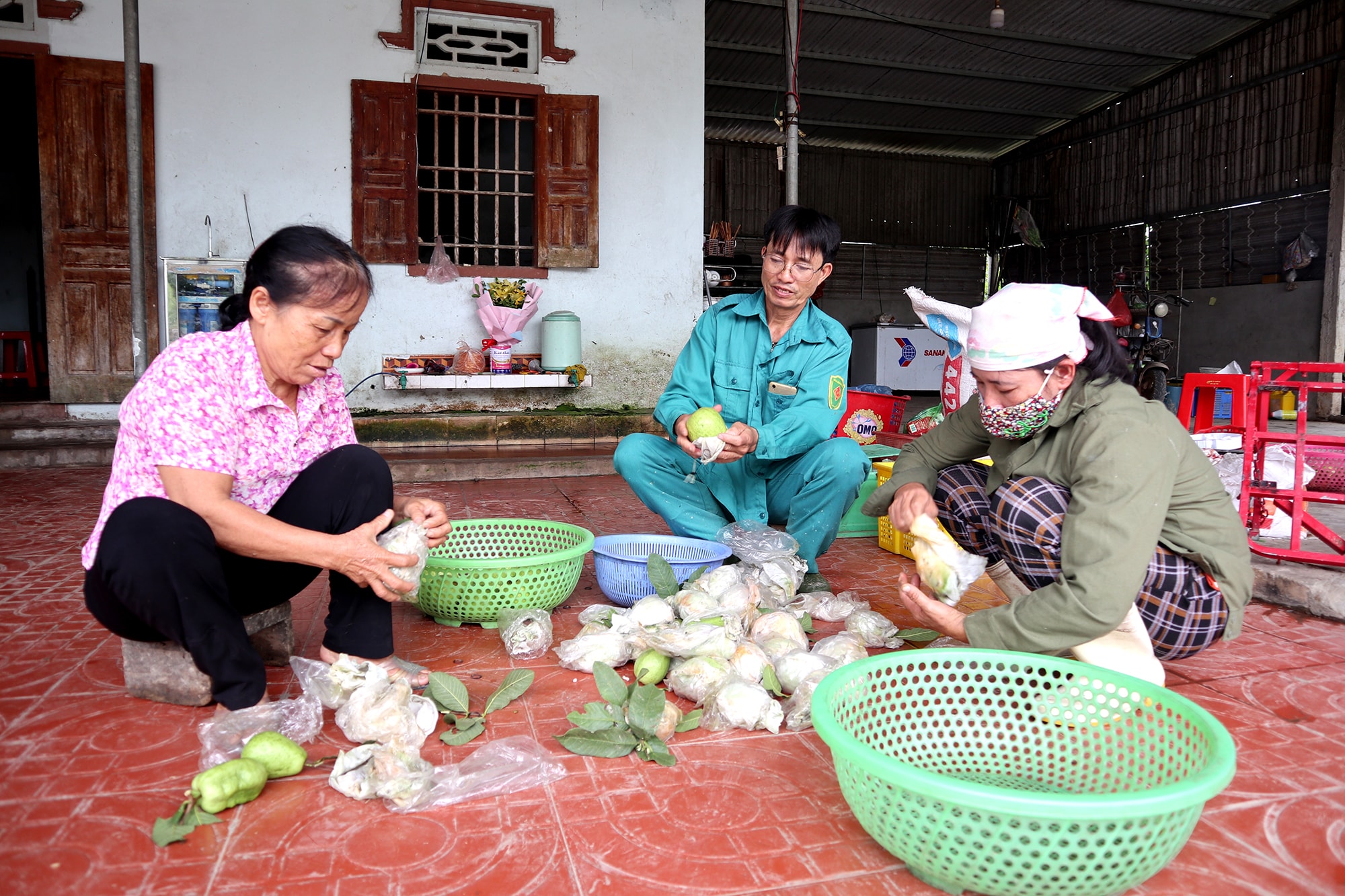
| The Taiwanese pear guava and red-fleshed dragon fruit from Tu Hanh organic farm have been awarded 3-star OCOP certification, but the labels are only affixed when participating in fairs, seminars, or upon customer request. Photo: Thanh Phuc |
Despite the clear benefits, the reality is that many producers of OCOP products currently do not pay enough attention to brand building, packaging, and labeling. This is because printing packaging, labels, and barcodes not only incurs additional costs, but the packaging and labeling process itself is time-consuming and labor-intensive. Meanwhile, their products are still primarily sold retail in the market.
Mr. Dam Duy Tu (Quynh Tam commune, Quynh Luu district) is the owner of 2 products that have achieved the standards.3-star OCOPA seller of red-fleshed dragon fruit and guava said: "Actually, I only put labels on my guavas when participating in trade fairs, seminars, trade promotion events, and at the request of customers. Because labeling 1 kg of guava costs an additional 2,000 VND/kg, which accounts for half of the profit, and if the selling price is 2,000 VND/kg higher, customers will not accept it."
 |
| However, if sold retail in markets, labels and tags are not allowed because it would increase the product's cost, making it difficult to compete in the market. Photo: Thanh Phuc |
Mr. Tu also stated that although affixing labels and stickers would help consumers distinguish his organic guava and dragon fruit products from other products on the market, he currently has to compete on price and therefore cannot invest further in labels and stickers.
Adding stamps, packaging, and labels will increase input costs, raise product prices, and reduce profit margins.
Currently, OCOP products face fierce competition from other products on the market, especially in terms of price. Therefore, investing in packaging and labeling for OCOP products has not yet received sufficient attention from producers. Another limitation is that while many producers have paid attention to "dressing up" their products, they have only done it superficially; packaging and labels have not been invested in, failing to showcase unique characteristics and not conforming to commercial standards.
 |
| Grilled mackerel from Cua Lo is vacuum-packed with standard packaging and labeling. Photo: Thanh Phuc |
Mr. Vo Van Ly - Head of the Economic DepartmentCua Lo TownAccording to the report: “Implementing the ‘One Commune, One Product’ (OCOP) program, the entire town now has 10 products recognized as OCOP products. Of these, 2 products achieved 4 stars and 8 products achieved 3 stars. All 10 products have been granted trademark protection. In addition to the support policy from the Provincial People's Committee, the town also provided 10 million VND in support for one processed product that received trademark certification from the Intellectual Property Office. The goal is to have 70-80% of products from craft villages with labels by 2025. However, besides products with standard labels, many products have packaging and labels that only meet the basic requirements, lacking creativity and unique characteristics.”
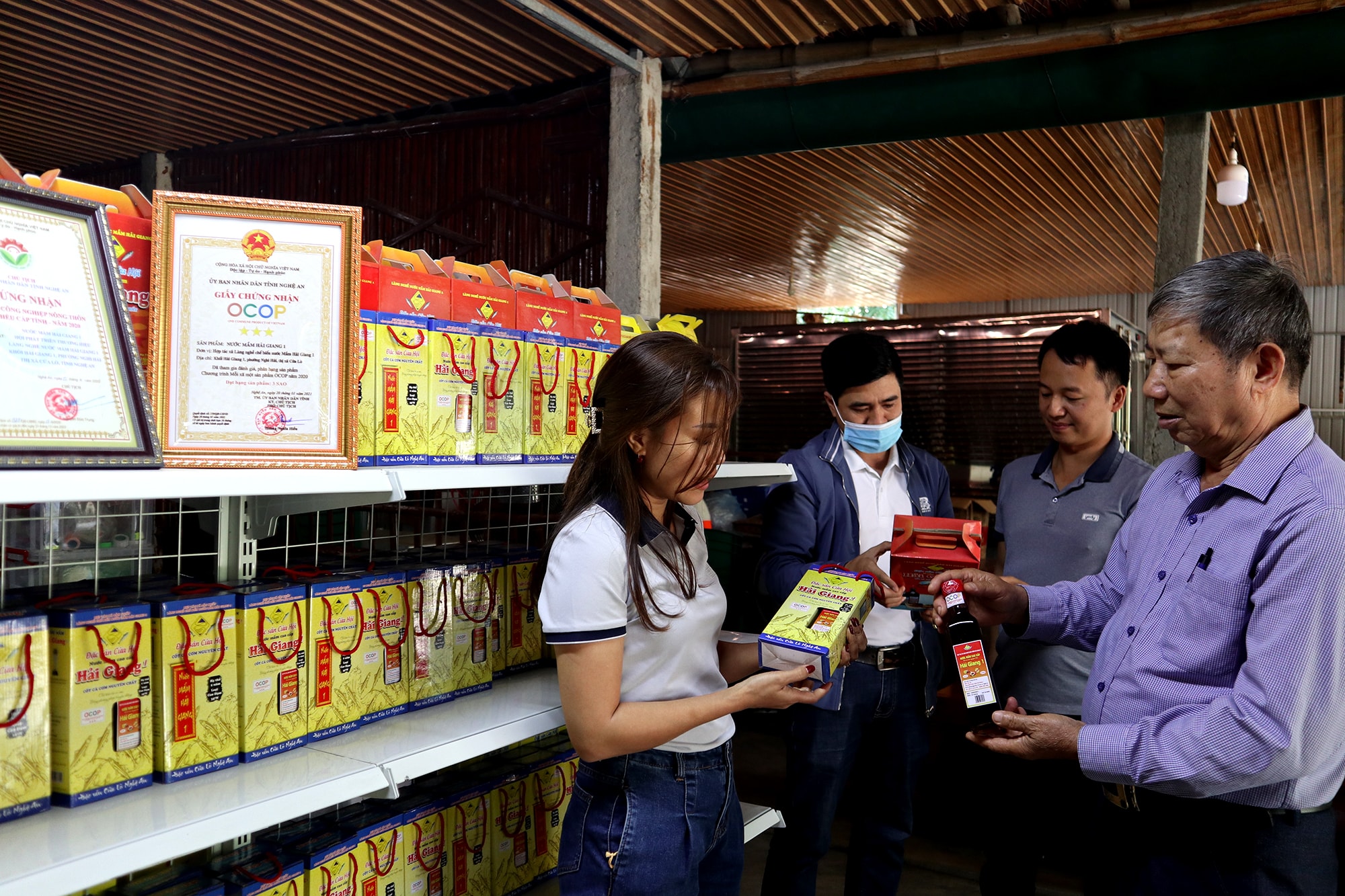 |
| In addition to the support policies of the Provincial People's Committee, Cua Lo Town also provides a subsidy of 10 million VND for one processed product that has been granted a trademark certificate by the Intellectual Property Office. Photo: Thanh Phuc |
This is also a common limitation regarding packaging and labeling of OCOP products currently. To overcome this shortcoming, the Rural Development Sub-Department has recently issued a document guiding districts, towns, and cities to direct economic entities to continue improving and upgrading their products, with a focus on redesigning packaging and labels. At the same time, they are coordinating with relevant departments and units to support economic entities in packaging design and label printing to further improve product packaging and labeling.
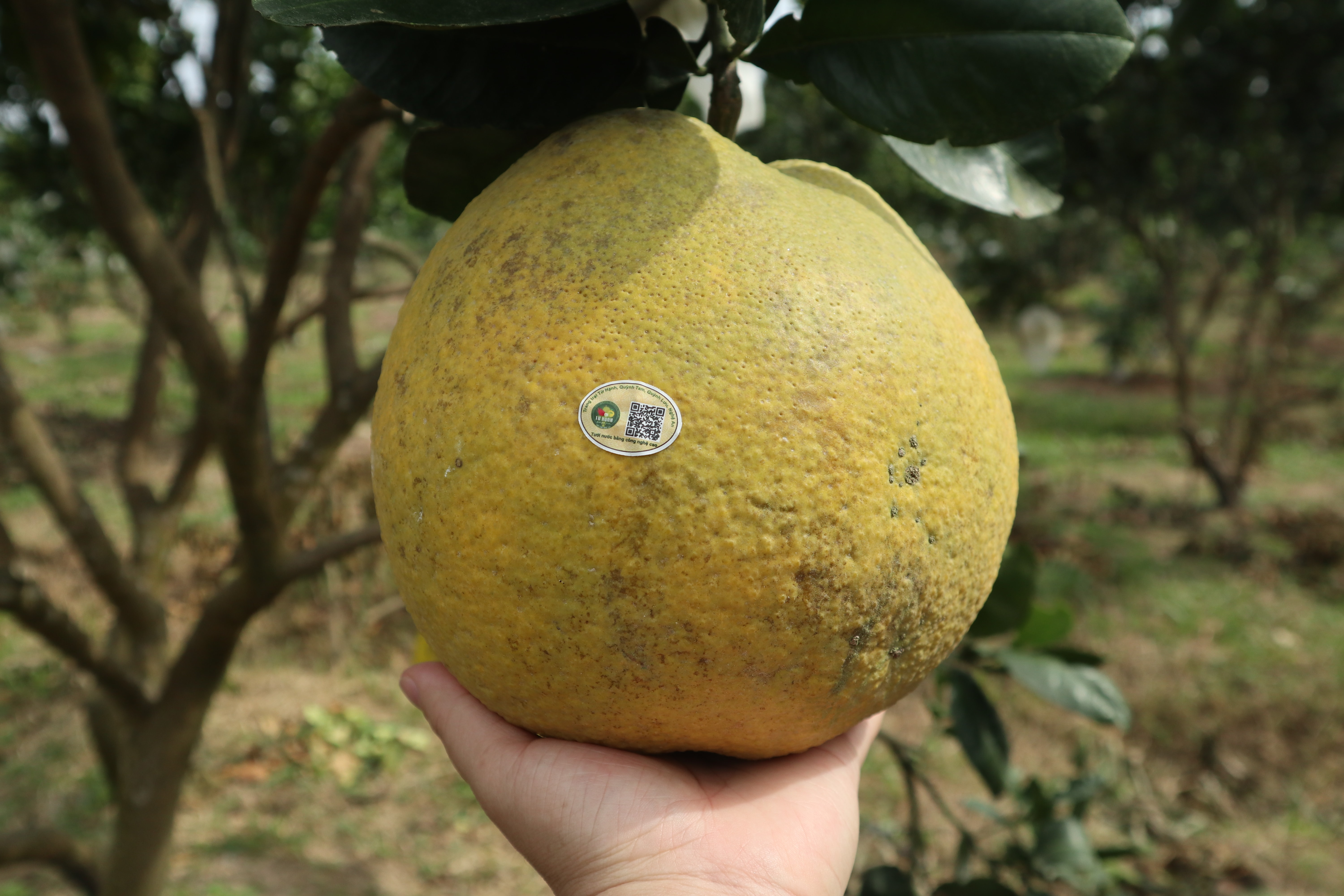 |
| Most labels and logos lack investment, are not highly commercialized, and do not reflect the unique characteristics of the product. Photo: Thanh Phuc |
To support OCOP producers in investing in branding, packaging, and labeling, the Provincial People's Council issued Resolution No. 25/2020/NQ-HĐND on "Regulations on some policies to support the implementation of the 'One Commune One Product' (OCOP) Program in Nghe An province, 2021-2025 period," effective from January 1, 2021. Accordingly, it provides support for 50% of the cost of designing and purchasing commercial packaging and labels, but not exceeding 50 million VND per product, and this support is provided for each upgrade in star rating.
Each OCOP product needs to be "identified" by its quality, brand, packaging, labels, etc. This is a necessary and sufficient factor to move towards "digitalization," expand the market, and affirm the position of OCOP products.


