Part 1: The village gradually becomes sparsely populated!
Thanh Nga - My Ha - Diep Thanh•June 23, 2025 06:06
Parents leaving their young children to be raised by grandparents when they go away for work is a common reality in many rural areas. Although working far from home may provide higher income, the loss of connection between family members is causing significant negative consequences.
Authors: Thanh Nga – My Ha – Diep Thanh Publication date: June 23, 2025 - Technical support: Diep Thanh
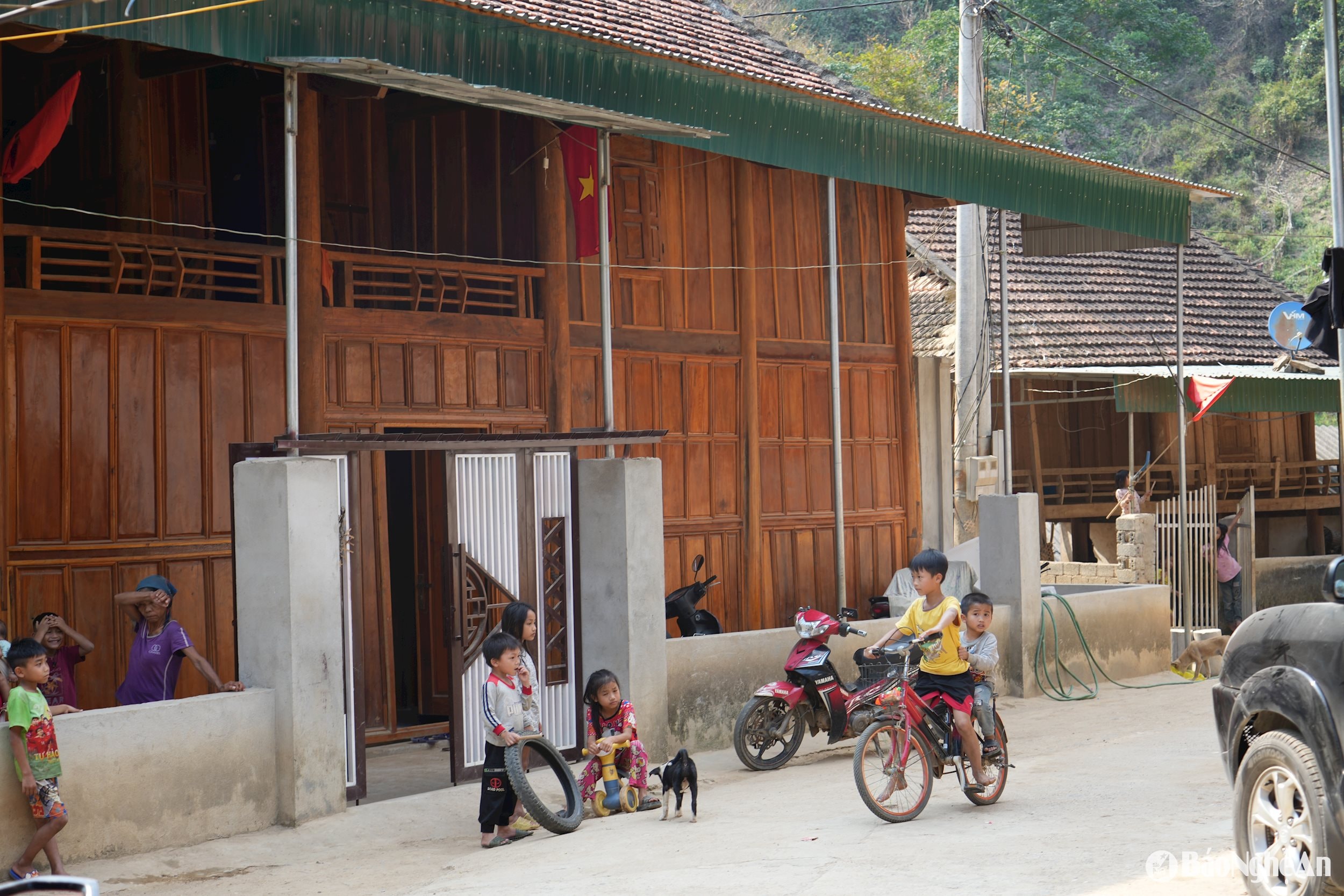
For the sake of their livelihoods, many people have accepted leaving their hometowns, leaving the burden of raising and caring for their children to their elderly grandparents... Many rural and mountainous villages are increasingly devoid of adults, especially those of working age. The same is true in Nghe An province.
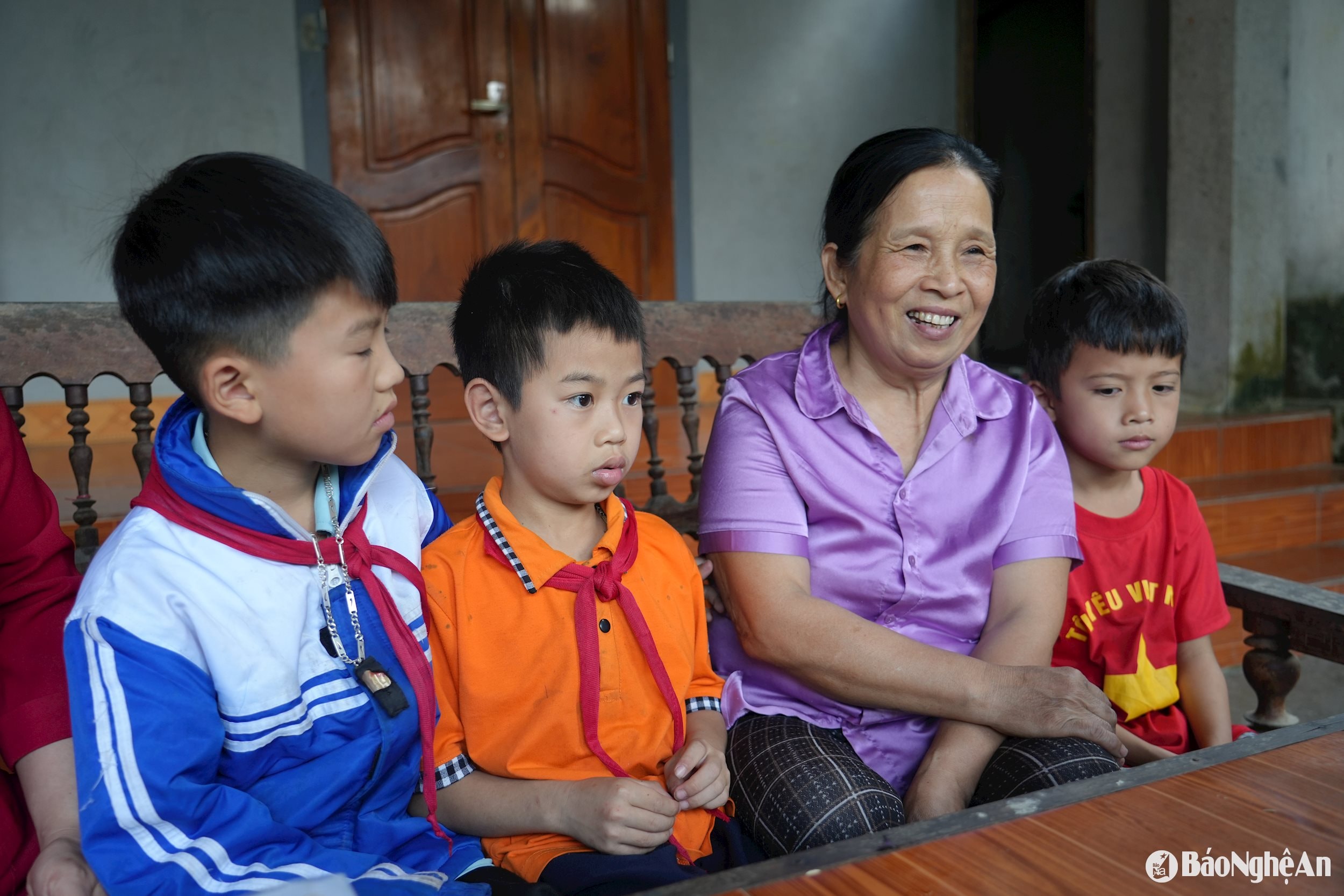
For many years, Mrs. Nguyen Thi Thao (Bai Xa village, Tam Quang commune, Tuong Duong district) and her husband have not had a single day of rest, even though their children are all grown up and have their own families. The burden has been heavy since their children's circumstances changed; some divorced, some lost their spouses early, and others went away to work, leaving all four grandchildren, both from their son's and daughter's families, to be left in their grandparents' care. Currently, the oldest is only in sixth grade, while the others are in elementary school, with some having been cared for by the grandparents since they were weaned.
At nearly 70 years old, many elderly people in Tam Quang commune, Tuong Duong district, still continue to shoulder the responsibilities of their parents. Photo: My Ha
Because the children are still young, at an age where they should be playing and studying, even though they are nearly 70, both grandparents are simultaneously shouldering many roles: grandparents, parents, and guardians of the children at school. The meager salary of the grandfather – a retired miner – must also be used to support the children, as the money their parents send home each month is very small.
Ms. Nguyen Thi Thao added: "I usually start each day at 4:30 a.m. to prepare meals for the children before they go to school. Besides worrying about books, tuition fees, clothes, and hospital expenses when they are sick, the grandparents also have to encourage the children to study."
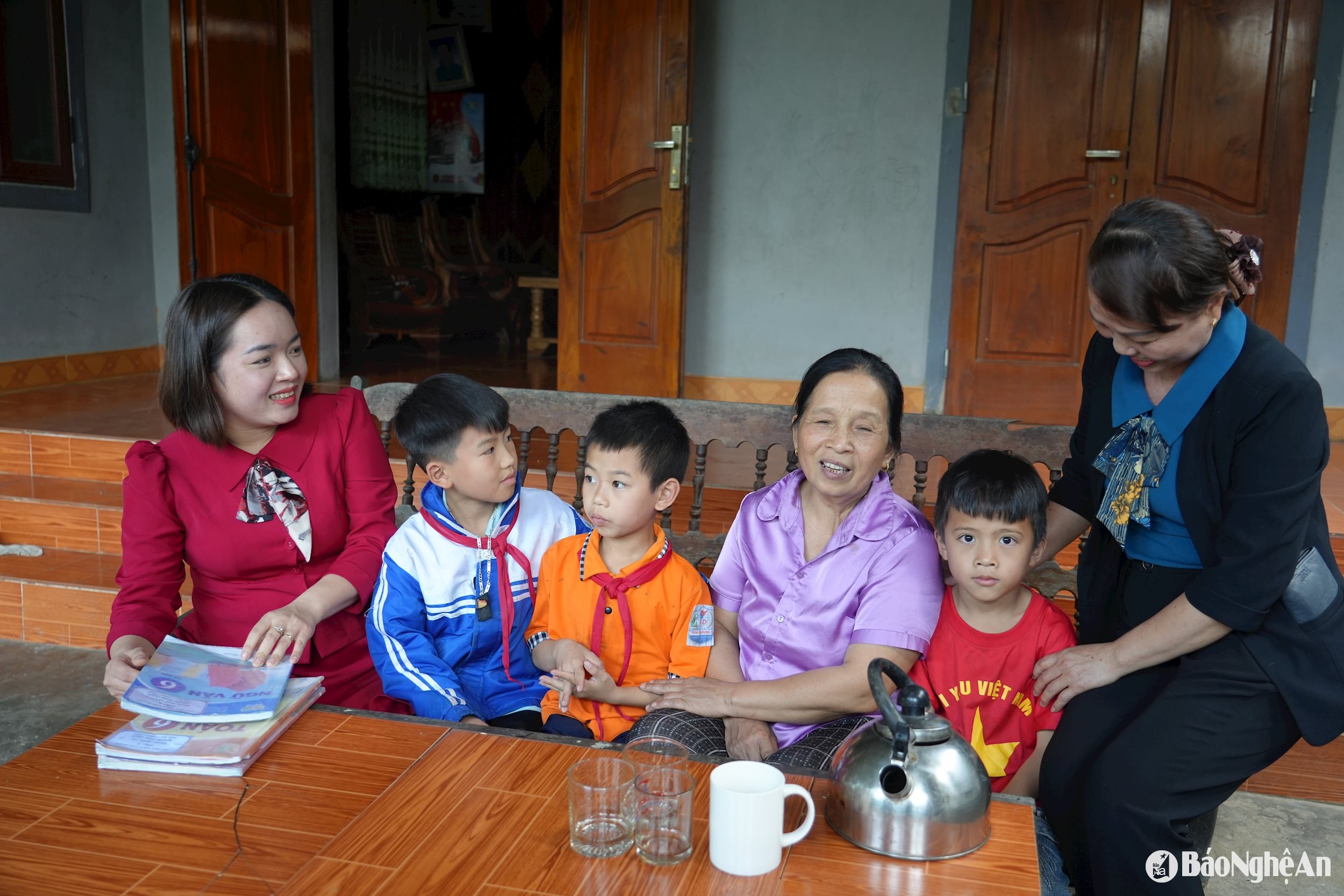
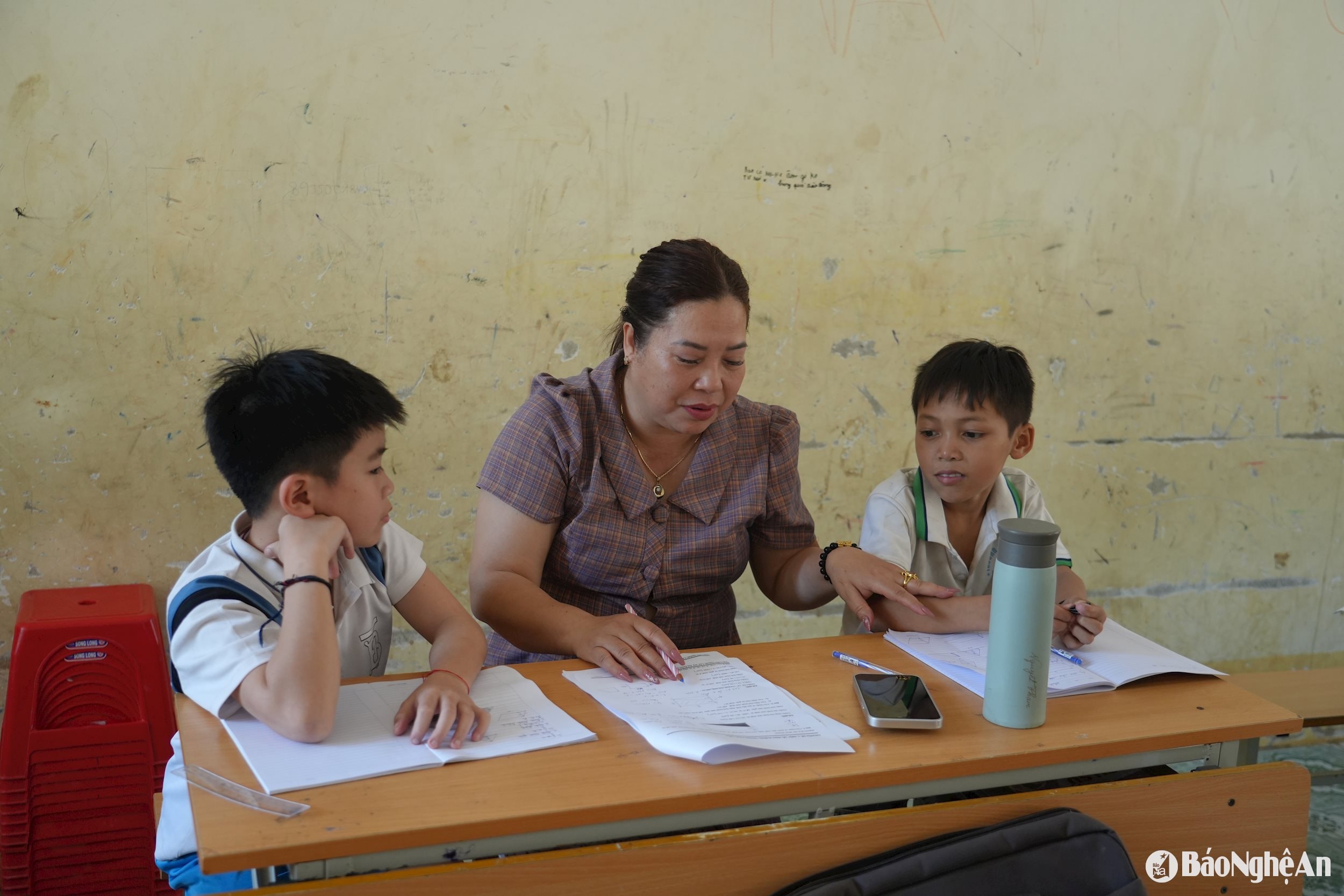
Teachers at Tam Quang 2 Primary School chat with and support families whose children are living with their grandparents. Photo: My Ha
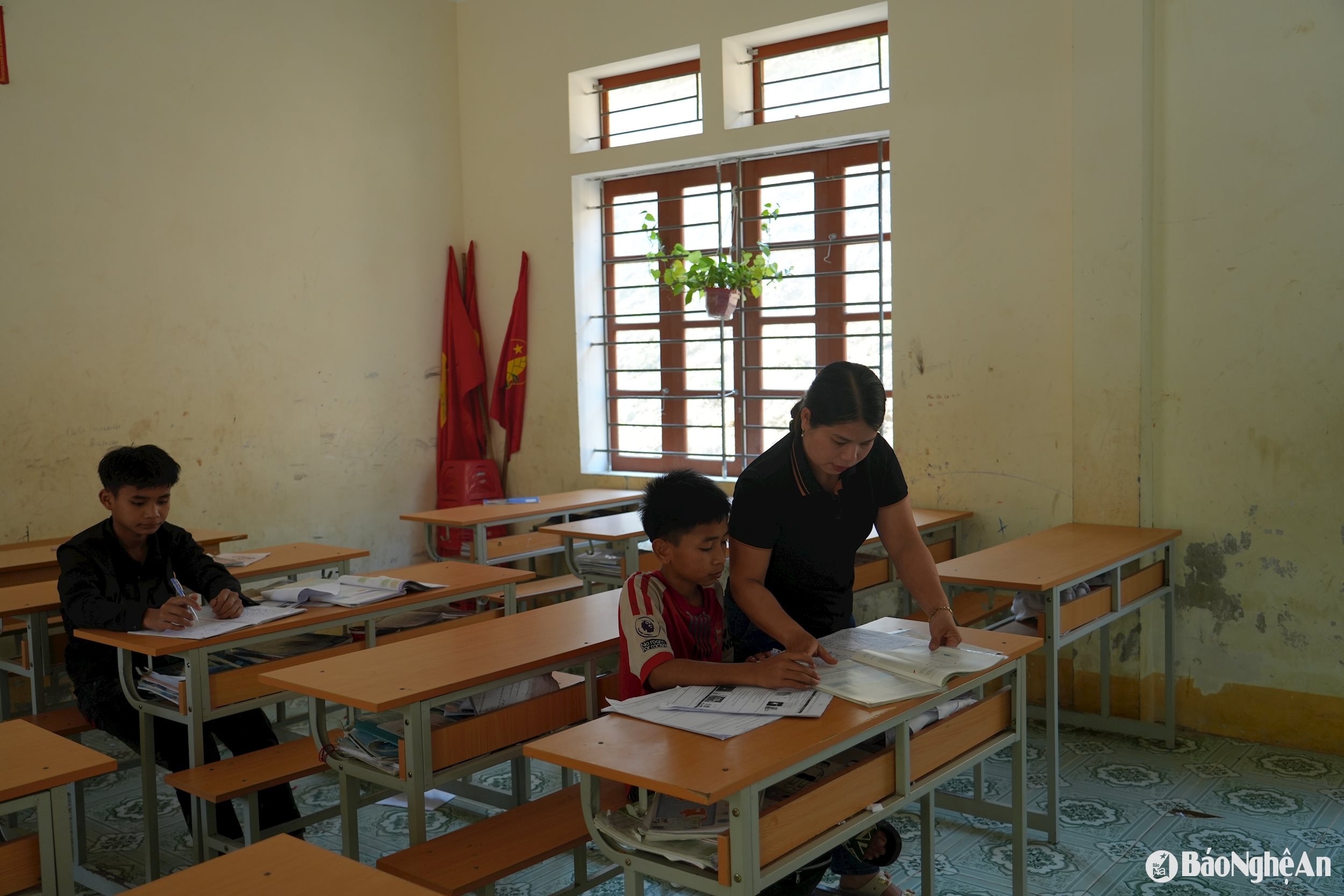
At Tam Quang 2 Primary School, more than half of the parents work far from home, and the case of leaving children at home with their grandparents, like the family of Ms. Nguyen Thi Thao, is prevalent. Ms. Nguyen Thi Thuong, the homeroom teacher of class 2A, recounts: "I rarely see the parents of my students because most parent-teacher meetings are attended by the grandparents instead. Children without parents are at a great disadvantage, as most grandparents are elderly and cannot closely supervise their children's studies."
Tam Quang commune has approximately 2,000 people of working age, but as many as 1,200 have gone to work elsewhere, mainly in the southern provinces. Ms. Kha Thi Hien, Chairwoman of the Tam Quang Commune People's Committee, also acknowledged: "After the 5th day of Tet (Lunar New Year), there isn't a soul left in the commune." The remaining population consists mainly of the elderly and children. Economic conditions in the commune are still difficult; farming alone doesn't provide enough to eat. Therefore, it's understandable that people choose to work elsewhere, and as a result, the economy has improved, and houses have been built more spaciously. However, when parents go away to work, leaving their children with grandparents has many negative consequences.
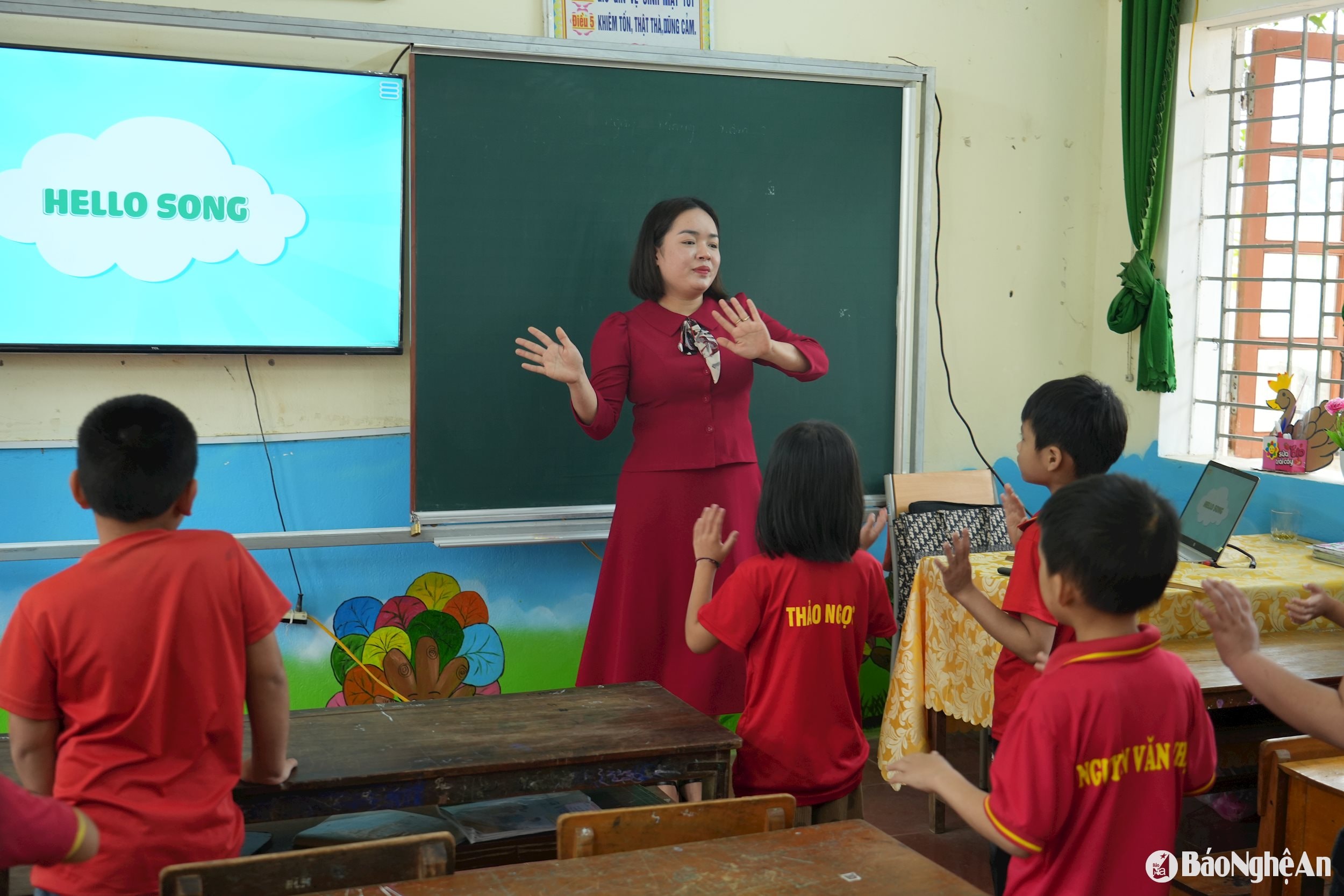
Teachers at Luong Minh Ethnic Boarding Junior High School in Tuong Duong provide tutoring and supplementary instruction for students who live far from their families. Photo: My Ha
According to statistics from Tuong Duong district, nearly 10,000 people of working age are currently working away from home. The majority of these workers leave their hometowns to work in the northern provinces, the Central Highlands, and the southern provinces, leaving their children with grandparents or relatives for care.
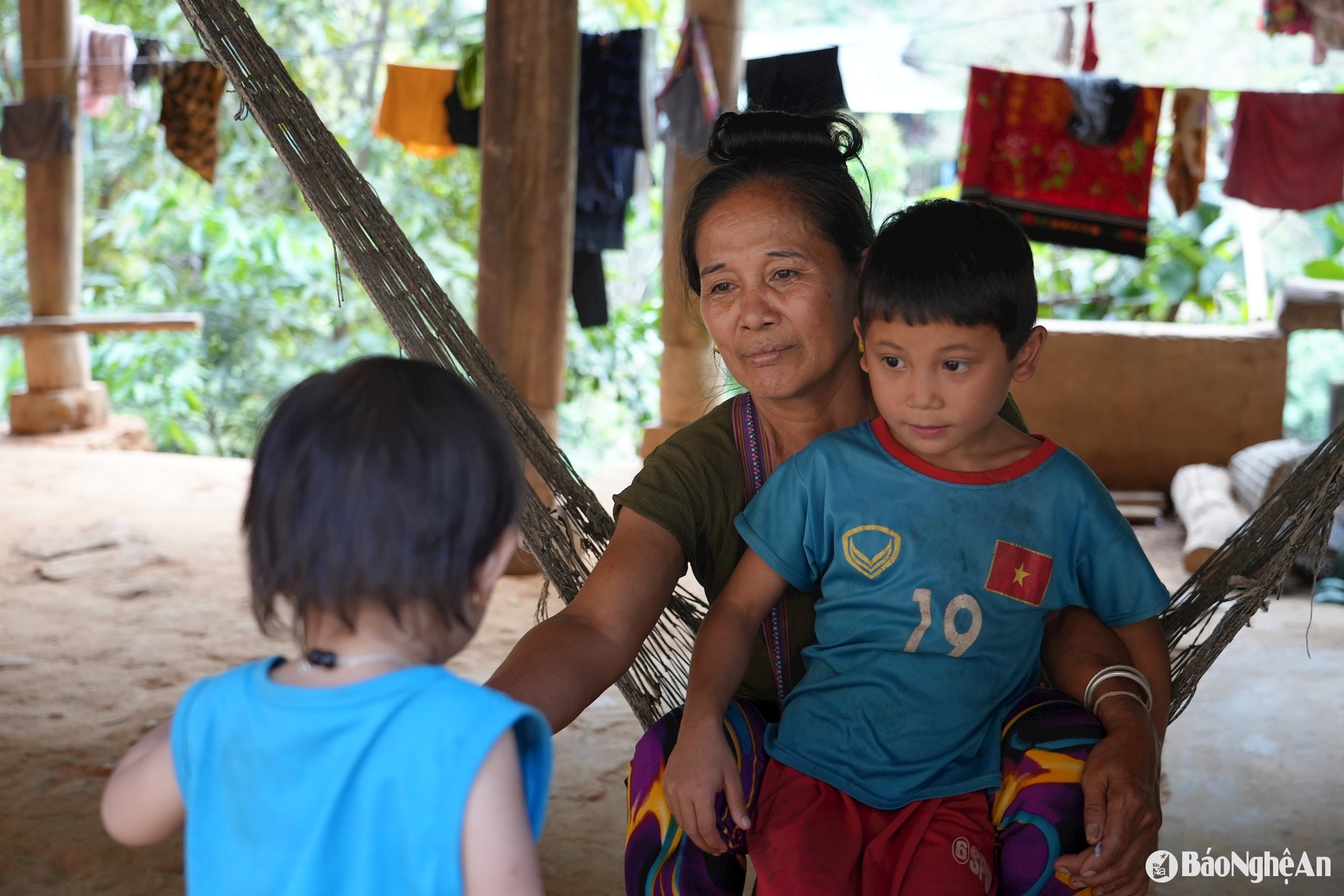
In Huu Kiem commune (Ky Son district), we met Mrs. Lu Thi Dieu (Dinh Son 1 village), who confided, "If I didn't love my grandchildren, I would have gone to work already." At just over 50 years old, Mrs. Dieu said that if she worked in the commune or district, she could earn 3-5 million dong a month. But currently, she is forced to stay home because she is raising five grandchildren alone. "After giving birth, they all left the village to work far away, and I've taken care of them since they were little. They occasionally send money back, but it's not much, so my grandchildren and I have to be frugal to make ends meet..." Mrs. Dieu said.
Taking care of young grandchildren is becoming increasingly difficult for grandmothers in Huu Kiem commune, Ky Son district. Photo: My Ha
Without their parents around, Mrs. Dieu's grandchildren have to fend for themselves. She herself is uneducated and illiterate, so most of their schoolwork is left to the teachers. Daily guidance and instruction are also difficult for her, as she mostly stays at home and doesn't know her grandchildren's friends or other social connections. Mrs. Dieu's biggest worry is that when her grandchildren grow up and need parental guidance, their parents won't be there to support them: No one wants to go away to work, but if they don't, how will they raise their children and secure their future?
Regarding this issue, Mr. Lu Ha, Chairman of the People's Committee of Huu Kiem commune, said that currently there are about 800 laborers (accounting for 1/3 of the working-age population) working far from home, mainly as factory workers in Bac Ninh and Binh Duong. Among these, only a few cases of people working in rubber plantations in the 15th Army Corps (Binh Duong) have their entire families with them. The rest mostly leave their children at home with their parents.
Over 50% of students at Tam Quang 2 Primary School in Tuong Duong have parents who work far away from home. Photo: My Ha
According to statistics from the Ky Son District Department of Internal Affairs, at this time, the entire Ky Son district has more than 21,800 workers who have gone to work elsewhere, accounting for 41% of the local working-age population.
Luong Minh Ethnic Boarding Junior High School (Tuong Duong) has over 350 students, but each student has a different background. Notably, the majority of students at the school do not have parents by their side for various reasons, such as parents working far away, or the students being orphans…
Cụt Phi Hùng, an 8th-grade student from Cà Moong village, is a Khơ Mú ethnic minority. He has three siblings, but because his father passed away early, his mother works as a factory worker, and his grandparents live far away, the siblings have been taking care of each other for many years. Last year, Hùng's older sister finished 9th grade, dropped out of school, and went to work as a laborer in Bắc Ninh, leaving Hùng and his younger brother. During the week, Hùng stays at the school's boarding facility. His younger sibling, who is after 3rd grade, has no one to look after her, so she has to be sent to live with her aunt in Minh Tiến village. Hùng himself returns home every two weeks. Each time he comes home, he sometimes cooks his own meals, and other times he goes to his uncle's house for a quick meal. For many months now, Hùng hasn't had a complete family meal because the travel expenses are high, and his mother's and sister's wages from their jobs are meager.
Photo: My Ha
"Our class has 33 students, and 90% of them are living alone or with their grandparents. It's heartbreaking; they're only 13 or 14 years old and already have to be independent."
Teacher Moong Thuy Duong - Luong Minh Ethnic Boarding Junior High School
As the homeroom teacher of class 8A at Luong Minh Ethnic Boarding Junior High School, Ms. Moong Thuy Duong shared that many parents in her class have never met or contacted her. Ms. Thuy Duong said: "Our class has 33 students, and about 90% are living alone or with their grandparents. It's heartbreaking to see them having to be independent at only 13 or 14 years old. Sometimes I want to connect with the parents to discuss things, but we can't form a private group on Facebook or Zalo because only a handful of parents use social media. The rest work in areas without signal or don't use phones."
Flipping through the list of 8A students, Ms. Thuy Duong sighed sadly because, at this point, only 5 students in the class have escaped poverty. The rest are from poor or near-poor households. Many of her students, even though they are boarding at the school, have very irregular school attendance, with no idea when they will miss school. "Many families don't even have enough food to eat, let alone provide for their children's education. Everything for the students at school is left to the teachers. Many times when students are sick or have an emergency, I call the grandparents and they argue that the grandparents only know how to take care of the grandchildren, and that the teacher must contact the parents. But honestly, I don't know the phone number to call. In some cases, a student hasn't come to school for a whole week, and I can't contact them, so I have to ask the village head for help," Ms. Thuy Duong explained.
Many parents in Huu Kiem commune, Ky Son district, work far from home and leave their children at home. Photo: My Ha
Speaking about the circumstances of the students at the school, Mr. Tran Duc Dung – Vice Principal of Luong Minh Ethnic Boarding Junior High School – expressed his deep concern: "Most students do not have parents to care for them. Now that they are in junior high school and have boarding facilities, they have teachers to guide and support them during the week. But after finishing junior high school, I worry that many will drop out because they lack motivation and parental guidance. Moreover, the environment in Luong Minh commune is quite complex, so if we are lax and lack attention, the students can easily fall into social vices..."
Your comment has been submitted and will be displayed after being reviewed by the editorial team. The editorial board reserves the right to edit comments to comply with the newspaper's content guidelines.


.png)
.png)
.png)