
Part 2: Leaving home and... separation!
Those who leave their hometowns for work may have stable incomes and accumulate capital for the future, but their children may not receive adequate care, and their marriages may even face the risk of separation. Upon returning home, they often face unemployment or low wages, insufficient to support their children's education.

Authors: Thanh Nga – My Ha – Diep Thanh
Publication date: June 23, 2025 - Technical support: Diep Thanh
Those who leave their hometowns for work may have stable incomes and accumulate capital for the future, but their children may not receive adequate care, and their marriages may even face the risk of separation. Upon returning home, they often face unemployment or low wages, insufficient to support their children's education.

In Chau Khe commune (Con Cuong district), a border area where the majority of residents are migrants from Nam Dan district since 1960, out of 135 households with 637 people in village 2/9, as many as 77 are working abroad. The entire commune records approximately 250 people working overseas, mainly through referrals from relatives. In the context of limited arable land and unstable agricultural product markets, labor export has become an almost inevitable choice.

Mr. Nguyen The Anh – Vice Chairman of the People's Committee of Chau Khe commune – observed: In the last 10 years, with the boom in overseas labor export, some families have both husband and wife going abroad, each sending back to their families in the countryside between 100 and 120 million VND annually. In 5 years, the number of poor households in the commune decreased from 20 to 6. However, there are also many negative consequences, such as divorce rates, children being left to be raised by grandparents whose skills are not suitable for the times, so most children have to fend for themselves. Children do not receive proper guidance in their studies, and after finishing high school, they often only think about making money and lack the motivation to continue learning. In 2024 alone, the commune had 10 marriages but as many as 24 divorces, not including those who separated...
Ms. Pham Thi Hoa, Secretary of the Party Branch of Hamlet 2/9, Chau Khe Commune, said: “The whole hamlet only has about 7 laborers working at Minh Anh Con Cuong Garment Company; the rest have gone to the South, the North, or abroad for work. My family also has two sons working abroad, one in Japan and one in South Korea. The people in the village now are mainly women, the elderly, and children. Many families have both husband and wife working abroad; some families have four children all participating in overseas labor, leaving their children to be raised by their grandparents. Although some laborers only earn 20-30 million VND/month abroad, sending back at most 50-100 million VND/year, they still have to struggle and haven't returned for 5-7 years.”
Mr. Vi Trung Dinh, Vice Chairman of the People's Committee of Thach Ngan commune, Con Cuong district, shared that although the commune's population is over 6,300 people, 85% of whom are ethnic Thai people, only fewer than 30 people work at companies in the district, while nearly 200 people from the commune have gone abroad for work.
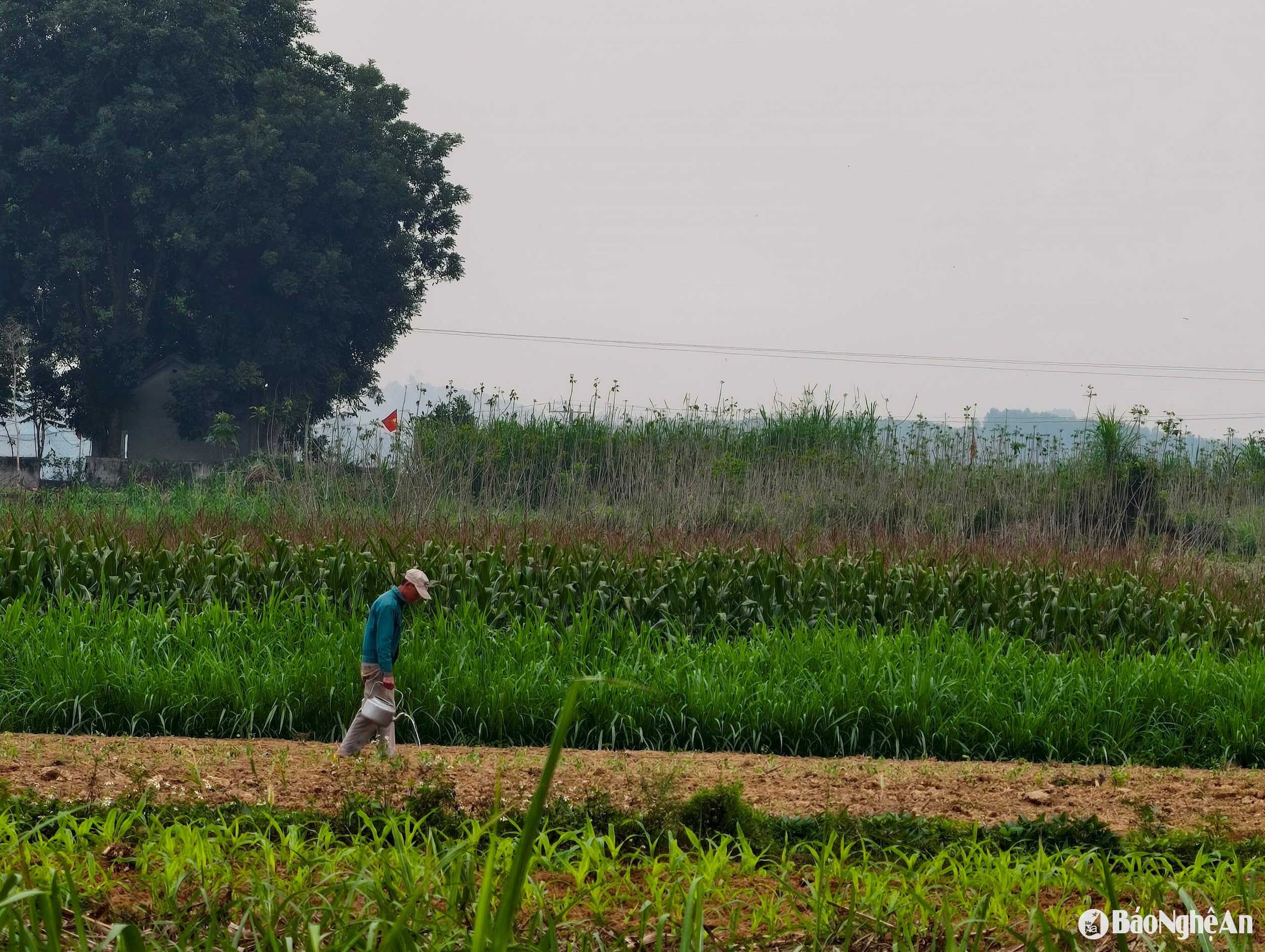
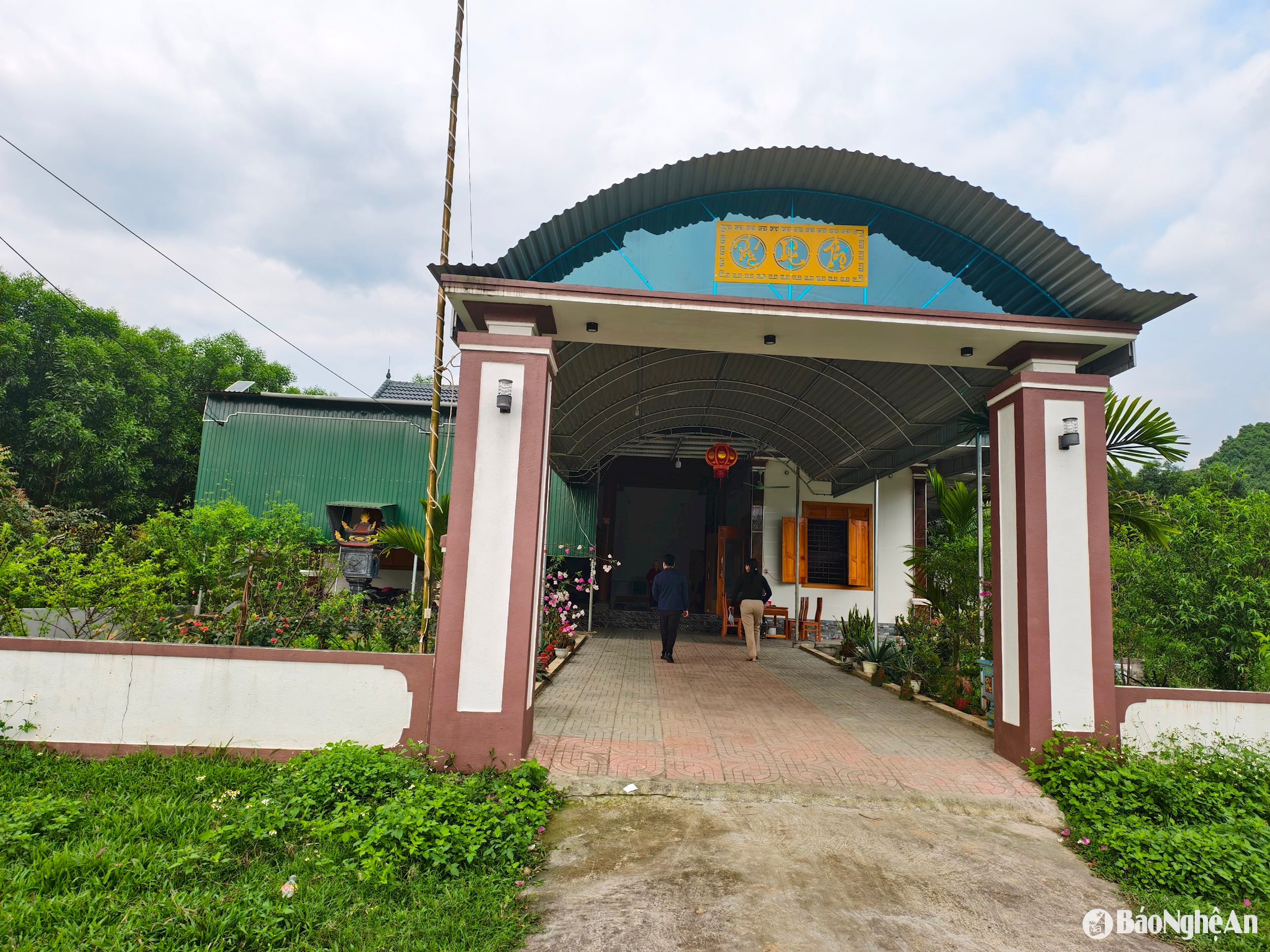
In Thach Ngan commune, many families participate in overseas labor export, and their lives have changed for the better. Many families have become well-off, but the negative consequences are also significant. Mr. Hoang Ba Thai – Party Secretary and Head of Thach Tien village – led us to a spacious and well-built house. Mr. Pham Thach Hung, the owner of the house, said: “I worked abroad in Dubai for 9 years and only returned a little over a month ago. My two children are now also in Taiwan. I think overseas labor export is the fastest way to get rich. After a few years, I had capital and was able to improve my life. Now I've returned to farming, raising cattle, planting cassava, acacia trees, etc.” Mr. Hung continued: “Participating in overseas labor export brings high income but comes with a price. Many people who return have divorced, and their children have been separated. In some families, there have been extramarital affairs, jealousy, and even murders due to the negative consequences of overseas labor export.”
Reportedly, Thach Tien village has up to 60 people participating in overseas labor export programs. Although their lives have improved, many families have lost connection with each other, with spouses and children losing contact.
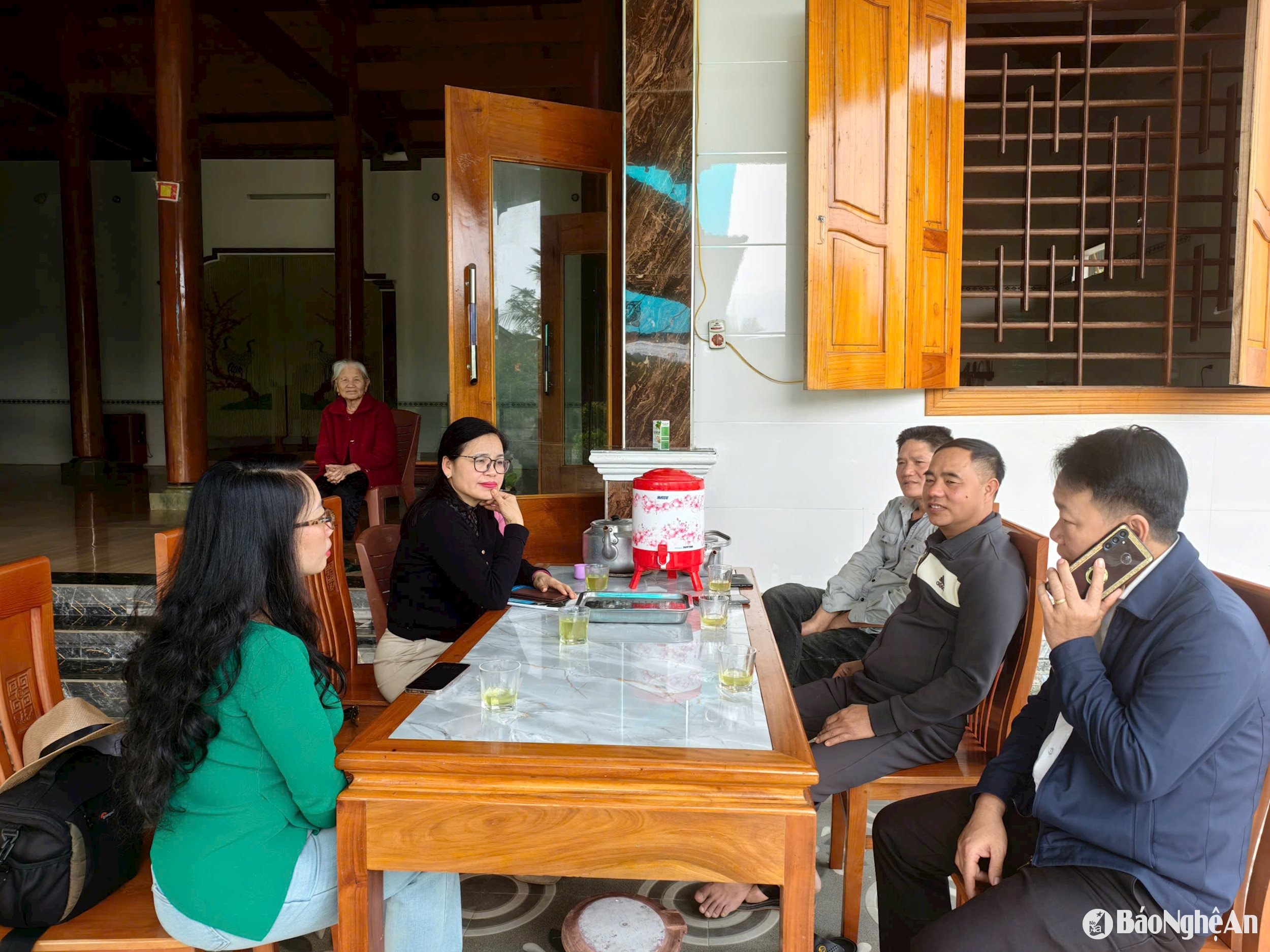
Ms. Hoang Thi Luong (born in 1973), who is currently taking care of her 3-year-old granddaughter while her daughter is away, said: “My daughter went abroad to work with her husband; if she went alone, it would be easy for them to separate. Her first marriage broke down because her husband went abroad to work alone and had an affair with someone else. Another son of mine also just went to Taiwan. He said he wanted to earn money quickly to support his parents and didn't want to go to school anymore…”
It can be said that the appearance of some rural areas is changing rapidly due to labor export. The economy is improving, houses are more spacious, but within those homes, there is a lack of lasting family bonds. Behind the money sent home are gaps in emotional support, education, and community connection – gaps that are not easily filled.

Ms. Nguyen Thi Thao and her husband, Ho Van Lam, from Hamlet 2/9, Chau Khe Commune (Con Cuong District), had previously sought work in their hometown, but with daily wages of less than 70,000 VND, life was extremely difficult. Three years ago, Mr. Lam participated in an overseas labor program in Taiwan with an initial cost of 150 million VND, and after one year, he had saved over 100 million VND. Ms. Thao later joined her husband in Taiwan, leaving their children with their maternal grandmother.
Ms. Thao and Mr. Lam are among many cases where people at home cannot earn enough to live on, so they have to go abroad for work or seek employment far from home hoping to earn some money to stabilize their lives later. Regarding this, the Vice Chairman of Chau Khe Commune People's Committee, Nguyen The Anh, said: "We had hoped that the Minh Anh factory would solve the unemployment problem for local workers. But after less than two months of working there, many workers quit because the salary was too low, less than 4 million VND per person per month. Therefore, most young workers choose to leave their hometowns, seek work in industrial zones in the South, or go abroad if their families can borrow initial capital to cover the emigration costs." Similarly, Mr. Vi Trung Dinh – Vice Chairman of Thach Ngan Commune People's Committee (Con Cuong) said: "When Minh Anh Con Cuong Garment Company first opened, it attracted up to 150 workers in the area, but the salary was too low, so they all quit."
In 2020, Mr. Vu Ba Son and his wife, Ms. Mua Y Nu, from Truong Son village, Nam Can commune (Ky Son district), went to Hanoi to work. A few months later, hearing that it was easier to make a living in Binh Duong province, Mr. Son and his wife moved there. They found work at a sofa and furniture manufacturing facility, earning 10 million VND per month after deducting food and drink expenses. However, after only a few months, they couldn't make ends meet and returned to their hometown. Because they couldn't find work with similar income back home, Mr. Son and his wife then went to Binh Phuoc province to work as rubber tappers, earning 15 million VND per month...
According to Mr. Tho Ba Re, Vice Chairman of the Ky Son District People's Committee: "It's true that the issue of providing employment for laborers in remote and disadvantaged areas is more urgent than ever. Previously, people could rely on farming, cultivating fields, and forests for their livelihood, but now that's no longer possible. The increasing demands of life are driving them to seek work elsewhere to earn more capital for their future. Our concern is that a large number of laborers are migrating to the South, North, and overseas, while the province is in dire need of workers, yet they are not choosing these options."

However, Mr. Rê also stated that Kỳ Sơn district had previously made efforts to attract investment and bring factories there, but without success. A prime example is the district's plan for a small industrial cluster in Chiêu Lưu commune, but for the past 20 years, it has failed to attract any businesses. This is because, due to the hilly and mountainous terrain, Kỳ Sơn district finds it very difficult to find a sufficiently large site for a factory employing several hundred workers, let alone suitable grounds and supporting facilities.
In Con Cuong district, although the Minh Anh Garment Factory in Chi Khe commune has been operating for over a year, attracting 1,000 local workers with starting salaries ranging from 4 to 7 million VND per month, many workers initially eagerly returned from all over the country to join the factory. They hoped that with a starting salary of over 4 million VND plus overtime pay, they could earn up to 7-8 million VND per month. However, due to low orders, their salaries did not improve after many months.
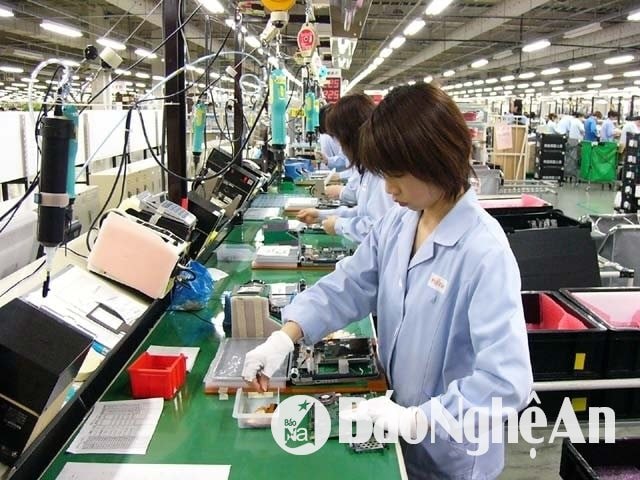
Ms. Vi Thi Nguyet, Deputy Head of the Internal Affairs Department of Con Cuong District, said: "We have made great efforts to bring jobs back to our hometowns, but honestly, the number of workers from our area is not large. The local government has explored many options to connect labor supply and demand. When the businesses started production and the first batches of workers started working at the factory, we directly went to discuss with the managers about communication and methods of conveying information to the workers, because to some extent, the people still possess characteristics of ethnic minorities such as being easily offended and lacking discipline. We also proposed issues such as the quality of meals during shifts and minimum income levels to ensure a decent life for the workers. However, the people still believe that the wages are too low, so many workers quit after a few months."
(To be continued)


