Part 4: Fundamental Solutions to New Challenges
Xuất phát từ mâu thuẫn quan hệ lao động, giải pháp cho ngừng việc tập thể cần giải quyết từ cơ sở. Đồng thời, trong tình hình mới, với tính chất phức tạp và những hệ lụy khó lường, việc phòng ngừa, hạn chế đình công trái pháp luật, ổn định an ninh công nhân cần xem là nhiệm vụ quan trọng không chỉ của riêng tổ chức công đoàn mà của cả hệ thống chính trị.
Authors: Diep Thanh - Thanh Chung - Phan Trang
Kỹ thuật: Diệp Thanh

In the context of increasingly deep international integration and the rapid development of the workforce, the issue of worker security is posing new and more urgent demands than ever before. This is not only a challenge but also an opportunity to affirm the position of the working class and the important role of trade unions in consolidating harmonious, stable, and progressive labor relations.

In the context of increasingly deep international integration, Vietnam has strengthened cooperation with countries around the world and actively participated in Free Trade Agreements (FTAs). Some FTAs that Vietnam has negotiated and joined include provisions on the establishment of workers' representative organizations and implementation roadmaps. Accordingly, within 5 years from the date the Comprehensive and Progressive Trans-Pacific Partnership Agreement (CPTPP) came into effect (2018-2023), the establishment of workers' representative organizations within enterprises is permitted. And within 7 years from the date the CPTPP Agreement came into effect (2018-2025), workers' organizations within enterprises are allowed to link together to establish higher-level organizations such as industry and regional organizations.
.jpg)
Furthermore, ILO Convention No. 87 allows workers the right to form and join their own organizations at any level. The Free Trade Agreements (EVFTA) and CPTPP also permit industry-level strikes, strikes in support of, and even strikes protesting socio-economic policies. All of these factors pose a significant challenge to the Vietnamese trade union organization.
In fact, recently, in some southern provinces and cities, taking advantage of regulations allowing the establishment of labor representative organizations not affiliated with the Vietnam General Confederation of Labor, some groups have incited and instigated workers and laborers to be uncooperative with employers, demanding the establishment of "independent trade unions" and "labor representative organizations." Initially, these groups focused on spreading false and distorted information on social media, meeting workers at company gates and in dormitories to entice them to join with many unfounded promises. Furthermore, exploiting the limitations and lack of experience of some grassroots trade unions, these individuals sought to connect with disgruntled individuals, looking for conflicts between workers and employers, thereby increasing discord and instigating workers to protest and strike, causing a disruption of security and order.

Security and social order stability are key factors that make Nghe An an attractive destination for major investors, alongside its open policies and large workforce. Attracting FDI projects with tens of thousands of workers is of great significance to the local socio-economic development, but it also raises many issues in ensuring security and order in the area, industrial park security, and worker safety.
Furthermore, managing grassroots trade unions affiliated with central industry trade unions is also a challenge. For example, in the case of Hoang Thi Loan Textile and Garment Joint Stock Company (Halotexco), located in Vinh City, the City Federation of Labor has a responsibility to participate in resolving the issue alongside relevant authorities; however, its role is only relative and it cannot intervene deeply or provide decisive solutions.
In the new context of many opportunities and challenges, the Nghe An Trade Union has actively coordinated with the police force, joined hands with the political system in protecting workers' security, and contributed to maintaining political and social stability.
.jpg)
Regarding proactive measures to prevent instability in worker security, Lieutenant Colonel Ngo Chi Hoan, Deputy Head of Hung Tay Commune Police, recounted: During the Lunar New Year of 2024, through intelligence gathering, the commune police discovered a plan by a group of workers at a local enterprise to call for a strike. Immediately, the commune police coordinated with the enterprise, the Management Board of the Southeast Nghe An Economic Zone, and the trade union to develop a plan to handle the incident and prevent the risk of a "chain reaction" to other enterprises. Lieutenant Colonel Hoan concluded: “With the motto of prevention being paramount, the police force proactively monitors the situation and coordinates with relevant agencies to resolve conflicts in labor relations. The most important thing here is to ensure unity and harmony in the rights of workers and businesses, preventing hotspots and instability that could lead to risks to worker security and industrial park security, thereby contributing to creating a stable and peaceful environment for businesses to produce and develop.”
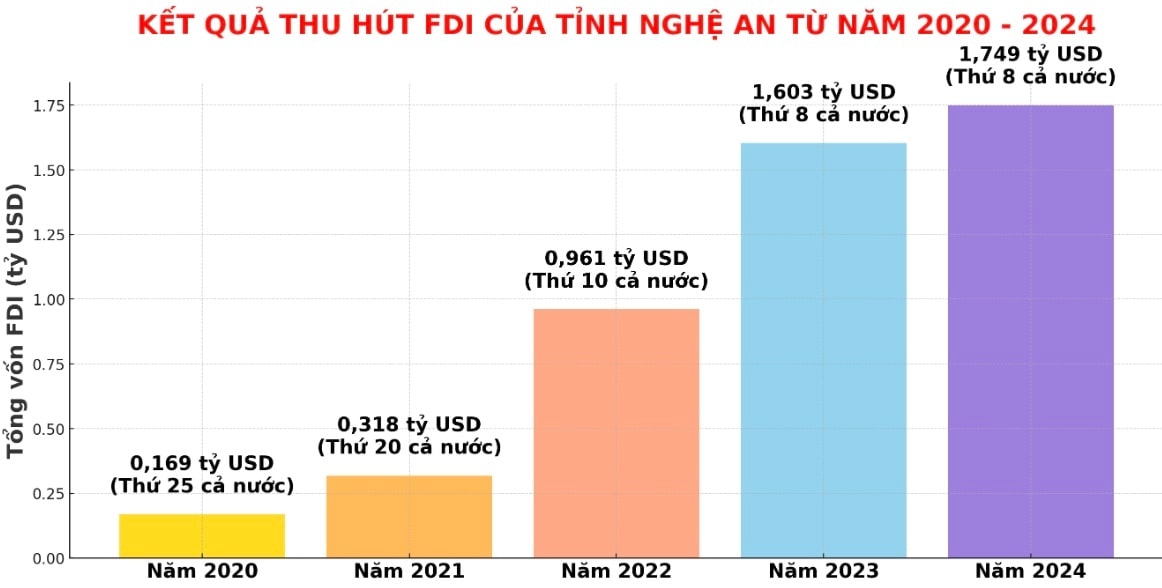
Nghe An province, once considered a "low-lying area" in attracting foreign direct investment (FDI), has risen to become a bright spot in recent years, consistently ranking in the top 10 nationwide. By the end of 2024, the number of workers employed in foreign-invested enterprises reached 49,000, an increase of 78.18% compared to 2019. In 2025, Nghe An province plans to develop four new industrial parks covering approximately 760 hectares.
According to the preliminary report on the six-year implementation of Directive No. 37-CT/TW of the Central Party Secretariat on building harmonious, stable, and progressive labor relations in the new situation, the coordination between the Provincial Police and the Provincial Labor Federation, the Southeast Economic Zone Management Board, and relevant departments and agencies has helped to resolve 25 cases of workers gathering to demand their rights and policies from 2019 to the present. At the same time, strikes were detected and prevented at three enterprises.
To address new challenges and build a solid foundation for worker security, trade union organizations at all levels need to adhere closely to Resolution No. 02-NQ/TW of the Politburo on "Renewing the organization and operation of the Vietnam Trade Union in the new situation". Mr. Kha Van Tam, Chairman of the Provincial Labor Union, affirmed: “The Resolution is a guiding principle for comprehensive and synchronized reform throughout the entire system, with flexible suggestions for application in accordance with all practical situations. This Resolution emphasizes strengthening the Party's leadership, leveraging the support of Party committees and authorities, striving to develop union membership, innovating activities, improving the capacity of trade union officials and the awareness of workers, and coordinating with departments, agencies, and other political and social organizations. The perseverance and determination in implementing Resolution 02 have created a transformation suitable to the new situation for both the Nghe An Trade Union apparatus and the workers. From there, it has awakened patriotism, national pride, and enhanced political resolve among workers.”
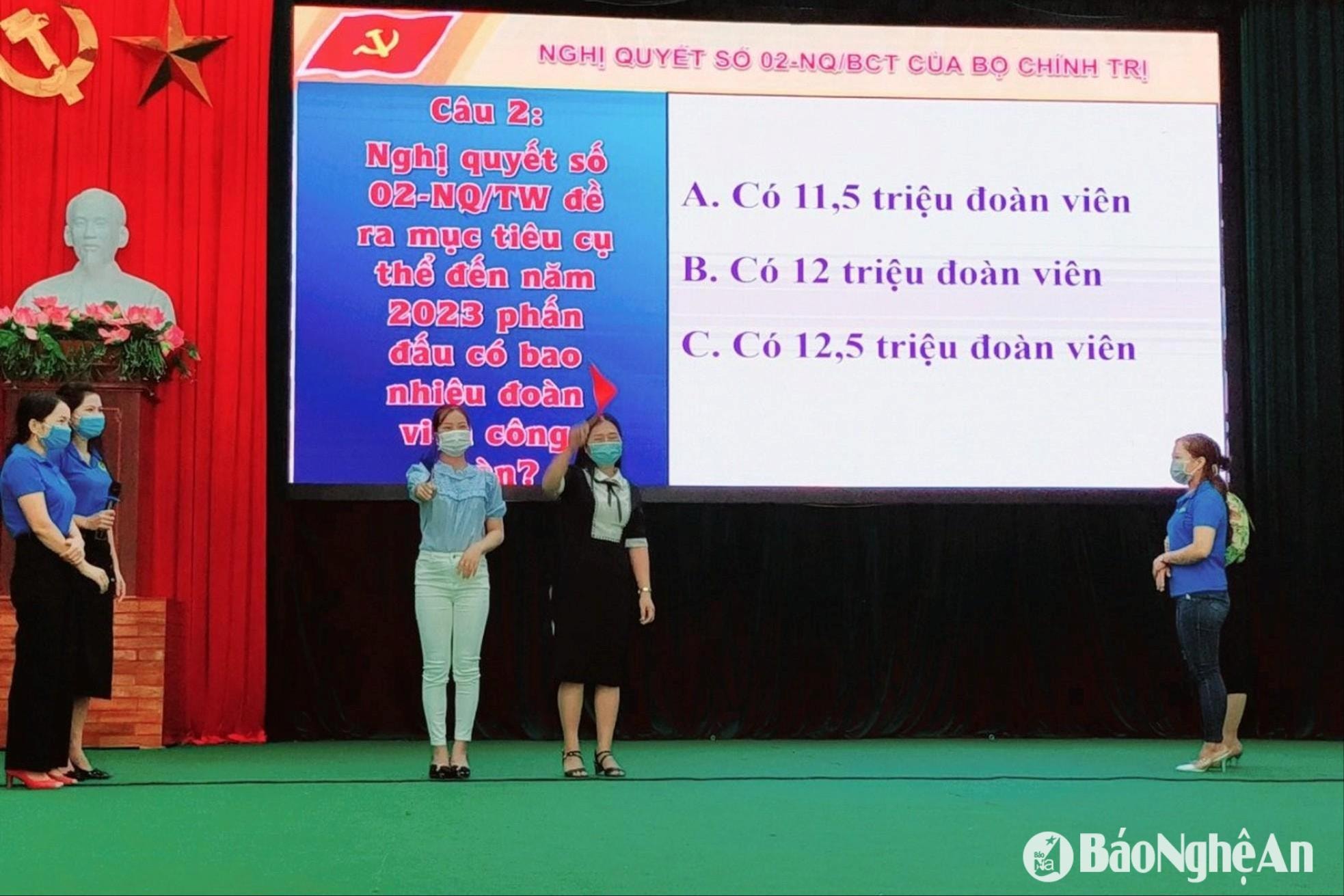
To prepare for the new context, in addition to caring for the lives and ensuring the rights of workers, relevant agencies need to improve existing policies and laws to suit the current reality. For example, this includes legalizing the role, responsibilities, and status of trade unions, regulating the use of trade union funds, and adjusting policies for recruiting trade union officials. Simultaneously, it is necessary to perfect the legal framework and institutionalize the organization representing workers as committed when joining free trade agreements, and to standardize regulations and guiding documents.
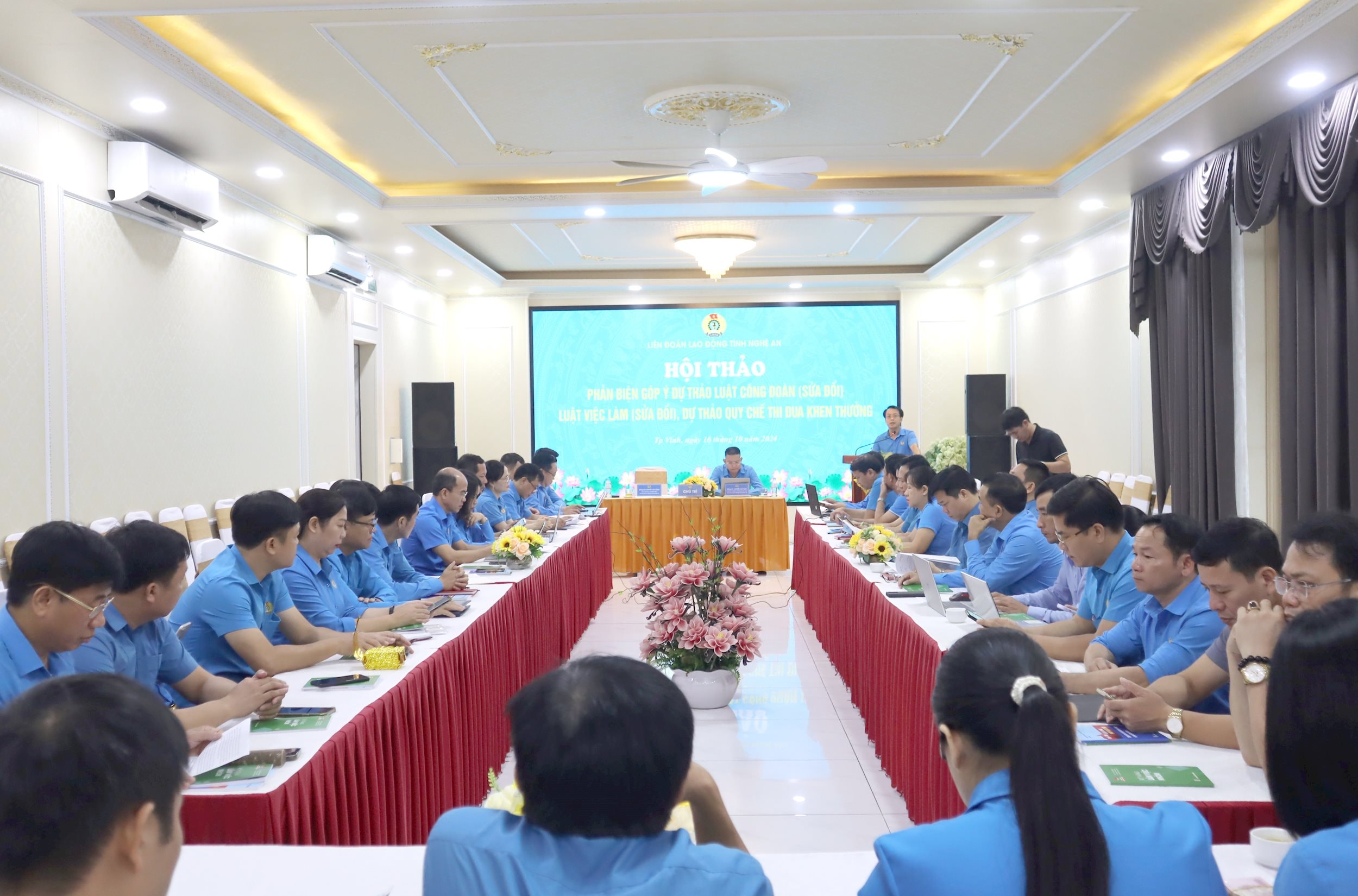
According to the Chairman of the Nghe An Provincial Labor Union, improving dialogue capacity within enterprises is a key factor. Furthermore, the intervention and involvement of state management agencies are needed to give dialogues and negotiations more weight. Especially in large-scale enterprises, when employee conferences and collective labor agreements are attended by the Provincial Labor Union and the Department of Labor, War Invalids and Social Affairs, the quality and impact will be significantly greater. Once these mechanisms are effective, they will prevent and minimize the risk of collective work stoppages.
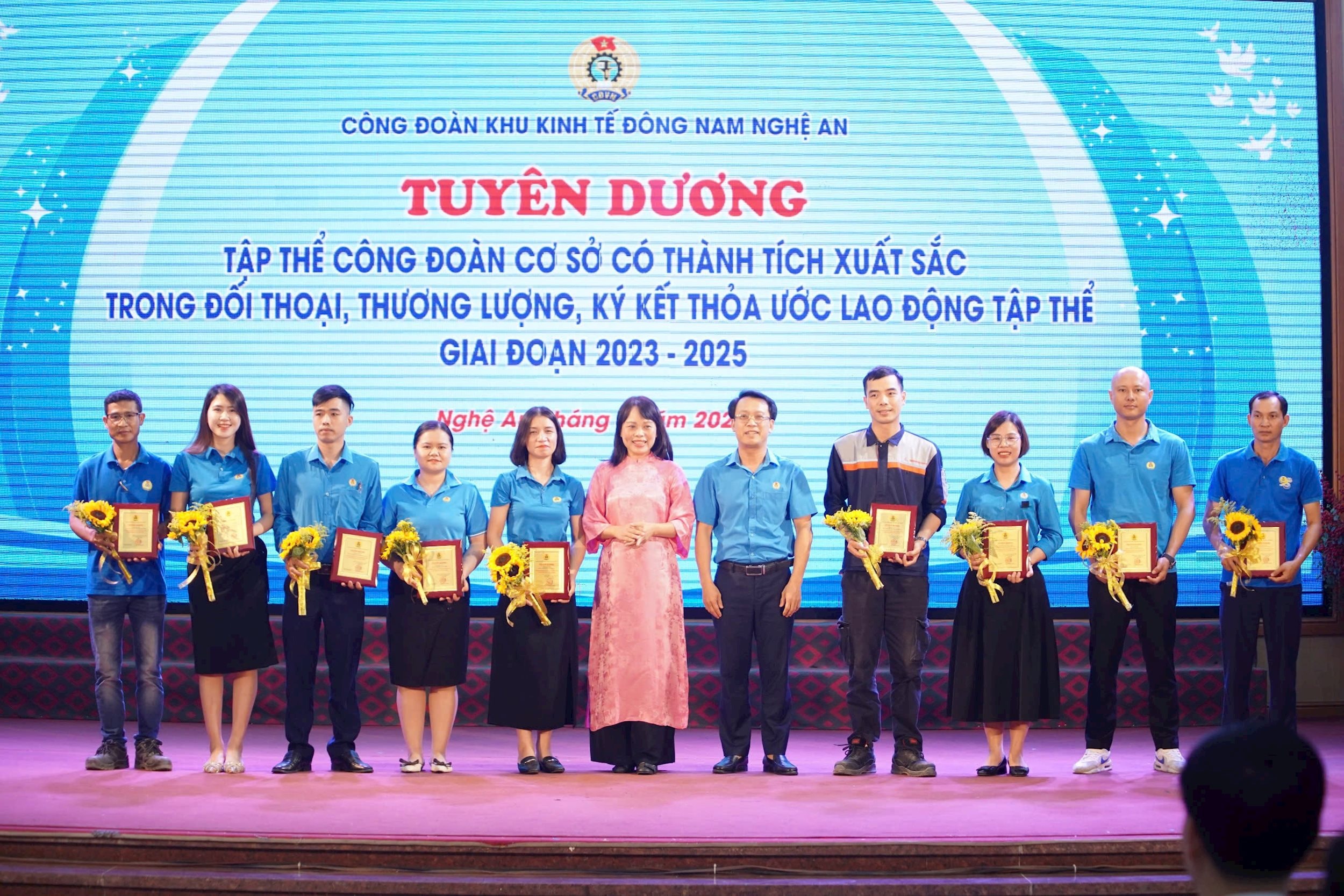
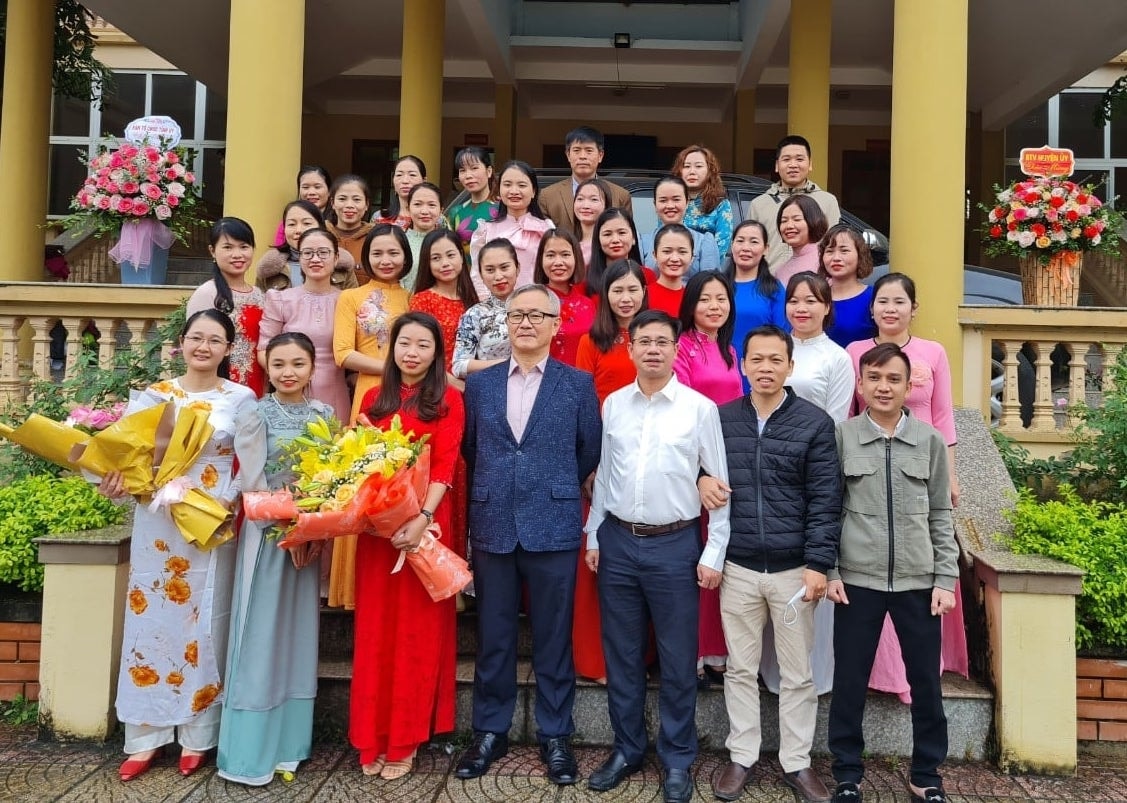
Developing Party membership within enterprises is also a strategic solution to foster consensus and stabilize labor relations. For example, at Kido Vinh Co., Ltd., after nearly two years of persuasion and numerous discussions between the enterprise, the government, and the district labor union, a Party branch was established at this FDI enterprise in Do Luong district. Since then, labor relations at this enterprise have consistently been assessed as stable, with harmonious interests, solidarity, and development.
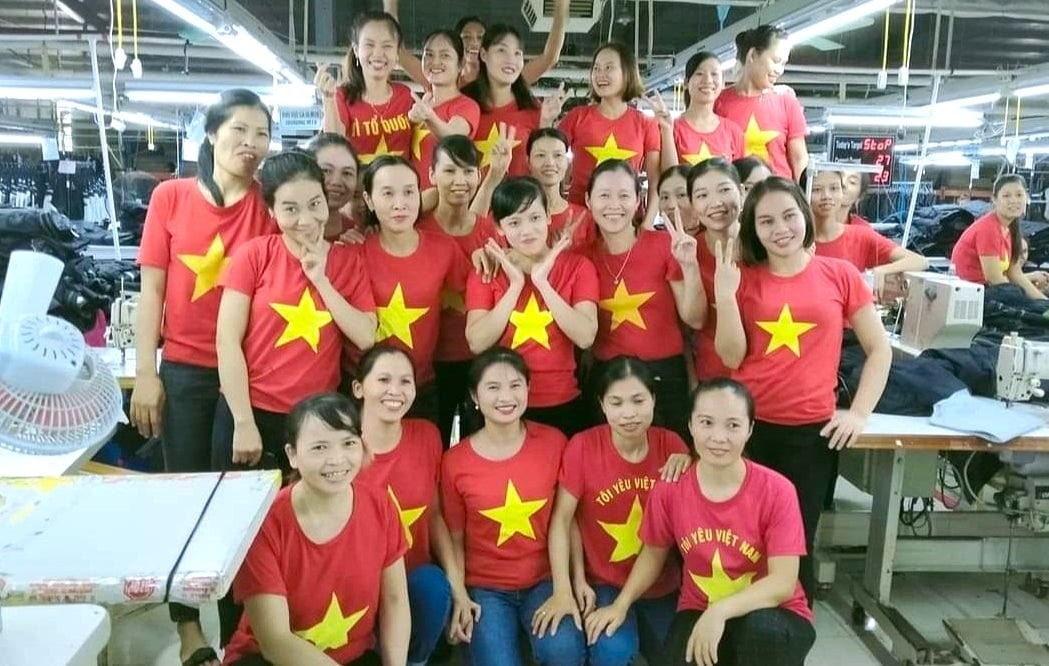
Finally, continued investment of resources in membership development, especially in non-state and informal sector enterprises, is essential. At the same time, membership development must be linked to improving membership quality and raising awareness, fostering a professional work ethic among employees.
With innovative approaches and many groundbreaking and synchronized methods, the Nghe An Trade Union not only maximizes the strength and potential of its members and workers, but also makes a significant contribution to ensuring worker security, so that the workforce is truly stable, building a stable economy and a sustainably developing country in the era of national progress.