Part 5: Contributing to ushering the country into a new era.
"Maintaining close contact, truthfully reflecting the opinions and suggestions of voters, and being subject to voter oversight" – General Secretary To Lam's emphasis at the National Assembly session has set a strong demand for reform for elected representatives. Close ties with voters are not only a responsibility but also a key to enabling representatives to play a bridging role, address pressing social issues, and contribute to ushering the country into a new era with the people's consensus.
Current Affairs and Politics Reporting TeamNovember 19, 2024
"Maintaining close contact, truthfully reflecting the opinions and suggestions of voters, and being subject to voter oversight" - General Secretary To Lam's emphasis at the National Assembly session has set a strong demand for reform for elected representatives. Close ties with voters are not only a responsibility but also a key for representatives to effectively act as a bridge, address pressing social issues, and contribute to ushering the country into a new era with the people's consensus.

“The country is standing at a historical threshold to enter a new era, an era of national resurgence. The pressing realities of the country are raising urgent issues that need to be addressed, and the people are waiting and expecting decisions from the Party, the State, and the National Assembly,” General Secretary To Lam emphasized at the opening session of the 8th session of the 15th National Assembly.

Based on that, the General Secretary set forth the requirement: Strongly reform the organization and operation of the National Assembly, ensuring effective and efficient operation, improving the quality and efficiency of the performance of duties and powers of National Assembly deputies, considering this as one of the key elements for reforming the National Assembly's activities; in which it is necessary to maintain close contact, truthfully reflect the opinions and recommendations of voters, and be subject to voter supervision.
This is not only a challenge for the National Assembly and its members, but also needs to be broadly considered for elected bodies and elected representatives at all levels, so that they can best fulfill their role as the people's masters through the "highest representative body of the people, the highest state power organ" (National Assembly) and the "state power organ at the local level, representing the will, aspirations, and right to self-governance of the people" (People's Council).
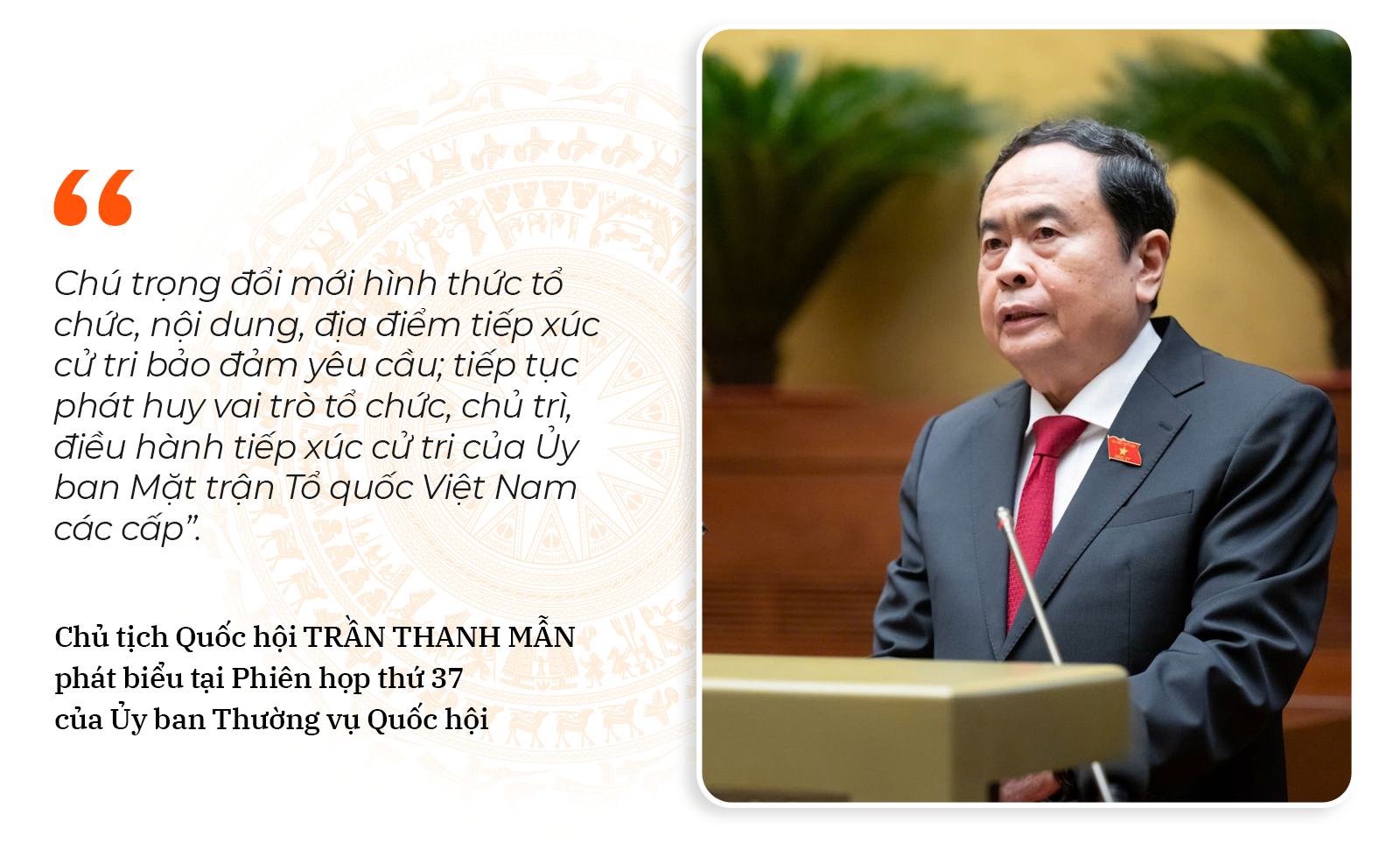
Based on monitoring and information gathering, voters, agencies, elected representatives, and the Fatherland Front of Nghe An province highly appreciate the National Assembly Standing Committee's approval of the integration and the issuance of a joint resolution detailing the voter outreach activities of National Assembly deputies and People's Council representatives at all levels, with many new points, thereby strongly innovating the form and content of voter outreach.
Mr. Tran Van Lam, Head of the Democracy and Law Committee of the Vietnam Fatherland Front Committee of Nghe An province, stated: The Standing Committee of the National Assembly and the Presidium of the Central Committee of the Vietnam Fatherland Front issued Joint Resolution No. 525 on September 27, 2012. However, after 12 years of implementation, some shortcomings have emerged. This resolution only regulates the forms of voter outreach by National Assembly deputies, but does not specify the forms of voter outreach by People's Council representatives at all levels. Therefore, there is a lack of uniformity between National Assembly deputies and People's Council representatives at all levels in voter outreach activities. Furthermore, the resolution does not specifically stipulate whether the district or commune level directly presides over the voter outreach meetings. Consequently, in some places, the district or commune level takes the lead in organizing and conducting the meetings; in some places, they are held in a single commune, while in others, they are organized in clusters of communes…

Therefore, according to Mr. Tran Van Lam, the National Assembly Standing Committee's decision to issue a new general resolution detailing the voter outreach activities of National Assembly deputies and People's Council representatives at all levels is essential to ensure uniformity in voter outreach activities. With its responsibilities and role, the Vietnam Fatherland Front Committee of Nghe An province also needs to strengthen the organization of training in the skills of organizing and conducting voter outreach meetings for Fatherland Front officials at all levels, ensuring openness, democracy, and friendliness, because in reality, some voters, despite having concerns and aspirations, are hesitant to speak in front of large crowds.
On the other hand, the Vietnam Fatherland Front must also improve the quality of summarizing voters' opinions, including full content, accurate representation of the issues, specific addresses, and classification of the authority to resolve them at each level, thereby making appropriate recommendations for resolution; at the same time, it must proactively coordinate with the National Assembly delegations and People's Councils at all levels in monitoring and tracking the resolution and responses of State agencies to the recommendations and feedback of voters and the people.

Meanwhile, Kha Van Ot, Vice Chairman of the People's Council of Tuong Duong District, highly appreciated the National Assembly Standing Committee's consideration of supplementing regulations on online and in-person voter outreach; voter outreach before and after extraordinary sessions of the National Assembly; voter outreach during natural disasters, epidemics, or force majeure events; and the collection and compilation of voter recommendations before and after extraordinary sessions of the National Assembly… in order to overcome the situation of "electoral college" or "professional voters" or voter outreach that is still "formalistic" or "monotonous".
“Online or in-person/hybrid online voter outreach is very suitable for our characteristics. Tuong Duong is the largest district in the country in terms of area, 3.4 times larger than Bac Ninh province. Adding these forms of voter outreach would diversify the methods and expand the range of people involved in the interaction between representatives and voters; not to mention reducing travel costs and time for both representatives and citizens, given that the distance from the district center to the furthest commune is about 140 km,” said Mr. Kha Van Ot.

Bên cạnh đó, Ủy ban Thường vụ Quốc hội đã thống nhất bổ sung quy định về khái nhiệm “tiếp xúc cử tri” để làm rõ nội hàm của hoạt động tiếp xúc cử tri của đại biểu dân cử. Bởi thực tế hiện nay, có những cuộc tiếp xúc cử tri đã “biến” thành cuộc tiếp dân, giải quyết khiếu nại, tố cáo của cử tri, nhân dân.
Bà Thái Thị An Chung - Ủy viên Ban Chấp hành Đảng bộ tỉnh, Phó Trưởng đoàn chuyên trách Đoàn ĐBQH tỉnh Nghệ An nhận định dự thảo Nghị quyết liên tịch Quy định chi tiết việc tổ chức tiếp xúc cử tri của đại biểu Quốc hội và đại biểu Hội đồng nhân dân các cấp (đang được Ủy ban Thường vụ Quốc hội lấy ý kiến góp ý) sau khi được ban hành sẽ tạo sự đột phá để nâng cao chất lượng, hiệu quả của các cuộc tiếp xúc cử tri.
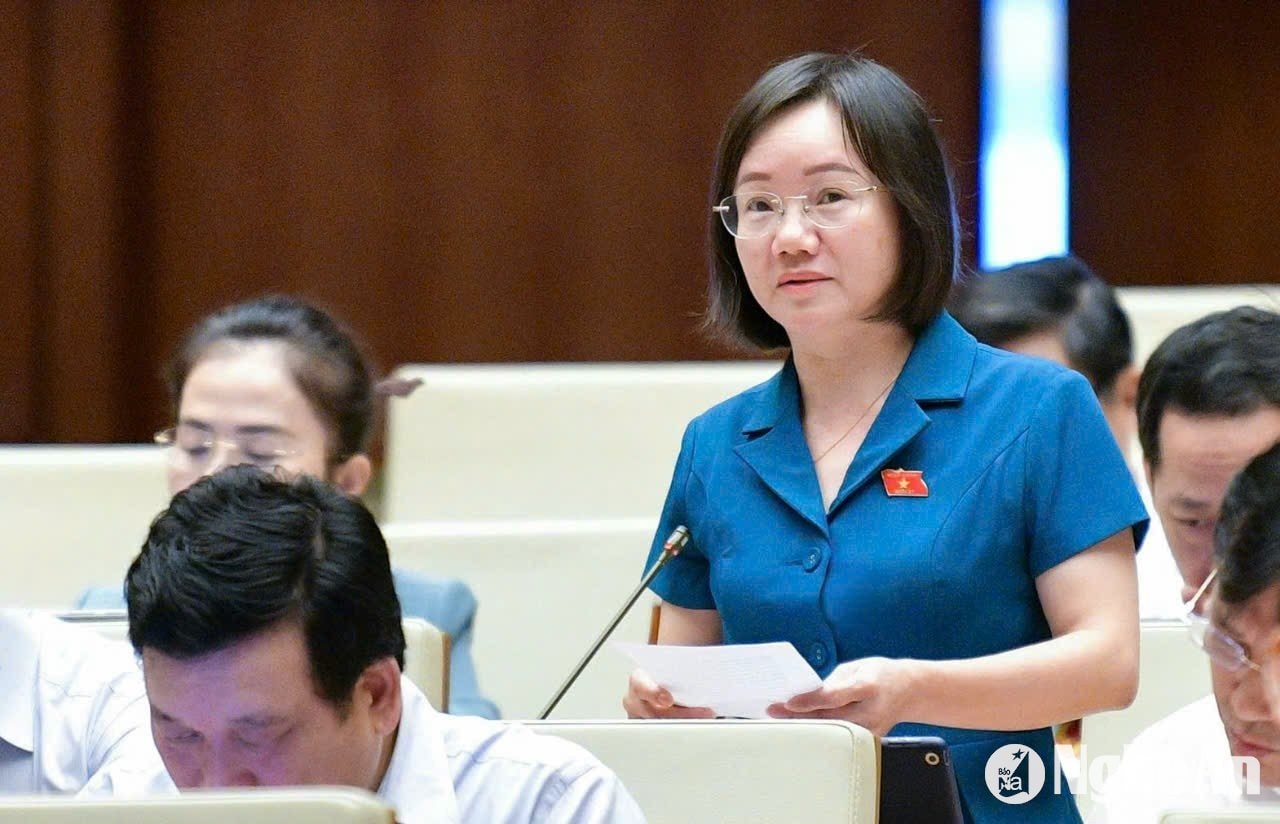
Bà Thái Thị An Chung cũng cho rằng, tại các Hội nghị tiếp xúc cử tri cần phát huy vai trò chủ trì điều hành hội nghị, linh hoạt lựa chọn những nội dung cử tri quan tâm để thông tin và gợi mở, hướng cử tri tập trung cho ý kiến. Đồng thời, các đại biểu dân cử phải thường xuyên liên hệ với địa phương, cử tri, chủ động đề xuất đa dạng hóa hình thức tiếp xúc cử tri để nắm được nhiều ý kiến kiến nghị, phản ánh của cử tri; Ban Thường trực Ủy ban MTTQ cấp huyện, Thường trực HĐND cấp huyện cần chủ động nắm bắt tình hình, dư luận xã hội tại địa phương để đề xuất Đoàn ĐBQH tỉnh, các Tổ đại biểu HĐND tỉnh tiếp xúc chuyên đề và địa bàn tiếp xúc trọng tâm; quan tâm lựa chọn địa điểm, thời gian tổ chức hội nghị tiếp xúc cử tri phù hợp, tạo điều kiện thuận lợi nhất cho cử tri tham gia, vừa khắc phục cử tri “chuyên nghiệp”, cử tri đại diện.
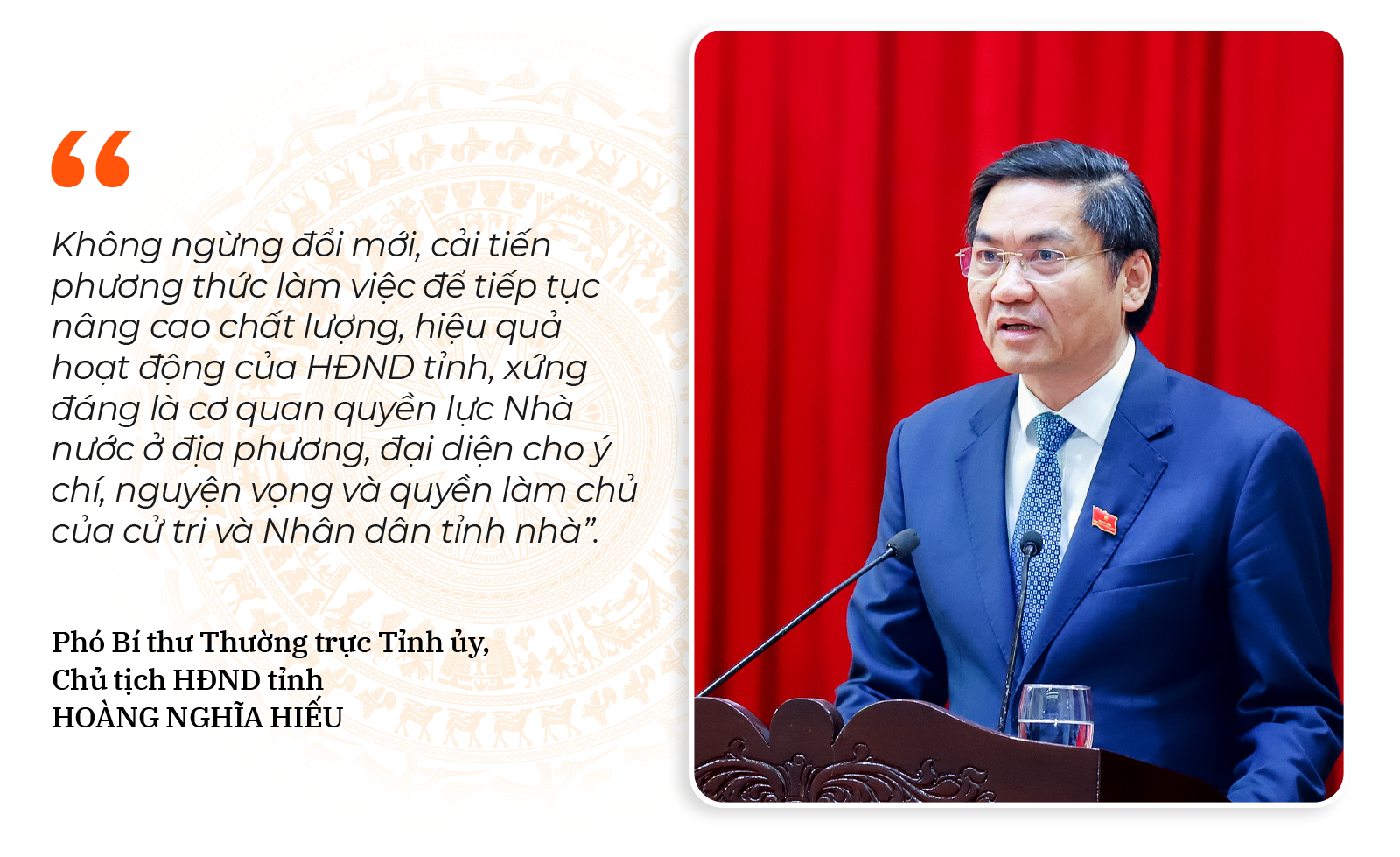
Phát biểu tại kỳ họp chuyên đề lần thứ 24, HĐND tỉnh Nghệ An khóa XVIII, Phó Bí thư Thường trực Tỉnh ủy, Chủ tịch HĐND tỉnh Nghệ An Hoàng Nghĩa Hiếu khẳng định: Tiếp tục phát huy mạnh mẽ tinh thần đoàn kết, thống nhất, dân chủ, tập trung trí tuệ, nỗ lực phấn đấu, nêu cao tinh thần trách nhiệm trước Đảng, trước cử tri và Nhân dân; không ngừng đổi mới, cải tiến phương thức làm việc để tiếp tục nâng cao chất lượng, hiệu quả hoạt động của HĐND tỉnh, xứng đáng là cơ quan quyền lực Nhà nước ở địa phương, đại diện cho ý chí, nguyện vọng và quyền làm chủ của cử tri và Nhân dân tỉnh nhà.

Theo nhiều ý kiến đại biểu và cử tri Nghệ An, đổi mới hình thức tiếp xúc cử tri cũng cần gắn với đổi mới giải quyết các kiến nghị của cử tri. Thời gian qua, dù có nhiều bước tiến, song chưa đáp ứng được mong muốn, yêu cầu đặt ra, vẫn còn những vấn đề mà cử tri kiến nghị đi, kiến nghị lại nhiều lần, mà một trong những nguyên nhân là câu trả lời của cơ quan chức năng vẫn còn đó những nội dung chung chung, nặng về “giải thích, giải trình”, mà thiếu đi “giải pháp, giải quyết”.
Bà Nguyễn Thị Anh Hoa - Phó Chánh Văn phòng đoàn ĐBQH và HĐND tỉnh Nghệ An cho biết: Hiện tại, việc trả lời đạt tỷ lệ 100%, song giải quyết chưa đảm bảo 100%. Điều này đặt ra cho Văn phòng Đoàn ĐBQH và HĐND tỉnh những trăn trở, cố gắng làm sao “bóc tách” rõ hơn, nội dung nào đã giải quyết, nội dung nào là trả lời, giải đáp, giải trình; đồng thời phải thực hiện một bước cao hơn nữa: nội dung nào kiến nghị mới, nội dung nào đã kiến nghị lần 1, lần 2, lần 3… để dễ theo dõi, giám sát, đôn đốc các cơ quan chức năng giải quyết. Trên cơ sở, các cấp, các ngành thấy rõ trách nhiệm để tập trung vào cuộc xử lý.
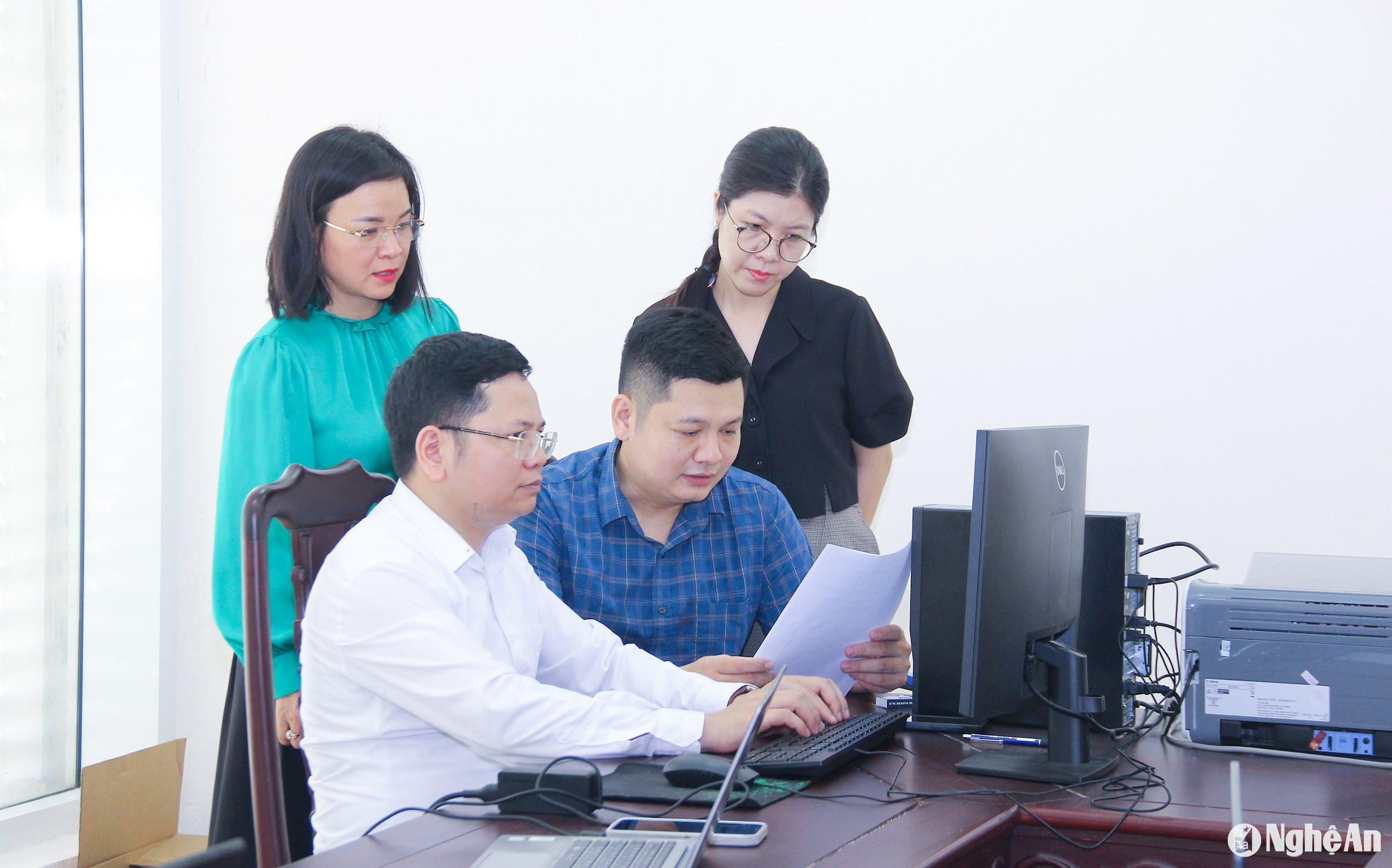
Kết quả giám sát chuyên đề “Việc giải quyết kiến nghị của cử tri từ đầu nhiệm kỳ 2021 - 2026” của Thường trực HĐND tỉnh Nghệ An cũng chỉ ra: Một số kiến nghị cử tri chưa được giải quyết kịp thời do đơn vị được giao giải quyết kiến nghị cử tri chưa quyết liệt, “đeo bám” việc giải quyết đến cùng kiến nghị cử tri, mới chỉ quan tâm đến việc thông tin, trả lời kiến nghị cử tri; công tác phối hợp giữa các sở, ngành và giữa các sở, ngành với địa phương có thời điểm, có việc chưa chặt chẽ, hiệu quả. Một số kiến nghị cử tri mặc dù đã có nhiều giải pháp để giải quyết nhưng chuyển biến còn chậm, chưa dứt điểm, có kiến nghị có tính chất cấp bách, khẩn cấp nhưng việc giải quyết còn kéo dài, nên cử tri kiến nghị lại nhiều lần.
"The quality of reports and responses regarding the resolution of some voter petitions is not high; some content is still general, not focused on the issues raised by voters, and does not propose specific roadmaps or solutions to address the petitions. Some reports on the resolution results lack specific solutions or roadmaps, mainly focusing on responses rather than concrete solutions," the Standing Committee of the Nghe An Provincial People's Council pointed out.
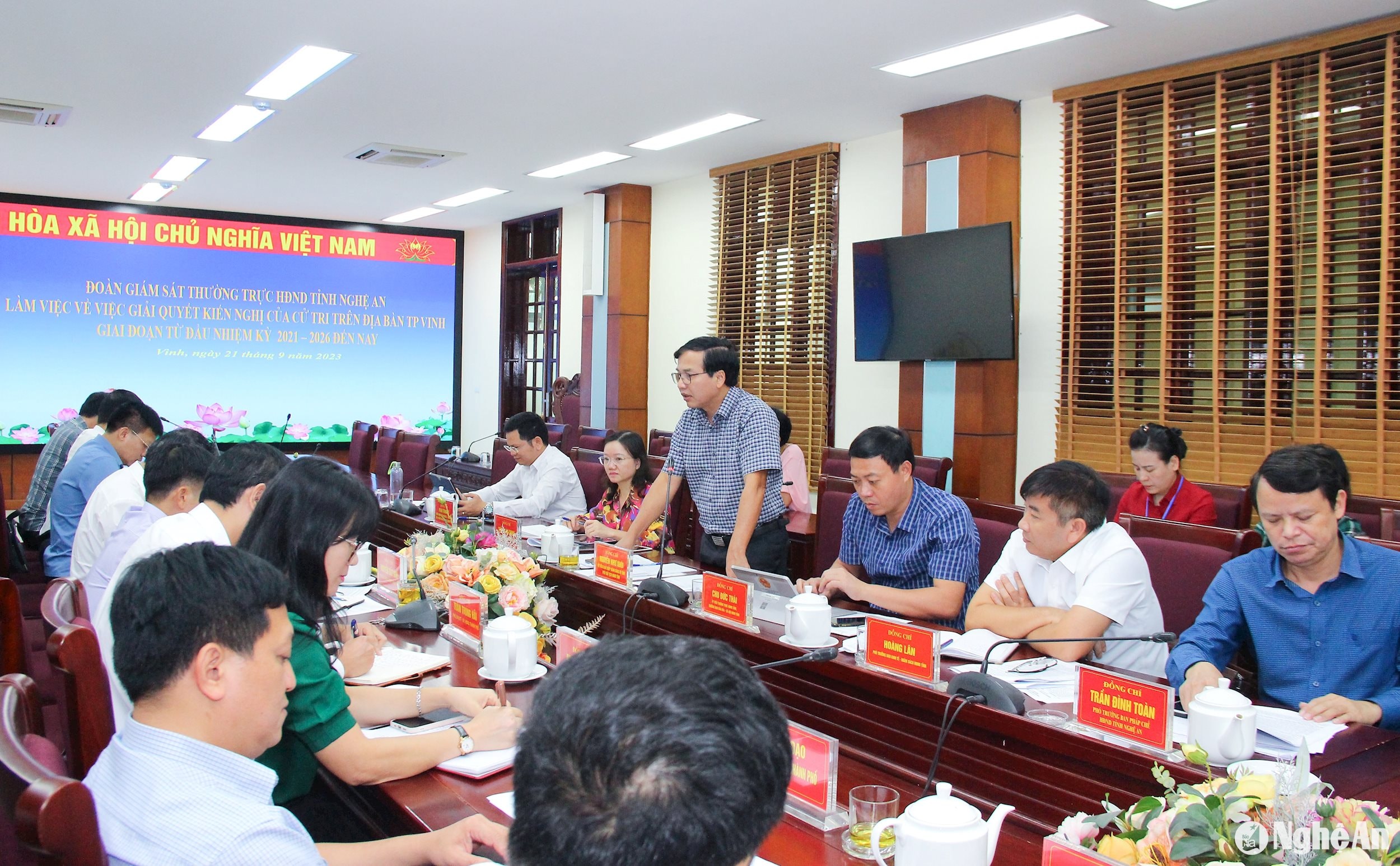
There are many objective and subjective reasons for the above situation, but it is clear that the element of responsibility needs to be properly assessed. Monitoring has revealed that the responsibility of some departments, sectors, and localities in receiving, resolving, and responding to voters' petitions, as well as the awareness and responsibility in performing official duties of a portion of officials and civil servants, is not high. However, the handling of responsibility has not been strict enough, and there is a lack of attention to using the results of resolving voters' petitions as one of the criteria for evaluating the performance of agencies, units, localities, officials, and civil servants; there is even still a tendency to shirk responsibility and avoid receiving and resolving voters' petitions.
Mr. Cao Van Son, a voter from Vinh City, suggested: There is a need to study and establish more specific regulations regarding the responsibilities of relevant agencies in participating in voter outreach and addressing and responding to voter petitions; and to impose strict penalties on cases of delayed or non-resolved responses to voter opinions and petitions forwarded by National Assembly deputies, National Assembly delegations, or People's Council representatives and standing committees at all levels.
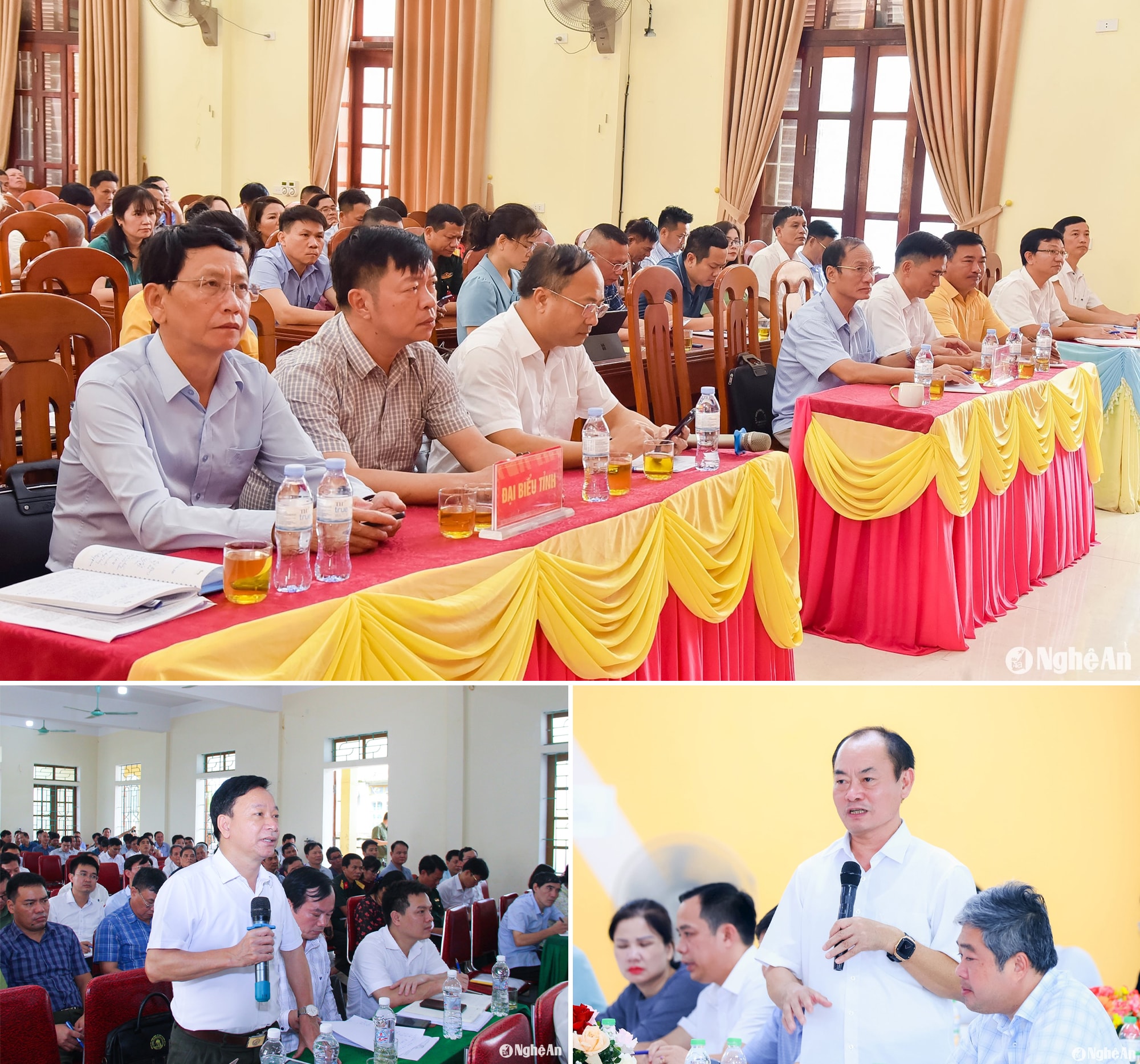
Mr. Nguyen Nhu Khoi, Vice Chairman of the Nghe An Provincial People's Council, stated: "The responsibility of each delegate must be enhanced to both answer and address issues of concern to voters; and to synthesize, classify, convey, and urge competent authorities to resolve them quickly and effectively, especially urgent and practical requests that relate to people's lives. This avoids simply receiving, summarizing, and forwarding requests to relevant agencies for resolution. Only then can we effectively fulfill our role of 'representing the will, aspirations, and right to self-governance of the people'."
During his lifetime, President Ho Chi Minh affirmed: "In the sky, there is nothing more precious than the people. In the world, there is nothing stronger than the united force of the people." His ideology of "the people are the foundation" has become a guiding principle for all actions, placing the people at the center of the country's renewal and development. Inheriting that spirit, our Party always affirms that the unity, well-being, and happiness of the people are the highest goals of all policies and strategies, and the solid foundation for building national unity.
On the journey into a new era, the urgent demands of the country require a strong transformation in all fields, especially in reforming the activities of elected representatives. The role of representatives is not only to reflect the thoughts and aspirations of the people but also to directly build effective bridges between the will of the people and the strategic decisions of the Party and the State. Each representative needs to become a "shining torch," proactively listening, understanding, and promptly addressing suggestions, ensuring that the voices of voters do not fall into formality or are forgotten.
Innovating voter outreach activities is not simply about expanding the forms of listening, but also about enhancing their substance, transforming meetings into spaces for democratic, frank, and effective dialogue. Through this, elected representatives not only gain the trust of voters, but also contribute to fostering unity and creativity among the entire population – a decisive factor in overcoming challenges and seizing development opportunities.
As General Secretary To Lam emphasized, vigorously reforming the operations of the National Assembly and elected bodies is a key task to clarify the democratic nature of our regime. When each elected representative continuously enhances their responsibility, dedication, and vision, the country will have more powerful impetus for breakthroughs, entering an era of independence, self-reliance, and sustainable development, with the people at the center of all actions, and national unity as the key to all victories.