
The broom-making village in Thanh Chuong is experiencing brisk sales and good prices.
(Baonghean.vn) - Recognized as a traditional craft village for over a decade, the broom-making village in Hamlet 2, Thanh Luong Commune (Thanh Chuong District) is developing steadily, selling well and at good prices.
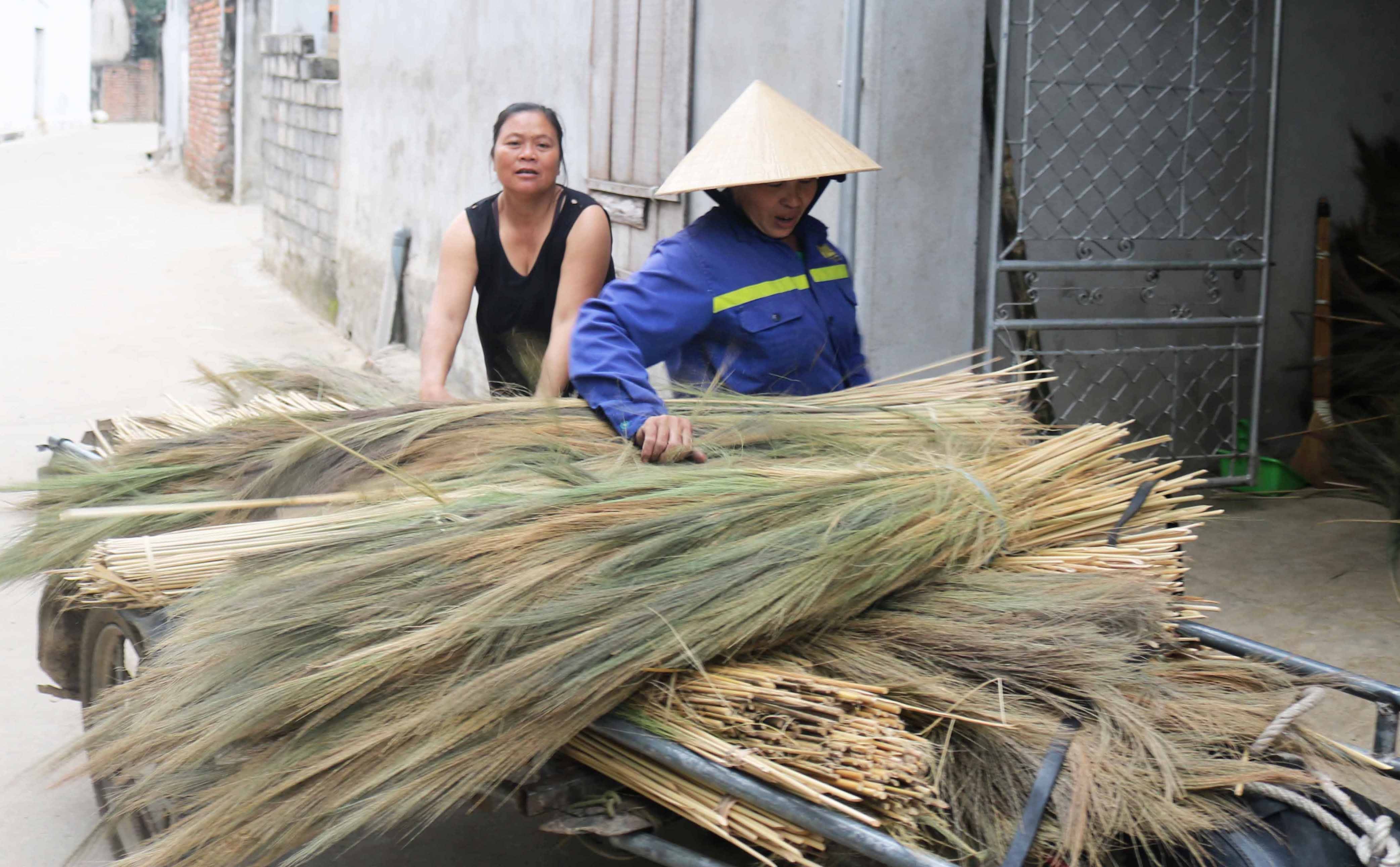 |
| In Hamlet 2, Thanh Luong commune (Thanh Chuong district), there are currently about 50 households maintaining the craft of making broomsticks from reeds. The main raw material for making broomsticks is reed flowers, which the households may collect themselves from the forest or buy from traders who bring them from western Nghe An province, Laos, and southern provinces. People in the craft usually buy dried reed flowers and store them for later use. Currently, dried reed flowers are being purchased by households at a price of 25,000 - 26,000 VND/kg. Photo: Huy Thu |
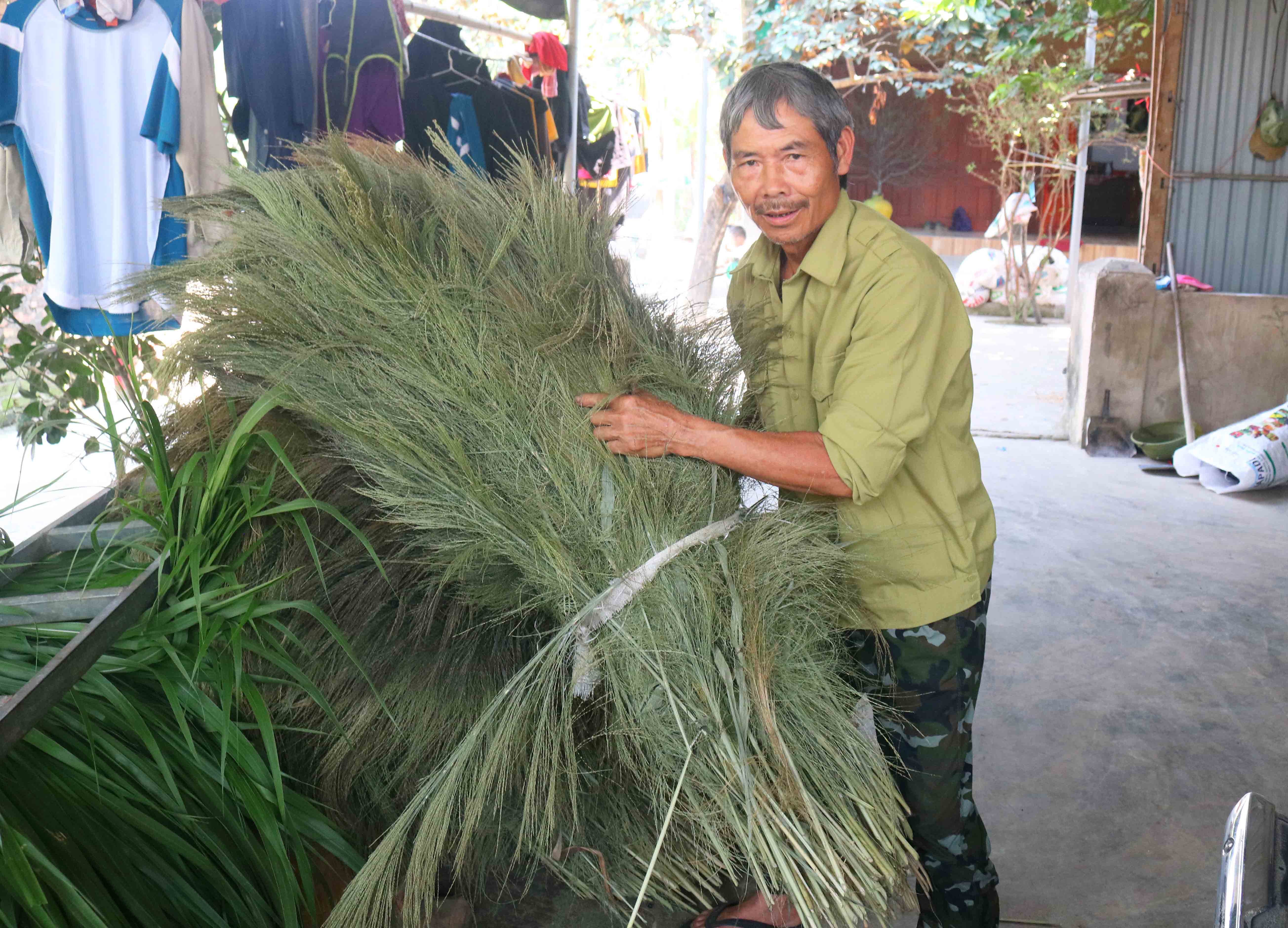 |
| Mr. Nguyen Van Hai (64 years old), a renowned broom maker in the area, said that his family has been in the trade for a long time and they collect the reeds from the forest themselves. According to Mr. Hai, after being collected, the reeds are dried in a brick kiln, so the material retains its green color, resulting in beautiful and durable brooms. Photo: Huy Thu |
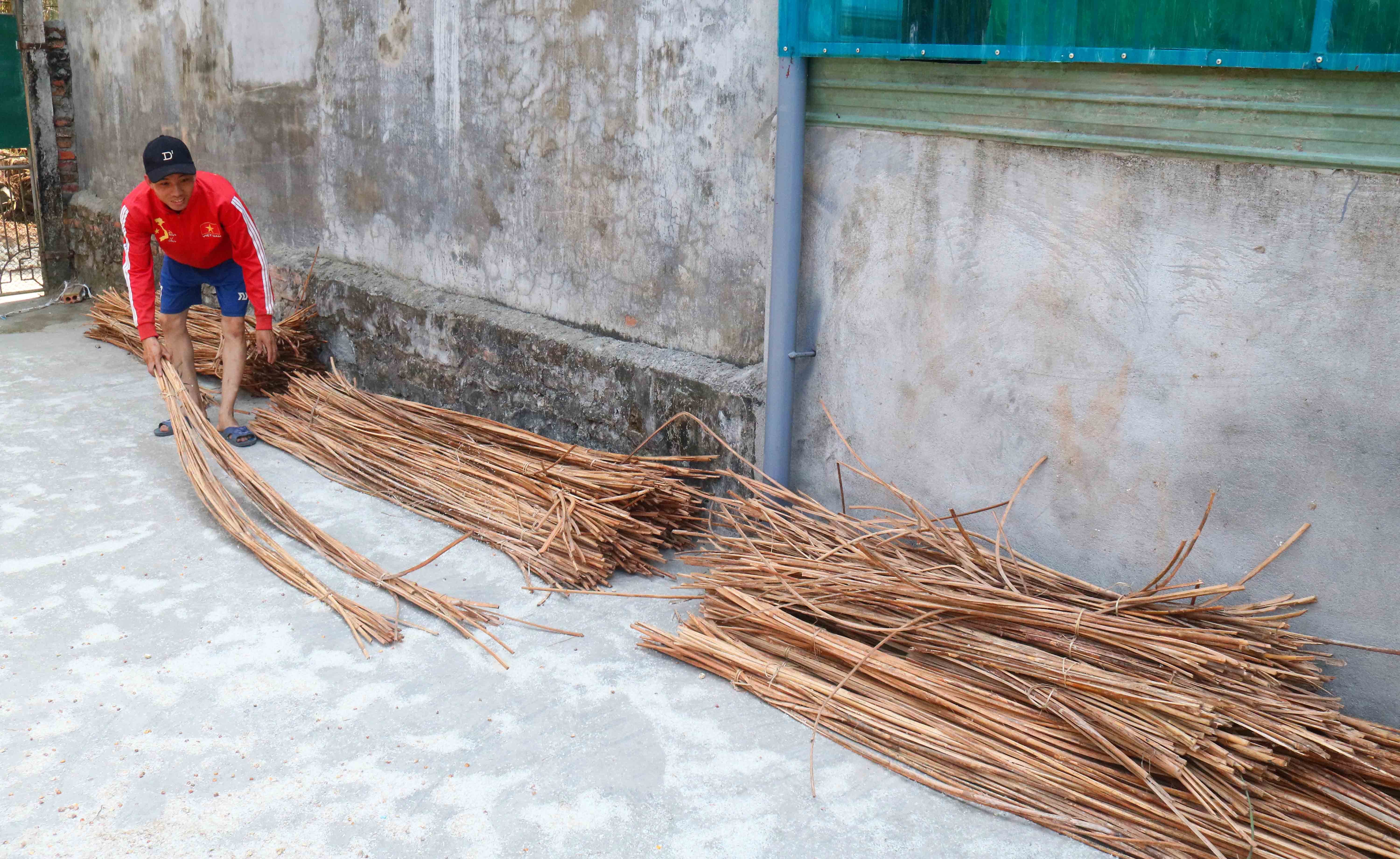 |
| Besides the raw reeds, brooms are also made from rattan, plastic, nylon, and steel wire. Currently, most broom-making households use plastic wire. However, some households still persistently use rattan to tie their brooms, and some even go into the forest to "hunt" for rattan. The term "hunt" is used because forest rattan is now quite rare and not as readily available as before. After the leaves are stripped and the rattan is segmented, it is brought home, split into smaller pieces, and dried. Making the thin rattan strands needed to tie brooms requires a laborious splitting and shaping process. Photo: Huy Thu |
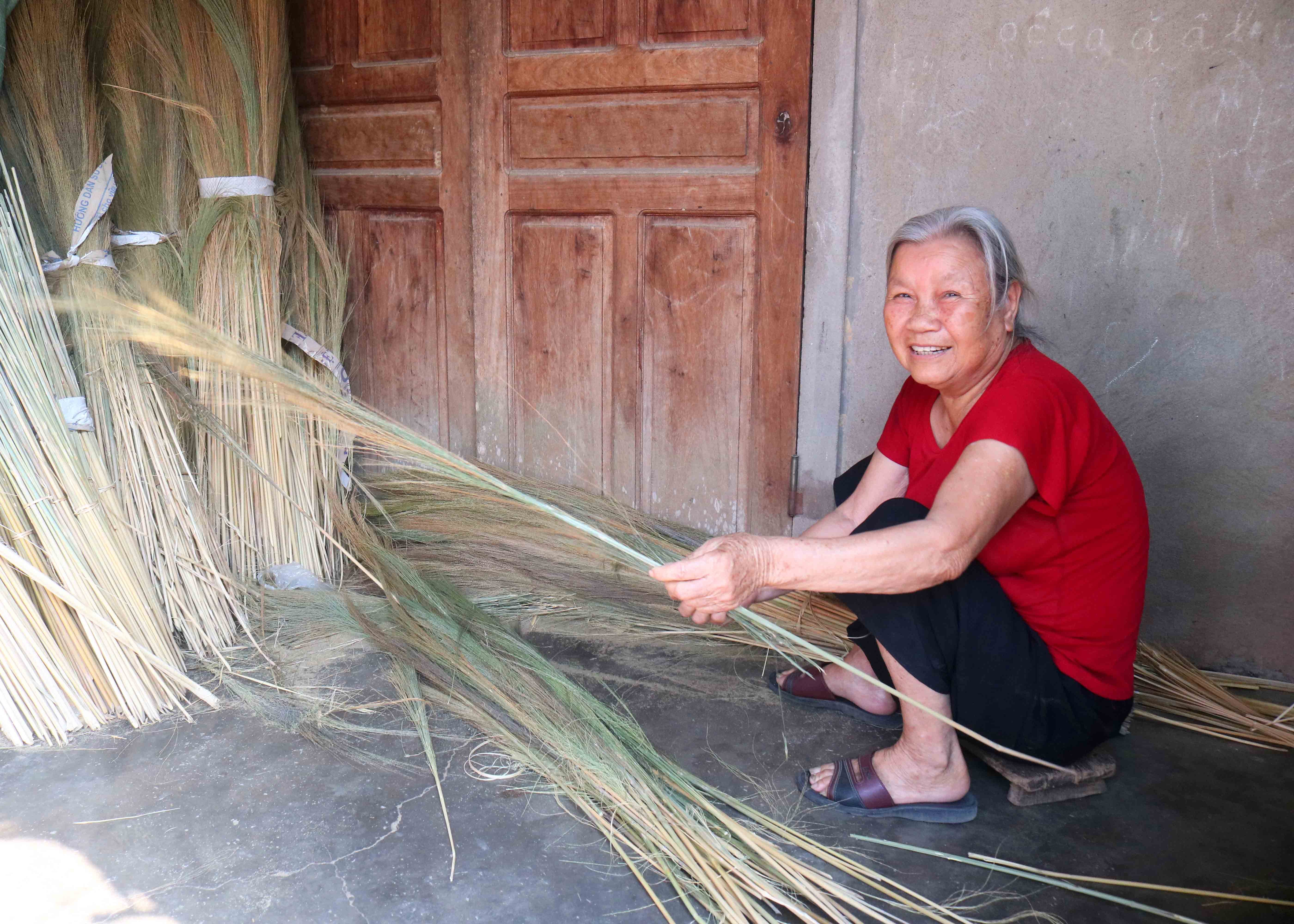 |
The craft of making broomsticks involves many steps: harvesting the reeds, preparing the broom head, tying the collar, attaching the handle, braiding the bristles, etc. The work isn't physically demanding, but it requires patience and diligence. Before making brooms, the reed flowers are stripped into smaller pieces to be arranged into broom heads. (Photo: Huy Thư) |
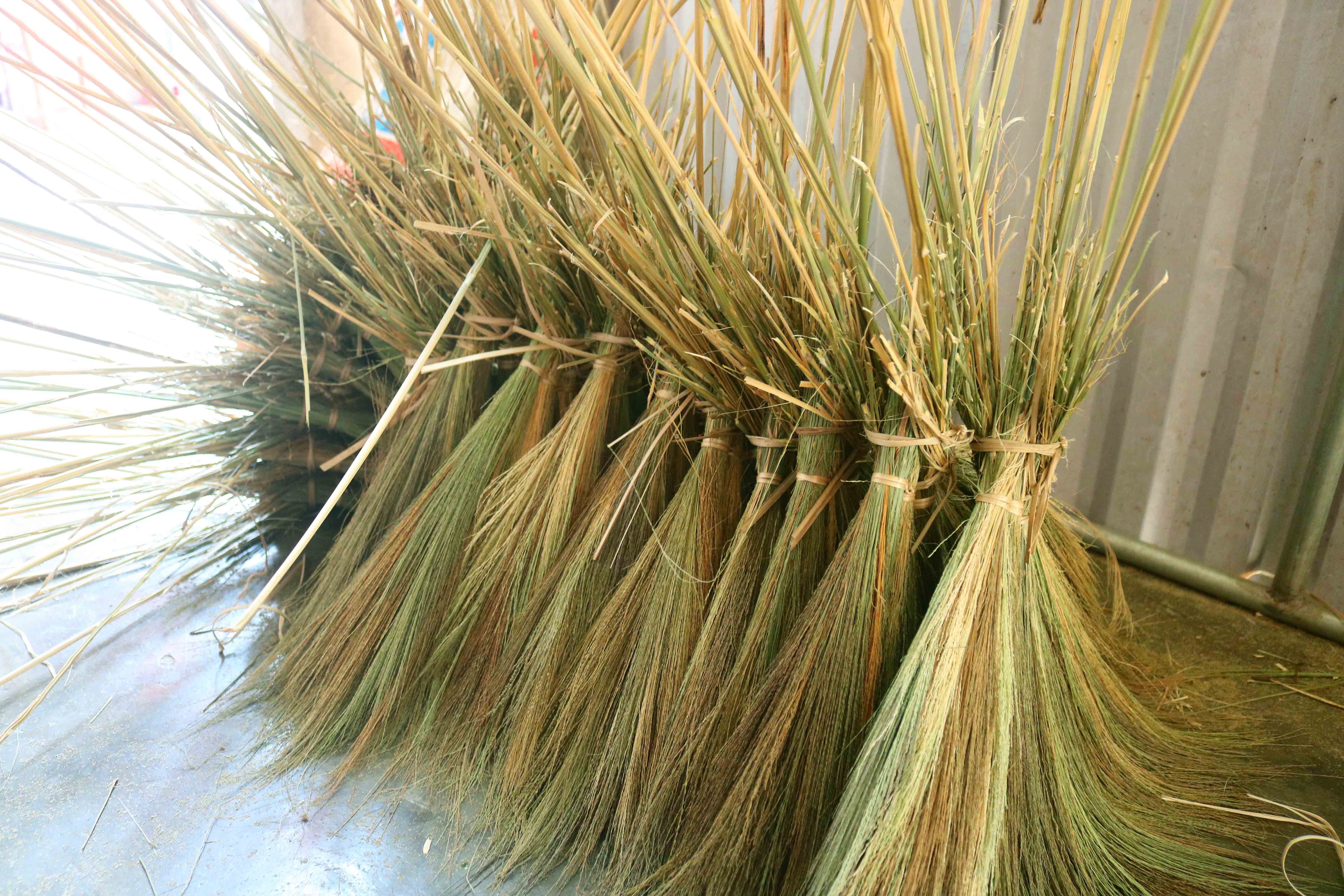 |
Bundles of reeds (bundles of reeds tied together in a fan shape) are tightly bound with bamboo fibers and strung together in long chains, ready to be used for broom making. Each bundle of reeds must have many reed stalks as long as the broom handle to ensure the broom's durability. Photo: Huy Thu |
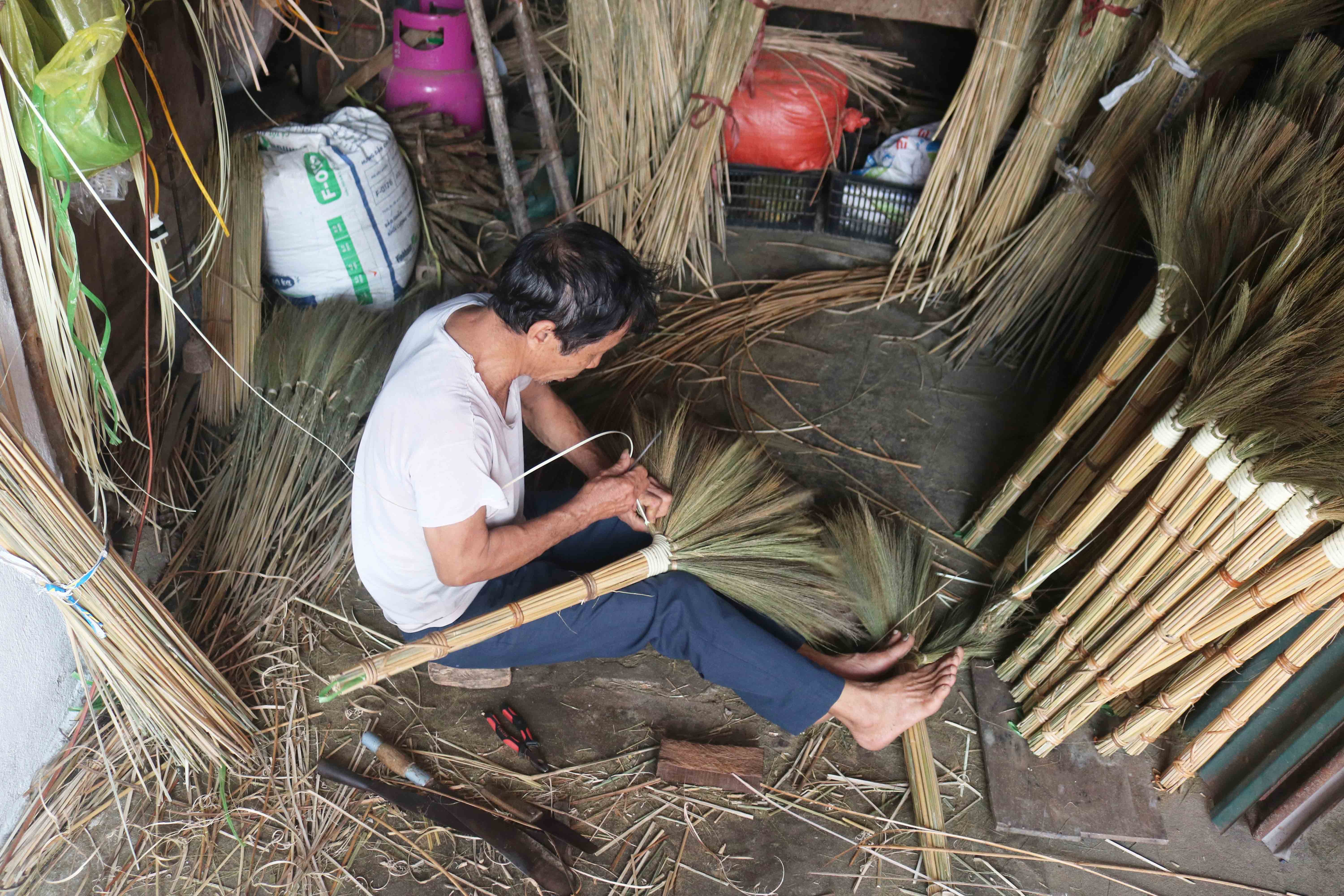 |
| The tools for making brooms are quite simple, just a few knives, pliers, and awls... People can make brooms all day or in their spare time. Mr. Nguyen Si Dung, a long-time broom maker in the village, said: Each year, his family uses about 1-1.5 tons of broom grass to make 2,000-3,000 brooms. He believes that each broom must be beautiful and sturdy, rather than focusing on quantity. Photo: Huy Thu |
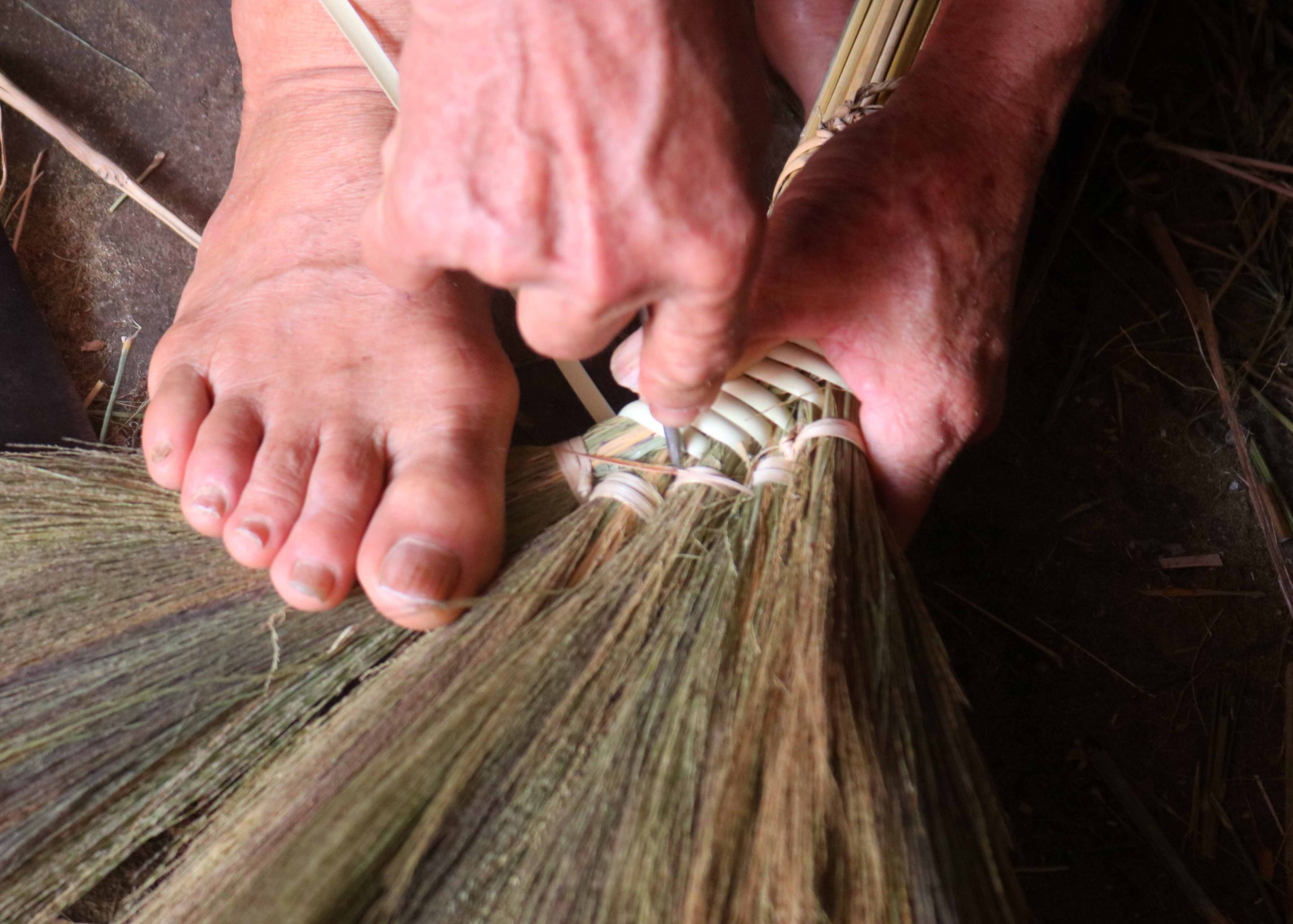 |
| According to Mr. Dung, each broom is made from 5-6 reeds, and the reeds must be arranged, tied, and braided skillfully to ensure the broom's neck is strong and beautiful. Photo: Huy Thu |
 |
Broom-making is a versatile craft that doesn't discriminate against workers; the elderly, the young, men, and women can all participate. In recent years, the broom-making industry has flourished, with many young people becoming involved in the trade, and some students even learning to make brooms. Nguyen Trong Tu (36 years old) shared: "In my family, only I make brooms; my wife works at a factory. Each year I use about 3 tons of reeds and am one of the most prolific broom makers in the village." (Photo: Huy Thu) |
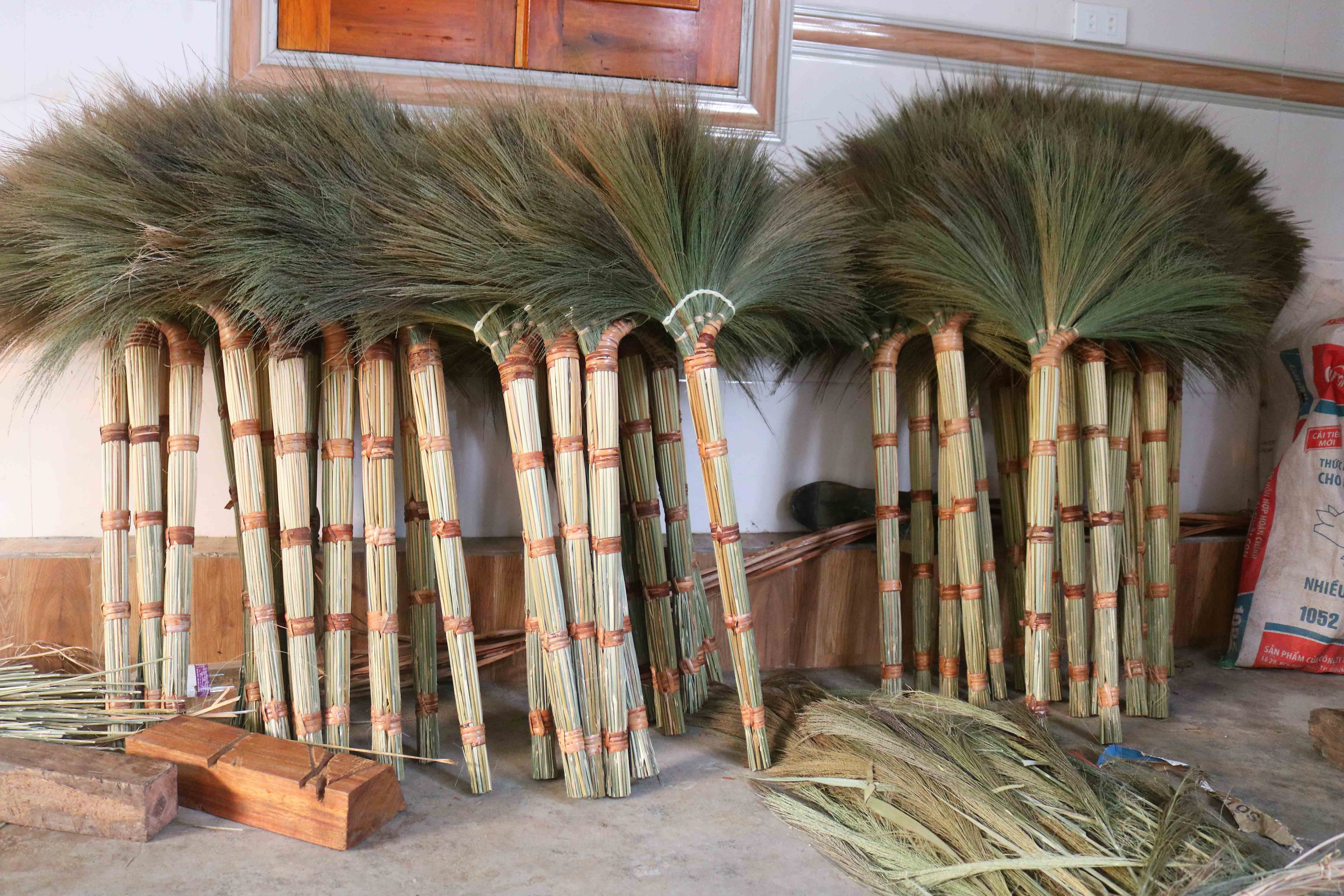 |
| Although brooms made from plastic cords are quite durable, consumers still prefer brooms made from rattan cords. One kilogram of broom grass can make two brooms. For custom-made brooms (ordered in advance), it might take 2 kilograms to make three. One person can make several dozen brooms a day. Photo: Huy Thu |
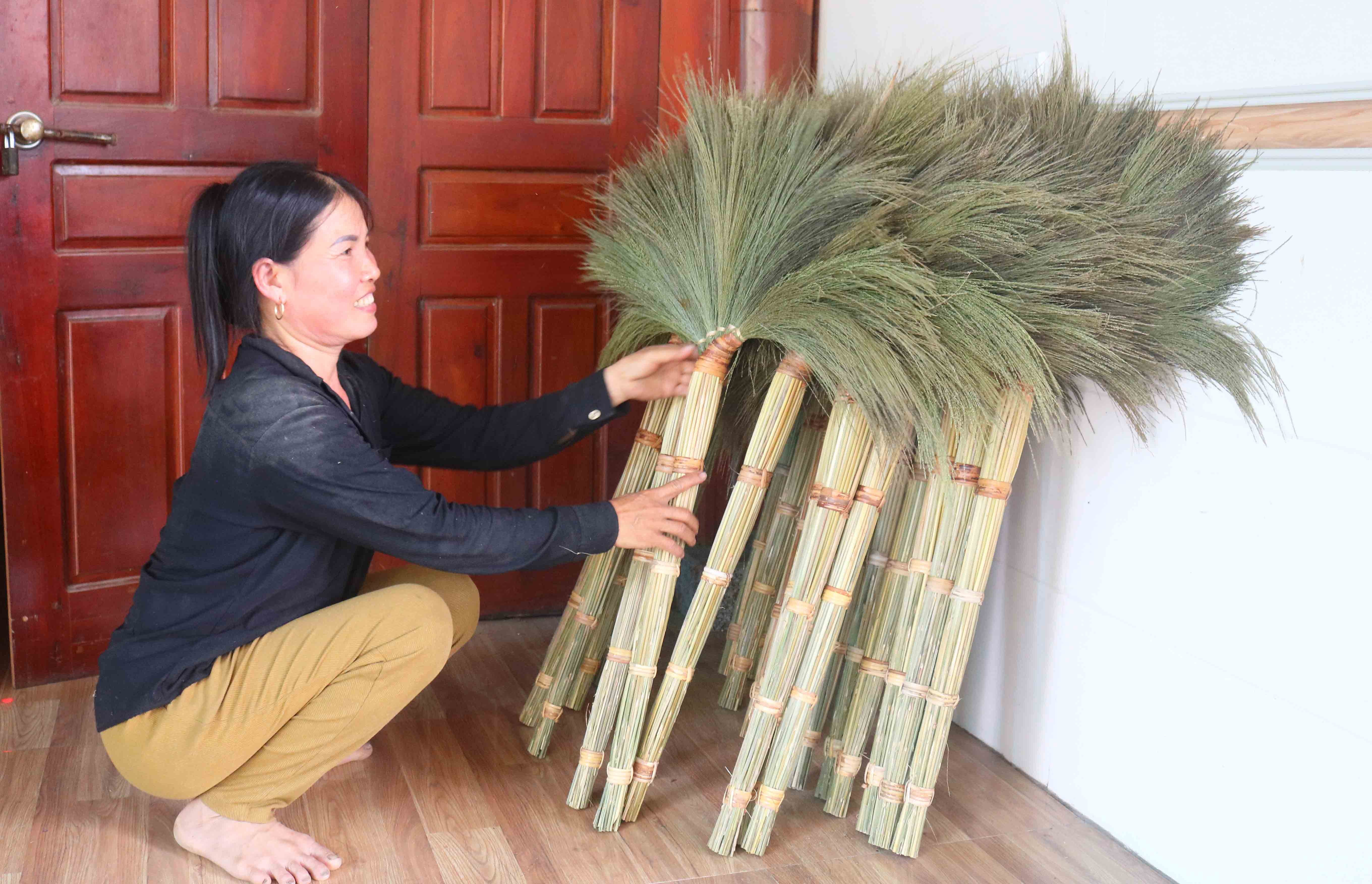 |
| The broom-making craft here has been recognized as a traditional craft village by the Provincial People's Committee. The brooms made by the people of Hamlet 2, Thanh Luong Commune, are widely sold throughout the district and beyond. Families involved in the craft can sell their brooms at the market, supply them to stalls and shops, or traders come to their homes to purchase them. Depending on quality, the wholesale price of brooms is around 30,000 VND per piece. Custom-made brooms cost between 40,000 and 50,000 VND per piece. Although considered a secondary occupation, broom making has brought local households hundreds of millions of VND in income annually. (Photo: Huy Thu) |


