
History of the War Invalids and Martyrs Day, July 27th
(Baonghean.vn) - Every year, on July 27th, people across the country remember the soldiers who sacrificed themselves for the happiness of the people and the future of the nation. Have you ever wondered what July 27th is, how it came into being, and what its significance is?
1. The circumstances surrounding the establishment of the Day of War Invalids and Martyrs
Shortly after the successful August Revolution of 1945, the Democratic Republic of Vietnam was established when the French colonialists returned to invade our country once again. "Unwilling to lose our country, unwilling to be enslaved," our people and soldiers bravely fought to repel the invaders. In the early months and years of the resistance, many compatriots and soldiers fell, sacrificing their lives and blood on the battlefields.
Grief gripped the entire nation, with many families losing both husbands and sons. Many young wives experienced happiness for only a single day. To help alleviate the pain of loss for the families of fallen soldiers and the people, the Vietnamese government initiated the establishment of an organization called the Association for Assisting Deceased Soldiers.
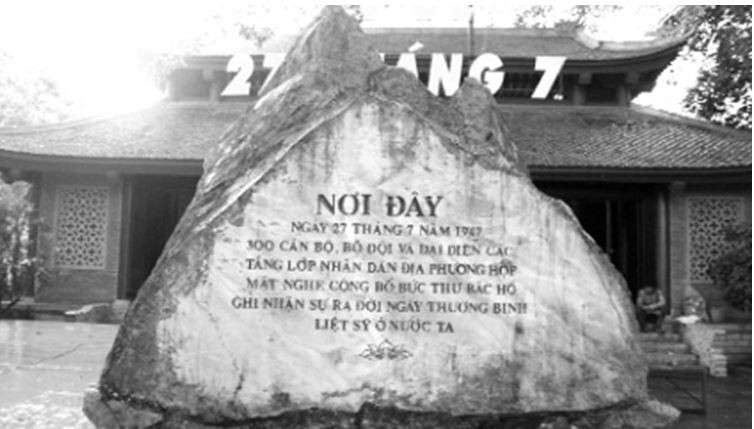 |
| The Day of War Invalids and Martyrs (July 27) holds profound historical, political, and social significance. Photo: Internet |
In early 1946, the Association for Assisting Injured Soldiers was established in Thuan Hoa (Binh Tri Thien), then in Hanoi and several other localities. On May 28, 1946, the Association for Assisting Injured Soldiers organized an important talk at the Hanoi Grand Theatre to call on people to join the association and enthusiastically help wounded soldiers. President Ho Chi Minh attended.
On November 17, 1946, also at this location, the "Winter Campaign for Soldiers" was held with the aim of collecting clothes, shoes, and hats for soldiers on the front lines, marking the beginning of the "Winter Campaign for Soldiers". Here, President Ho Chi Minh took off his winter coat and donated it to the soldiers.
When the nationwide resistance war broke out on December 19, 1946, the number of wounded and killed increased. The lives of our soldiers and people faced many difficulties. In response to this situation, the Party and State decided on many important policies regarding the care of wounded soldiers and martyrs to ensure the material and spiritual well-being of their families during the early period of the resistance war.
2. Official War Invalids and Martyrs Day
In June 1947, representatives from the General Headquarters of the Viet Minh, the Central Committee of the National Women's Salvation Association, the Central Committee of the National Youth Salvation Association, the Political Department of the Vietnamese National Army, the Information and Propaganda Department, and several localities met in Dai Tu (Bac Thai) to discuss the work related to wounded soldiers and martyrs and to implement President Ho Chi Minh's directive to choose a day as the National Day for Wounded Soldiers and Martyrs. After consideration, the delegates unanimously chose July 27th as the "National Day for Wounded Soldiers".
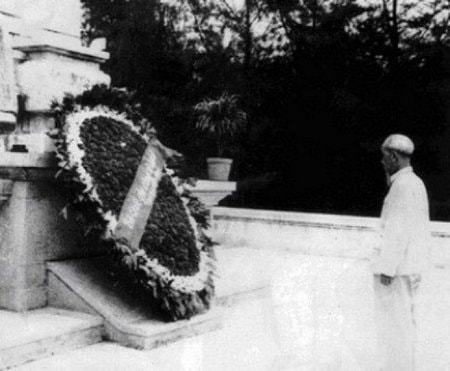 |
| President Ho Chi Minh was the first person to sign a document affirming the importance of caring for wounded soldiers and martyrs in the nation's resistance war for national liberation. (Archival photo) |
Since then, every year around this time, President Ho Chi Minh would send letters and gifts to inquire about, encourage, and remind everyone to be grateful to and wholeheartedly help wounded soldiers and the families of martyrs. Especially after the Dien Bien Phu Victory, the Government and President Ho Chi Minh paid even more attention to the work related to wounded soldiers and martyrs.
From July 1955, the Party and State decided to change the "National War Invalids Day" to "War Invalids and Martyrs Day" with the aim of recognizing the great sacrifices of the people and soldiers nationwide for the glorious victory of the entire nation.
Following the liberation of South Vietnam and the reunification of the country, according to Directive 223/CT-TW dated July 8, 1975, of the Central Party Secretariat, July 27th officially became the "National Day for War Invalids and Martyrs" from 1975 onwards. Every year, especially on the anniversary of "War Invalids and Martyrs Day," the entire Party, people, and army organize numerous practical and heartfelt activities to care for war invalids, families of martyrs, and those who have contributed to the revolution.
3. The Day of War Invalids and Martyrs has profound historical, political, and social significance.
The tradition of "filial piety, righteousness, and compassion," the respect and gratitude of our Party, State, and people towards those who sacrificed and dedicated themselves for the independence, freedom, and unity of the Fatherland, and for the happiness of the people. Through this, we can promote patriotism and strengthen and cultivate faith in the revolutionary cause chosen by our Party, President Ho Chi Minh, and our people.
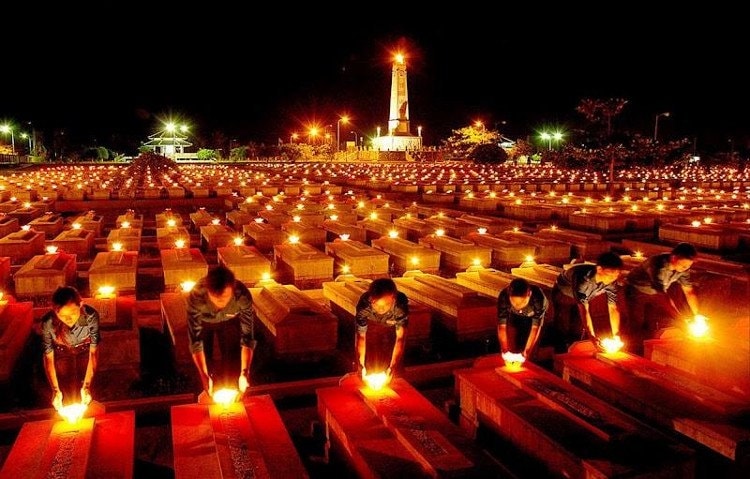 |
| Lighting candles to pay tribute to the heroic martyrs. Photo: Internet |
Honoring heroes, martyrs, wounded soldiers, and those who have made contributions to the nation, while affirming their invaluable dedication and sacrifice for national independence, freedom, and the happiness of the people, is paramount. Caring for wounded soldiers, sick soldiers, families of martyrs, and those who have made contributions is an honor and a responsibility of all levels, sectors, political and social organizations, and of everyone, of present and future generations.
The Party, the State, and our people deeply appreciate the immense contributions and sacrifices of our compatriots and soldiers to the Fatherland. Alongside this, we always prioritize educating the sense of responsibility, civic duty, and profound gratitude of all strata of society and revolutionary generations towards wounded soldiers, martyrs, and those who have contributed to the revolution.
4. Some outstanding achievements in the work related to wounded soldiers, martyrs, and people who have rendered meritorious services to the revolution over the past 70 years.
Since Decree No. 20/SL, signed by President Ho Chi Minh on February 16, 1947, establishing the "disability pension and death benefit regime for fallen soldiers," the system of legal documents on preferential treatment for those who have rendered meritorious services to the revolution has been researched, developed, and promulgated quite comprehensively, fully, and promptly, ensuring quality to gradually concretize the guidelines and policies of the Party and the State.
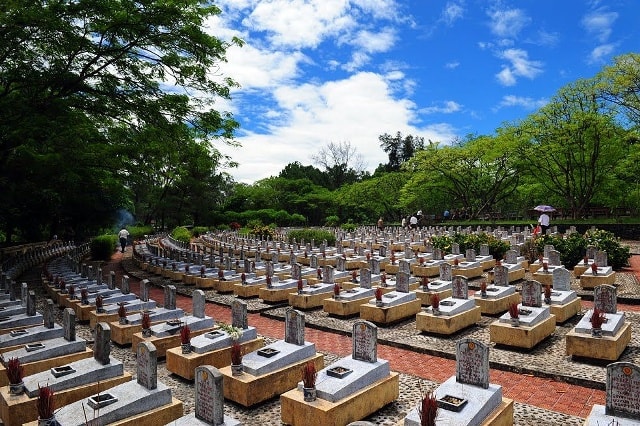 |
| Truong Son Martyrs' Cemetery - The resting place of those who sacrificed their lives and blood for the peace of the Fatherland. |
The movement to care for wounded soldiers, sick soldiers, families of martyrs, and those who have rendered meritorious services to the revolution has developed extensively from the central to local levels and has achieved quite practical results, demonstrating the affection, responsibility, and fine cultural traditions of the nation.
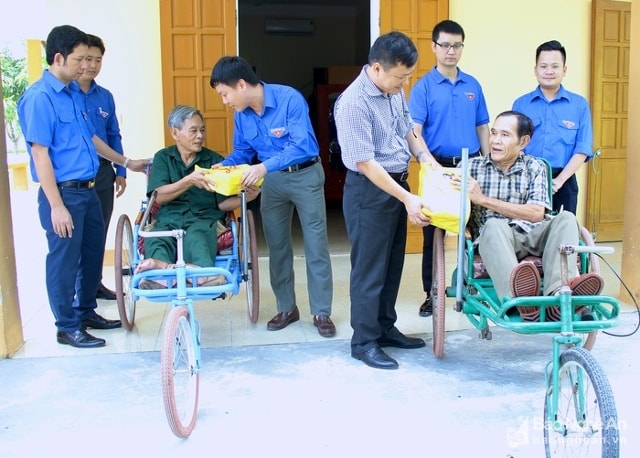 |
| Leaders of the Nghe An Provincial Youth Union and representatives of Mobifone Region 6 visited and presented gifts to wounded and sick soldiers. (Photo: Archival image) |
Every year, the Day of War Invalids and Martyrs (July 27th) has become a day for the entire nation to remember and express gratitude to those who have contributed to the country. The Party and the State have many preferential policies, both material and spiritual, for those who have contributed to the country, as well as their families and children.
However, remembering and showing gratitude to those who have contributed to the nation is not just about one day, one period, or one commemoration, but more importantly, it requires practical and regular actions to help the families and children of those who have sacrificed their lives or suffered injuries, alleviating their difficulties in life. That is the deepest meaning of the Day of War Invalids and Martyrs.
Peace
(Synthetic)
| RELATED NEWS |
|---|


