
'Fire tests gold'
(Baonghean.vn) - While previous confidence votes were merely a "reference information channel in evaluating officials," now, with Regulation 96, this activity has become a factor in evaluating, assigning, and utilizing officials.
This is truly a radical and decisive change, likened to "the test of fire," becoming an important measure reflecting the competence and effectiveness of leaders and managers.
Regulations are not just for reference in evaluating officials.
General Secretary Nguyen Phu Trong clearly stated that the confidence vote is an assessment and recognition of the efforts, endeavors, and achievements of each leading and managerial official. The results of the confidence vote are not intended to assign blame or eliminate anyone, but rather each vote should be seen as a mirror reflecting and helping each individual...Self-reflection and self-correction"Continue to strive and improve in your work, perfect yourself, and live up to the trust and hope of the Party and the people."
 |
Illustration: Source material |
For a long time, confidence votes have been seen as a mechanism to monitor power and enhance political accountability. Leaders and managers must constantly strive in their work to maintain trust. Confidence votes also serve as a reminder, creating necessary pressure for those being evaluated to perform their duties well, to be dynamic, innovative, decisive, to think outside the box, to take responsibility, and to face challenges in carrying out their assigned tasks. Of course, those with low confidence ratings and declining prestige are not worthy of continuing in their positions and should resign to be replaced.
Regulation 96 aims to guide leaders and managers towards viewing resignation or transfer as normal occurrences; minimizing the situation where incompetent officials cling to their positions, disregarding integrity and honor, and only thinking of their own and their families' interests.
 |
General Secretary Nguyen Phu Trong casts his vote of confidence into the ballot box during a session of the 13th National Assembly in November 2014. Photo: Quochoi.vn |
Of course, the primary factor remains the self-discipline of each cadre and Party member. Those who consistently cultivate and improve their moral character, enhance their sense of responsibility in their work, and demonstrate a professional demeanor and attitude in serving the people will be highly valued. Conversely, those who, driven by individualism, infringe upon the collective interest and the interests of the people will be purged. Regulation 96 serves as a warning, awakening self-respect, and as a necessary deterrent for each leading and managing cadre. This is a further step in perfecting the regulations and standards, demonstrating the strict yet humane nature of the Party's personnel work.
Regulation 96 has attracted considerable public attention and widespread support. It is expected to be a step towards "legalizing" the Party's policies, serving as a deterrent and warning to those in positions of power to prevent them from being drawn into corruption and negative practices. This regulation is seen as a further concretization of the Party's Regulation 41 on the dismissal and resignation of officials and the Politburo's Conclusion 20 on the policy of reassigning officials under the Politburo and Secretariat's management after disciplinary action.
Many new featuresin the vote of confidence
Permanent member of the Party Central Committee Secretariat Vo Van Thuong has just signed on behalf of the Politburo.Issued Regulation No. 96-QD/TWRegarding the process of conducting confidence votes for leadership and management positions within the political system, this is seen as a strong and decisive change, likened to a "test by fire" for each leader and manager.
The new aspect of this document is the more specific and stringent regulations regarding the use of confidence vote results. Accordingly, individuals who receive more than half but less than two-thirds of the votes of no confidence will be removed from the list of candidates for higher positions; their current positions may be considered for removal, reassignment to other duties, or resignation; or a vote of no confidence will be held. Under the old regulations, individuals with more than half of the votes of no confidence would only be considered for removal from the list of candidates for higher positions.
Individuals receiving a low confidence vote (two-thirds or more) will be dismissed from their current positions and reassigned to lower-level duties without waiting for the end of their term or appointment. Under the old regulations, individuals with a low confidence vote (two-thirds or more) would be allowed to resign or be dismissed if they were deemed unsuitable for the job.
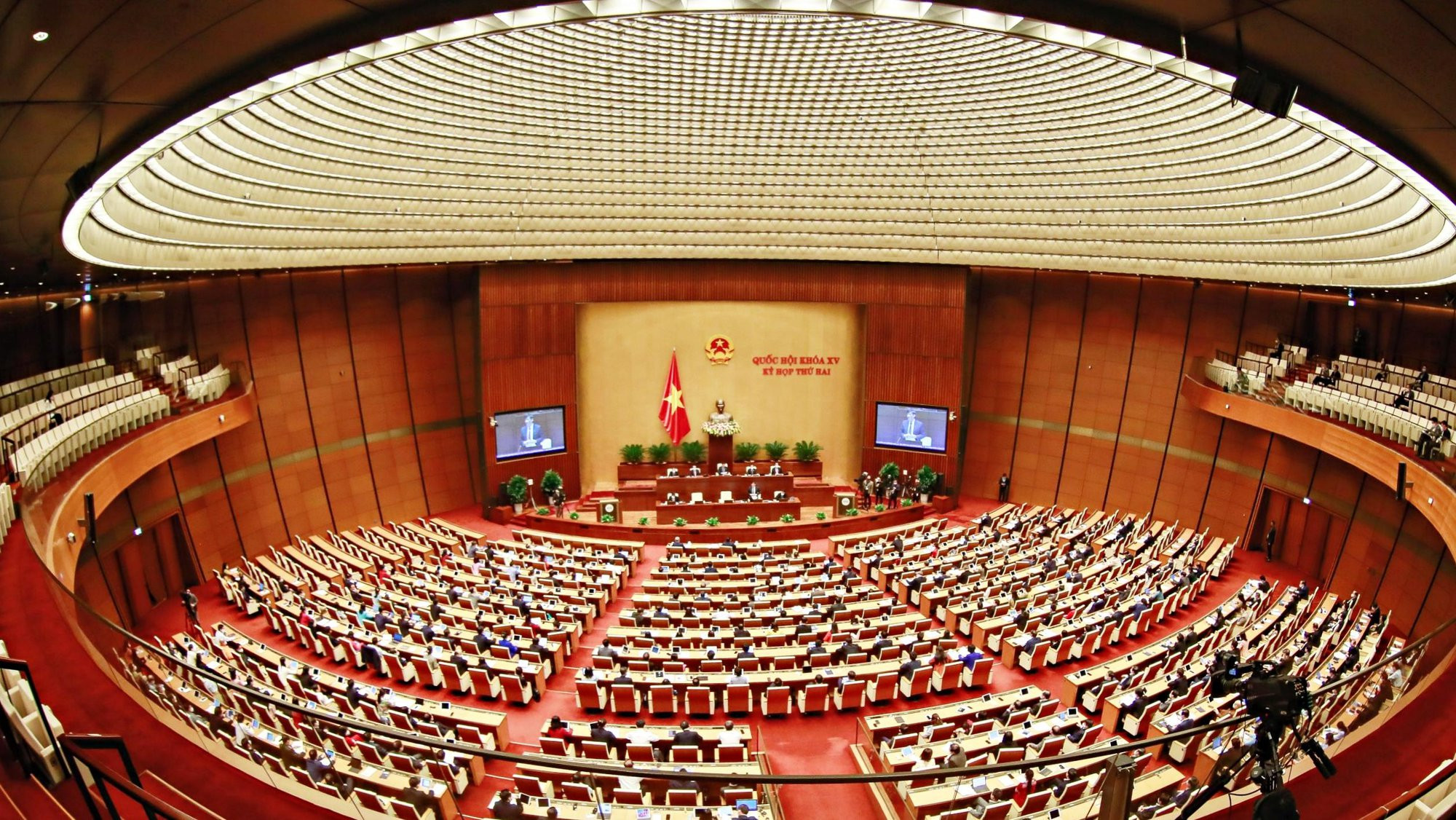 |
The results of the confidence vote are likened to a "test by fire" for each leader and manager. Photo: Archival material. |
A confidence vote can only be held when at least two-thirds of those summoned are present. This is done in the third year (mid-term) of the party congress at all levels.
In particular, a noteworthy new point in Regulation 96 is the addition of criteria regarding the exemplary conduct not only of the leading and managerial officials themselves but also of their spouses and children in complying with the State's policies and laws. Furthermore, the responsibility of officials to set a good example is also considered when conducting confidence votes.


