
What's so special about Russia's new unmanned reconnaissance and attack aircraft?
The new unmanned aerial vehicle (UAV) system will track enemy targets and direct the drones to attack them.
Recently, the Astron Mechanical and Optical Design Bureau unveiled a new unmanned reconnaissance and attack system for the first time. The new UAV system, named Granat, is currently undergoing testing.
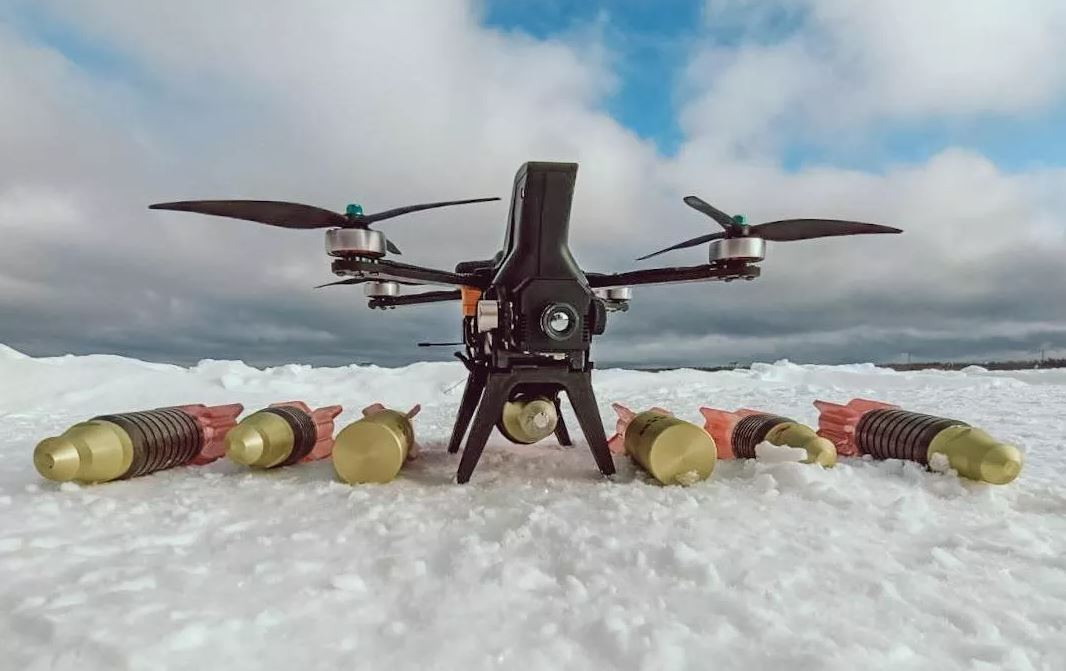
IntroductionGranat system
Essentially, Granat is an unmanned system designed to conduct reconnaissance in challenging terrain and urban areas where human reconnaissance personnel might face difficulties or risks.
This system includes a reconnaissance UAV, a ground control station, and a relay drone, which acts as an intermediary transmitting signals from the drone to the control station and back again.
Although adding a relay drone might seem like unnecessary complexity, it increases the operational range of the reconnaissance UAV, making it less dependent on the control station's signal range.
Additionally, relay drones can be used to transmit information to kamikaze drones, which can operate based on data collected by surveillance UAVs.
The Granat system's offensive component includes several types of ammunition, including fragmentation rounds and high-explosive anti-tank rounds.
According to a statement from Astron representatives reported by Russian media, Granat is designed to perform aerial reconnaissance and target search, as well as guide combat drones to detected targets.
Astron's line of UAVs
Granat is not the only unmanned system developed by Astron.
The design department developed an attack UAV that essentially functions as an unmanned bomber and is capable of launching PG-7VL anti-tank missiles (the same type of projectile used in RPG-7 grenade launchers) at designated targets.
Unlike the Granat, this unmanned bomber has entered production and is being used by the Russian military in the conflict zone in Ukraine.
Earlier this year, Astron began mass production of the Blokpost-4T long-range reconnaissance system, which integrates ground-based thermal imaging stations and at least one drone equipped with a thermal imaging camera to detect enemy personnel and vehicles.


