
How to eat fruits and vegetables safely in the summer?
In the summer, pesticide residue levels on fruits and vegetables are usually higher than during the rainy season.
Fruits and vegetables are considered safe when the levels of nitrate residue, heavy metals, pesticides, and microbial contamination are below the prescribed limits.
According to the doctorCao Thi Hau, formerDirector of the Center for Nutrition Education and Communication,Institute of Nutrition, vDuring the dry season, pesticide residue on fruits and vegetables is usually higher than during the rainy season because rainwater washes away some of the remaining pesticides. Vegetables and root crops that need to be peeled before eating, such as squash, gourds, and zucchini, are generally safer.
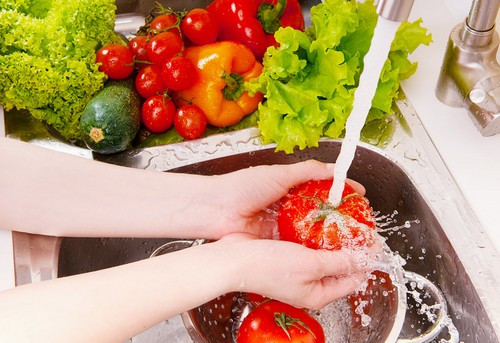 |
You should wash vegetables under running water. Photo: MA |
Therefore, kWhen choosing fruits and vegetables, you should choose:
- The fruits and vegetables are fresh, intact, free from scratches, have a normal external shape, natural color, are firm and crisp, and feel heavy when held.
- The fruits and vegetables are not wilted, bruised, or contaminated with foreign substances.
Attention:
- Some fruits may be spoiled inside but still look fresh on the outside due to the use of chemical preservatives, so you should check carefully before buying.
- Avoid buying pre-peeled and pre-cut vegetables and fruits that have been soaked in water at the market, as the soaking water may not be hygienic and may even contain harmful chemicals to keep them white and crisp. In addition, vitamins and minerals in fresh vegetables, such as vitamin C, are easily dissolved and lost in the soaking water.
To prevent poisoning from eating fruits and vegetables contaminated with pesticides, consumers should:
- Soak and wash each leaf thoroughly, especially the crevices; peel the skin off any fresh fruits.
For leafy vegetables like lettuce, spinach, and broccoli, add 1-2 teaspoons of salt to the washing water to help remove insects and pests from the crevices of the leaves.
Vegetables and fruits should be left whole and washed thoroughly before peeling.
- Vegetables and fruits should be soaked in clean water for 15-20 minutes, washed several times (at least 3-4 times), and rinsed under running water to remove most of the residual pesticides.
- Cooking thoroughly and leaving the lid open while cooking is also a good way to eliminate most of the remaining chemical residue through evaporation.
4 steps to washing vegetables
According to VNE


