
Heavy rains from Typhoon No. 10 have caused severe flooding of crops in Nghe An province.
The impact of Typhoon Bualoi has caused many localities in Nghe An province to experience prolonged heavy rains, with some areas experiencing torrential downpours. Water levels have risen in the fields, causing widespread flooding. Most worryingly, key vegetable-growing areas that had just recovered from Typhoon No. 5 are now suffering heavy losses again. Winter vegetable crops are at risk of total loss, and the supply of fresh vegetables is showing signs of disruption.
The province's largest vegetable growing area is deeply submerged in water.
.jpg)
From the evening of September 26th to the morning of September 27th, heavy rains submerged dozens of hectares of vegetable crops in Quynh Mai ward and Quynh Anh commune. This area is considered the largest "vegetable hub" of Nghe An province, supplying fresh vegetables year-round. After Typhoon No. 5, farmers had just begun to recover somewhat, but now their crops face the risk of widespread damage.
Mr. Ho Dang Tam, Chairman of the Quynh Bang Agricultural Cooperative in Quynh Anh commune, expressed his concern: “This rain was too unexpected and heavy. Many areas of sweet cabbage, onions, kohlrabi, carrots, etc., belonging to the farmers have been flooded, eroded, and damaged. Areas of newly sown vegetables, which had just taken root, are now almost completely ruined. Even vegetables that had recovered after the previous storm are unlikely to survive.”

Unable to hide his impatience, Mr. Tran Van Xuan from Quynh Mai ward said that his family planted 3 sao (approximately 0.3 hectares) of onions. Although they weren't ready yet, he had to mobilize manpower to harvest them early. "If we left them for a few more days, the onions would definitely spoil. Harvesting early reduces the yield, but luckily the price of onions is high, so we can still salvage something."
In the fields of Quynh Mai ward, groups of farmers, wearing raincoats, wade through the water to harvest onions and vegetables. Amidst the torrential rain, the sound of water pumps working continuously to save the crops fills the air. Mr. Nguyen Canh Tuy, Vice Chairman of the Farmers' Association of the ward, said: “The most severe damage is to chayote, kohlrabi, and carrots; many areas where the seeds hadn't even taken root yet were ruined. The association is urging farmers to harvest quickly and focus on clearing and dredging ditches to save the remaining crops.”

According to preliminary statistics, by the morning of September 27th, hundreds of hectares of vegetables throughout the province had been flooded. Some areas, while not completely destroyed, were severely damaged, with very little chance of recovery. Significantly, winter vegetables, considered a "lifeline" for farmers after the damage caused by Typhoon No. 5, have now been severely affected, adding to the farmers' anxiety.
Risk of impact on vegetable supply in the market.
In many other localities in the province, large areas of vegetable crops are in a similar situation. In Vinh Hung ward, many vegetable fields are submerged in water. Mr. Nguyen Van Quy, a long-time vegetable farmer, lamented: “I just planted 2 acres of sprouts and mustard greens, and now they're all flooded. The young, tender vegetables were damaged by the continuous heavy rain throughout the night, which didn't have time to recede. All we can do is hope the rain stops soon and that the storm doesn't come, then maybe we can recover.”

Many vegetable-growing areas in Dai Hue and Lam Thanh communes, where winter crops have just been planted, are threatened by heavy rain. Mr. Nguyen Van Tinh, from Dai Dong hamlet, Van An commune, said: "Farmers proactively dredged canals and irrigation systems before planting, so drainage is temporarily under control. But if heavy rain continues, the risk of total crop loss is very high."
According to the agricultural sector, prolonged heavy rains are threatening hundreds of hectares of winter vegetables across the province. Newly sown areas are vulnerable to erosion and seed washing away; areas in the rooting stage are suffering from root rot and leaf blight. Even mature vegetable fields are being damaged, resulting in significantly reduced yields.

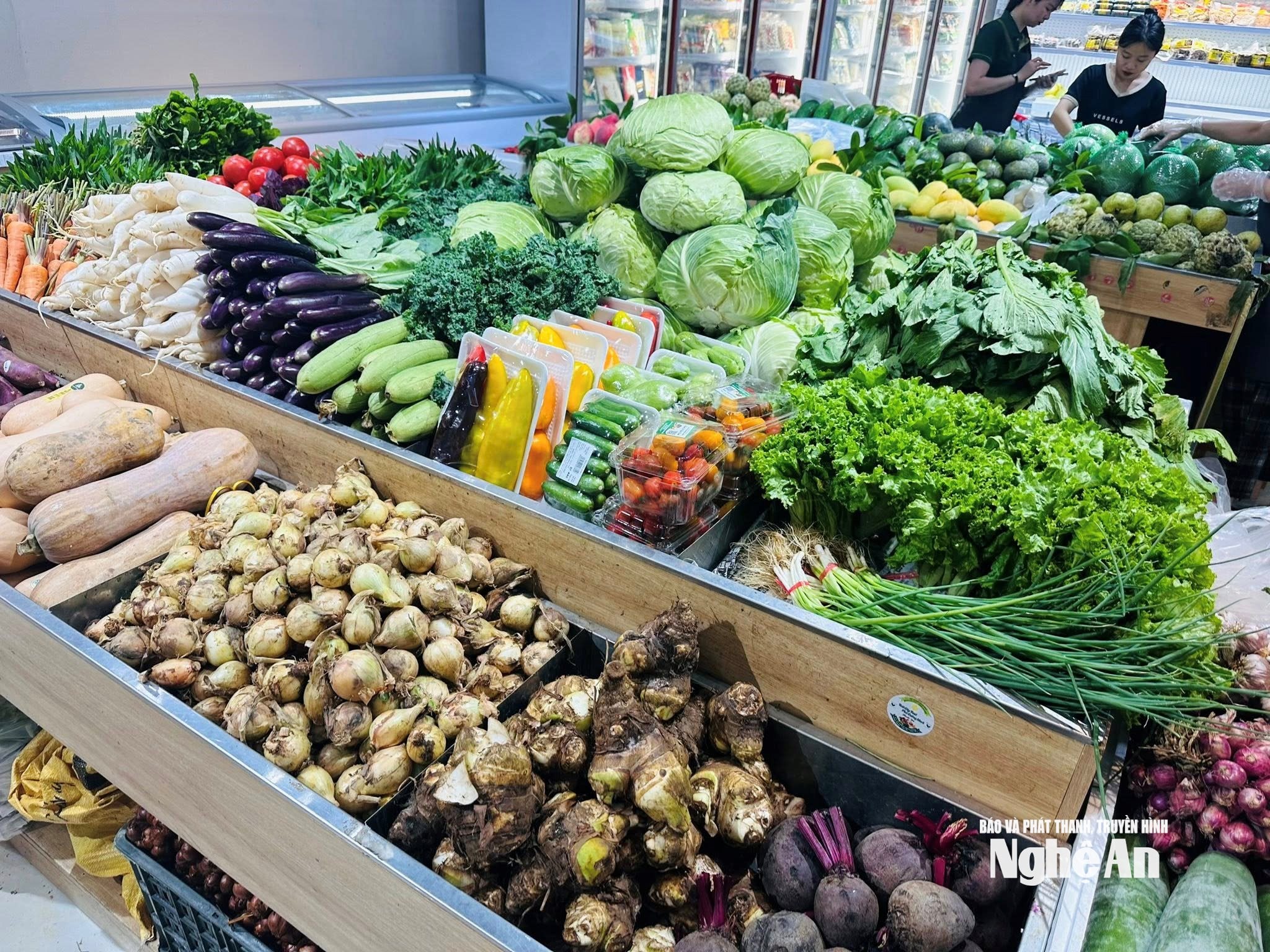
Damage to winter vegetables will directly affect market supply during the year-end and Lunar New Year holidays. Vegetables are perishable, and this is the most important crop of the year. If flooding persists, supply will certainly be disrupted, and vegetable prices could rise sharply.
At wholesale markets, traders are also starting to worry as the supply of fresh vegetables is becoming increasingly scarce. Ms. Nguyen Thi Hang, a trader at Vinh market, shared: "If the rain continues, many vegetables in the province will be damaged, forcing us to import from other places, which is expensive, and prices will certainly increase sharply."
Meanwhile, farmers are worried about not having enough produce to supply the market during the Lunar New Year. For them, the winter vegetable crop is not only economically significant but also a glimmer of hope for recovery after failed harvests due to storms and heavy rains. However, extreme weather and production disruptions have caused farmers considerable difficulties.
Currently, local authorities are mobilizing resources and pumps to drain floodwaters from crops; at the same time, they are advising farmers to urgently harvest ripe crops, reinforce embankments, and dredge canals to prevent the risk of continued heavy rain and flooding. However, these measures are only intended to minimize damage and provide immediate response…


