
The US admits its hypersonic weapon test was a failure.
According to U.S. Air Force Secretary Frank Kendall, the launch of the ARRW hypersonic missile by the U.S. this month was unsuccessful.
The US Air Force has admitted that the test of a hypersonic missile manufactured by Lockheed Martin has failed for the fourth time, while also hinting at the possibility of adopting a competing system manufactured by Raytheon.
“The test we just conducted was unsuccessful. We didn’t get the necessary data from that test and they are investigating to find out why,” Air Force Secretary Frank Kendall told members of the House Armed Services Committee on March 28.
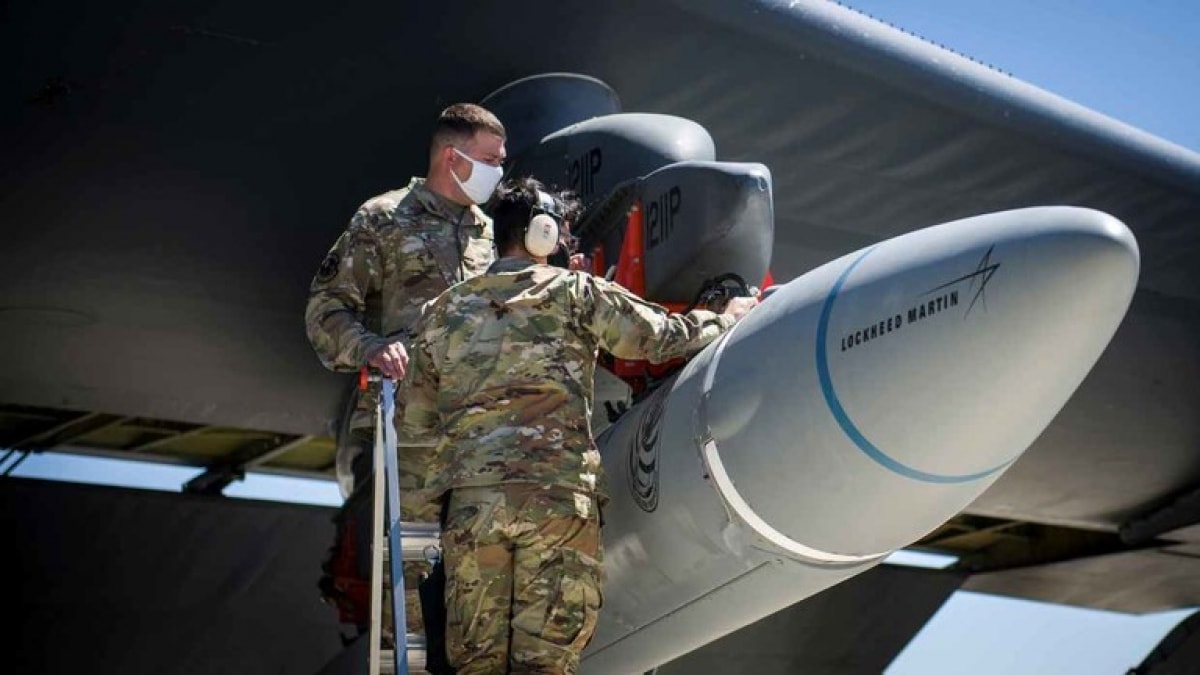 |
| The ARRW missile is suspended under the wing of a B-52H Stratofortress during a test in August 2020 at Edwards Air Force Base. Photo: US Air Force |
Kendall referred to the AGM-183A Air-Launched Rapid Response Weapon (ARRW) test off the coast of Southern California on March 13. He did not elaborate on what happened during the launch.
Kendall's comments may surprise some lawmakers because the U.S. Air Force issued a statement last week saying the ARRW test had "met some objectives." The statement did not mention the test's failure.
ARRW has been under development since 2018 and was delayed after three failed test launches in 2021. The US Air Force announced its first successful launch in May 2022, with the missile reaching speeds above Mach 5 (6,125 km/h).
Hypersonic missiles, with speeds exceeding Mach 5, are highly maneuverable and therefore very difficult to shoot down. The US does not yet have a fully operational hypersonic missile and is lagging behind Russia and China in the race to develop this type of weapon.
Kendall said that following the latest ARRW test, the U.S. Air Force is “more committed” to another hypersonic program, the Hypersonic Attack Cruise Missile (HACM). A budget decision on whether to implement ARRW is expected in 2024, after two more test launches.
The U.S. Air Force is believed to have received approximately $423 million for research and development of ARRW over the past two years, and has requested an additional $150 million in funding for the next fiscal year. The total funding for HACM is $423 million for the current fiscal year alone, and the U.S. Air Force plans to spend an additional $1.9 billion on the program over the next five years.
According to Kendall, the HACM program has been "reasonably successful" so far.
“We see HACM as having a specific role to play. It’s compatible with more aircraft and will provide more overall combat capabilities,” Kendall said.


