
Russia is taking the hit for helping China develop weapons.
Failed arms sales and weapons copied by China have hit Russia hard, damaging its own arms development cooperation program.
According to statistics published by the Kommersant newspaper, 70% of weapons manufactured in China are copied from Russia, a conclusion regarding China's controversial weapons development program.
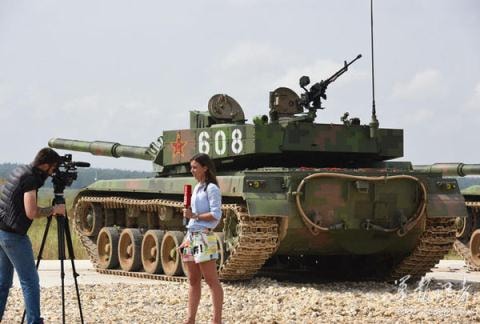 |
| China's Type 96 tank. |
The popular products that China copied from Russia sparked a heated intellectual property dispute between the two countries, leaving Russia with a bitter taste in its mouth.
And the J-11B fighter jet is the most controversial copycat product between Russia and China, after Russia granted China a license to manufacture the Su-27 fighter jet under the name J-11.
However, after completing less than 100 of the agreed-upon 200 aircraft, China unilaterally terminated the contract and copied the design to create the J-11B.
The successful "modification" of the Su-27 into the J-11B laid the groundwork for China's continued development of its controversial defense industry. China acquired 76 Su-30MKK and 24 Su-30MK2 fighters from Russia. Subsequently, China created a twin version of this fighter, the J-16.
By June 2012, the J-16 fighter jet appeared outside the Shenyang aircraft manufacturing plant, much to the surprise of world military analysts. It is difficult to distinguish the differences between Russia's Su-30MKK and China's J-16.
The next copy that caused Russia to suffer a bitter defeat was the HQ-9 long-range air defense system. Initially, this air defense missile system was developed based on the American Patriot air defense missile, which China learned about from a secret third party. However, the system's capabilities were quite limited and did not meet the standards of modern air defense missiles.
By the 1990s, China had reached an agreement to purchase two battalions of S-300PMU1 long-range air defense missiles. This is considered one of the world's leading air defense missile systems. Immediately, Chinese engineers began disassembling the S-300 for study.
And the HQ-9A variant, a copy of the S-300, emerged, turning it into a "Russian-American" hybrid. The HQ-9A has the same launch vehicle and launch tubes and missiles as Russia's S-300, while using a guidance system similar to the American Patriot.
In addition to directly copying prototypes obtained from Russia, China is also accused of engaging in industrial espionage to copy its designs.
According to Military Factory, after failing to convince Moscow to sell the Su-33 carrier-based fighter jets for a long time, China has resorted to "begging" Ukraine to sell the T-10K version of the Su-33 that it possesses.
With the economy struggling, and China offering a large sum of money for a derelict fighter jet that was sitting idle, it was difficult for Ukraine to refuse. As expected by the Russians, not long afterward, a prototype of the Chinese-made carrier-based fighter jet, the J-15, appeared.
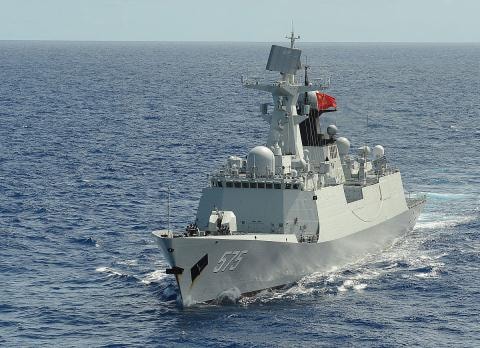 |
| Despite numerous reports of Russia assisting China in developing the Type 054A frigate, Moscow has never officially acknowledged it. |
Next up is a replica of China's controversial missile, albeit a model, the M20 tactical ballistic missile system.
First unveiled at the IDEX-2013 defense exhibition in Dubai, UAE, the M20 tactical ballistic missile immediately attracted significant attention from the world's military community.
The M20 attracted public attention not because of its superior technical characteristics, but because it bore a striking resemblance to the Russian 9K720 Iskander tactical ballistic missile.
Although the Chinese manufacturer claims that the M20 is a product of their own research and development, and has only appeared in prototype form so far, it shows that Chinese manufacturers are ready to produce a "made in China" variant of the Iskander.
The copycat versions of Russian weapons have hit Russia hard in the international arms market. In 2011, Konstantin Makienko, Deputy Director of the Russian Center for Strategic and Technological Analysis, stated that Russia's tank export industry had been severely affected by China's controversial weapons program.
Even China's VT1A main battle tank has "outperformed" the T-90 to penetrate the Moroccan market. The African nation's Ministry of Defence has ordered 150 VT1A tanks from China. This is a bitter pill for Russia to swallow, as the VT1A is an improved version of the Russian T-72 tank and has comparable capabilities to the T-80UM2.
Furthermore, China is actively promoting the export of the inexpensive Type 96 tank, and in the near future, there will be an additional Type 99 tank, designed based on the VT1A/MBT 2000. In other words, China is fully capable of meeting all needs. If you want a cheap tank, please buy the VT1A or the Type 96; if you want a higher quality tank, please buy the Type 99.
According to Dat Viet Newspaper
| RELATED NEWS |
|---|


