
Nghe An province aims to ensure that 65% of its rural population has access to clean water by 2030.
To ensure safe water supply in rural areas during the period 2025-2029, on June 28, 2024, the People's Committee of Nghe An province issued Plan No. 499 on ensuring safe water supply in the province.
Specifically, the aforementioned Plan includes a reassessment of the current status of centralized domestic water supply in the area.rural Nghe An,The Provincial People's Committee clearly stated the necessity of issuing a plan to ensure safe water supply in rural areas of Nghe An province for the period 2025-2029. The plan includes the following basic contents:
+ Overall objectivesThe goal is to ensure safe water supply in rural areas by managing risks and addressing potential problems arising from water sources, water treatment facilities, and water transmission and distribution systems to end users. This ensures a continuous water supply with sufficient flow, adequate pressure, and water quality, contributing to improved quality of life and protecting human health.
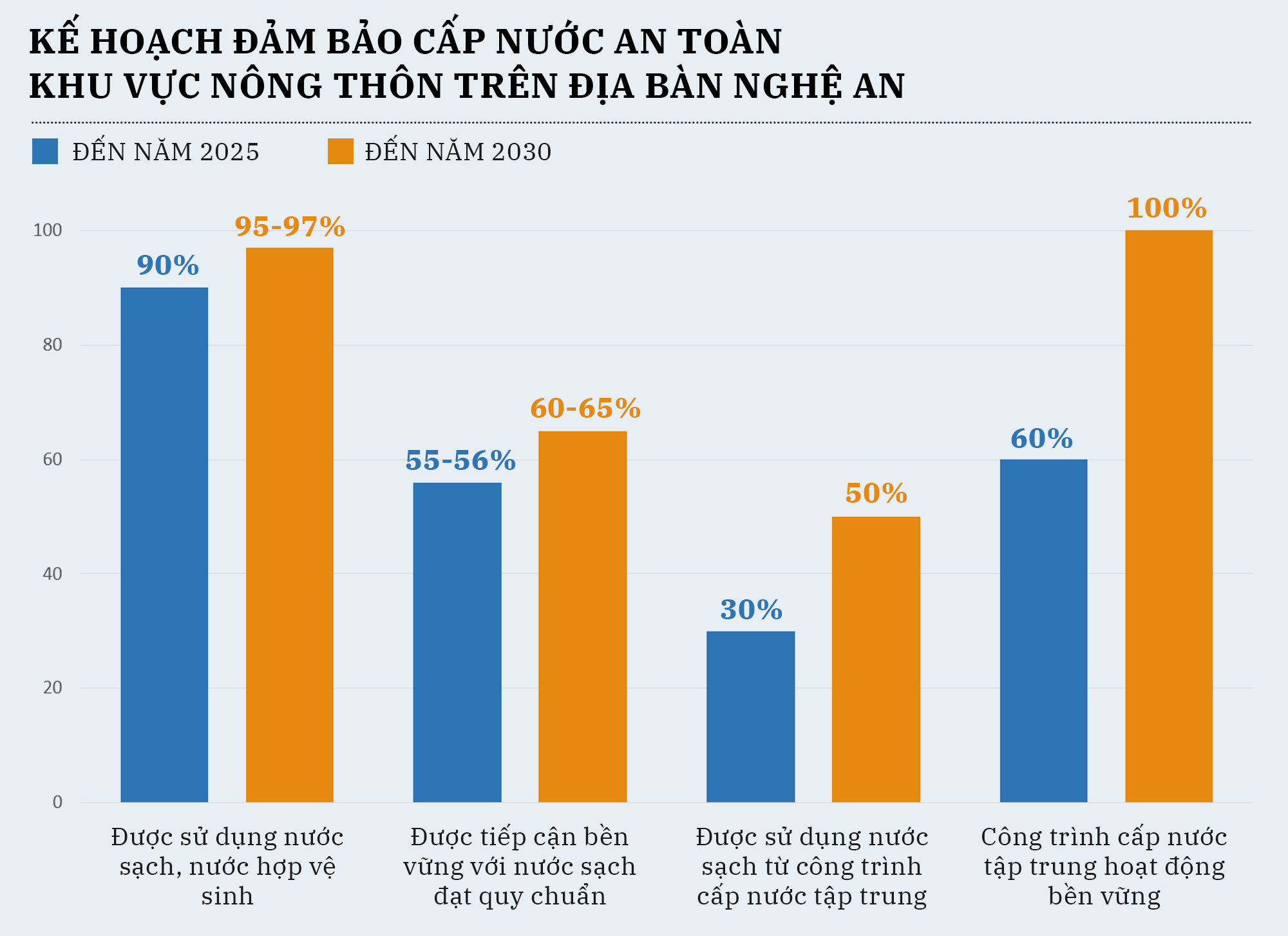
+ Specific objectivesBy 2025, 90% of the rural population will have access to clean, hygienic water, with 55-56% having sustainable access to clean water meeting standards, with a minimum quantity of 60 liters/person/day; increasing the percentage of rural people using clean water from centralized water supply systems to 30% or more; 100% of centralized water supply systems will operate normally, with 60% operating sustainably.
By 2030, Nghe An province aims to have 95-97% of its rural population using clean and hygienic water, with 60-65% having sustainable access to clean water meeting standards, with a minimum quantity of 80 liters/person/day; increasing the percentage of rural residents using clean water from centralized water supply systems to 50% or more, and ensuring 100% of centralized water supply systems operate sustainably.
The rate of centralized water supply in rural areas across the province that have established and implemented safe water supply plans is 10% or higher.
+Scope and subjects of applicationThis regulation applies to the production and supply of clean water for domestic use within centralized rural water supply systems with a capacity of 100 m3/day or more in Nghe An province. The target group includes organizations and individuals involved in the management of water supply infrastructure; operation, production, supply, and consumption of clean water for domestic use in rural areas of Nghe An province.
+ Requirements for centralized rural clean water supply projectsEnsuring a continuous and stable water supply that meets the required quantity and quality standards; managing, operating, and maintaining water collection, treatment, storage, and distribution facilities according to technical procedures and standards; having a plan to control potential hazards, risks, and incidents in the system from the water source to the customer, and implementing backup water supply measures in case of interruptions lasting more than 48 hours; having a clear financial management mechanism, with sufficient revenue to cover costs and accumulate funds for maintenance, minor repairs, and incident response; ensuring that water resource exploitation and utilization are registered and licensed according to regulations.Water Resources Law.
+ Content and implementation solutions:
- Effectively implement safe water supply in rural areas by developing and approving a Safe Water Supply Plan for centralized water supply systems in the area, following the guidelines of the Ministry of Agriculture and Rural Development.
- Improve and control the quality of domestic water by strengthening inspection and monitoring of clean domestic water quality according to local technical standards for domestic use; allocate and mobilize resources for investment, renovation, repair, and upgrading of damaged and degraded water supply facilities to ensure a sufficient, continuous, and high-quality supply of domestic water to meet the needs of the people, especially in water-scarce areas, remote areas, and mountainous regions.
- The management, operation, and exploitation of water infrastructure assets must comply with regulations. Attention should be paid to information dissemination and public awareness campaigns to improve community understanding.
- Promote the application of science and technology in the production and supply of clean water in rural areas, ensuring quality.
+Funding for implementationThe plan is implemented according to the principle that for water supply units with water prices that accurately and fully reflect reasonable costs, the cost of preparing and implementing the water supply plan is included in the water production cost as prescribed. For water supply units that do not have a price or whose price is not accurately and fully reflected reasonable costs, a pricing plan must be developed and submitted to the Department of Finance for appraisal and then presented to the Provincial People's Committee for consideration and decision. The implementation process integrates national target programs and other legitimate funding sources. For state management agencies participating in the implementation of the provincial-level safe water supply plan, funding is sourced from the unit's annual recurrent budget.
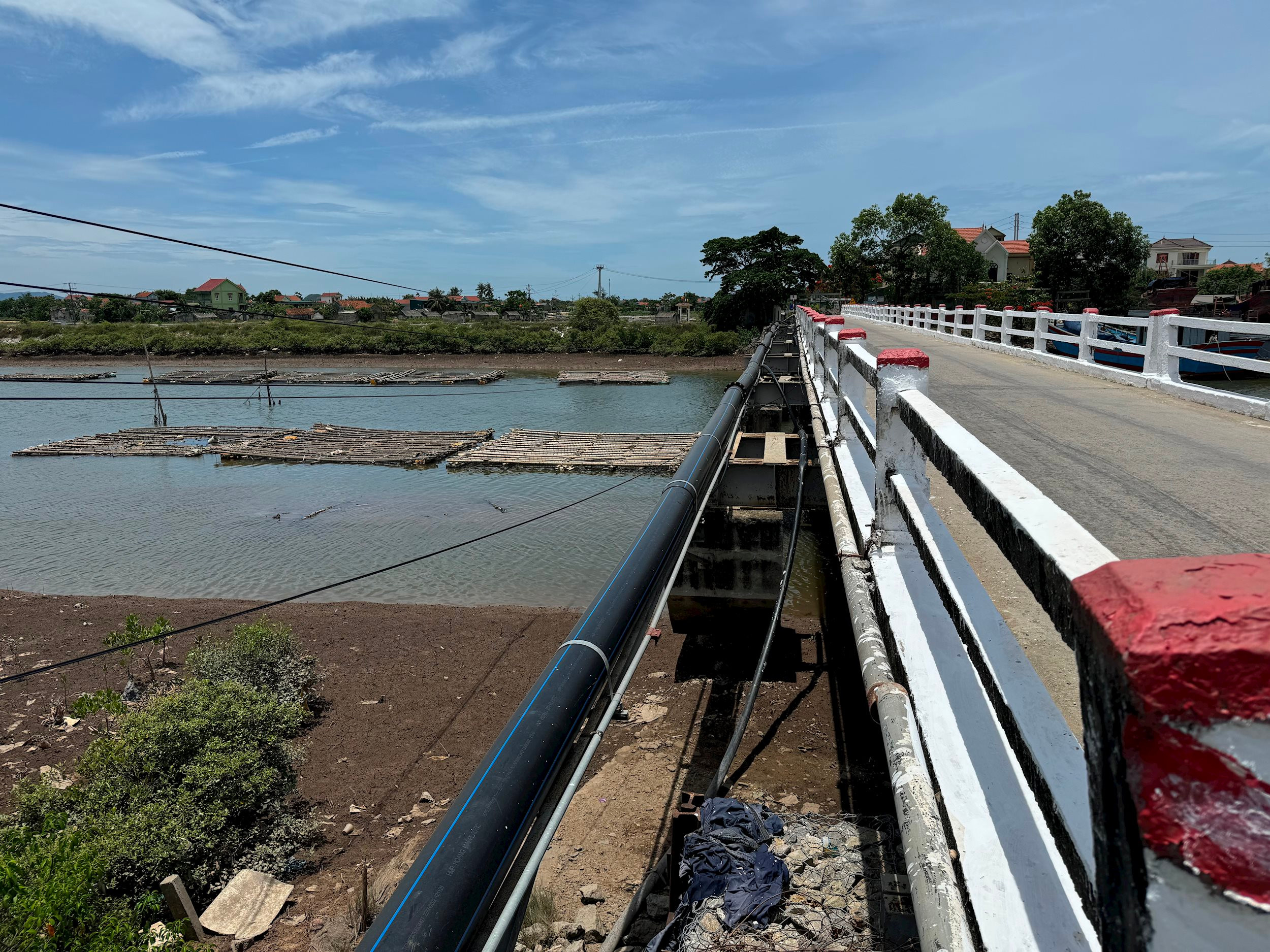
The Provincial People's Committee assigns the Departments of Agriculture and Rural Development, Construction, Health, Planning and Investment, Finance, and the People's Committees of districts; and rural water supply units to implement this plan based on this plan. Regular reports on the implementation results of the Plan must be submitted before December 15th of each year. Any difficulties should be reported to the Provincial People's Committee through the Department of Agriculture and Rural Development.
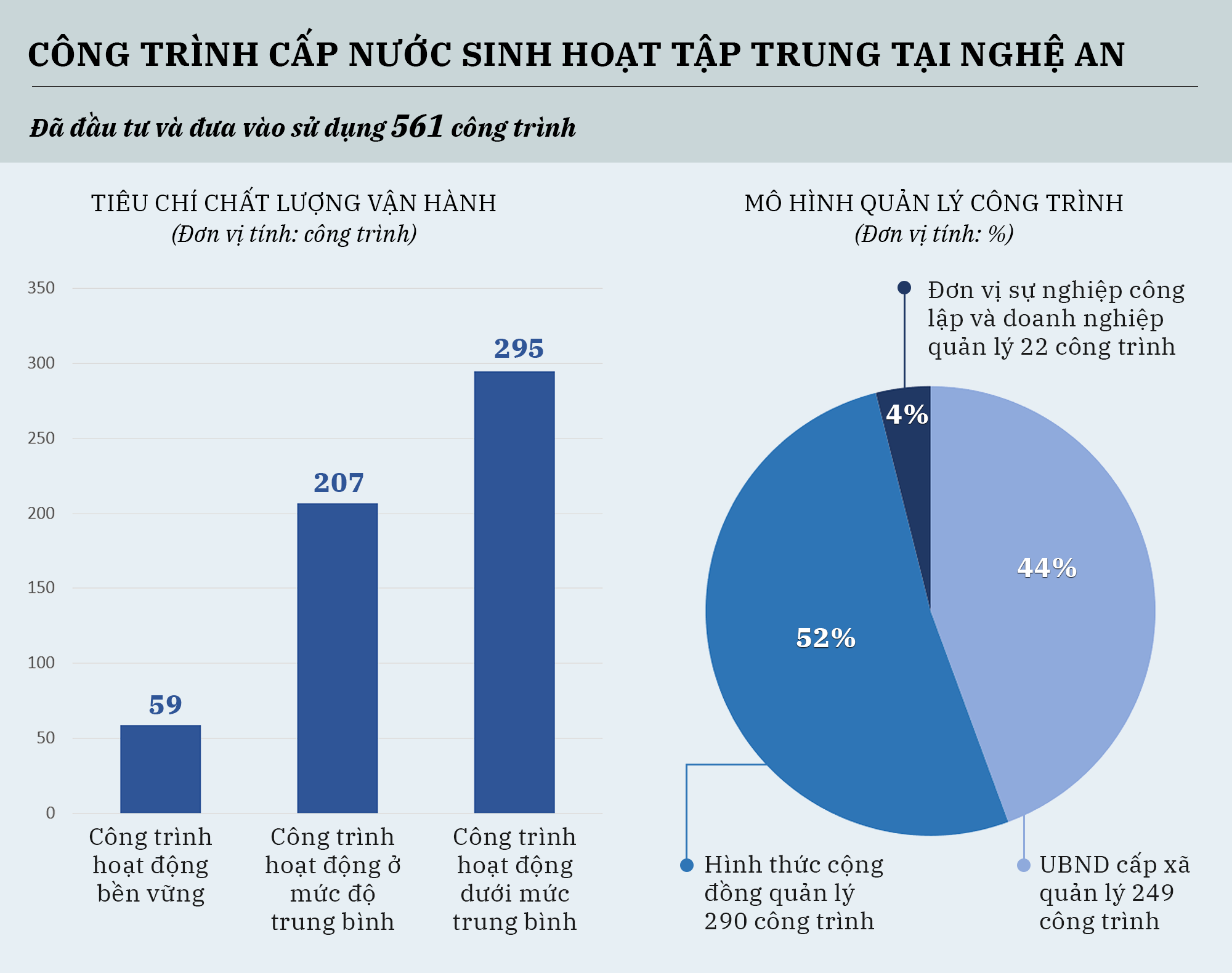
The province currently has 561 centralized domestic water supply systems with a total designed capacity of 79,985 m3/day, supplying water to 118,000 people. Currently, the operating capacity is 39,972 m3/day, ensuring domestic water supply for approximately 112,000 people and public areas in rural regions, including 492 gravity-fed water systems and 69 pumped water systems.


