
Nghe An: Rice transplanters are scarce, and even with high prices, it's difficult to hire them.
(Baonghean.vn) - Currently, many areas have completed the spring rice harvest and are urgently preparing the land for the transplanting season. To meet the deadline, most families have to hire transplanters, paying high wages, but it is not easy to find workers…
THE HARD WORK OF A RENTAL PLANTER
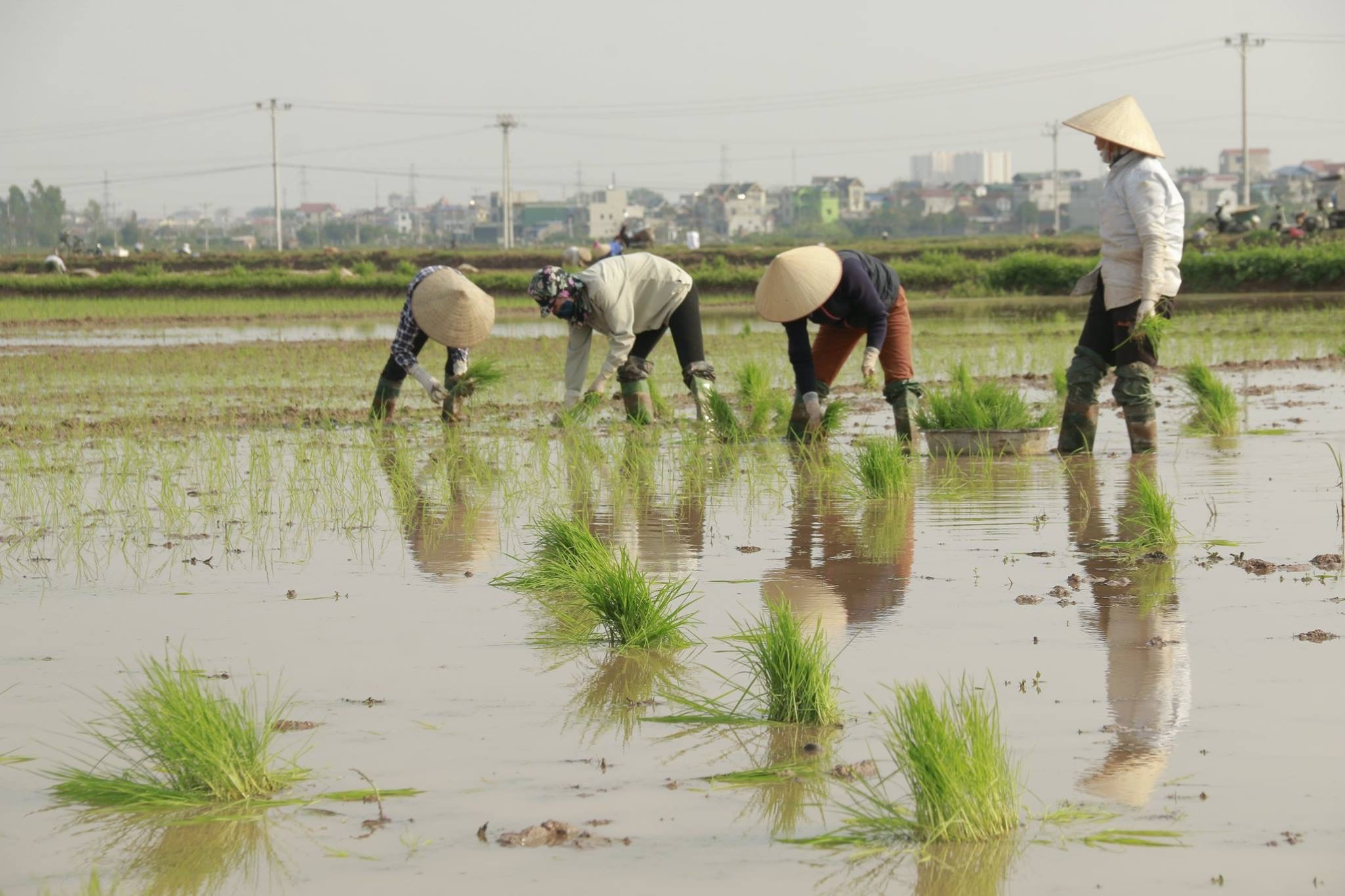 |
| In Yen Thanh district, there are many rice transplanting teams of 3-5 people who work as hired laborers in other parts of the district and neighboring districts. Photo: Thanh Phuc |
At 6 a.m., we arrived at the Chua rice field in Khanh Thanh commune (Yen Thanh district), where groups of 3-6 rice planters were bending over, transplanting the summer-autumn rice crop. "We have to take advantage of the cool, calm weather to plant; it's hard when the sun comes out. It's impossible to survive with the sun above and the water below," said Dang Thi Phuc, a worker.rice planterKhánh Thành said.
Her team consists of five people, and since the beginning of the season, they have planted dozens of acres of rice paddies in the lowlands of Khánh Thành, Long Thành, Hoa Thành, Xuân Thành… The job of “planting rice for wages” is very hard work, with feet covered in mud and heads exposed to the sun, sometimes reaching 39 or 40 degrees Celsius. Bending over under the scorching sun all day, working continuously from dawn until dusk, the job of rice planting requires people to have strong and resilient health.
To avoid the heat, rice planters have to wake up at 2-3 am, before it's even light; if they plant in nearby fields, they go home to eat and rest; if they plant in distant fields, they bring their own food and rest in the shade of trees or on the edge of the field. If they're lucky, the homeowner will treat them to lunch.
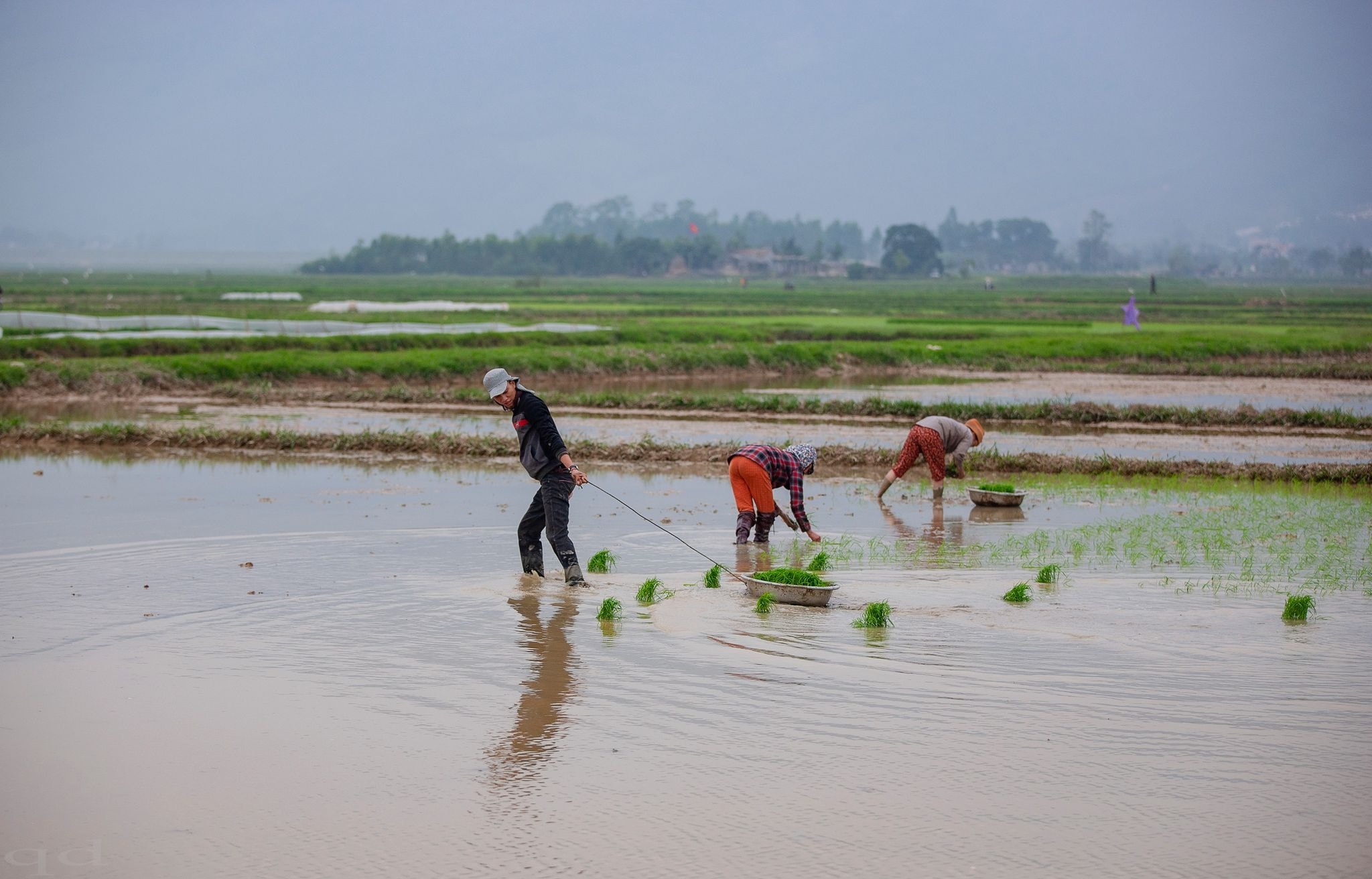 |
| Each rice planter is paid 350,000 - 400,000 VND per day or a fixed rate per sao (a unit of land measurement), with each sao earning 450,000 - 550,000 VND. Photo: Thanh Phuc |
The job of "working the land under the sun and rain" is arduous, but in return, rice planters earn a decent amount of money with relatively high wages, ranging from 350,000 to 400,000 VND per person per day; at the end of the planting season, some people earn 5-7 million VND.
Having worked as a hired rice planter for over a decade, Ms. Thai Thi Dung (Hoa Thanh, Yen Thanh) said that there's no shortage of work, it requires effort rather than capital, and you get paid immediately after the day's work is done.
For her, the landowners in the district are familiar faces and know her well, so from the beginning of the season they call, agree on daily rates, and schedule planting. One person introduces another, so during the planting season, she doesn't have a single day off. "For each day of hired planting, the owner pays the workers 350,000 - 400,000 VND/day, or the owner may contract a plot of land for us to work on together and divide the wages. We earn a few hundred thousand dong a day, and if we're healthy enough to plant at night, we can earn a few hundred thousand dong – that's considered high in the countryside," Ms. Dung said.
SEASONAL AGRICULTURAL LABOR SHORTAGE
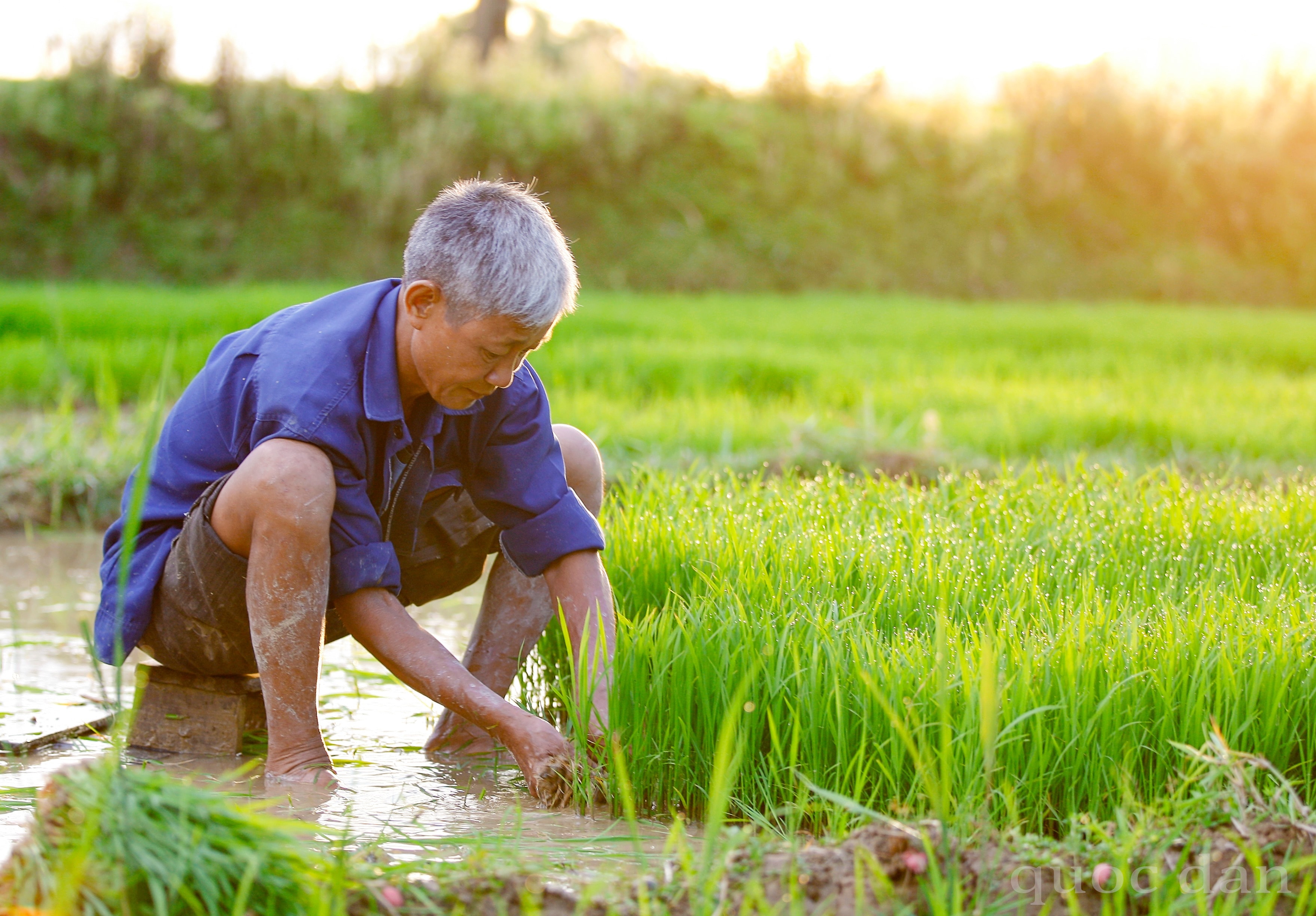 |
| Besides hiring transplanters, farmers have to either pull up seedlings themselves, harvest them, or hire extra help. Photo: Thanh Phuc |
Time spent onsow summer and autumnIt took place within a rather tight timeframe, almost simultaneously withspring rice harvestThis has caused considerable hardship for many farmers, forcing them to hire laborers for rice planting. Hiring people for planting is not easy, even though the pay is much higher than last year.
Mr. Nguyen Dang Phuoc (Hamlet 6, Son Thanh Commune) and his wife went to work in Binh Duong, leaving only his elderly parents at home.Therefore, for this rice transplanting season, he had to go on social media to ask for help finding people to transplant the seedlings. Mr. Phuoc said: “For the past 5 years, my family has had to hire people to transplant the seedlings. We have nearly 6 acres of rice fields, we hired a machine to prepare the land a few days ago, and the seedlings are growing well, but we still haven't found anyone to transplant them. This year, the transplanting fee is high, but there is still a shortage of people. They are asking for 2.6 million VND for 6 acres (compared to only 1.8 million VND in previous years), but we still have to wait another 2-3 days before we can find someone to transplant them.”
It's not just Mr. Phuoc; most farming families, if they don't sow their own rice, have to hire people to transplant it. Ms. Nguyen Thi Chau (Dien Minh commune, Dien Chau district) said that only she and her husband, both over 70 years old, are left at home. Their children all work in factories or are involved in trading, so there's no one to work in the fields. To transplant rice on 4 sao (approximately 0.4 hectares), she has to ask people to go to other communes and districts to find workers, even asking her children in Ho Chi Minh City to post ads on social media to hire transplanters, transferring money and making deposits in advance.
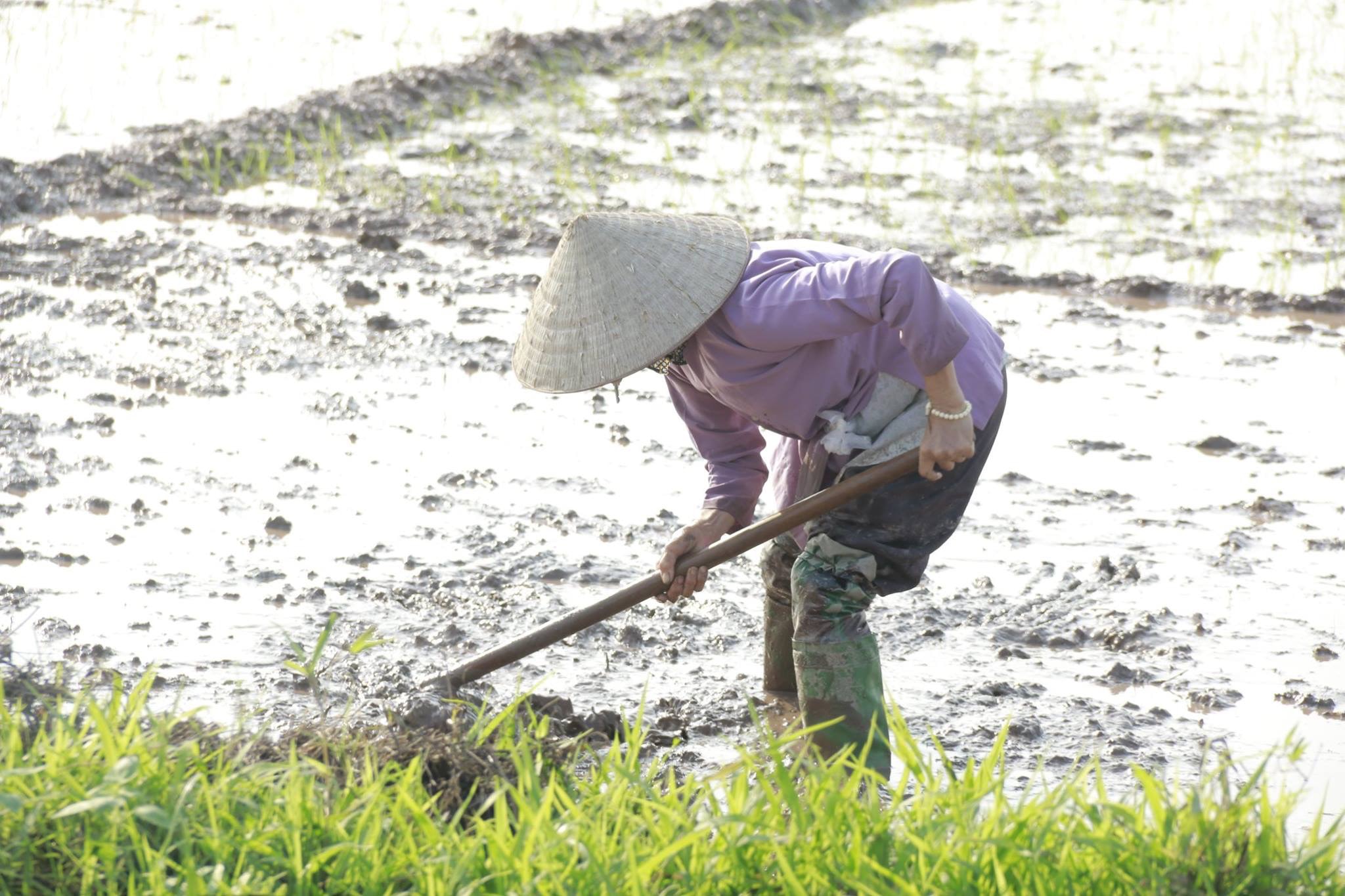 |
| The small, fragmented land area makes it difficult to introduce mechanization into production. Photo: Thanh Phuc |
“The characteristic of the summer-autumn crop season is that it happens very quickly; as soon as the spring rice harvest is completed, the summer crop is started immediately. Therefore, the workforce in agricultural production becomes scarce, while there isn't much surplus labor in rural areas. This labor shortage in agriculture leads to many localities missing the optimal planting season, making rice susceptible to pests and diseases, and resulting in low yields… To mitigate this situation, strategic solutions are needed. Among them, introducing mechanization into all stages of production will overcome the labor shortage during the planting season.”
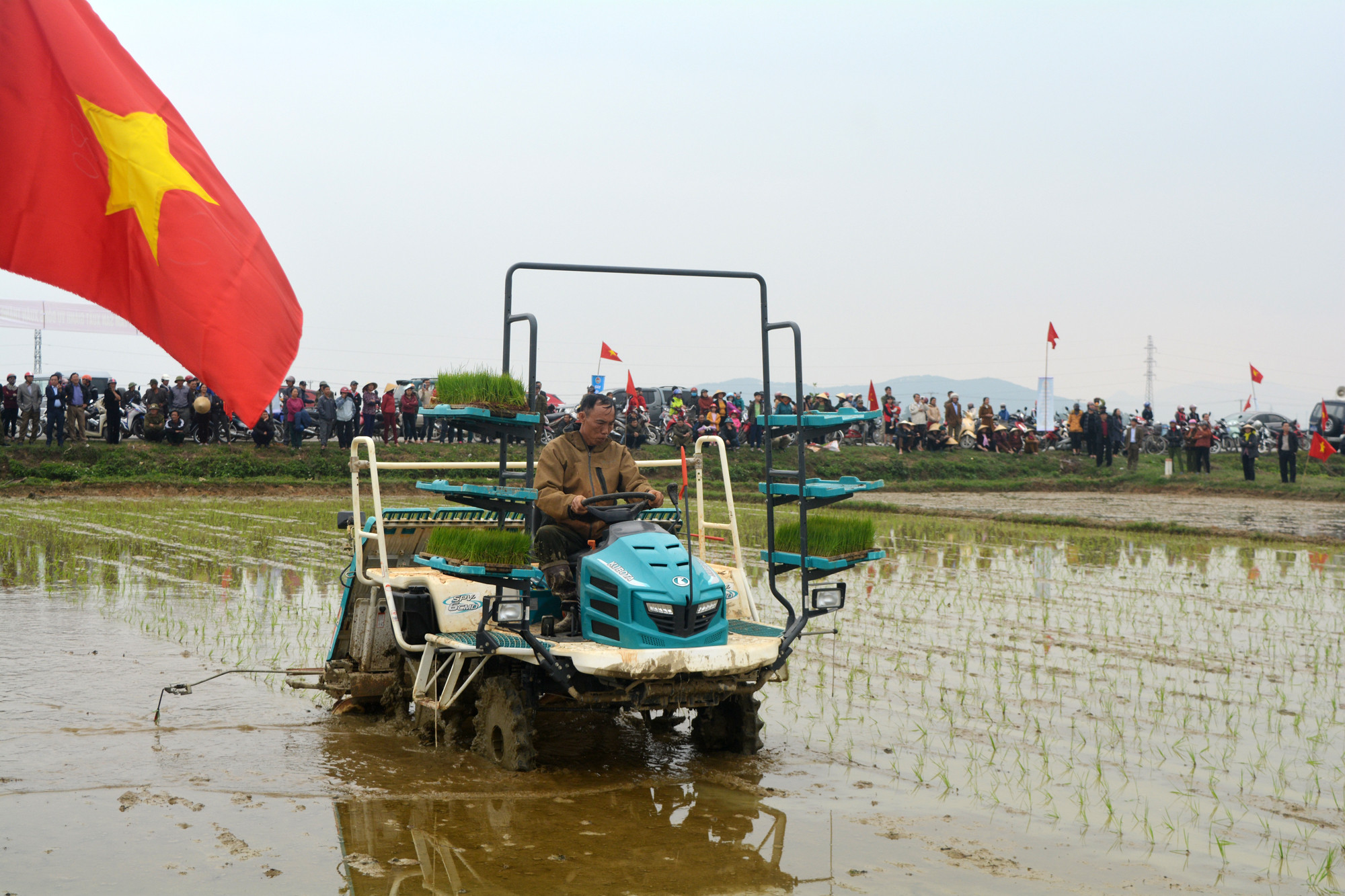 |
| Demonstration of machine rice planting for the spring crop in Thinh Son commune (Do Luong district). Photo: Thanh Phuc |
In reality, while machine transplanting has many advantages such as saving on seed quantity, reducing costs, shortening planting time, and especially reducing labor days and transplanting costs, its application in localities faces many difficulties due to a shortage of transplanters. Furthermore, despite land consolidation, many areas still have fragmented fields making it difficult to introduce transplanters; the irrigation system is not yet adequate for proactive watering; seedling preparation requires high technical skills, adherence to specific procedures, and the cost of producing tray seedlings is quite high...
On the other hand, in many places, Party committees and authorities have not paid sufficient attention to new technological advancements. In some localities, people's awareness of machine transplanting is still limited, thus failing to change the traditional habit of hand transplanting, despite the significantly higher cost of hiring traditional hand transplanters.


